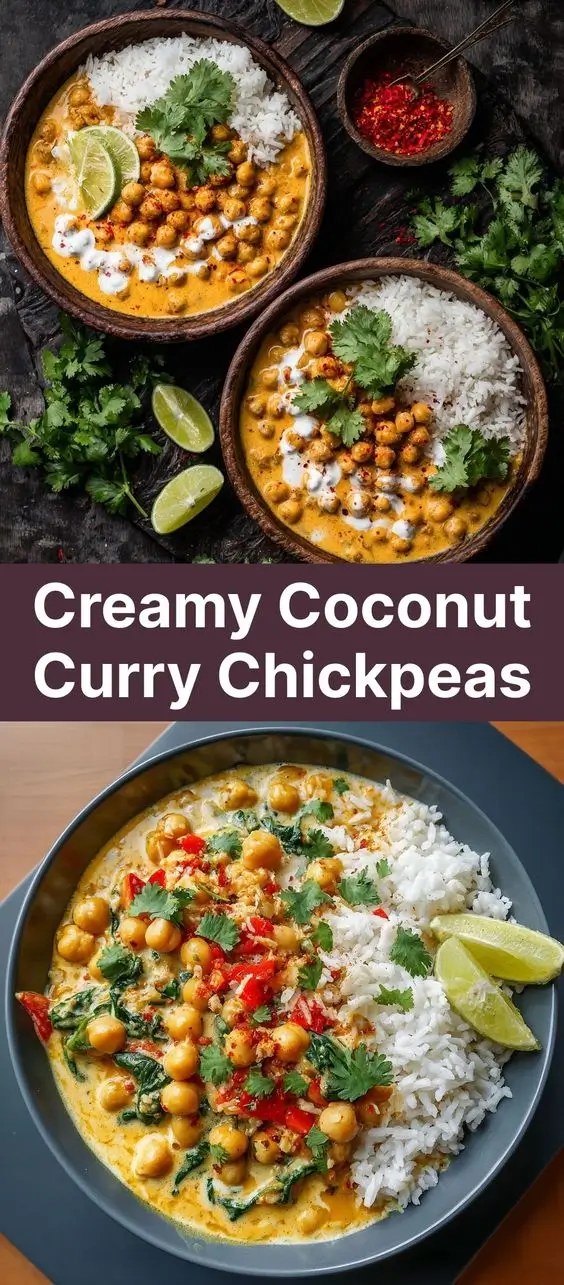
Creamy Coconut Curry Chickpeas: A Comforting, Flavor-Packed Plant-Based Delight
Creamy Coconut Curry Chickpeas is a rich, aromatic dish that brings together the earthiness of chickpeas with the luxurious creaminess of coconut milk and the bold warmth of Indian-inspired spices. Whether you’re following a plant-based diet or simply looking for a hearty, wholesome meal, this recipe delivers on flavor, texture, and nutrition. Perfect over steamed basmati rice, quinoa, or with warm naan bread, it’s a one-pot wonder that’s as easy to make as it is satisfying to eat.
The History: Roots of Flavor and Tradition
The origins of creamy curries like this can be traced back to South Asian culinary traditions, particularly from regions in India, Sri Lanka, and Southeast Asia where coconut and legumes play a central role in daily meals. Chickpeas—also known as garbanzo beans—have been cultivated for thousands of years and are a staple in Indian vegetarian cooking, often featured in dishes like chana masala and various dals.
Coconut milk, extracted from the grated flesh of mature coconuts, has long been used in tropical cuisines to create rich, velvety sauces that balance spice with sweetness. The fusion of chickpeas and coconut milk in curry form reflects both historical trade routes—where spices like turmeric, cumin, and coriander traveled across continents—and the ingenuity of home cooks crafting nourishing meals from affordable, shelf-stable ingredients.
This modern adaptation of Creamy Coconut Curry Chickpeas draws inspiration from these time-honored techniques while simplifying the process for today’s busy kitchens. It honors tradition while embracing accessibility, making it a global favorite among vegans, vegetarians, and omnivores alike.
Ingredients Breakdown: What Makes This Dish Shine
- Chickpeas (Garbanzo Beans): Packed with protein and fiber, canned chickpeas offer convenience without sacrificing nutrition. For even better texture, you can use soaked and cooked dried chickpeas.
- Coconut Milk: Full-fat coconut milk provides the luscious creaminess and subtle sweetness essential to the sauce. Light coconut milk can be used but will yield a thinner consistency.
- Aromatics – Onion, Garlic, Ginger: These form the flavor foundation. Sautéed until golden, they add depth and warmth to the curry.
- Curry Base Spices: Turmeric gives color and anti-inflammatory benefits; cumin and coriander bring earthiness; smoked paprika adds a hint of smokiness; chili powder or cayenne controls the heat level.
- Tomato Paste or Diced Tomatoes: Adds tanginess and body to the sauce. Tomato paste deepens flavor, while fresh or canned tomatoes lend juiciness.
- Vegetable Broth: Enhances moisture and layers savory notes into the curry.
- Lime Juice and Fresh Cilantro: Brighten the dish at the end, cutting through the richness with freshness.
- Oil: Coconut oil or neutral oil like avocado or sunflower helps bloom the spices and prevent sticking.
- Salt and Pepper: Essential for balancing and enhancing all other flavors.
Step-by-Step Recipe: How to Make Creamy Coconut Curry Chickpeas
- Prepare Ingredients: Drain and rinse 2 cans (15 oz each) of chickpeas. Finely dice 1 medium onion, mince 3–4 garlic cloves, and grate about 1 tablespoon of fresh ginger.
- Sauté Aromatics: Heat 2 tablespoons of oil in a large pot or Dutch oven over medium heat. Add the diced onion and cook for 4–5 minutes until translucent. Stir in the garlic and ginger, cooking for another minute until fragrant—be careful not to burn.
- Bloom the Spices: Add 1 teaspoon ground turmeric, 1 teaspoon ground cumin, 1 teaspoon ground coriander, ½ teaspoon smoked paprika, and ¼–½ teaspoon chili powder (adjust to taste). Stir constantly for 30 seconds to release essential oils and deepen flavors.
- Add Tomato Base: Stir in 2 tablespoons tomato paste or ½ cup diced canned tomatoes. Cook for 2–3 minutes, allowing the mixture to darken slightly and develop complexity.
- Incorporate Liquids: Pour in 1 can (13.5 oz) of full-fat coconut milk and ½ cup vegetable broth. Whisk well to combine, scraping any bits from the bottom of the pot.
- Add Chickpeas: Stir in the drained chickpeas. Bring the mixture to a gentle simmer, then reduce heat to low. Cover and let it cook for 20–25 minutes, stirring occasionally, allowing the chickpeas to absorb the flavors and the sauce to thicken.
- Season and Finish: Taste and adjust seasoning with salt and black pepper. Stir in the juice of half a lime (about 1–2 tablespoons) and garnish with chopped fresh cilantro just before serving.
- Serve: Ladle the curry over cooked basmati rice, quinoa, or millet. Serve with warm naan, roti, or pita bread for dipping.
Tips for the Best Creamy Coconut Curry Chickpeas
- Use Full-Fat Coconut Milk: The high fat content is key to achieving a creamy, restaurant-quality texture. Shake the can well before opening or stir thoroughly if separated.
- Don’t Skip Blooming Spices: Toasting spices in oil unlocks their full aroma and prevents a raw, dusty taste.
- Simmer Gently: Avoid boiling vigorously, which can cause coconut milk to separate. Keep the heat low and steady.
- Enhance Umami: For deeper savoriness, add 1 teaspoon soy sauce, tamari, or coconut aminos during cooking.
- Thicken the Sauce: If the curry is too thin, simmer uncovered for an extra 5–10 minutes. Alternatively, mash a few chickpeas with a fork to naturally thicken the stew.
- Make Ahead Friendly: Flavors intensify overnight! Store in the fridge for up to 5 days or freeze for up to 3 months.
- Fresh Is Best: Use freshly squeezed lime juice and real ginger—not powdered—for optimal brightness and zing.
Variations and Customizations: Make It Your Own
This recipe is highly adaptable. Here are some creative ways to switch it up:
- Add Vegetables: Stir in spinach, kale, bell peppers, sweet potatoes, cauliflower, or peas during the last 5–10 minutes of cooking.
- Protein Boost: Add cubed tofu, tempeh, or seitan for extra protein. Pan-sear first for better texture.
- Nutty Twist: Swirl in 1–2 tablespoons of almond butter or cashew butter for added richness and nuttiness.
- Thai-Inspired Version: Swap curry spices for red or green curry paste (2–3 tbsp), add bamboo shoots and Thai basil, and finish with a splash of fish sauce (or vegan alternative).
- Low-Fat Option: Use light coconut milk and reduce added oil, though the creaminess will be less pronounced.
- Spice Level Control: Omit chili powder for mildness, or add fresh jalapeño or serrano peppers for extra kick.
- Herb Variations: Try mint, parsley, or even dill instead of cilantro for a different herbal note.
- Dairy Infusion: Stir in a spoonful of plain yogurt or coconut yogurt at the end for tang and creaminess (optional).
Health Considerations and Nutritional Value
Creamy Coconut Curry Chickpeas is a nutrient-dense, plant-powered meal offering a balanced profile of macronutrients and essential micronutrients.
Nutritional Highlights (per serving, approx. 1.5 cups with rice):
- Calories: ~400–450 kcal
- Protein: 12–15g – Excellent plant-based source supporting muscle repair and satiety.
- Fiber: 10–12g – Promotes digestive health, stabilizes blood sugar, and supports gut microbiome.
- Healthy Fats: Primarily from coconut milk, containing medium-chain triglycerides (MCTs) that may support energy metabolism.
- Complex Carbohydrates: From chickpeas and grains, providing sustained energy.
- Vitamins & Minerals: Rich in iron, folate, manganese, phosphorus, and vitamin B6. Turmeric contains curcumin, a potent anti-inflammatory compound.
Considerations:
- Coconut Fat Content: While beneficial in moderation, coconut milk is high in saturated fat. Those monitoring cholesterol may opt for light versions or consume in smaller portions.
- Sodium: Canned chickpeas and broth can be high in sodium. Use low-sodium versions and control added salt to manage intake.
- Allergens: Naturally gluten-free and nut-free (unless using nut butter). Always check labels on broth and canned goods if allergies are a concern.
- Diabetes-Friendly: High fiber and moderate glycemic load help regulate blood sugar when paired with whole grains.
- Weight Management: High volume, fiber, and protein promote fullness, making it ideal for healthy weight maintenance.
Ingredients
- 2 tablespoons coconut oil or neutral oil
- 1 medium yellow onion, finely diced
- 3–4 garlic cloves, minced
- 1 tablespoon fresh ginger, grated
- 1 teaspoon ground turmeric
- 1 teaspoon ground cumin
- 1 teaspoon ground coriander
- ½ teaspoon smoked paprika
- ¼–½ teaspoon chili powder (adjust to taste)
- 2 tablespoons tomato paste (or ½ cup canned diced tomatoes)
- 2 (15 oz) cans chickpeas, drained and rinsed
- 1 (13.5 oz) can full-fat coconut milk
- ½ cup vegetable broth (low sodium preferred)
- Salt and freshly ground black pepper, to taste
- Juice of ½ lime (1–2 tablespoons)
- Fresh cilantro, chopped (for garnish)
Directions
- In a large pot or deep skillet, heat oil over medium heat. Add onion and sauté for 4–5 minutes until soft and translucent.
- Add garlic and ginger, stirring frequently for 1 minute until fragrant.
- Stir in turmeric, cumin, coriander, smoked paprika, and chili powder. Cook for 30 seconds, stirring constantly to toast the spices.
- Add tomato paste and cook for 2–3 minutes, stirring to prevent burning and deepen flavor.
- Pour in coconut milk and vegetable broth. Whisk to combine and bring to a gentle simmer.
- Stir in chickpeas. Reduce heat to low, cover, and simmer for 20–25 minutes, stirring occasionally.
- Season with salt and pepper to taste. Stir in lime juice.
- Garnish with fresh cilantro and serve hot over rice or with bread.
FAQ
Can I make this curry ahead of time?
Yes! This dish tastes even better the next day as flavors meld. Store in an airtight container in the fridge for up to 5 days.
Can I freeze Creamy Coconut Curry Chickpeas?
Absolutely. Freeze in portion-sized containers for up to 3 months. Thaw in the fridge overnight and reheat gently on the stove, adding a splash of broth or water if needed.
Why did my coconut milk separate?
Coconut milk can separate if boiled too quickly. To prevent this, keep the heat low and avoid rapid boiling. If separation occurs, whisk vigorously while reheating—it will often re-emulsify.
Can I use dried chickpeas instead of canned?
Yes. Soak 1 cup dried chickpeas overnight, then cook until tender (about 1–1.5 hours). Use 3 cups cooked chickpeas in place of canned.
Is this recipe gluten-free?
Yes, as long as all ingredients (especially broth and spices) are certified gluten-free. Always double-check labels.
How can I make it spicier?
Add fresh chopped chilies (like jalapeño or serrano) when sautéing onions, increase chili powder, or stir in a dash of hot sauce at the end.
What can I serve with this curry?
Excellent with basmati rice, jasmine rice, quinoa, couscous, or flatbreads like naan or roti. A side of cucumber raita or mango chutney complements it beautifully.
Can I make it oil-free?
Yes. Sauté onions, garlic, and ginger in water or vegetable broth using a non-stick pan. The texture will be slightly different but still flavorful.
Summary
Creamy Coconut Curry Chickpeas is a nourishing, aromatic one-pot meal that blends protein-rich chickpeas with creamy coconut milk and warming spices for a deeply satisfying plant-based experience.
Easy to customize, packed with nutrients, and bursting with flavor, it’s a versatile dish perfect for weeknights, meal prep, or impressing guests with minimal effort.