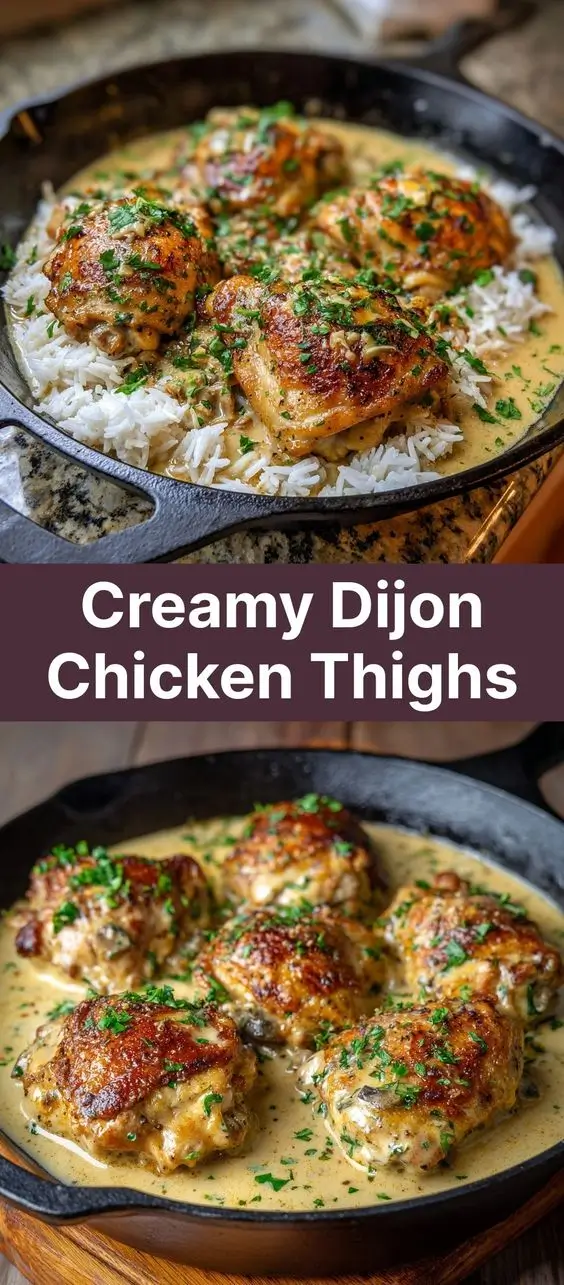
Creamy Dijon Chicken Thighs: A Rich, Flavorful Comfort Dish
The History of Creamy Dijon Chicken Thighs
The roots of Creamy Dijon Chicken Thighs trace back to classic French country cooking, where rustic ingredients were transformed into deeply satisfying meals. Dijon mustard, named after the French town of Dijon in Burgundy, has been a culinary staple since the 13th century. Originally made from brown or black mustard seeds and verjuice (the acidic juice of unripe grapes), it evolved over time—especially in the 19th century—when wine replaced verjuice, giving the condiment its now-familiar sharp, tangy flavor.
Chicken thighs, often overlooked in favor of leaner breast meat in modern diets, have long been prized in traditional European kitchens for their rich flavor, tenderness, and ability to remain juicy during slow cooking. The combination of chicken thighs with creamy sauces and Dijon mustard likely emerged from farmhouse kitchens where cooks sought to elevate simple proteins with bold flavors and available pantry staples. Over time, this dish crossed borders, adapting to local tastes while maintaining its core elements: succulent dark meat, a velvety sauce, and the unmistakable zing of Dijon mustard.
In contemporary cuisine, Creamy Dijon Chicken Thighs have gained popularity as a weeknight favorite and dinner party staple due to their balance of elegance and ease. They represent the best of French-inspired home cooking—comforting, flavorful, and deceptively simple.
Ingredients Breakdown: What Makes This Dish Shine
The magic of Creamy Dijon Chicken Thighs lies in the harmony of its components. Each ingredient plays a crucial role in building layers of flavor, texture, and richness:
- Chicken Thighs (Bone-in, Skin-on): These are the star of the dish. The higher fat content compared to chicken breasts ensures juiciness and depth of flavor, especially when seared and braised. The skin crisps beautifully, adding textural contrast.
- Dijon Mustard: Sharp, tangy, and slightly spicy without being overpowering, Dijon adds complexity and cuts through the richness of the cream. It emulsifies into the sauce, lending both flavor and body.
- Heavy Cream: Provides luxurious silkiness and balances the acidity of the mustard. It also helps create a luscious sauce that clings perfectly to the chicken and any accompanying starch.
- Garlic and Shallots: These aromatics build a savory foundation. Shallots offer a delicate sweetness, while garlic contributes warmth and pungency.
- Dry White Wine: Often used to deglaze the pan, wine lifts the browned bits (fond) and introduces acidity and fruitiness that enhance the overall flavor profile.
- Chicken Stock or Broth: Adds depth and moisture during braising, helping to tenderize the meat while contributing umami.
- Fresh Herbs (Thyme and Parsley): Thyme’s earthy notes complement the mustard and poultry, while fresh parsley stirred in at the end brightens the dish.
- Olive Oil and Butter: Olive oil is ideal for high-heat searing, while butter adds richness during sautéing and finishing.
- Salt and Black Pepper: Essential for seasoning each layer of the dish, ensuring balanced taste throughout.
Optional enhancements like a splash of lemon juice, a pinch of cayenne, or a grating of nutmeg can elevate the dish further, tailoring it to personal preference.
Step-by-Step Recipe: How to Make Perfect Creamy Dijon Chicken Thighs
- Prep the Chicken: Pat 6 bone-in, skin-on chicken thighs dry with paper towels. Season generously on both sides with salt and freshly ground black pepper. This step is critical for achieving crispy skin and well-seasoned meat.
- Sear the Chicken: Heat 2 tablespoons of olive oil in a large, oven-safe skillet (such as cast iron or stainless steel) over medium-high heat. Once hot, place the chicken thighs skin-side down. Sear for 6–8 minutes until the skin is golden brown and crisp. Flip and sear the other side for 3–4 minutes. Remove the chicken and set aside on a plate. (Resist the urge to crowd the pan—work in batches if needed.)
- Sauté the Aromatics: Reduce the heat to medium. Add 1 tablespoon of butter to the same skillet. Stir in 1 finely chopped shallot and cook for 2–3 minutes until softened. Add 3 minced garlic cloves and cook for another 30 seconds until fragrant—do not let them burn.
- Build the Sauce Base: Pour in ½ cup of dry white wine (like Sauvignon Blanc or Pinot Grigio) to deglaze the pan. Use a wooden spoon to scrape up all the flavorful browned bits from the bottom. Let the wine reduce by half, about 3 minutes.
- Incorporate Dijon and Liquids: Stir in ¼ cup of Dijon mustard until fully blended into the mixture. Add 1 cup of chicken stock and bring to a gentle simmer.
- Braise the Chicken: Return the seared chicken thighs to the skillet, skin-side up. Tuck in 3–4 sprigs of fresh thyme. Cover the skillet with a lid or foil and transfer to a preheated oven at 375°F (190°C). Bake for 30–35 minutes, or until the internal temperature of the chicken reaches 165°F (74°C).
- Add the Cream: Remove the skillet from the oven. Carefully take off the lid. Stir in ½ cup of heavy cream and gently swirl to combine. Return to the oven, uncovered, for an additional 5–10 minutes to allow the sauce to thicken slightly.
- Finish and Serve: Take the skillet out and let the chicken rest for 5 minutes. Taste the sauce and adjust seasoning—add more salt, pepper, or a squeeze of lemon juice if desired. Garnish with chopped fresh parsley before serving.
Tips for Success: Mastering Creamy Dijon Chicken Thighs
- Dry the Chicken Thoroughly: Moisture is the enemy of browning. Patting the thighs dry ensures a perfect sear and crispy skin.
- Don’t Rush the Sear: Allow the chicken to develop a deep golden crust before flipping. This builds flavor via the Maillard reaction.
- Use Quality Dijon Mustard: Opt for authentic Dijon mustard—avoid “imitation” versions with added fillers or artificial flavors. Maille or Grey Poupon are reliable choices.
- Balance the Sauce: If the sauce tastes too sharp, add a teaspoon of honey or a splash of cream. If too rich, a dash of lemon juice or vinegar can brighten it.
- Avoid Curdling: When adding cream, ensure the sauce isn’t boiling vigorously. Lower the heat and stir gently to prevent separation.
- Skim Excess Fat: After braising, you can skim off some of the rendered fat from the sauce for a lighter finish—or leave it for extra richness.
- Let It Rest: Allowing the chicken to rest before serving lets the juices redistribute, resulting in moister meat.
Variations and Customizations
Creamy Dijon Chicken Thighs are highly adaptable. Here are several creative twists to keep the dish exciting:
- Dairy-Free Version: Substitute heavy cream with full-fat coconut milk and use olive oil instead of butter. Use a vegan Dijon mustard to keep it plant-based compatible.
- Low-Carb/Keto Option: This recipe is naturally low in carbs. Just ensure your Dijon mustard doesn’t contain added sugars, and serve with cauliflower mash or roasted vegetables.
- Mushroom Addition: Sauté 1 cup of sliced cremini or shiitake mushrooms with the shallots for an earthy, umami-rich upgrade.
- Herb Variations: Swap thyme for rosemary or tarragon. Tarragon, in particular, pairs beautifully with Dijon and chicken.
- Mustard Blend: Combine Dijon with whole grain mustard for added texture and complexity.
- Tomato Twist: Stir in 2 tablespoons of tomato paste with the shallots for a deeper, slightly sweet undertone.
- Crispy Skin Alternative: For extra-crispy skin, broil the chicken for 2–3 minutes at the end—but watch closely to avoid burning.
- One-Pan Sheet Pan Version: Arrange seared thighs on a sheet pan with baby potatoes and carrots. Drizzle with the Dijon-cream sauce and roast at 400°F (200°C) for 35–40 minutes.
- Instant Pot Method: Sear thighs using the sauté function, then add aromatics, wine, mustard, stock, and herbs. Pressure cook on high for 10 minutes, natural release, then stir in cream and use sauté mode to thicken.
Health Considerations and Nutritional Value
While Creamy Dijon Chicken Thighs are undeniably indulgent, they can be part of a balanced diet when enjoyed in moderation and with mindful preparation:
- Nutrient Profile (per serving, approx. 1 thigh with sauce):
- Calories: ~450–500
- Protein: ~30g (excellent source)
- Fat: ~35g (mostly unsaturated and saturated; includes healthy fats from chicken skin and cream)
- Carbohydrates: ~6–8g (primarily from shallots and mustard)
- Iron, Zinc, Selenium: Abundant in dark chicken meat
- Vitamin B6 and B12: Supports energy metabolism and nerve function
- Health Notes:
- Chicken thighs provide more iron and essential fatty acids than breasts.
- The dish contains saturated fat from cream and butter. To reduce, use half-and-half or evaporated milk instead of heavy cream, and limit butter usage.
- Dijon mustard is low in calories and may support digestion due to its acetic acid content.
- Using skinless thighs reduces fat but sacrifices crispiness and moisture.
- Pair with fiber-rich sides like steamed greens, quinoa, or roasted Brussels sprouts to balance the meal.
Ingredients
- 6 bone-in, skin-on chicken thighs (about 3–3.5 lbs total)
- Salt and freshly ground black pepper (to taste)
- 2 tablespoons olive oil
- 1 tablespoon unsalted butter
- 1 large shallot, finely chopped (about ½ cup)
- 3 garlic cloves, minced
- ½ cup dry white wine (e.g., Sauvignon Blanc, Pinot Grigio)
- ¼ cup Dijon mustard (preferably whole grain or classic)
- 1 cup chicken stock or broth (low-sodium preferred)
- ½ cup heavy cream
- 3–4 sprigs fresh thyme
- 2 tablespoons fresh parsley, chopped (for garnish)
- Optional: 1 tsp lemon juice, ¼ tsp cayenne, or 1 tbsp capers
Directions
- Preheat oven to 375°F (190°C). Pat chicken thighs dry and season liberally with salt and pepper.
- Heat olive oil in a large oven-safe skillet over medium-high heat. Add chicken, skin-side down, and sear for 6–8 minutes until golden. Flip and sear opposite side for 3–4 minutes. Transfer to a plate.
- Reduce heat to medium. Add butter, then shallot. Sauté for 2–3 minutes until soft. Add garlic; cook 30 seconds.
- Pour in white wine, scraping the pan. Simmer until reduced by half (~3 minutes).
- Stir in Dijon mustard until combined. Add chicken stock and bring to a simmer.
- Return chicken to skillet, skin-side up. Add thyme. Cover with lid or foil.
- Transfer to oven and bake for 30–35 minutes, until chicken reaches 165°F internally.
- Remove cover, stir in heavy cream, and return to oven uncovered for 5–10 minutes to thicken sauce.
- Remove from oven. Rest for 5 minutes. Taste and adjust seasoning. Garnish with parsley.
- Serve warm with sauce spooned over the top.
FAQ
Can I use chicken breasts instead of thighs?
Yes, but adjust cooking time. Breasts cook faster and dry out more easily. Use bone-in, skin-on breasts and reduce oven time to 20–25 minutes.
Can I make this ahead of time?
Absolutely. Prepare the dish up to a day in advance, refrigerate, and reheat gently on the stovetop over low heat, adding a splash of broth if needed.
How do I store leftovers?
Store in an airtight container in the refrigerator for up to 3 days. Reheat in a skillet over medium-low heat to preserve texture.
Can I freeze Creamy Dijon Chicken Thighs?
Yes, though dairy-based sauces can separate slightly upon thawing. Freeze without cream, then add fresh cream when reheating. Or blend after reheating to restore smoothness.
Why did my sauce curdle?
Sudden high heat or acidic ingredients can cause cream to split. Always add cream off direct heat and stir gently. If curdled, blend with an immersion blender or strain.
What should I serve with this dish?
Excellent pairings include mashed potatoes, egg noodles, risotto, polenta, or a simple green salad. Roasted asparagus, green beans, or carrots also work well.
Is Dijon mustard spicy?
Not traditionally hot, but it has a sharp, pungent kick due to the mustard seeds and vinegar. Mild varieties are available if sensitivity is a concern.
Summary
Creamy Dijon Chicken Thighs deliver a perfect harmony of rich, tangy, and savory flavors, featuring tender, juicy dark meat enveloped in a luxurious mustard-cream sauce. Simple enough for weeknights yet elegant enough for guests, this French-inspired dish is a timeless addition to any home cook’s repertoire.