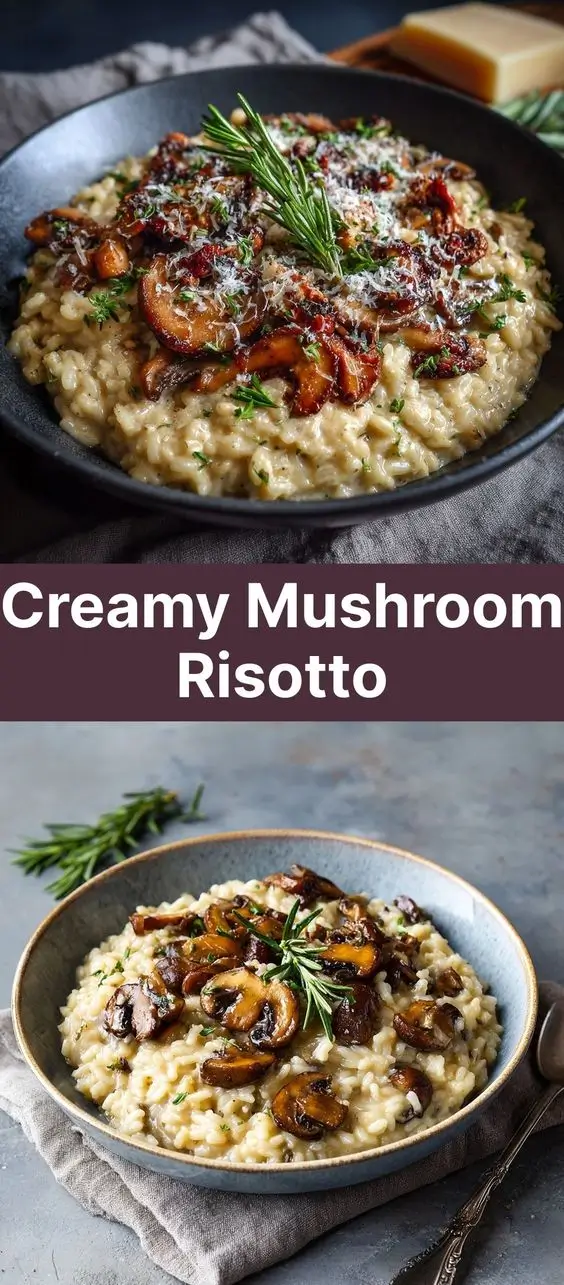
Creamy Mushroom Risotto is a luxurious Italian dish that embodies comfort, elegance, and culinary tradition. With its velvety texture, rich umami flavor, and the earthy aroma of mushrooms, this risotto has become a staple on gourmet menus and home kitchens alike. Whether served as a main course or an indulgent side, it delivers a warm, satisfying experience in every bite. Originating from Northern Italy, where rice cultivation thrives in the Po Valley, risotto showcases the region’s love for slow cooking, local ingredients, and bold flavors. Among the many variations, mushroom risotto stands out for its depth and complexity, making it a favorite among vegetarians and food lovers worldwide.
The History
Risotto traces its roots back to the 14th century in Northern Italy, particularly in regions such as Lombardy, Piedmont, and Veneto. While early versions may have included saffron (as seen in the iconic Risotto alla Milanese), the technique of slowly cooking Arborio or Carnaroli rice in broth to extract starch and create creaminess became a hallmark of Italian cuisine. Mushrooms have long been foraged and cherished in these alpine areas, so their integration into risotto was a natural evolution. The creamy mushroom version gained popularity in the 20th century as chefs began emphasizing seasonal, earthy ingredients. Today, it’s celebrated globally, often associated with autumn harvests, fine dining, and rustic Italian charm.
Ingredients Breakdown
Creating authentic Creamy Mushroom Risotto hinges on high-quality, complementary ingredients:
- Arborio Rice: This short-grain rice is essential due to its high starch content, which gives risotto its signature creamy consistency without becoming mushy.
- Fresh Mushrooms: A blend of cremini, shiitake, porcini, or wild mushrooms adds layers of earthy flavor. Dried porcini, when rehydrated, contribute intense umami notes.
- Onion or Shallot: Finely diced for a subtle sweetness and aromatic base.
- Dry White Wine: Adds acidity and depth; a crisp Pinot Grigio or Sauvignon Blanc works best.
- Vegetable or Chicken Broth: Must be warm and added gradually to control the absorption process.
- Butter and Parmesan Cheese: These enrich the dish at the end, providing silkiness and savory richness.
- Olive Oil: Used for sautéing, preferably extra virgin for a fruity undertone.
- Garlic (optional): Enhances the mushroom profile without overpowering.
- Fresh Herbs: Thyme or parsley are commonly used for freshness and color.
Step-by-Step Recipe
- Prepare the Mushrooms: Clean and slice your mushrooms. If using dried porcini, soak them in hot water for 20 minutes, then strain, reserving the liquid. Chop the rehydrated mushrooms finely and set aside.
- Warm the Broth: In a saucepan, heat 6 cups of broth (vegetable or chicken) over medium heat. Keep it simmering throughout cooking. If using porcini soaking liquid, strain it through a coffee filter and add it to the broth for extra flavor.
- Sauté the Aromatics: In a large, heavy-bottomed skillet or Dutch oven, heat 2 tablespoons of olive oil and 1 tablespoon of butter over medium heat. Add 1 small diced shallot or onion and cook until translucent (about 3–4 minutes). Add minced garlic if desired and cook for 30 seconds more.
- Cook the Mushrooms: Add all mushrooms to the pan and sauté until they release moisture and begin to brown (5–7 minutes). Season lightly with salt and pepper. Remove half and set aside for garnish.
- Toast the Rice: Add 1½ cups of Arborio rice to the pot. Stir constantly for 2–3 minutes until the rice becomes slightly translucent around the edges and emits a nutty aroma.
- Deglaze with Wine: Pour in ½ cup of dry white wine. Stir continuously until the liquid is fully absorbed.
- Begin Adding Broth: Add a ladleful (about ½ cup) of warm broth to the rice. Stir frequently until the liquid is mostly absorbed before adding the next ladle. This gradual process should take 18–22 minutes. Maintain a gentle simmer.
- Monitor Texture: The rice should be al dente—tender with a slight bite—and suspended in a creamy, porridge-like liquid. Avoid rushing by adding too much broth at once.
- Finish the Risotto: When the rice is cooked, remove from heat. Stir in ¼ cup grated Parmesan cheese, 2 tablespoons of cold butter, and the reserved cooked mushrooms. This step, called “mantecatura,” creates a glossy, cohesive texture.
- Season and Serve: Taste and adjust seasoning with salt and pepper. Garnish with fresh thyme or parsley, extra Parmesan, and a drizzle of olive oil if desired.
Tips
- Use Warm Broth: Cold broth slows cooking and disrupts starch release. Always keep it simmering nearby.
- Stir Frequently, Not Constantly: Stirring helps release starch, but constant stirring can cool the pan. Aim for regular attention without obsession.
- Don’t Rush: Authentic risotto takes time. The gradual addition of broth is crucial for proper texture.
- Taste as You Go: Check the rice’s doneness starting at 18 minutes. It should not be crunchy nor mushy.
- Rest Before Serving: Let the risotto sit for 1–2 minutes after finishing. It will thicken slightly and settle.
- Serve Immediately: Risotto waits for no one! It continues to absorb liquid and loses its creamy allure if left sitting.
Variations and Customizations
Creamy Mushroom Risotto is wonderfully adaptable. Consider these creative twists:
- Truffle Infusion: Add a few drops of truffle oil or shavings of fresh black truffle for a decadent upgrade.
- Cream Addition: For extra richness, stir in 2–3 tablespoons of heavy cream at the end.
- Protein Boost: Top with seared scallops, grilled chicken, or crispy pancetta for a heartier meal.
- Vegan Version: Substitute butter with vegan margarine, use nutritional yeast instead of Parmesan, and ensure broth is plant-based.
- Herb Variations: Try rosemary, sage, or tarragon for a different aromatic profile.
- Grain Swap: For a healthier alternative, use Carnaroli or Vialone Nano rice, or experiment with farro (though texture will differ).
- Roasted Mushrooms: Roast mushrooms separately with olive oil and herbs before folding into the risotto for deeper flavor.
Health Considerations and Nutritional Value
While Creamy Mushroom Risotto is rich and indulgent, it offers several nutritional benefits when prepared thoughtfully:
- Mushrooms: Low in calories and fat, they are a good source of B vitamins, selenium, potassium, and antioxidants like ergothioneine, which supports immune function.
- Whole Grain Option: Though traditional risotto uses white Arborio rice, using partially milled or whole grain alternatives increases fiber and nutrient content.
- Healthy Fats: Olive oil provides monounsaturated fats, beneficial for heart health. Butter, while high in saturated fat, contributes flavor in moderation.
- Calcium and Protein: Parmesan cheese adds calcium and a modest amount of protein.
- Portion Control: Risotto is dense and satisfying—a serving size of 1 cup is often enough. Pair with a green salad or steamed vegetables for balance.
- Sodium Awareness: Store-bought broths can be high in sodium. Opt for low-sodium versions or make your own to control salt levels.
A typical 1-cup serving contains approximately:
- Calories: 320–380
- Fat: 12–16g (depending on butter and cheese)
- Carbohydrates: 45–50g
- Protein: 8–10g
- Fiber: 2–3g
- Sodium: 600–900mg (varies by broth and cheese)
Ingredients
- 1½ cups (300g) Arborio rice
- 8 oz (225g) mixed fresh mushrooms (cremini, shiitake, button), sliced
- ½ oz (15g) dried porcini mushrooms (optional)
- 4–6 cups vegetable or chicken broth
- ½ cup dry white wine (e.g., Pinot Grigio)
- 1 small shallot or ½ small onion, finely diced
- 2 cloves garlic, minced (optional)
- 2 tbsp olive oil
- 3 tbsp unsalted butter, divided
- ¼ cup freshly grated Parmesan cheese, plus extra for serving
- Salt and freshly ground black pepper, to taste
- 1 tsp fresh thyme leaves or ½ tsp dried thyme
- Chopped fresh parsley, for garnish
Directions
- Rehydrate dried porcini in 1 cup hot water for 20 minutes. Strain, chop, and reserve liquid. Set mushrooms aside.
- In a saucepan, heat broth (including strained porcini liquid) until simmering. Keep warm.
- In a large pot or deep skillet, heat olive oil and 1 tbsp butter over medium heat. Add shallot and sauté until soft (3–4 minutes).
- Add garlic and cook for 30 seconds until fragrant.
- Add all mushrooms (fresh and rehydrated) and thyme. Cook 6–8 minutes until browned and tender. Remove half and set aside.
- Add rice to the pot. Toast for 2–3 minutes, stirring constantly, until edges turn translucent.
- Pour in white wine. Stir until completely absorbed.
- Begin adding warm broth, one ladle at a time, stirring frequently. Wait until most liquid is absorbed before adding more.
- Continue for 18–22 minutes until rice is creamy and al dente.
- Remove from heat. Stir in remaining 2 tbsp butter, Parmesan, and reserved mushrooms.
- Season with salt and pepper. Let rest 1–2 minutes.
- Serve immediately, garnished with parsley, extra Parmesan, and a twist of black pepper.
FAQ
Can I make mushroom risotto ahead of time?
It’s best served fresh, but you can prepare it partially in advance. Cook the risotto to just before the final stage, then spread on a tray to cool. Reheat gently with warm broth to loosen before finishing with butter and cheese.
Why is my risotto gummy or too thick?
Over-stirring or letting it sit too long can cause excess starch activation. Add a splash of warm broth or water to restore creaminess.
Can I use instant rice?
No. Instant rice lacks the starch needed for creaminess and cooks too quickly. Stick to Arborio, Carnaroli, or Vialone Nano.
Is risotto gluten-free?
Yes, provided the broth and all other ingredients are certified gluten-free. Rice is naturally gluten-free.
What wine should I use?
A dry, crisp white wine like Pinot Grigio, Sauvignon Blanc, or Vermentino. Avoid sweet wines, which can throw off the balance.
Can I freeze leftover risotto?
Freezing affects texture significantly. It’s better to refrigerate for up to 3 days and reheat with broth on the stove.
Summary
Creamy Mushroom Risotto is a masterpiece of Italian cuisine, combining tender Arborio rice, earthy mushrooms, and a luxuriously smooth texture achieved through careful, gradual cooking. Elegant yet comforting, it’s a dish that delights the senses and brings warmth to any table.