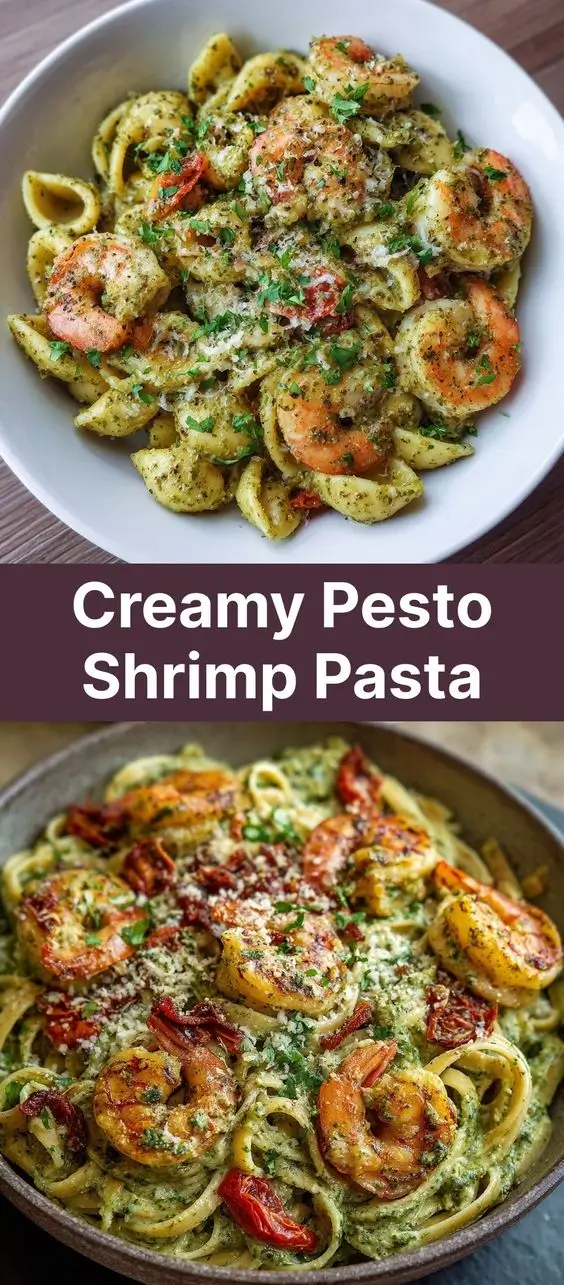
Creamy Pesto Shrimp Pasta: A Luxurious Fusion of Flavors and Comfort
Indulge in the velvety richness of Creamy Pesto Shrimp Pasta—a dish that perfectly marries the briny sweetness of succulent shrimp with the vibrant, herbaceous punch of fresh basil pesto, all swirled into a luscious cream sauce that coats every strand of al dente pasta. This recipe is a modern classic that brings together Mediterranean flair and Italian comfort food tradition in one unforgettable bowl. Whether you’re preparing a romantic dinner for two or impressing guests at a weekend gathering, this dish delivers elegance without excessive complexity. With its balance of protein, healthy fats, and complex carbohydrates, it’s not only delicious but also nutritionally satisfying. Let’s dive deep into everything you need to know about creating the perfect plate of Creamy Pesto Shrimp Pasta—its history, ingredients, methods, variations, and more.
The History of Creamy Pesto Shrimp Pasta
While pasta dishes have been enjoyed in Italy for centuries, the concept of Creamy Pesto Shrimp Pasta is a relatively recent culinary innovation born from the fusion of traditional Italian cuisine and modern American cooking sensibilities. Classic pesto originated in Genoa, Italy, where “pesto alla Genovese” was traditionally made from fresh basil, pine nuts, garlic, Parmesan cheese, and extra virgin olive oil, pounded together using a mortar and pestle. This bright green sauce was typically tossed with trofie or trenette pasta and sometimes served with boiled potatoes or green beans.
Shrimp, while not native to inland northern Italy, has long been used in coastal regions such as Sicily and Sardinia. However, combining seafood with pesto became more widespread in the 20th century, especially as global trade made ingredients more accessible. The addition of cream to pesto-based sauces emerged largely outside of Italy—particularly in American and Northern European kitchens—where cooks sought richer, silkier textures. The creamy version gained popularity in the late 1900s as part of the broader trend toward indulgent, restaurant-style pasta dishes that could be recreated at home.
Creamy Pesto Shrimp Pasta reflects this evolution—a harmonious blend of rustic Italian roots and contemporary gourmet preferences. It showcases how classic recipes can adapt over time, embracing new techniques and tastes while still honoring their origins.
Ingredients Breakdown: What Makes This Dish Shine
The magic of Creamy Pesto Shrimp Pasta lies in the quality and synergy of its components. Each ingredient plays a crucial role in building layers of flavor, texture, and aroma. Here’s an in-depth look at what goes into this delectable dish:
- Fresh Shrimp: Medium to large shrimp (31/40 count), peeled and deveined, are ideal. Freshness is key—look for firm, translucent flesh with a mild ocean scent. Wild-caught Gulf or Pacific shrimp offer superior flavor and sustainability.
- Pasta: Long strands like fettuccine, linguine, or tagliatelle work best because they hold onto the creamy pesto sauce beautifully. Whole wheat or gluten-free alternatives can be used for dietary needs.
- Basil Pesto: You can use homemade or high-quality store-bought pesto. Homemade ensures freshness and control over ingredients—typically fresh basil, pine nuts (or walnuts), garlic, Parmesan, Pecorino Romano, olive oil, and a squeeze of lemon juice.
- Heavy Cream: Adds luxurious body and smoothness to the sauce. Half-and-half can be substituted for a lighter version, though it may result in a less rich consistency.
- Garlic: Freshly minced garlic enhances both the shrimp and sauce, providing aromatic depth.
- Olive Oil: Extra virgin olive oil is used for sautéing shrimp and adding fruitiness to the final dish.
- Lemon Juice: A splash brightens the entire dish, cutting through the richness and elevating the herbal notes of the pesto.
- Grated Cheese: Freshly grated Parmesan or Pecorino adds umami and helps emulsify the sauce. Avoid pre-grated cheeses, which often contain anti-caking agents that hinder melting.
- Salt & Pepper: Essential seasonings to enhance natural flavors. Use kosher salt for better control and freshly cracked black pepper for aromatic heat.
- Optional Add-ins: Cherry tomatoes, spinach, sun-dried tomatoes, artichoke hearts, or roasted red peppers can add color, texture, and nutritional value.
Step-by-Step Recipe: How to Make Creamy Pesto Shrimp Pasta
Follow these detailed steps to create a restaurant-quality Creamy Pesto Shrimp Pasta right in your kitchen:
- Prepare the Ingredients: Peel and devein the shrimp, pat them dry with paper towels, and season lightly with salt and pepper. Mince the garlic. Measure out the pesto, heavy cream, grated cheese, and lemon juice. Cook the pasta according to package instructions in well-salted boiling water until al dente. Reserve ½ cup of pasta water before draining.
- Cook the Pasta: Bring a large pot of salted water to a boil (about 1 tablespoon of salt per 4 quarts of water). Add the pasta and cook until just tender with a slight bite. Drain, reserving the starchy cooking water, and set aside.
- Sear the Shrimp: In a large skillet or sauté pan, heat 1–2 tablespoons of olive oil over medium-high heat. Once shimmering, add the seasoned shrimp in a single layer. Cook for 1–2 minutes per side until opaque and pink with light golden edges. Be careful not to overcook. Remove shrimp from the pan and set aside.
- Sauté the Aromatics: In the same pan, reduce heat to medium and add another drizzle of olive oil if needed. Add minced garlic and sauté for 30 seconds until fragrant—do not let it brown.
- Create the Creamy Pesto Sauce: Pour in the heavy cream and bring to a gentle simmer. Stir in ⅓ to ½ cup of pesto (depending on desired intensity) and allow the sauce to thicken slightly for 2–3 minutes. Gradually whisk in grated Parmesan until smooth and creamy.
- Combine Everything: Return the cooked shrimp to the pan along with the drained pasta. Toss thoroughly to coat every strand. If the sauce is too thick, gradually add reserved pasta water, one tablespoon at a time, until the desired silky consistency is achieved.
- Finish and Season: Squeeze in fresh lemon juice (start with 1 teaspoon), taste, and adjust seasoning with salt and pepper as needed. Fold in optional additions like halved cherry tomatoes or baby spinach if using.
- Serve Immediately: Plate the pasta hot, garnishing with extra grated cheese, a sprinkle of red pepper flakes, chopped fresh basil, or toasted pine nuts for crunch.
Tips for Perfect Creamy Pesto Shrimp Pasta Every Time
- Don’t Overcook the Shrimp: Shrimp cook quickly—overcooking makes them rubbery. Remove them from the heat as soon as they turn pink and form a loose “C” shape.
- Use High-Quality Pesto: The flavor of the pesto drives the dish. Opt for homemade or refrigerated artisanal pesto rather than shelf-stable versions loaded with preservatives.
- Salt Your Pasta Water Generously: Think of it as “seasoning the pasta from within.” Under-salted water leads to bland results.
- Reserve Pasta Water: The starchy liquid helps bind the sauce to the noodles and improves texture significantly.
- Add Acid at the End: Lemon juice should be added after combining the sauce to preserve its brightness and prevent curdling.
- Embrace Carryover Cooking: The shrimp will continue to cook slightly when returned to the hot sauce, so err on the side of underdone when searing.
- Warm Your Plates: Serving on warm plates keeps the dish hot longer and enhances the dining experience.
- Prevent Sauce Separation: Keep the heat moderate when adding dairy; high heat can cause cream to break. Stir constantly and avoid boiling once cheese is added.
Variations and Customizations
This recipe is highly adaptable. Here are some creative twists to suit different tastes and dietary needs:
- Dairy-Free Version: Substitute heavy cream with full-fat coconut milk and use nutritional yeast or vegan Parmesan instead of dairy cheese. Choose a vegan pesto (without cheese).
- Gluten-Free Option: Use certified gluten-free pasta made from rice, corn, quinoa, or legumes. Ensure all other ingredients (especially pesto) are gluten-free compliant.
- Vegetarian Twist: Skip the shrimp and add grilled zucchini, mushrooms, asparagus, or white beans for protein and heartiness.
- Chicken or Salmon Swap: Replace shrimp with sautéed chicken breast strips or flaked baked salmon for alternative proteins.
- Spicy Kick: Add crushed red pepper flakes during sautéing or stir in a dash of sriracha or Calabrian chili paste into the sauce.
- Nut-Free Pesto: Use sunflower seeds or pumpkin seeds instead of pine nuts for those with allergies.
- Extra Greens: Stir in a couple of handfuls of baby spinach, arugula, or kale at the end—it wilts beautifully into the warm pasta.
- Tomato-Basil Fusion: Add fire-roasted diced tomatoes or blistered cherry tomatoes for a summery twist.
- Seafood Medley: Combine shrimp with scallops, mussels, or crab meat for a luxurious surf-and-turf effect.
- Cream Alternatives: For a lighter version, use whole milk blended with a bit of cornstarch or Greek yogurt (add off-heat to prevent curdling).
Health Considerations and Nutritional Value
Creamy Pesto Shrimp Pasta can be part of a balanced diet when enjoyed in moderation and prepared with mindful ingredient choices. Here’s a breakdown of its nutritional profile (per serving, approx. 1.5 cups):
| Nutrient | Amount (Approx.) |
|---|---|
| Calories | 550–650 kcal |
| Protein | 25–30g |
| Total Fat | 28–35g |
| Saturated Fat | 10–12g |
| Carbohydrates | 50–60g |
| Dietary Fiber | 3–5g |
| Sugar | 3–5g |
| Sodium | 600–900mg |
Key Health Benefits:
- High-Quality Protein: Shrimp is low in fat and rich in lean protein, supporting muscle maintenance and satiety.
- Heart-Healthy Fats: Olive oil and nuts in pesto provide monounsaturated and polyunsaturated fats, beneficial for cardiovascular health.
- Antioxidant-Rich Herbs: Basil contains antioxidants like eugenol and flavonoids, which help combat oxidative stress.
- Calcium & Bone Support: Parmesan cheese offers calcium and phosphorus for strong bones.
- Low Mercury Seafood: Shrimp is generally low in mercury, making it a safer seafood choice, especially for pregnant women and children.
Considerations:
- The dish is moderately high in saturated fat due to cream and cheese. To reduce this, consider using half-and-half, evaporated milk, or plant-based creamers.
- Sodium levels can be high depending on pesto and cheese choices. Opt for low-sodium pesto or make your own to control salt content.
- Portion control is important—stick to 1.5 cups per serving and pair with a side salad or steamed vegetables for a well-rounded meal.
- Those with shellfish allergies must avoid shrimp entirely. Always check labels for potential cross-contamination.
Ingredients
- 12 oz (340g) fettuccine or linguine
- 1 lb (450g) large shrimp, peeled and deveined
- 3 tbsp extra virgin olive oil, divided
- 4 cloves garlic, minced
- 1 cup heavy cream (or substitute)
- ⅓ to ½ cup basil pesto (homemade or high-quality store-bought)
- ½ cup freshly grated Parmesan or Pecorino Romano cheese, plus extra for serving
- 1 tsp fresh lemon juice (plus more to taste)
- Kosher salt and freshly ground black pepper, to taste
- ¼ tsp red pepper flakes (optional)
- Reserved pasta water, as needed
- Garnishes: chopped fresh basil, toasted pine nuts, lemon zest
Directions
- Bring a large pot of salted water to a boil. Add pasta and cook until al dente. Reserve ½ cup of pasta water, then drain and set aside.
- In a large skillet over medium-high heat, warm 2 tablespoons of olive oil. Add shrimp in a single layer, season with salt and pepper, and cook 1–2 minutes per side until pink and opaque. Transfer to a plate.
- In the same skillet, add remaining 1 tablespoon of olive oil. Sauté garlic for 30 seconds until fragrant.
- Pour in heavy cream and bring to a gentle simmer. Stir in pesto and let cook for 2 minutes to meld flavors.
- Reduce heat to low. Gradually stir in grated cheese until sauce is smooth and creamy.
- Add cooked pasta and shrimp to the skillet. Toss well to coat. Add reserved pasta water as needed to loosen the sauce.
- Stir in lemon juice, red pepper flakes (if using), and additional salt and pepper to taste.
- Serve immediately, garnished with extra cheese, fresh basil, pine nuts, and a sprinkle of lemon zest.
FAQ
Can I make this ahead of time?
It’s best served fresh, but you can prep ingredients in advance. Cook the pasta and store separately; keep shrimp raw and refrigerated. Reheat gently on the stove with a splash of cream or water to revive the sauce.
How do I store leftovers?
Store in an airtight container in the refrigerator for up to 3 days. Reheat slowly on the stove over low heat with a little milk or broth to restore creaminess. Avoid microwaving at high power.
Can I freeze Creamy Pesto Shrimp Pasta?
Freezing is not recommended due to the dairy-based sauce, which may separate upon thawing. The shrimp can become tough, and the pasta mushy. Best enjoyed fresh or refrigerated short-term.
Is this dish safe during pregnancy?
Yes, if shrimp are fully cooked to an internal temperature of 145°F (63°C). Ensure all ingredients are fresh and handled properly. Choose pasteurized dairy products and avoid raw eggs in homemade pesto unless using pasteurized eggs.
What wine pairs well with this dish?
A crisp white wine like Pinot Grigio, Sauvignon Blanc, or unoaked Chardonnay complements the richness and herbal notes. For a bolder pairing, try a light-bodied red like Pinot Noir.
Can I use frozen shrimp?
Yes, but thaw them properly in the refrigerator overnight. Pat dry before cooking to ensure proper searing and prevent excess moisture.
Why did my sauce curdle?
Dairy can curdle if exposed to high heat or acidic ingredients too early. Always add lemon juice at the end and keep the sauce below boiling point. Using cold cheese or adding it too fast can also cause separation.
Summary
Creamy Pesto Shrimp Pasta combines tender shrimp, al dente noodles, and a luxuriously smooth pesto-cream sauce into a satisfying, flavor-packed meal that feels gourmet yet comes together in under 30 minutes. With endless customization options and a balance of protein, healthy fats, and carbs, it’s a versatile dish perfect for weeknights or entertaining.