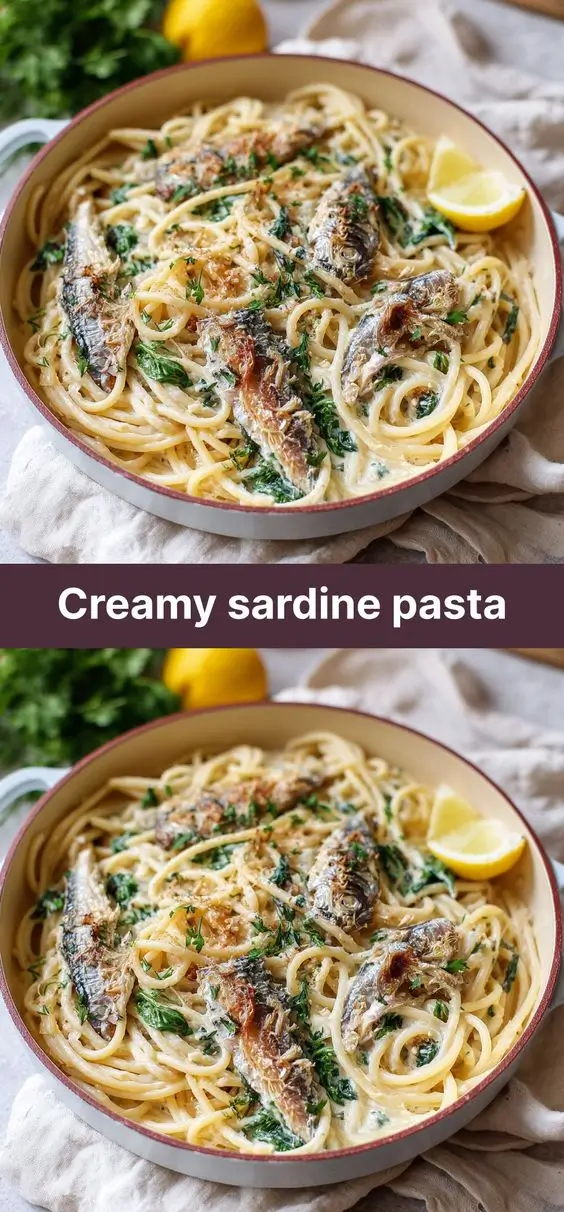
Creamy Sardine Pasta: A Rich, Savory Delight from the Sea
Indulge in the bold and comforting flavors of Creamy Sardine Pasta, a dish that marries the briny richness of sardines with the velvety smoothness of a luxurious cream sauce. Often overlooked, sardines bring not only a deep umami flavor but also an impressive nutritional profile, making this pasta both satisfying and wholesome. Whether you’re a seafood enthusiast or looking to expand your culinary horizons, this recipe transforms humble canned sardines into a gourmet experience worthy of a cozy dinner or elegant weekend meal.
The History: From Coastal Kitchens to Contemporary Tables
Sardines have been a staple in coastal communities for centuries, especially in Mediterranean countries like Italy, Portugal, and Spain. Named after the Italian island of Sardinia—where they were once caught in abundance—sardines were traditionally preserved in olive oil or salt, allowing fishermen and families to enjoy their rich taste year-round. These small, oily fish were valued not just for their flavor but also for their affordability and long shelf life.
Pasta dishes featuring tinned fish emerged as frugal yet flavorful meals during times when fresh seafood wasn’t readily available. In Southern Italy, recipes using anchovies, sardines, and other preserved fish became household staples. Over time, these rustic preparations evolved. The addition of cream to sardine-based sauces is a more modern twist, influenced by French and Northern Italian culinary techniques that emphasize creamy textures and balanced acidity.
Today, Creamy Sardine Pasta stands at the intersection of tradition and innovation—a tribute to resourceful cooking and a celebration of sustainable, nutrient-dense ingredients. As food trends shift toward eco-conscious eating, sardines are gaining renewed appreciation, and this dish showcases how simple pantry items can be elevated into something truly special.
Ingredients Breakdown: What Makes This Dish Shine
The magic of Creamy Sardine Pasta lies in its harmonious blend of ingredients, each contributing texture, flavor, and nutrition. Here’s a detailed look at what goes into the dish:
- Canned Sardines (in olive oil): The star of the show. Choose high-quality sardines packed in extra virgin olive oil for the best flavor. They provide a rich, savory depth and melt into the sauce beautifully.
- Pasta (preferably short shapes like penne, fusilli, or rigatoni): These shapes hold the creamy sauce well, ensuring every bite is flavorful. Whole wheat or legume-based pastas can be used for added fiber and protein.
- Heavy cream or half-and-half: Adds luxurious creaminess. For a lighter version, substitute with full-fat coconut milk or cashew cream.
- Garlic: Freshly minced garlic adds aromatic warmth and complements the sardines without overpowering them.
- Shallot or onion: Provides a subtle sweetness and base layer of flavor.
- Dry white wine (optional): Enhances complexity and cuts through the richness. Use a crisp variety like Pinot Grigio or Sauvignon Blanc.
- Fresh lemon juice and zest: Brightens the dish and balances the oiliness of the sardines.
- Butter or olive oil: Used for sautéing; butter adds richness, while olive oil keeps it dairy-free.
- Grated Parmesan or Pecorino cheese: Adds salty, nutty notes. Omit for a dairy-free version or use nutritional yeast for a cheesy flavor.
- Fresh herbs (parsley, dill, or chives): For garnish and freshness. Dill pairs especially well with sardines.
- Red pepper flakes (optional): A pinch adds gentle heat and dimension.
- Salt and freshly ground black pepper: To taste. Be cautious with salt since sardines are naturally salty.
Step-by-Step Recipe: How to Make Creamy Sardine Pasta
- Boil the pasta: Bring a large pot of salted water to a boil. Add 12 oz (340g) of pasta and cook according to package instructions until al dente. Reserve ½ cup of pasta water before draining.
- Prepare the aromatics: While the pasta cooks, heat 2 tablespoons of olive oil or butter in a large skillet over medium heat. Add 1 finely chopped shallot and sauté for 3–4 minutes until soft and translucent. Add 2–3 cloves of minced garlic and red pepper flakes (to taste), cooking for another 30 seconds until fragrant.
- Deglaze with wine (optional): Pour in ¼ cup dry white wine, scraping up any browned bits. Simmer for 1–2 minutes until reduced by half.
- Add the sardines: Gently add 2 cans (about 7 oz each) of sardines in olive oil, breaking them apart with a fork. Let them simmer for 2–3 minutes to infuse the oil and release their oils into the sauce.
- Incorporate the cream: Stir in ¾ cup heavy cream or half-and-half. Bring to a gentle simmer and let it cook for 3–4 minutes, allowing the sauce to thicken slightly. Avoid boiling vigorously to prevent curdling.
- Add lemon and cheese: Stir in 1 tablespoon fresh lemon juice, a teaspoon of lemon zest, and ¼ cup grated Parmesan cheese. Mix until smooth and well combined.
- Combine with pasta: Add the drained pasta to the skillet and toss thoroughly to coat. If the sauce is too thick, gradually add reserved pasta water, one tablespoon at a time, until desired consistency is reached.
- Season and finish: Taste and adjust seasoning with salt and black pepper. Fold in most of the chopped fresh parsley or dill, reserving some for garnish.
- Serve immediately: Divide among warm bowls. Top with extra Parmesan, a drizzle of sardine oil from the can, a sprinkle of fresh herbs, and a final twist of lemon zest.
Tips for the Perfect Creamy Sardine Pasta
- Use high-quality sardines: Opt for wild-caught, sustainably sourced sardines in olive oil. Brands like King Oscar, Wild Planet, or Bela offer excellent texture and flavor.
- Don’t skip the pasta water: The starchy liquid helps emulsify the sauce, creating a silky coating that clings to the pasta.
- Control the heat: Keep the cream mixture at a gentle simmer. High heat can cause separation, especially if using lower-fat dairy.
- Bone awareness: Some canned sardines contain soft, edible bones (rich in calcium). If serving to sensitive eaters, remove larger bones before adding to the sauce.
- Balancing flavors: Taste as you go. If the dish feels too rich, a splash more lemon juice will brighten it. Too salty? Add a bit more cream or a pinch of sugar.
- Make it ahead? While best served fresh, you can prep components in advance. Cook the sauce base (without cream) and reheat gently, adding cream and pasta last minute.
- Reheating: Reheat on the stove over low heat with a splash of milk or broth to revive the creaminess.
Variations and Customizations
Creamy Sardine Pasta is wonderfully adaptable. Try these creative twists to suit your palate or dietary needs:
- Tomato Cream Version: Stir in ½ cup of tomato passata or crushed tomatoes before adding cream for a rosé-style sauce with tangy depth.
- Vegetable Boost: Add sautéed spinach, roasted cherry tomatoes, artichoke hearts, or sun-dried tomatoes for color, texture, and nutrients.
- Seafood Medley: Combine sardines with smoked trout, capers, or a few anchovy fillets for layered umami.
- Dairy-Free Creamy Sauce: Use full-fat coconut milk or blended silken tofu for a plant-based alternative. Add a spoon of tahini for richness.
- Gluten-Free Option: Use gluten-free pasta made from rice, corn, or quinoa. Ensure it’s cooked al dente to avoid mushiness.
- Herb Variations: Swap parsley for basil in summer, or try tarragon for a slightly anise-like note that complements sardines.
- Spicy Kick: Add harissa paste, Calabrian chili spread, or extra red pepper flakes for a bolder profile.
- Citrus Twist: Replace lemon with orange or yuzu for a sweeter, floral contrast.
- Nutty Crunch: Top with toasted pine nuts, breadcrumbs, or crushed almonds for texture contrast.
- Breakfast Pasta: Serve with a poached egg on top for a decadent brunch option.
Health Considerations and Nutritional Value
Creamy Sardine Pasta isn’t just delicious—it’s surprisingly nutritious when prepared thoughtfully. Here’s why it deserves a spot in a balanced diet:
- Omega-3 Fatty Acids: Sardines are one of the richest sources of heart-healthy EPA and DHA omega-3s, which support brain function, reduce inflammation, and promote cardiovascular health.
- High-Quality Protein: With about 20–25g of protein per can, sardines help maintain muscle mass and keep you full longer.
- Calcium and Vitamin D: Edible bones in sardines provide bioavailable calcium, while vitamin D aids absorption—great for bone health.
- Low in Mercury: As small, short-lived fish, sardines accumulate far less mercury than tuna or swordfish, making them safe for regular consumption, including during pregnancy.
- Sustainable Choice: Sardines are abundant, fast-reproducing, and typically caught with low-impact methods, making them an eco-friendly seafood option.
- Vitamins B12 and D: Essential for energy metabolism, nerve function, and immune support.
- Healthy Fats: Olive oil-packed sardines deliver monounsaturated fats, linked to improved cholesterol levels.
Nutritional Estimate (per serving, serves 4):
| Nutrient | Amount |
|---|---|
| Calories | ~520 kcal |
| Total Fat | 28g |
| Saturated Fat | 9g |
| Cholesterol | 85mg |
| Carbohydrates | 42g |
| Dietary Fiber | 3g |
| Sugars | 3g |
| Protein | 26g |
| Sodium | 680mg (varies by brand) |
| Omega-3s | ~2,000mg |
Note: Values may vary based on specific ingredients used. For lower sodium, choose low-salt sardines and reduce added salt. For a lighter version, use half-and-half instead of heavy cream and whole grain pasta.
Ingredients
- 12 oz (340g) short pasta (penne, fusilli, or rigatoni)
- 2 cans (7 oz each) sardines in olive oil, drained (reserve oil)
- 2 tbsp olive oil or unsalted butter
- 1 medium shallot, finely chopped (or ½ small onion)
- 2–3 garlic cloves, minced
- ¼ cup dry white wine (optional)
- ¾ cup heavy cream or half-and-half
- 1 tbsp fresh lemon juice
- 1 tsp lemon zest
- ¼ cup grated Parmesan or Pecorino cheese, plus more for serving
- ¼ tsp red pepper flakes (optional)
- Salt and freshly ground black pepper, to taste
- ½ cup chopped fresh parsley or dill, plus more for garnish
- Reserved pasta water, as needed
Directions
- Bring a large pot of salted water to a boil. Add pasta and cook until al dente. Reserve ½ cup of pasta water, then drain and set aside.
- In a large skillet, heat olive oil or butter over medium heat. Add chopped shallot and sauté for 3–4 minutes until soft.
- Add minced garlic and red pepper flakes. Cook for 30 seconds until fragrant.
- If using, pour in white wine and simmer for 1–2 minutes until reduced by half.
- Add sardines, breaking them apart with a fork. Simmer for 2–3 minutes to integrate flavors.
- Stir in heavy cream, bringing to a gentle simmer. Cook for 3–4 minutes, stirring occasionally, until sauce begins to thicken.
- Add lemon juice, lemon zest, and Parmesan. Stir until cheese melts and sauce is smooth.
- Add cooked pasta to the skillet. Toss thoroughly to coat. Add reserved pasta water as needed to loosen the sauce.
- Season with salt and pepper to taste. Fold in most of the fresh herbs.
- Divide into bowls. Garnish with extra herbs, Parmesan, a drizzle of sardine oil, and additional lemon zest.
- Serve immediately, ideally with crusty bread and a green salad.
FAQ
Can I use fresh sardines instead of canned?
Yes, but they require more prep. Clean and debone fresh sardines, then pan-sear or grill before flaking into the sauce. Note: fresh sardines are more delicate and less oily, so you may need to boost flavor with anchovy paste or extra olive oil.
Are canned sardines healthy?
Absolutely. They’re low in contaminants, high in protein, omega-3s, calcium, and vitamins. Just watch sodium levels and opt for versions in water or olive oil without added preservatives.
Can I make this dairy-free?
Yes! Substitute cream with full-fat coconut milk and omit cheese or use nutritional yeast. The result is still rich and flavorful.
How long does leftovers last?
Store in an airtight container in the refrigerator for up to 3 days. Reheat gently on the stove with a splash of milk or broth to restore creaminess.
Why are my sardines too fishy?
This may be due to low-quality sardines or overcooking. Use reputable brands and avoid boiling the sauce. Balance with lemon, herbs, and wine to mellow the flavor.
Can I freeze Creamy Sardine Pasta?
Not recommended. Dairy-based sauces tend to separate when frozen and thawed. Freeze the sauce base (without cream) separately if needed.
Is this recipe kid-friendly?
With proper introduction, yes. Start with mild sardines, add extra cheese and herbs, and serve with fun-shaped pasta. Many children enjoy the creamy texture once they get past the “fish” stigma.
Summary
Creamy Sardine Pasta is a luxurious, nutrient-packed dish that transforms simple canned fish into a restaurant-worthy meal with minimal effort. Rich in omega-3s, protein, and flavor, it’s a sustainable and satisfying choice for seafood lovers and curious eaters alike.