Introduction
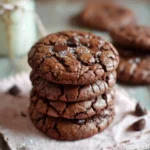
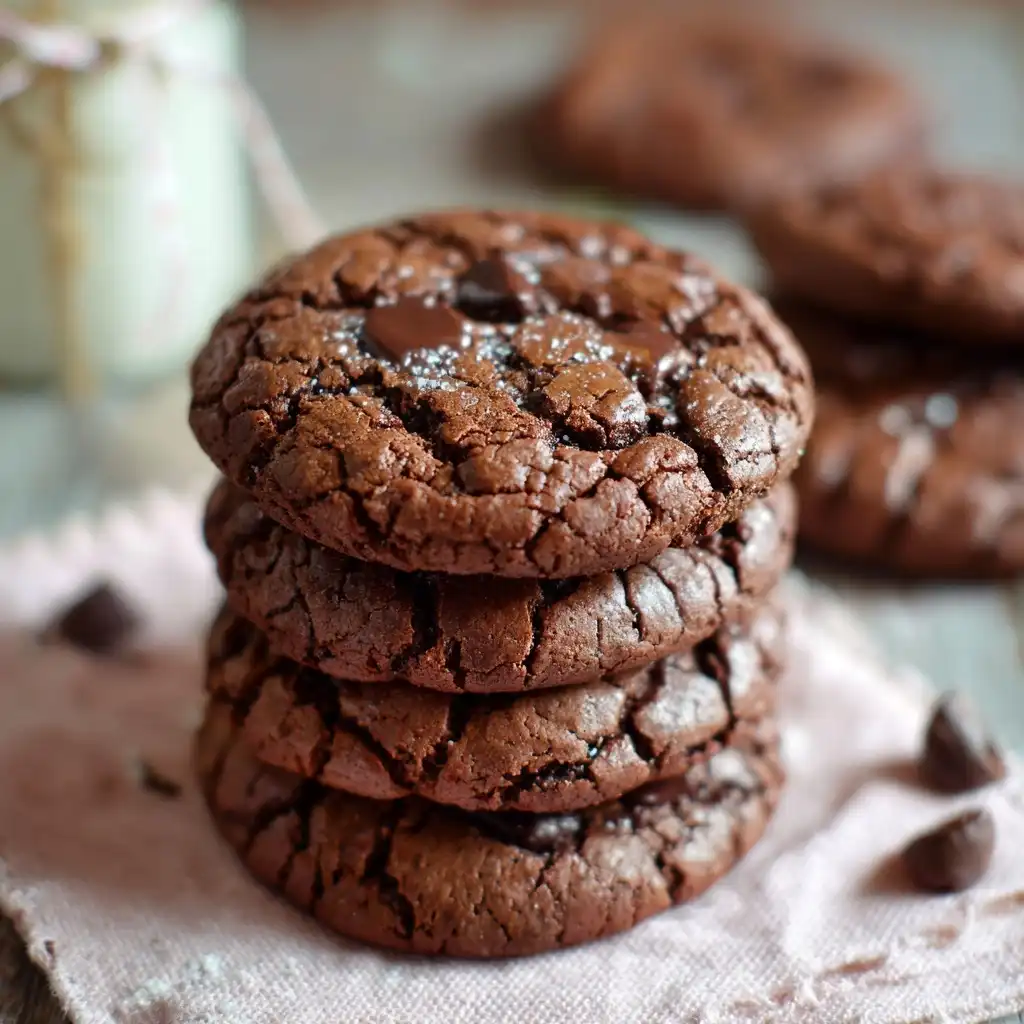
Double Chocolate Cookies are the ultimate indulgence for chocolate lovers — rich, fudgy, deeply cocoa-infused, and studded with generous pockets of melty chocolate. Unlike standard chocolate chip cookies, these treats feature *two distinct forms* of chocolate: unsweetened or Dutch-process cocoa powder in the dough *and* high-quality chocolate chips or chunks (often a mix of semisweet and dark). The result is an intensely chocolatey experience with layers of complexity — from earthy bitterness to velvety sweetness — balanced by buttery richness and just the right amount of chew and crisp edge. Whether served warm from the oven with a glass of cold milk, gifted in a festive tin, or enjoyed as a midday pick-me-up, Double Chocolate Cookies embody comfort, nostalgia, and decadent craftsmanship in every bite.
The History
The origins of the double chocolate cookie trace back to the broader evolution of American chocolate baking in the early-to-mid 20th century. While chocolate chip cookies were famously invented by Ruth Wakefield in 1938 at the Toll House Inn (using Nestlé’s newly minted semi-sweet chocolate bars), the “double chocolate” variation emerged organically in home kitchens and commercial bakeries during the 1950s and 60s, as cocoa powder became more widely available and affordable in grocery stores. Bakers began experimenting by adding cocoa to classic drop cookie batters — transforming vanilla-based doughs into deeply chocolate canvases. By the 1970s, cookbooks like The Joy of Cooking and Betty Crocker’s Picture Cook Book included “Chocolate Cocoa Cookies” or “Fudgy Chocolate Cookies,” often noting the dual-chocolate technique as a “richer alternative.” The term “Double Chocolate Cookie” gained mainstream traction in the 1980s and 90s with the rise of specialty bakeries (like Levain Bakery in New York, which popularized oversized, gooey-centered chocolate cookies) and food magazines emphasizing ingredient layering and flavor depth. Today, it stands as a beloved staple in bakeries, cafes, and home pantries worldwide — a testament to how simple ingredient doubling can elevate a classic into something extraordinary.
Ingredients Breakdown
Every ingredient in Double Chocolate Cookies plays a precise functional and flavor role — not merely additive, but synergistic. Here’s a comprehensive breakdown:
- All-Purpose Flour: Provides essential gluten structure. Too little yields spread; too much creates toughness. A blend with bread flour (5–10%) can enhance chew without compromising tenderness.
- Unsweetened Cocoa Powder (Dutch-Process or Natural): The first “chocolate.” Dutch-process offers smoother, milder, reddish-brown notes with higher pH — ideal for balanced leavening and deep color. Natural cocoa is more acidic and fruit-forward; if used, baking soda must be increased slightly to neutralize acidity and activate properly.
- Granulated Sugar: Adds sweetness, aids in spreading, and contributes to crisp edges via caramelization during baking.
- Packed Brown Sugar (light or dark): Introduces molasses — adding moisture, chewiness, acidity (to react with baking soda), and nuanced caramel/toffee undertones. Dark brown sugar intensifies flavor and softness.
- Unsalted Butter: The fat backbone. Must be softened to room temperature (65–68°F) for optimal creaming. European-style butter (higher fat, lower water) yields richer, more tender cookies. Melted butter creates a denser, fudgier texture — a popular modern twist.
- Large Eggs (room temperature): Bind ingredients, add moisture and structure, and emulsify the batter. Egg yolks contribute richness and tenderness; whites add slight lift. An extra yolk is a common pro tip for ultra-fudgy results.
- Vanilla Extract (pure, not imitation): Enhances chocolate’s aromatic profile — rounding out bitterness and amplifying warmth. Madagascar bourbon vanilla is especially complementary.
- Baking Soda: Primary leavener. Reacts with acidic components (brown sugar, natural cocoa, or buttermilk if used) to create lift and spread. Critical for that signature crinkled top.
- Salt (fine sea salt or kosher): Not just for seasoning — it heightens sweetness, balances bitterness, and strengthens gluten slightly. Flaky sea salt sprinkled on top pre-bake adds textural contrast and flavor bursts.
- Chocolate Chips or Chunks (the second chocolate): Use a combination for complexity: 60–70% dark chocolate for depth, semisweet for balance, and a handful of milk chocolate for creamy sweetness. High-cocoa single-origin bars chopped by hand yield irregular, melty pools. Mini chips distribute evenly; jumbo chunks create dramatic pockets.
- Optional Enhancers: Espresso powder (½ tsp) intensifies chocolate without tasting like coffee; instant coffee granules dissolve seamlessly. A pinch of cinnamon or smoked sea salt adds intrigue. Toasted walnuts or pecans add crunch and nutty contrast.
Step-by-Step Recipe
- Prep & Weigh Ingredients: Line two large baking sheets with parchment paper or silicone mats. Weigh all dry ingredients using a digital kitchen scale for precision (volume measurements vary up to 20%). Let butter and eggs sit at room temperature for 45–60 minutes.
- Whisk Dry Ingredients: In a medium bowl, sift together flour, cocoa powder, baking soda, and salt. Whisk thoroughly to aerate and fully combine — eliminating lumps ensures even distribution and prevents bitter cocoa pockets.
- Cream Butter & Sugars: In a stand mixer fitted with the paddle attachment (or with a hand mixer), beat softened butter, granulated sugar, and brown sugar on medium-high speed for 3–4 minutes until light, fluffy, and pale in color. Scrape down bowl halfway. This step incorporates air critical for texture and ensures full sugar dissolution.
- Add Eggs & Vanilla: Add eggs one at a time, beating well after each addition (about 30 seconds per egg) until fully incorporated and glossy. Add vanilla and beat for another 15 seconds. Batter should look smooth and slightly ribbony.
- Gradually Incorporate Dry Mix: Reduce mixer speed to low. Add dry ingredients in three equal additions, mixing only until *just combined* after each — about 10–15 seconds. Overmixing develops gluten, leading to tough, cakey cookies. A few dry streaks are okay.
- Fold in Chocolate: Using a flexible silicone spatula, gently fold in chocolate chips/chunks until evenly distributed. Avoid overworking — aim for visible, unmelted pieces throughout.
- Chill the Dough (Non-Negotiable Step): Cover bowl tightly with plastic wrap and refrigerate for *at least 2 hours, ideally 24–72 hours*. Chilling solidifies butter, slows spread, concentrates flavors, hydrates flour/cocoa, and improves browning. For maximum depth, chill overnight — the dough will deepen in color and aroma.
- Preheat & Portion: Preheat oven to 375°F (190°C) with racks in upper and lower thirds. Scoop chilled dough using a 2-tablespoon cookie scoop (≈40g per cookie). Roll into tight balls, then flatten slightly to ¾” thick discs. Place 3″ apart on prepared sheets.
- Bake Strategically: Bake for 10–12 minutes — rotating pans top-to-bottom and front-to-back at the 6-minute mark. Cookies are done when edges are set and lightly golden, centers look soft and slightly puffed, and tops show fine cracks. They will appear underbaked — this is intentional. Remove from oven.
- Cool Completely on Sheet: Let cookies rest on baking sheets for 8–10 minutes to finish setting. Their structure firms as residual heat continues cooking the centers. Then transfer carefully to wire racks to cool fully (15–20 minutes). For warm, gooey enjoyment, serve after 5 minutes of cooling — centers will be molten.
Tips
- Butter Temperature Matters: Too warm = flat, greasy cookies; too cold = dense, uncreamed batter. Test by pressing a finger — it should make a slight indentation without sinking or sliding.
- Don’t Skip the Chill: Skipping chilling leads to excessive spread, loss of chew, and muted flavor. If short on time, freeze dough balls for 30 minutes — but refrigeration yields superior texture.
- Use a Scale, Not Cups: Cocoa powder compacts easily — 1 cup can weigh anywhere from 75g to 110g. Consistent weight ensures reliable results batch after batch.
- Rotate Pans Mid-Bake: Home ovens have hot spots. Rotating ensures even browning and prevents burnt edges or raw centers.
- Underbake Slightly: Pull cookies out when centers still look soft. Carryover heat will finish them perfectly. Overbaking dries them out instantly.
- Let Dough Warm Slightly Before Baking: If dough is very cold straight from the fridge, let scooped balls sit at room temp for 5–8 minutes before baking — promotes even expansion.
- Make Ahead & Freeze: Portion dough balls onto a tray, freeze solid (1 hour), then transfer to a freezer bag. Bake straight from frozen — add 1–2 minutes to bake time. Dough keeps up to 3 months.
- Revive Stale Cookies: Place in a sealed container with a slice of plain white bread overnight — moisture migrates, restoring softness.
- Uniform Sizing = Uniform Baking: Use a spring-loaded scoop for consistency. Irregular sizes lead to uneven doneness.
- Toast Your Cocoa (Optional Pro Move): Spread cocoa powder on a parchment-lined sheet and bake at 325°F for 8–10 minutes, stirring twice. Deepens flavor with roasted, almost nutty notes.
Variations and Customizations
Double Chocolate Cookies are a versatile canvas — adaptable for dietary needs, seasonal flair, global inspiration, and creative expression:
- Gluten-Free: Substitute 1:1 gluten-free all-purpose flour blend (with xanthan gum) + 1 tbsp ground flaxseed for binding. Add 1 tsp psyllium husk for chew. Verify cocoa and chocolate are GF-certified.
- Vegan: Replace butter with vegan butter (Miyoko’s or Earth Balance); eggs with flax eggs (1 tbsp ground flax + 2.5 tbsp water per egg, rested 10 min); use dairy-free chocolate. Add 1 tsp apple cider vinegar for lift.
- High-Protein: Add ¼ cup unflavored whey or collagen peptides (blended into dry ingredients). Swap 2 tbsp flour for cocoa to compensate. Use dark chocolate ≥70% for lower sugar.
- Sea Salt & Caramel: Drizzle cooled cookies with homemade salted caramel sauce and finish with flaky sea salt. Add 2 tbsp toasted pecans.
- Peppermint Crunch: Fold in ¼ cup crushed candy canes or peppermint candies + 1 tsp peppermint extract (reduce vanilla). Top with crushed candy pre-bake.
- Mexican-Inspired: Add 1 tsp ground cinnamon, ¼ tsp chipotle powder, and 1 tbsp finely grated orange zest. Use Mexican chocolate (Ibarra) chunks.
- Espresso Stout: Replace 2 tbsp liquid with cold stout beer or strong espresso. Add 1 tsp instant espresso powder. Garnish with cocoa-dusted espresso beans.
- White Chocolate Raspberry: Swap half the dark chocolate for high-quality white chocolate and fold in ⅓ cup freeze-dried raspberries (pulverized slightly to prevent bleeding).
- Stuffed Surprise: Flatten dough ball, place ½ tsp Nutella or dulce de leche in center, seal, and reshape. Yields molten centers.
- Mini Cookies: Scoop 1-teaspoon portions. Bake at 375°F for 7–9 minutes. Perfect for parties, lunchboxes, or portion control.
Health Considerations and Nutritional Value
While Double Chocolate Cookies are inherently indulgent, mindful preparation allows for thoughtful nutritional optimization without sacrificing satisfaction. A standard 3-inch cookie (approx. 40g) made with traditional ingredients contains roughly 160–190 calories, 8–10g fat (4–5g saturated), 20–24g carbohydrates (12–15g sugars), 2g protein, and <1g fiber. Key health considerations include:
- Sugar Content: Brown and granulated sugars contribute significantly to glycemic load. Reducing total sugar by 15–20% is often imperceptible due to cocoa’s natural bitterness. Swapping 1–2 tbsp granulated for coconut sugar adds trace minerals but similar impact.
- Fat Profile: Butter provides saturated fat, but also butyrate (anti-inflammatory) and fat-soluble vitamins (A, D, E, K2). Using grass-fed butter enhances omega-3s and CLA. Vegan versions may use coconut oil (high in sat fats) or avocado oil (monounsaturated-rich).
- Cocoa Benefits: Rich in flavanols — antioxidants linked to improved endothelial function, reduced blood pressure, and enhanced cognitive blood flow. Dutch-process retains ~60% of flavanols; natural cocoa retains ~80%, though its acidity may affect digestion for some.
- Fiber & Micronutrients: Standard versions are low in fiber and micronutrients. Boost with 1 tbsp blackstrap molasses (iron, calcium, magnesium), 2 tbsp oat bran (soluble fiber), or 1 tsp mesquite powder (prebiotic, low-GI).
- Allergen Awareness: Contains wheat (gluten), dairy, eggs, and soy (in many chocolates). Always verify labels for tree nuts if cross-contact is a concern.
- Mindful Enjoyment: Pairing with a cup of green tea (catechins) or berries (anthocyanins) enhances antioxidant synergy. Serving one cookie with a small handful of almonds increases satiety and slows glucose absorption.
- Portion Mindfulness: Baking larger cookies (50g+) encourages slower eating and greater satisfaction per bite — reducing overall intake compared to multiple small cookies.
For those managing diabetes, hypertension, or cholesterol, consult a registered dietitian to tailor recipes using erythritol/stevia blends, resistant starch (green banana flour), or plant sterol-enriched chocolate — always testing for texture and taste impact.
Ingredients
- 2 ¼ cups (280g) all-purpose flour
- ¾ cup (75g) unsweetened Dutch-process cocoa powder (sifted)
- 1 tsp baking soda
- 1 tsp fine sea salt
- 1 cup (227g) unsalted butter, softened to 65–68°F
- 1 cup (200g) packed light brown sugar
- ½ cup (100g) granulated sugar
- 2 large eggs + 1 extra yolk (all at room temperature)
- 2 tsp pure vanilla extract
- 1 ½ cups (270g) high-quality semi-sweet chocolate chips or chopped chocolate (60% cacao)
- ½ cup (90g) high-quality dark chocolate chunks (70% cacao)
- Flaky sea salt, for finishing (optional)
Directions
- In a medium bowl, whisk together flour, cocoa powder, baking soda, and salt until fully combined and lump-free. Set aside.
- In the bowl of a stand mixer fitted with the paddle attachment, beat softened butter, brown sugar, and granulated sugar on medium-high speed for 3–4 minutes, until light, fluffy, and noticeably paler in color. Scrape down sides and bottom of bowl halfway through.
- Add eggs one at a time, beating for 30 seconds after each addition until fully incorporated and glossy. Add egg yolk and beat for another 30 seconds. Add vanilla and mix for 15 seconds.
- Reduce mixer speed to low. Gradually add dry ingredients in three parts, mixing only until no dry streaks remain — approximately 10 seconds per addition. Do not overmix.
- Using a silicone spatula, fold in semi-sweet chips and dark chocolate chunks until evenly distributed.
- Cover bowl tightly with plastic wrap and refrigerate dough for a minimum of 2 hours, or up to 72 hours for optimal flavor and texture.
- When ready to bake, preheat oven to 375°F (190°C) with racks positioned in upper and lower thirds. Line two large baking sheets with parchment paper or silicone baking mats.
- Scoop chilled dough using a 2-tablespoon cookie scoop (≈40g). Roll into smooth balls, then gently flatten each to ¾” thickness. Place 3 inches apart on prepared sheets.
- Bake for 10–12 minutes, rotating pans top-to-bottom and front-to-back at the 6-minute mark, until edges are set and lightly golden and centers appear soft and puffed with fine surface cracks.
- Remove from oven and let cookies cool on baking sheets for 8–10 minutes to set. Transfer carefully to wire racks to cool completely before storing. Serve warm for maximum gooeyness.
FAQ
- Can I use natural cocoa instead of Dutch-process?
- Yes — but adjust leavening: increase baking soda to 1¼ tsp and ensure brown sugar is present for acidity. Expect a slightly brighter, sharper chocolate note and lighter color.
- Why did my cookies spread too much?
- Most common causes: butter too warm, insufficient chilling, expired baking soda, or inaccurate flour measurement (too little). Also check oven temperature with an oven thermometer — many run hot or cold.
- Can I make these nut-free?
- Absolutely — just omit any nut-based add-ins and verify your chocolate is processed in a nut-free facility if allergies are severe.
- How long do they stay fresh?
- Stored in an airtight container at room temperature: 5 days. Refrigerated: up to 10 days (may firm up — refresh in 10-sec microwave bursts). Frozen (baked): 3 months. Frozen (dough): 3 months.
- Can I substitute oil for butter?
- Not recommended — oil lacks water content and emulsifying properties needed for proper creaming and texture. Results will be greasy and cakey. Vegan butter is the best alternative.
- My cookies turned out cakey — what went wrong?
- Overmixing the dough after adding flour, using too much baking soda, adding an extra egg white, or substituting cake flour (too low protein) are likely culprits. Stick to all-purpose and mix minimally.
- Can I add espresso powder?
- Yes — 1 tsp instant espresso powder added with dry ingredients enhances chocolate flavor without detectable coffee taste. Start with ½ tsp if sensitive.
- Are these suitable for mailing?
- Yes — their sturdy, slightly dense texture travels well. Pack between layers of parchment in a rigid tin or box with bubble wrap. Include a slice of apple or bread to retain moisture en route.
- Can I use honey or maple syrup instead of sugar?
- Not directly — liquid sweeteners alter moisture balance and structure dramatically. For liquid-sweetener versions, seek tested vegan or paleo-specific double chocolate cookie recipes.
- Why do some recipes call for melted butter while others require softened?
- Melted butter yields denser, fudgier, chewier cookies with less spread and pronounced crinkles. Softened butter creates airier, cakier, more traditionally textured cookies with better lift. Both are valid — choose based on desired outcome.
Summary
Double Chocolate Cookies represent the pinnacle of chocolate-centric baking — where cocoa powder and premium chocolate unite in a harmonious, deeply flavorful, texturally complex treat that balances fudgy tenderness with crisp edges and rich, nuanced bitterness. With meticulous attention to ingredient quality, temperature control, chilling discipline, and baking precision, they transform humble pantry staples into unforgettable moments of joy, comfort, and culinary artistry.
Whether you’re honoring tradition, adapting for modern dietary needs, or innovating with global spices and seasonal twists, the double chocolate cookie remains endlessly inspiring — a timeless canvas proving that sometimes, the most profound pleasures come not from simplicity alone, but from the deliberate, loving doubling of delight.