Eggplant Parmesan Stacks: A Modern Twist on a Classic Italian Favorite
The History of Eggplant Parmesan
Eggplant Parmesan, or melanzane alla parmigiana, is a beloved dish hailing from Southern Italy, particularly the regions of Campania and Sicily. Though its exact origins are debated, food historians believe it emerged in the 18th or 19th century when eggplants—introduced to Europe via Arab traders—became widely cultivated in the Mediterranean. The dish evolved as a vegetarian alternative to meat-based casseroles, using layers of fried eggplant, tomato sauce, mozzarella, and Parmesan cheese baked until golden and bubbling.
Originally, the term “Parmesan” referred not to the cheese but to parmigiana, meaning “in the style of Parma.” However, over time, the name became associated with Parmigiano-Reggiano cheese, which now plays a starring role. In traditional versions, eggplant slices were salted, fried in olive oil, layered with homemade tomato sauce, and baked slowly. Immigrants brought this recipe to America in the late 19th and early 20th centuries, where it evolved into a casserole-style comfort food staple in Italian-American households.
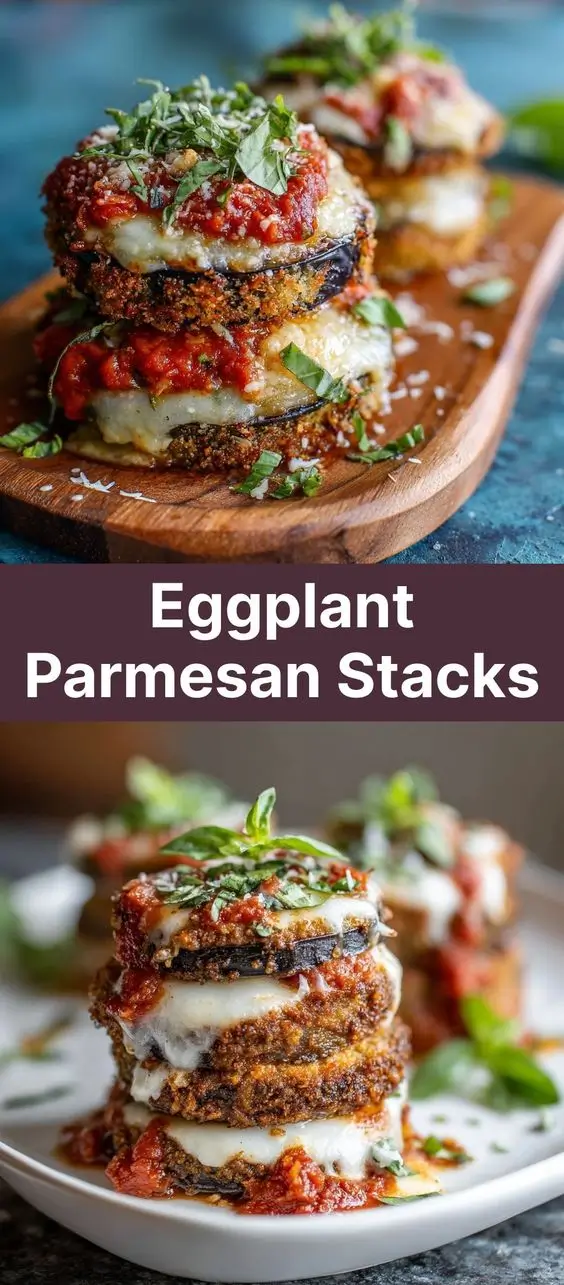
The modern “stacks” version—a deconstructed, individual portion format—emerged as a response to contemporary dining preferences: visually appealing, portion-controlled, and restaurant-worthy presentations. These elegant stacks retain all the rich flavors of the original while offering better texture control and reduced oil absorption. Today, Eggplant Parmesan Stacks are popular at dinner parties, date nights, and gourmet family dinners, combining rustic heritage with modern culinary flair.
Ingredients Breakdown: What Makes This Dish Shine
The beauty of Eggplant Parmesan Stacks lies in its simplicity and quality of ingredients. Each component contributes to a harmonious blend of textures and flavors—creamy, tangy, savory, and slightly sweet. Here’s a detailed look at each ingredient and why it matters:
- Eggplant (1 large): The star of the show. Choose firm, glossy eggplants without soft spots. Their spongy flesh absorbs flavors beautifully and transforms into a tender, almost meaty texture when cooked. Salting beforehand helps draw out bitterness and excess moisture.
- Salt (for sweating): Used to pre-treat eggplant slices, salt removes water content, preventing soggy stacks and improving fry efficiency.
- Unbleached all-purpose flour (½ cup): Lightly coats eggplant for a crisp exterior. For gluten-free options, use rice or chickpea flour.
- Eggs (2 large, beaten): Act as a binder, helping breadcrumbs adhere and adding richness.
- Panko breadcrumbs (1 cup): Provide a light, airy crunch. Regular breadcrumbs work too, but panko gives superior crispness.
- Grated Parmigiano-Reggiano (½ cup): Adds umami depth and salty complexity. Real Parmigiano-Reggiano is aged and granular—avoid pre-grated versions with anti-caking agents.
- Fresh mozzarella (8 oz, sliced or pearls): Melts luxuriously, offering creaminess and stretch. Opt for low-moisture mozzarella for less dripping, or fresh buffalo mozzarella for gourmet flair.
- Marinara sauce (3 cups, preferably homemade): The flavor backbone. Use a slow-simmered sauce with garlic, basil, oregano, and San Marzano tomatoes for authenticity.
- Fresh basil (½ cup, chopped): Adds aromatic freshness. Reserve some for garnish.
- Extra virgin olive oil (¼ cup + for brushing): Used for sautéing and brushing; choose a high-quality oil for best taste.
- Garlic (3 cloves, minced): Infuses the oil and marinara with pungent warmth.
- Dried oregano (1 tsp): Earthy, slightly bitter herb that complements tomatoes.
- Crushed red pepper flakes (¼ tsp, optional): Adds subtle heat for those who enjoy a kick.
- Italian seasoning (1 tsp): A blend of marjoram, thyme, rosemary, and sage for layered herbal notes.
- Black pepper (to taste): Enhances overall flavor profile.
Optional additions include ricotta cheese dollops between layers for extra creaminess, grilled zucchini or portobello mushrooms for variation, and a splash of balsamic glaze for finishing elegance.
Step-by-Step Recipe: Crafting Perfect Eggplant Parmesan Stacks
Follow these meticulous steps to create restaurant-quality Eggplant Parmesan Stacks at home. Precision ensures crisp eggplant, balanced flavors, and stable layering.
- Prepare the Eggplant: Slice the eggplant into ½-inch thick rounds. Lay them on a wire rack over a tray and sprinkle both sides generously with kosher salt. Let sit for 30–45 minutes to draw out moisture and bitterness. Rinse lightly and pat dry thoroughly with paper towels.
- Preheat Oven & Prepare Baking Sheet: Preheat oven to 375°F (190°C). Line a baking sheet with parchment paper and brush lightly with olive oil. Alternatively, use a wire rack on the baking sheet for even air circulation during baking.
- Set Up Breading Station: In three shallow bowls, place: (1) flour seasoned with black pepper, (2) beaten eggs with a splash of water, and (3) a mixture of panko breadcrumbs, half the Parmesan, dried oregano, Italian seasoning, and a pinch of salt.
- Bread the Eggplant: Dredge each eggplant slice in flour (shake off excess), dip in egg, then coat thoroughly with breadcrumb mixture. Press gently to ensure adhesion. Place on the prepared baking sheet.
- Bake or Pan-Fry: For healthier stacks, bake: Brush tops with olive oil and bake for 20–25 minutes, flipping halfway, until golden and crisp. For richer flavor, pan-fry in ¼ inch of olive oil over medium heat for 3–4 minutes per side until deep golden. Drain on paper towels.
- Warm the Marinara Sauce: In a saucepan, heat 2½ cups of marinara sauce over low heat. Add minced garlic, crushed red pepper flakes (if using), and half the fresh basil. Simmer for 10 minutes to meld flavors.
- Assemble the Stacks: On a serving plate, place one breaded eggplant round. Top with 2 tablespoons warm marinara, a slice of mozzarella, a sprinkle of Parmesan, and a few basil leaves. Repeat for 2–3 layers per stack, ending with cheese on top.
- Melt the Cheese: Arrange assembled stacks on a baking sheet. Broil on high for 2–3 minutes until cheese is melted, bubbly, and lightly browned. Watch closely to avoid burning.
- Garnish and Serve: Drizzle with remaining olive oil, a spoonful of fresh marinara, and a final sprinkle of basil and Parmesan. Serve immediately while hot and gooey.
Pro Tips for Success
- Sweating is Essential: Never skip salting the eggplant. It prevents greasiness and improves texture.
- Don’t Crowd the Pan: Whether baking or frying, space eggplant slices evenly to ensure crispness.
- Use Fresh Ingredients: Canned tomatoes and dried herbs won’t deliver the same brightness. Fresh basil and real Parmigiano-Reggiano make a noticeable difference.
- Avoid Soggy Stacks: Assemble just before broiling. If prepping ahead, cook eggplant and sauce separately, then assemble fresh.
- Stabilize Tall Stacks: For taller constructions (4+ layers), chill briefly before broiling or serve with a side sauce for dipping instead of layering all sauce inside.
- Make It Crispier: For extra crunch, toast panko in a dry skillet with a bit of olive oil before breading.
- Even Cooking: Rotate baking sheets halfway through cooking for uniform browning.
Variations and Customizations
Eggplant Parmesan Stacks are wonderfully adaptable. Try these creative twists to suit dietary needs or elevate your meal:
- Gluten-Free: Substitute flour with almond or rice flour and use gluten-free panko. Ensure all other ingredients are certified GF.
- Vegan Version: Replace eggs with a flax wash (1 tbsp ground flaxseed + 3 tbsp water per egg), use vegan mozzarella and Parmesan, and choose plant-based breadcrumbs.
- Keto-Friendly: Skip breading altogether—brush eggplant with oil, season, and roast. Layer with sauce and cheese, then broil. Use a low-carb marinara.
- Ricotta Layer: Add a dollop of seasoned ricotta (mixed with lemon zest, parsley, and black pepper) between layers for a creamy contrast.
- Meat Lover’s Twist: Add a thin layer of cooked Italian sausage or pepperoni between eggplant slices for a heartier version.
- Vegetable Medley Stacks: Alternate eggplant with roasted zucchini, yellow squash, or portobello mushroom caps.
- Individual Mason Jar Layers: For appetizers, layer ingredients in small jars and bake—great for parties!
- Spicy Arrabbiata Style: Use arrabbiata sauce instead of marinara for a fiery kick.
- Mediterranean Fusion: Add crumbled feta, kalamata olives, and oregano for a Greek-inspired take.
- Dessert Version: Yes, really! Use cinnamon-dusted eggplant, honey, mascarpone, and walnuts for a surprising sweet twist.
Health Considerations and Nutritional Value
Eggplant Parmesan Stacks can be both indulgent and nutritious, depending on preparation methods. Here’s a breakdown of health aspects:
Nutritional Highlights (per serving, approx. 3-layer stack):
- Calories: 380–450 (varies with frying vs. baking)
- Protein: 18g (from egg, cheese, eggplant)
- Fat: 22g (mostly unsaturated from olive oil; reduce by baking)
- Carbohydrates: 36g (primarily from breadcrumbs and tomatoes)
- Fiber: 8g (eggplant is rich in dietary fiber)
- Sodium: 650mg (can be reduced by using low-sodium cheese and sauce)
- Vitamins & Minerals: Rich in potassium, vitamin K, vitamin C, folate, and antioxidants like nasunin (found in eggplant skin).
Health Benefits:
- Heart Health: Eggplant contains antioxidants that may help reduce LDL cholesterol.
- Digestive Support: High fiber content promotes gut health and regularity.
- Low Glycemic Index: Eggplant has minimal impact on blood sugar, suitable for diabetics in moderation.
- Anti-Inflammatory Properties: Olive oil and tomatoes contain polyphenols and lycopene, known for reducing inflammation.
Considerations:
- Oil Absorption: Deep-frying increases fat content significantly. Baking reduces calories by up to 30%.
- Sodium Levels: Cheese and store-bought sauces can be high in salt. Make your own sauce and use reduced-sodium cheese if needed.
- Lactose Intolerance: Mozzarella and Parmesan contain lactose. Use lactose-free alternatives or nutritional yeast for topping.
- Balanced Meal: Serve with a side salad (arugula, cherry tomatoes, vinaigrette) and whole-grain bread for a complete, balanced dinner.
Ingredients
- 1 large eggplant, ends trimmed
- Kosher salt, for sweating
- ½ cup unbleached all-purpose flour
- 2 large eggs, beaten
- 1 cup panko breadcrumbs
- ½ cup grated Parmigiano-Reggiano, divided
- 8 oz fresh mozzarella, sliced or in small pearls
- 3 cups marinara sauce (homemade or high-quality jarred)
- ½ cup fresh basil, chopped
- ¼ cup extra virgin olive oil, plus more for brushing
- 3 cloves garlic, minced
- 1 tsp dried oregano
- ¼ tsp crushed red pepper flakes (optional)
- 1 tsp Italian seasoning
- Freshly ground black pepper, to taste
Directions
- Slice eggplant into ½-inch rounds. Sprinkle both sides with salt and let sit on a rack for 30–45 minutes. Rinse and pat dry.
- Preheat oven to 375°F (190°C). Line a baking sheet with parchment paper.
- Set up breading station: bowl 1 – flour + pepper; bowl 2 – beaten eggs; bowl 3 – panko + ¼ cup Parmesan + oregano + Italian seasoning.
- Dredge each eggplant slice in flour, dip in egg, then coat with breadcrumb mixture. Place on baking sheet.
- Brush tops with olive oil. Bake for 10 minutes, flip, brush again, and bake 10–15 more minutes until golden and crisp. (Or pan-fry in olive oil over medium heat, 3–4 minutes per side.)
- While eggplant cooks, heat marinara sauce in a saucepan. Add garlic, red pepper flakes, and ¼ cup basil. Simmer 10 minutes.
- Increase oven temperature to broil (high).
- Assemble stacks: Start with eggplant, then sauce, mozzarella, Parmesan, and basil. Repeat for 2–3 layers.
- Place stacks on baking sheet and broil 2–3 minutes until cheese is melted and bubbly.
- Garnish with remaining basil, a drizzle of olive oil, and extra Parmesan. Serve immediately.
FAQ
- Can I make Eggplant Parmesan Stacks ahead of time?
- Yes! You can prep breaded eggplant and sauce up to 2 days in advance. Store eggplant unbaked in the fridge on a tray. Assemble and broil just before serving for best texture.
- Can I freeze these stacks?
- It’s not recommended to freeze assembled stacks due to moisture from eggplant and cheese. However, you can freeze breaded, uncooked eggplant slices for up to 3 months. Bake directly from frozen (add 5–10 minutes).
- Why did my eggplant turn out soggy?
- Most likely, the eggplant wasn’t salted or dried properly, or too much sauce was used. Always sweat eggplant and drain fried/baked slices on paper towels.
- Can I air-fry the eggplant?
- Absolutely! Air-fry breaded slices at 375°F for 10–12 minutes, flipping halfway. Lightly spray with oil for crispness.
- Is Eggplant Parmesan healthy?
- When baked instead of fried and made with fresh ingredients, it can be part of a balanced diet. It’s rich in fiber, antioxidants, and healthy fats—just watch portion sizes and sodium.
- What wine pairs well with Eggplant Parmesan Stacks?
- A medium-bodied red like Chianti, Sangiovese, or Barbera complements the acidity of tomatoes and richness of cheese. For white lovers, try a crisp Pinot Grigio.
- Can I use other cheeses?
- Yes! Provolone, fontina, or pecorino Romano add different flavor profiles. Ricotta works well as a spreadable layer.
- Are eggplant seeds safe to eat?
- Yes. Fully ripe eggplants have soft, edible seeds. Only very overripe eggplants develop hard, bitter seeds—which should be scooped out.
Summary
Eggplant Parmesan Stacks offer a sophisticated, flavorful twist on the classic Italian casserole, combining crispy baked eggplant, rich marinara, and melty cheeses in elegant individual portions.
Whether you’re catering to vegetarians, hosting a dinner party, or simply craving comfort food with a gourmet touch, this dish delivers bold taste, beautiful presentation, and wholesome ingredients in every bite.