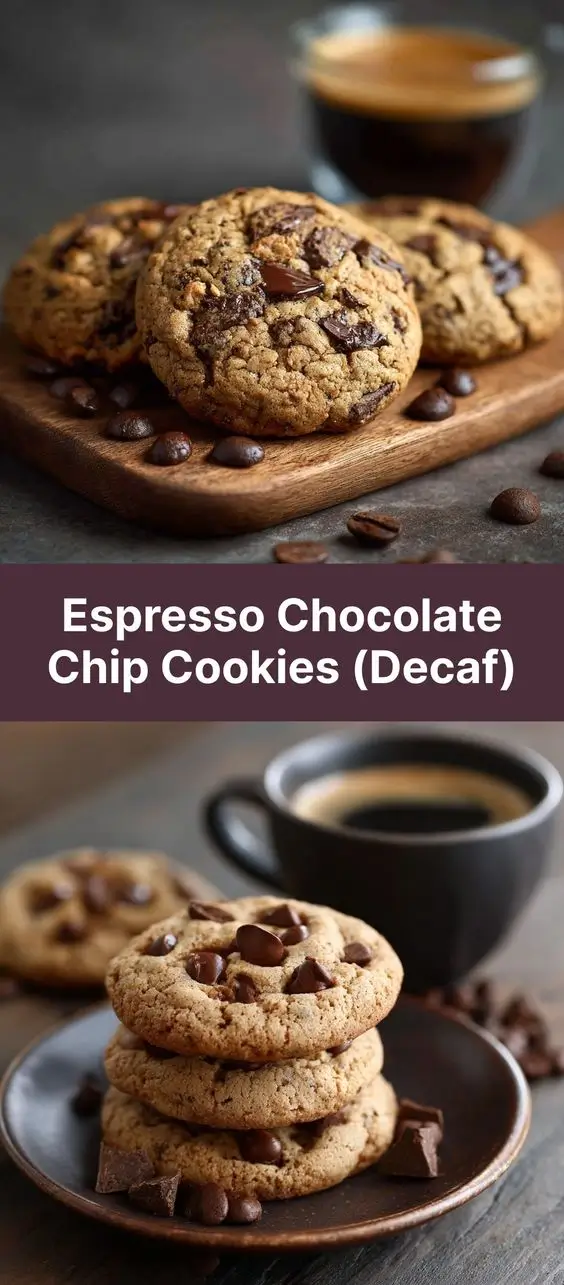
Espresso Chocolate Chip Cookies (Decaf)
The History
The beloved chocolate chip cookie has a storied past, dating back to the 1930s when Ruth Wakefield of the Toll House Inn in Whitman, Massachusetts, famously substituted broken pieces of a chocolate bar into her butter drop cookie dough, expecting them to melt and distribute evenly. Instead, they held their shape, creating what would become one of America’s most iconic treats—the chocolate chip cookie. Over the decades, bakers have experimented with countless variations, adding nuts, oats, spices, and even coffee to elevate the classic recipe.
The fusion of espresso and chocolate is a match made in culinary heaven, rooted in European café culture where strong coffee complements rich desserts. The idea of infusing cookies with coffee flavor emerged as home bakers sought deeper, more complex flavors beyond the traditional sweet dough. Decaffeinated espresso powder allows enthusiasts to enjoy the bold taste of coffee without the stimulant effects, making these Espresso Chocolate Chip Cookies perfect for evening treats, late-night cravings, or serving to children and caffeine-sensitive individuals. This decaf version maintains all the sophistication and depth of flavor while being inclusive and gentle on the nervous system.
Ingredients Breakdown
Every great cookie begins with high-quality ingredients. In this decaffeinated espresso twist on the classic chocolate chip cookie, each component plays a crucial role in texture, flavor, and overall indulgence:
- All-Purpose Flour: Provides structure. It contains gluten-forming proteins that give the cookies their chewy backbone. For best results, spoon and level the flour to avoid dry, dense cookies.
- Baking Soda: Acts as a leavening agent, helping the cookies rise slightly and develop a tender crumb. It reacts with acidic components (like brown sugar and melted butter) to create air bubbles.
- Salt: Enhances all other flavors and balances sweetness. A pinch can make the chocolate and espresso notes pop.
- Instant Decaf Espresso Powder: The star ingredient. Made from brewed decaffeinated coffee that’s been dried into a fine powder, it dissolves easily and delivers a deep, aromatic coffee flavor without caffeine. Do not substitute regular instant coffee unless you’re okay with caffeine.
- Unsalted Butter (melted): Adds richness and moisture. Melted butter yields a chewier, denser texture compared to creamed butter. Using unsalted allows control over salt content.
- Light Brown Sugar: Contributes moisture and chewiness due to its molasses content. It also adds a warm caramel-like flavor that pairs beautifully with coffee.
- Granulated Sugar: Adds sweetness and helps with surface cracking and slight crispness around the edges.
- Vanilla Extract: Deepens the flavor profile and rounds out the sweetness with its floral, creamy notes.
- Egg: Binds the ingredients and contributes to structure and softness. Room temperature eggs blend more smoothly into the batter.
- High-Quality Dark Chocolate Chips or Chopped Chocolate: Opt for at least 60% cacao for a sophisticated balance against the coffee. The bitterness of dark chocolate harmonizes with the roasted espresso notes.
- Optional Add-ins: Toasted chopped walnuts, pecans, or even white chocolate chips can add contrast and complexity.
Step-by-Step Recipe
- Preheat Oven & Prepare Baking Sheets: Preheat your oven to 350°F (175°C). Line two large baking sheets with parchment paper or silicone baking mats to prevent sticking and ensure even baking.
- Mix Dry Ingredients: In a medium bowl, whisk together 2 ¼ cups (280g) all-purpose flour, 1 teaspoon baking soda, ½ teaspoon salt, and 2 tablespoons of instant decaf espresso powder until fully combined and no streaks remain. Set aside.
- Cream Wet Ingredients: In a large mixing bowl, combine ¾ cup (170g) melted and slightly cooled unsalted butter, ¾ cup (150g) packed light brown sugar, ¼ cup (50g) granulated sugar, 2 teaspoons vanilla extract, and 1 large room-temperature egg. Use a hand mixer or sturdy spatula to mix until smooth, glossy, and well emulsified—about 2 minutes by hand or 1 minute with a mixer.
- Incorporate Dry Mix: Gradually add the dry ingredients to the wet mixture, stirring gently with a spatula just until no flour streaks remain. Overmixing can lead to tough cookies, so stop as soon as the dough comes together.
- Add Chocolate Chips: Fold in 1 ½ to 2 cups (270–360g) of dark chocolate chips or chopped chocolate until evenly distributed throughout the dough. At this stage, you may also fold in ½ cup toasted nuts if desired.
- Chill the Dough (Optional but Recommended): Cover the bowl with plastic wrap and refrigerate the dough for at least 30 minutes, or up to 48 hours. Chilling enhances flavor development, prevents excessive spreading, and leads to thicker, chewier cookies.
- Scoop and Shape: Once chilled, use a cookie scoop or tablespoon to portion dough into balls, about 1.5 tablespoons each. Roll them into tight spheres and place at least 2 inches apart on prepared baking sheets. For extra bakery-style cookies, press a few additional chocolate chips onto the top of each dough ball before baking.
- Bake: Bake one sheet at a time in the center rack of the oven for 10–12 minutes, rotating halfway through for even browning. Cookies are done when the edges are set and golden, but the centers still look soft and slightly underbaked.
- Cool: Let cookies cool on the baking sheet for 5 minutes to allow them to set. Then transfer them to a wire rack to cool completely, or enjoy warm with melty chocolate pockets.
Tips
- Use Quality Decaf Espresso Powder: Not all decaf powders are created equal. Look for brands like Swiss Water Process decaf or those labeled “aromatic” for maximum flavor without caffeine.
- Don’t Skip the Chill: While optional, chilling the dough improves texture dramatically. Cold dough spreads less, resulting in thicker, more cake-like centers with crisp edges.
- Underbake Slightly: These cookies continue to cook on the hot baking sheet after removal from the oven. Taking them out when they look slightly underdone ensures a soft, chewy interior.
- Uniform Scooping: Use a #40 cookie scoop (1.5 tbsp size) for consistent baking and professional appearance.
- Room Temperature Egg: Prevents the melted butter from re-solidifying and ensures a smooth, homogenous dough.
- Toast Your Nuts: If adding nuts, toast them first (350°F for 8–10 minutes) to bring out their natural oils and deepen their flavor.
- Rotate the Pan: Ovens often have hot spots. Rotating the baking sheet halfway through promotes even browning.
- Store Properly: Keep cooled cookies in an airtight container at room temperature for up to 5 days. To maintain softness, add a slice of bread—it will absorb excess dryness and keep cookies moist.
- Freeze for Later: Portion and freeze unbaked dough balls on a tray, then transfer to a freezer bag. Bake straight from frozen, adding 1–2 minutes to the bake time.
Variations and Customizations
This versatile recipe welcomes creativity. Here are some delicious twists to try:
- Blondies Version: Omit the espresso powder and use milk chocolate chips for a sweeter, buttery take.
- Double Espresso: Increase decaf espresso powder to 3 tablespoons for an intense coffee punch.
- White Chocolate & Macadamia: Swap dark chocolate for white chocolate chips and add ½ cup chopped macadamia nuts for a tropical flair.
- Mocha Crunch: Stir in ¼ cup crushed cocoa nibs or mini chocolate-covered espresso beans (decaf!) for added crunch and mocha intensity.
- Gluten-Free Option: Substitute the all-purpose flour with a 1:1 gluten-free baking blend containing xanthan gum. Results may vary slightly in texture but remain delicious.
- Vegan Adaptation: Replace butter with vegan butter, egg with a flax egg (1 tbsp ground flaxseed + 3 tbsp water), and use dairy-free chocolate chips.
- Sea Salt Finish: Sprinkle a pinch of flaky sea salt on top of each cookie right after baking for a gourmet touch.
- Orange Zest Infusion: Add 1 tablespoon of finely grated orange zest to the wet ingredients for a citrus-coffee-chocolate harmony.
- Cookie Sandwiches: Make smaller cookies and sandwich them with espresso-flavored buttercream or mascarpone whipped cream.
- Mini Cookies: Use a teaspoon to make bite-sized versions—perfect for parties or sampling.
Health Considerations and Nutritional Value
While undeniably indulgent, these decaf espresso chocolate chip cookies offer some mindful advantages over traditional versions:
- Caffeine-Free: Ideal for children, pregnant individuals, those sensitive to caffeine, or anyone avoiding stimulants in the evening.
- Portion Control: Baking at home allows you to control sugar, fat, and portion size. You can reduce sugar by 25% without sacrificing too much flavor.
- Antioxidant-Rich Ingredients: Dark chocolate (especially 70%+ cacao) and coffee both contain antioxidants like flavonoids and polyphenols, which support heart health and reduce inflammation.
- Energy Without Jitters: These cookies provide satisfying energy from carbohydrates and fats, minus the caffeine crash.
- Dietary Modifications: As mentioned, the recipe can be adapted to be gluten-free, vegan, or lower in sugar depending on dietary needs.
Nutritional Estimate per Cookie (based on 24 cookies, using standard ingredients):
- Calories: ~180 kcal
- Total Fat: 10g (6g saturated)
- Cholesterol: 25mg
- Sodium: 95mg
- Total Carbohydrates: 22g
- Dietary Fiber: 1g
- Sugars: 14g
- Protein: 2g
Note: Values may vary based on specific brands and substitutions.
Ingredients
- 2 ¼ cups (280g) all-purpose flour
- 1 teaspoon baking soda
- ½ teaspoon salt
- 2 tablespoons instant decaf espresso powder (high quality recommended)
- ¾ cup (170g) unsalted butter, melted and slightly cooled
- ¾ cup (150g) packed light brown sugar
- ¼ cup (50g) granulated sugar
- 1 large egg, room temperature
- 2 teaspoons pure vanilla extract
- 1 ½ to 2 cups (270–360g) dark chocolate chips or chopped chocolate (60–70% cacao)
- Optional: ½ cup chopped toasted nuts (walnuts, pecans, etc.)
Directions
- Preheat oven to 350°F (175°C). Line baking sheets with parchment paper or silicone mats.
- In a medium bowl, whisk together flour, baking soda, salt, and decaf espresso powder. Set aside.
- In a large bowl, mix melted butter, brown sugar, granulated sugar, vanilla extract, and egg until smooth and well combined.
- Gradually stir in the dry ingredients until just incorporated. Do not overmix.
- Fold in chocolate chips (and nuts, if using) until evenly distributed.
- (Optional) Cover and chill dough for 30 minutes to 48 hours for improved texture and flavor.
- Scoop dough into 1.5-tablespoon balls and place 2 inches apart on baking sheets.
- Bake for 10–12 minutes, rotating pan halfway, until edges are golden and centers are soft.
- Cool on baking sheet for 5 minutes, then transfer to a wire rack. Enjoy warm or at room temperature.
FAQ
Can I use regular espresso powder instead of decaf?
Yes, but it will contain caffeine. Use decaf specifically if you want to avoid stimulants entirely.
What if I don’t have espresso powder?
You can substitute 2 tablespoons of very strong brewed decaf coffee (cooled), but you may need to adjust flour slightly to compensate for extra liquid. However, the coffee flavor will be milder.
Why did my cookies spread too much?
Likely causes include warm dough, melted butter that wasn’t cooled, too little flour, or skipping the chill. Always measure flour correctly and consider refrigerating the dough.
Can I freeze the baked cookies?
Yes! Cool completely, then store in a single layer in a freezer-safe bag or container for up to 3 months. Reheat in the microwave for 10–15 seconds for a fresh-baked feel.
Are these cookies safe for kids?
Yes, because they are made with decaf espresso powder, they contain negligible to no caffeine, making them suitable for most children in moderation.
Can I make these without sugar substitutes?
This recipe is designed for real sugars, which contribute to texture and browning. Artificial sweeteners may alter spread, crispness, and moisture. For lower sugar, reduce by 25% and accept slight texture changes.
How do I make them chewier?
Increase brown sugar slightly, use more melted butter, and underbake by 1 minute. Storing with a piece of bread also helps retain chewiness.
Can I use oil instead of butter?
Not recommended. Butter contributes flavor, texture, and structure. Oil makes cookies greasy and flat. Stick to butter for best results.
Summary
Indulge in rich, aromatic Espresso Chocolate Chip Cookies made with decaf espresso powder for a caffeine-free treat that satisfies chocolate and coffee lovers alike. Chewy, deeply flavorful, and perfectly balanced, these cookies are ideal any time of day—or night.