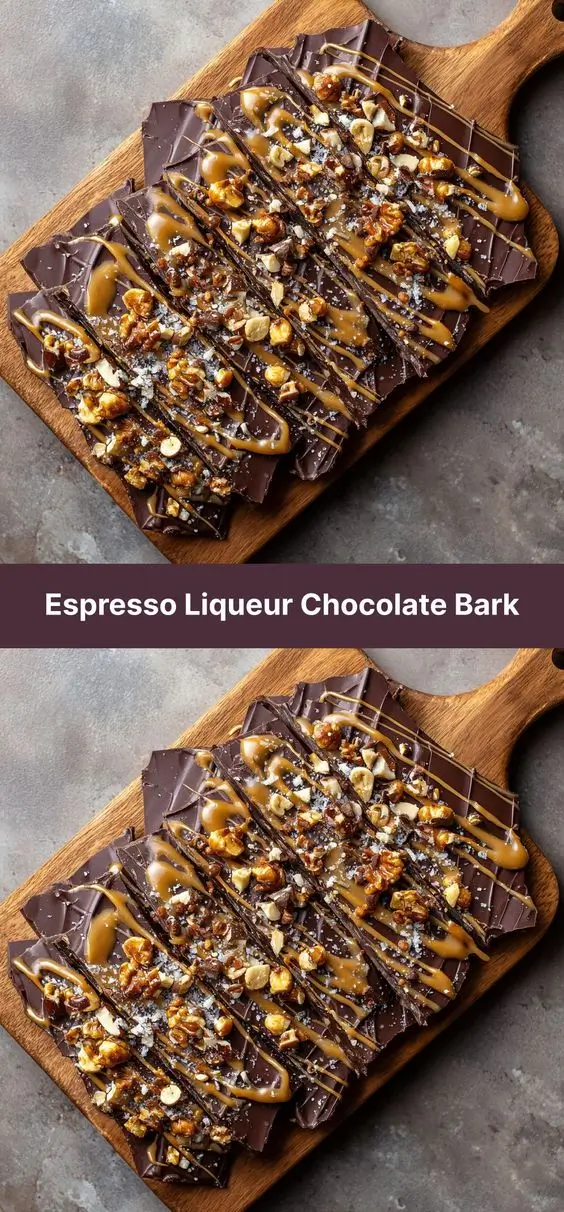
Espresso Liqueur Chocolate Bark
The History of Chocolate Bark and the Rise of Gourmet Confections
Chocolate bark, in its simplest form, dates back centuries as a rustic and accessible way to enjoy chocolate without the need for molds or specialized equipment. The term “bark” is derived from the uneven, craggy surface of the cooled chocolate, which resembles tree bark. Originally popularized in American kitchens during the 20th century, especially around holidays, traditional chocolate bark was made by melting chocolate and spreading it into a thin layer before topping it with nuts, dried fruits, or candies.
As culinary tastes evolved and global flavors became more integrated into home cooking, gourmet variations of chocolate bark emerged. Infusions of spirits, coffee extracts, and artisanal ingredients transformed this humble treat into a sophisticated dessert. The introduction of espresso liqueur—such as Kahlúa, Tia Maria, or homemade infusions—into chocolate confections reflects the modern love affair with bold, complex flavor profiles that blend the richness of cocoa with the deep warmth of coffee and alcohol.
Today, Espresso Liqueur Chocolate Bark stands at the intersection of indulgence and elegance. It’s a favorite among hosts for dinner parties, holiday gifting, or intimate evenings where a small piece of decadent chocolate pairs perfectly with after-dinner drinks. This recipe not only honors the simplicity of traditional bark but elevates it with premium ingredients, making it a standout in the world of homemade sweets.
Ingredients Breakdown: A Symphony of Flavor and Texture
The magic of Espresso Liqueur Chocolate Bark lies in its carefully selected components, each contributing to a harmonious balance of sweetness, bitterness, creaminess, and crunch. Let’s explore each ingredient and its role:
- Dark Chocolate (70% cacao): The foundation of this bark. High-quality dark chocolate provides a rich, slightly bitter base that complements the sweetness of the liqueur and other toppings. Opting for couverture chocolate ensures a smooth melt and glossy finish.
- Espresso Liqueur (e.g., Kahlúa, Tia Maria, or homemade): This is the star flavor enhancer. The liqueur imparts a deep coffee aroma, subtle sweetness, and a velvety mouthfeel. Its alcohol content also helps emulsify the chocolate, giving the bark a silkier texture.
- Unsalted Butter: Adds a creamy richness and helps prevent the chocolate from seizing when mixed with liquid ingredients. A small amount goes a long way in improving mouthfeel.
- Instant Espresso Powder: Intensifies the coffee flavor without adding excess moisture. When combined with the liqueur, it creates a robust espresso essence that lingers on the palate.
- Sea Salt Flakes: A pinch of flaky sea salt enhances all the other flavors through contrast, balancing sweetness and amplifying complexity—a technique rooted in modern gastronomy.
- Toasted Almonds or Hazelnuts: Provides a satisfying crunch and nutty depth. Toasting them beforehand brings out their natural oils and intensifies their flavor.
- Cocoa Nibs (optional): For an extra layer of chocolate intensity and a crunchy, almost coffee-bean-like texture, raw or roasted cocoa nibs can be sprinkled on top.
- Chocolate Sprinkles or Gold Leaf (optional): For visual appeal, especially when serving at events or gifting, these decorative elements add luxury and whimsy.
Step-by-Step Recipe: Crafting the Perfect Espresso Liqueur Chocolate Bark
- Prepare Your Workspace: Line a rimmed baking sheet (approximately 9×13 inches) with parchment paper or a silicone baking mat. Ensure the surface is clean and dry. Have all ingredients measured and ready—this is crucial when working with melted chocolate.
- Toast the Nuts (if using): Preheat your oven to 350°F (175°C). Spread sliced or chopped almonds or hazelnuts in a single layer on a separate baking sheet. Toast for 8–10 minutes, stirring once, until golden and fragrant. Remove and let cool completely. This step enhances flavor and prevents moisture from fresh-toasting nuts affecting the chocolate set.
- Melt the Chocolate: Chop the dark chocolate into uniform pieces for even melting. Use a double boiler: place a heatproof bowl over a saucepan with 1–2 inches of simmering water (ensure the bowl doesn’t touch the water). Add the chocolate and stir gently until about 75% melted. Remove from heat and continue stirring until fully smooth. Alternatively, use a microwave: heat in 30-second intervals at 50% power, stirring between each, until melted and glossy.
- Incorporate Flavor Agents: Once the chocolate is melted, stir in 1 tablespoon of unsalted butter until fully incorporated. Then, whisk in 2 tablespoons of espresso liqueur and 1 teaspoon of instant espresso powder. Mix thoroughly—the mixture may appear slightly grainy at first, but continued stirring will create a homogenous blend.
- Season and Enrich: Add a generous pinch of flaky sea salt and stir. Taste a tiny bit (cooled on a spoon) to assess flavor balance. Adjust with another ½ teaspoon of liqueur if desired, but avoid adding too much liquid, which can prevent proper setting.
- Spread the Mixture: Pour the chocolate onto the prepared baking sheet. Using an offset spatula or the back of a spoon, spread it into a thin, even layer—about ¼ inch thick. Work quickly before the chocolate begins to cool.
- Add Toppings: While the chocolate is still wet, evenly sprinkle the toasted nuts over the surface. Press them down lightly with the spatula to ensure adhesion. Optionally, scatter cocoa nibs, chocolate curls, or edible gold flakes for added texture and elegance.
- Chill to Set: Transfer the baking sheet to the refrigerator. Allow the bark to set for 30–45 minutes, or until firm and glossy. Avoid freezing unless necessary, as rapid temperature changes can cause condensation or fat bloom.
- Break into Pieces: Once fully set, lift the bark from the pan using the parchment edges. Place it on a cutting board. Using a sharp knife or your hands, break the bark into irregular shards—this enhances the rustic aesthetic. Larger pieces make elegant gifts; smaller ones are perfect for nibbling.
- Store Properly: Place the pieces in an airtight container, separating layers with parchment paper. Store in a cool, dark place (ideally 60–68°F) for up to 2 weeks, or refrigerate for up to 1 month. Bring to room temperature before serving for optimal texture and flavor release.
Tips for Success: Mastering the Art of Chocolate Bark
- Use High-Quality Chocolate: Since this recipe has few ingredients, the quality of chocolate directly impacts the final taste. Look for brands with minimal additives and real cocoa butter.
- Avoid Water at All Costs: Even a drop of water can cause chocolate to seize. Ensure all utensils, bowls, and spatulas are completely dry before use.
- Don’t Overheat the Chocolate: Temperatures above 90°F (32°C) can scorch dark chocolate or cause fat separation. Use low, indirect heat and patience.
- Balance the Liqueur: Too much espresso liqueur can prevent the bark from setting properly. Stick to the recommended 2 tablespoons per 8 oz of chocolate. If you crave a stronger coffee kick, increase espresso powder instead.
- Toast Nuts Evenly: Watch them closely in the oven—they go from golden to burnt quickly. Cool them fully before adding to prevent melting the chocolate.
- Experiment with Textures: Mix different nuts (pistachios, pecans), seeds (pumpkin, sesame), or even crushed biscotti for unique crunch combinations.
- Serve at Room Temperature: Cold chocolate can mute flavors. Let the bark sit out for 10–15 minutes before serving to unlock its full aromatic profile.
Variations and Customizations: Make It Your Own
The beauty of chocolate bark is its adaptability. Here are inspired twists on the classic Espresso Liqueur version:
- Spiked White Chocolate Version: Substitute dark chocolate with high-quality white chocolate. Reduce espresso powder to ½ tsp and use 1½ tbsp liqueur. Top with macadamia nuts and a dusting of cinnamon.
- Vegan Adaptation: Use dairy-free dark chocolate and plant-based butter (e.g., coconut oil or vegan margarine). Ensure the espresso liqueur is vegan-friendly (some contain milk derivatives).
- Alcohol-Free Option: Replace espresso liqueur with strong chilled espresso or coffee extract (1 tsp extract + 1 tbsp hot water, cooled). Increase espresso powder slightly for depth.
- Peppermint Mocha Twist: Add ¼ tsp peppermint extract to the melted chocolate. Top with crushed candy canes or peppermint chips before chilling.
- Orange Espresso Fusion: Zest one organic orange and mix into the chocolate. The citrus brightens the coffee notes beautifully. Pair with dark chocolate and toasted almonds.
- Spiced Bark: Add a pinch of cinnamon, cardamom, or cayenne for a warm, complex edge. Especially delightful in colder months.
- Gift-Worthy Packaging: Layer pieces in clear cellophane bags tied with twine, or place in mini gift boxes with a personalized label: “Handcrafted Espresso Liqueur Chocolate Bark – Best with Coffee or Whiskey.”
Health Considerations and Nutritional Value
While Espresso Liqueur Chocolate Bark is undeniably indulgent, understanding its nutritional profile helps in mindful enjoyment:
- Calories: Approximately 150–180 calories per 1-oz (28g) serving, depending on chocolate type and toppings.
- Fat Content: Ranges from 10–13g per serving, primarily from cocoa butter and nuts. Mostly unsaturated fats, especially if nuts like almonds or hazelnuts are used.
- Sugar: Around 10–12g per serving. Dark chocolate naturally contains less sugar than milk or white varieties.
- Caffeine: Each serving contains roughly 15–25mg of caffeine from both chocolate and espresso components—equivalent to a quarter cup of coffee. Not recommended for children or those sensitive to stimulants.
- Alcohol Content: Although most alcohol remains in the final product, the quantity per serving is minimal (about 0.5–1 tsp liqueur per serving). Still, it should be avoided by pregnant individuals, recovering alcoholics, or those abstaining for health reasons.
- Antioxidants: Dark chocolate is rich in flavonoids, which have been linked to heart health and reduced inflammation. Cocoa and coffee both contribute beneficial polyphenols.
- Portion Control: Due to its richness, small servings are satisfying. Savor slowly to enhance satiety and appreciation.
Ingredients
- 8 oz (225g) high-quality dark chocolate (70% cacao), finely chopped
- 2 tbsp espresso liqueur (e.g., Kahlúa, Tia Maria)
- 1 tbsp unsalted butter (or vegan alternative)
- 1 tsp instant espresso powder
- ½ cup toasted almonds or hazelnuts, sliced or chopped
- Pinch of flaky sea salt (e.g., Maldon)
- Optional: 2 tbsp cocoa nibs, chocolate curls, or edible gold flakes
Directions
- Line a 9×13-inch baking sheet with parchment paper or a silicone mat.
- Toast nuts in a 350°F oven for 8–10 minutes until fragrant and golden. Cool completely.
- Melt chocolate using a double boiler or microwave in 30-second bursts at 50% power, stirring until smooth.
- Remove from heat. Stir in butter until melted, then whisk in espresso liqueur and espresso powder until well blended.
- Add sea salt and mix. Taste and adjust flavor if needed.
- Pour mixture onto prepared baking sheet. Spread evenly to ¼-inch thickness with an offset spatula.
- Immediately sprinkle toasted nuts and optional toppings over the surface. Press lightly.
- Refrigerate for 30–45 minutes until firm and glossy.
- Lift bark from pan using parchment. Break into irregular pieces by hand or cut with a knife.
- Store in an airtight container in a cool, dry place for up to 2 weeks, or refrigerate for up to 1 month.
FAQ
Can I use milk chocolate instead of dark?
Yes, but note that milk chocolate is sweeter and softer. The coffee flavor may be less pronounced, so consider increasing espresso powder slightly. Also, it may take longer to set due to higher fat content.
Is this safe for kids?
Due to the alcohol and caffeine content, it’s best reserved for adults. For a kid-friendly version, omit the liqueur and use decaf coffee or vanilla extract instead.
Why did my chocolate seize?
Seizing occurs when water or steam contacts melted chocolate. Always use dry utensils and avoid letting steam from the double boiler enter the bowl. If it happens, try adding 1 tsp vegetable oil or shortening and stirring vigorously—it may recover.
Can I freeze the bark?
Yes, but wrap tightly in plastic and place in an airtight container to prevent freezer burn. Thaw in the fridge overnight, then bring to room temperature before serving to avoid condensation.
How do I make it shiny?
A glossy finish comes from proper tempering or slow cooling. For home cooks, ensuring the chocolate cools gradually in the fridge (not freezer) preserves shine. Avoid temperature fluctuations.
Can I use cold brew instead of espresso liqueur?
Cold brew is mostly water and lacks the sugar and alcohol that help integrate flavor and texture. It may cause seizing. If you must, reduce the cold brew to a syrup by simmering ½ cup until it becomes 1–2 tbsp, then cool before adding sparingly.
Summary
Espresso Liqueur Chocolate Bark is a luxurious, easy-to-make confection that marries the boldness of coffee with the richness of dark chocolate and a hint of spirited warmth. Perfect for gifting, entertaining, or treating yourself, this gourmet bark delivers intense flavor in every rustic shard.