Introduction
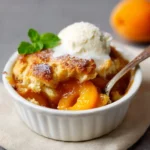
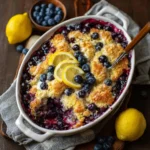
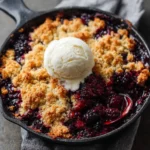
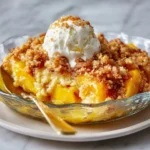
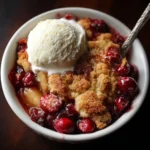
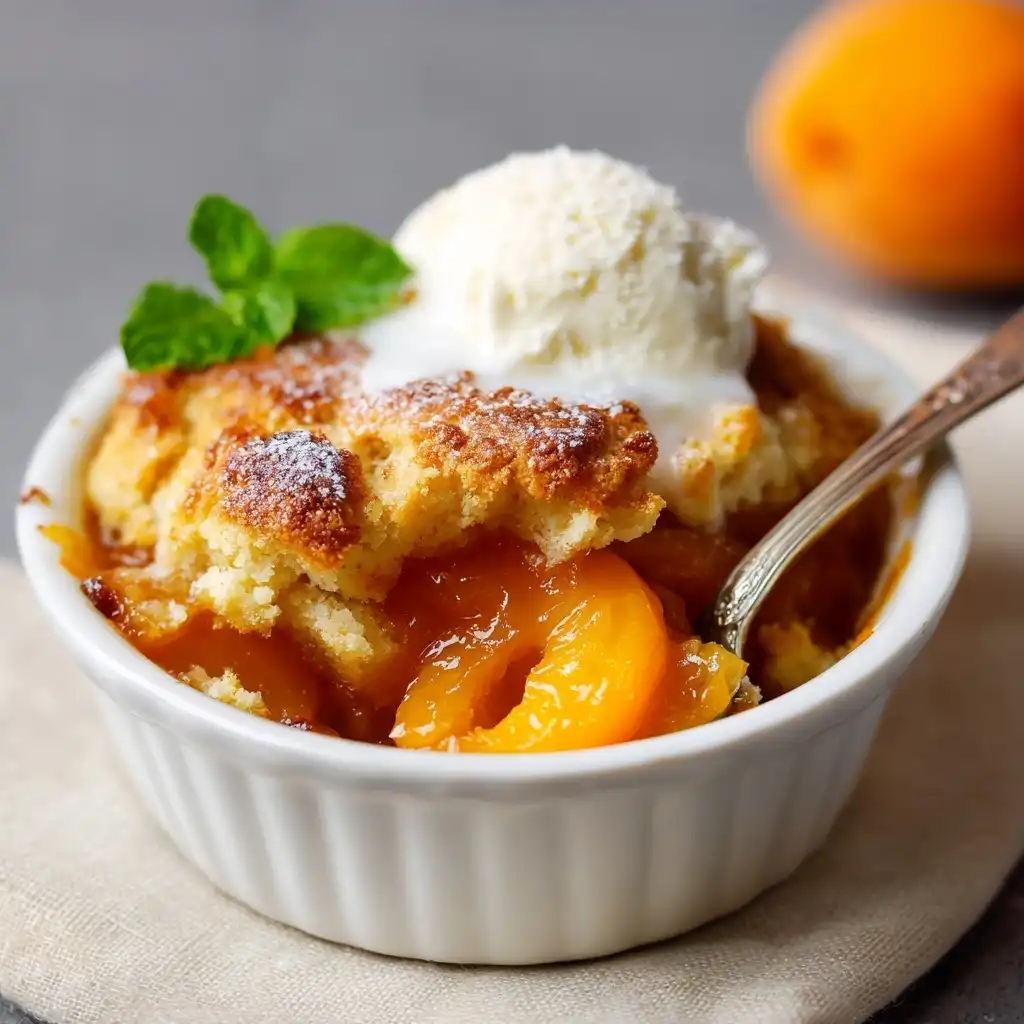
Fresh Apricot Cobbler is a timeless, sun-kissed dessert that captures the very essence of late spring and early summer—when apricots ripen to golden perfection, bursting with floral sweetness, delicate tartness, and velvety texture. Unlike fruit pies or crisps, cobbler features a rustic, home-style charm: tender, juicy apricots bubbling beneath a golden, biscuit-like or cakey topping that bakes up light, slightly crisp on top, and softly tender underneath. It’s comfort food elevated by seasonality—simple enough for weeknight baking yet elegant enough for Sunday suppers, potlucks, or garden parties. Whether served warm with a scoop of vanilla bean ice cream, a drizzle of crème fraîche, or simply dusted with powdered sugar, Fresh Apricot Cobbler evokes nostalgia, warmth, and the pure joy of fruit at its peak.
The History
Cobbler traces its roots to early American colonial kitchens, where resourceful cooks adapted English pudding and deep-dish pie traditions using limited pantry staples and seasonal foraged or orchard-grown fruits. The term “cobbler” likely derives from the Old English word *cobeler*, meaning “lumpy” or “rough-hewn”—a fitting descriptor for its intentionally uneven, cobblestone-like topping. By the 18th and 19th centuries, cobblers became especially popular across the Southern and Midwestern U.S., where stone fruits like peaches, plums, and apricots thrived. Apricots—originally native to China and later cultivated along the Silk Road before arriving in North America via Spanish missionaries in the 1700s—found ideal growing conditions in California’s Central Valley. As orchards expanded in the late 1800s, fresh apricot cobblers began appearing in regional cookbooks, church socials, and farmhouse kitchens. Unlike more formal desserts requiring precise pastry techniques, cobblers embraced improvisation: biscuit dough dropped by spoonfuls, cornmeal-enriched toppings, or even soda biscuit variations made possible by the advent of commercial baking powder in the 1850s. Today, the Fresh Apricot Cobbler stands as both a culinary heirloom and a canvas for modern creativity—honoring tradition while inviting personal expression through spices, flours, sweeteners, and accompaniments.
Ingredients Breakdown
Every exceptional Fresh Apricot Cobbler begins with thoughtful, high-quality ingredients—each playing a distinct and indispensable role in flavor, texture, and structure:
- Fresh Apricots: The undisputed star—ideally ripe but still firm (not mushy), with vibrant orange-gold skin and a fragrant, honeyed aroma. Their natural pectin helps thicken the filling, while their balanced acidity prevents cloying sweetness. Look for Blenheim, Tilton, or Moorpark varieties when available—they offer superior flavor depth over mass-market hybrids.
- Granulated Sugar: Provides foundational sweetness and aids in caramelization during baking. Adjust based on apricot ripeness—underripe fruit may need up to ¾ cup; deeply ripe, fragrant apricots often shine with just ½ cup—or even less when paired with honey or maple syrup.
- Brown Sugar (light or dark): Adds molasses-infused warmth, moisture retention, and rich color to both filling and topping. Dark brown sugar intensifies caramel notes; light brown offers subtler depth.
- Lemon Juice & Zest: Brightens the apricots’ inherent sweetness, balances richness, and preserves vibrant color. Freshly squeezed juice is non-negotiable—bottled versions lack brightness and can impart bitterness.
- Cornstarch or Tapioca Starch: Acts as the filling’s thickener. Cornstarch yields a glossy, clear finish; tapioca starch provides a slightly more elastic, jewel-toned gel that holds up beautifully during prolonged baking and reheating. Arrowroot is a viable gluten-free alternative but should be added just before baking to avoid breaking down.
- Ground Cinnamon & Cardamom: Warm, aromatic spices that complement apricots’ floral notes without overpowering. A pinch of freshly ground cardamom (¼ tsp) adds sophistication; cinnamon (½ tsp) grounds the profile. Optional additions include nutmeg, star anise (steeped then removed), or a whisper of ground ginger.
- Salted Butter: Used both in the filling (for gloss and mouthfeel) and topping (for flakiness and richness). Unsalted butter is preferred for control over sodium, but a pinch of fine sea salt enhances all other flavors.
- All-Purpose Flour: The structural backbone of the biscuit-style topping. For tenderness, some recipes blend in cake flour or pastry flour; for heartier texture, whole wheat pastry flour or spelt flour can replace up to 25% of the AP flour.
- Baking Powder & Baking Soda: Leavening agents that lift the topping into airy, golden mounds. Ensure they’re fresh (replace every 6 months)—a simple test: drop ½ tsp baking powder into hot water; it should fizz vigorously.
- Heavy Cream or Buttermilk: Adds fat, tenderness, and tang. Buttermilk contributes acidity that activates baking soda and yields extra tenderness; heavy cream delivers unparalleled richness and browning. Half-and-half or whole milk work in a pinch—but reduce liquid slightly if substituting.
- Vanilla Extract (pure, not imitation): Deepens complexity and rounds out sharp edges. Madagascar bourbon vanilla is ideal; for extra luxury, infuse the cream with a split vanilla bean pod while warming.
- Coarse Sugar (Turbinado or Demerara): Sprinkled atop before baking for textural contrast, subtle molasses notes, and sparkling visual appeal.
Step-by-Step Recipe
- Prep the Apricots: Wash 2 lbs (about 6–7 medium) fresh apricots under cool running water. Pat dry. Halve and pit each fruit, then slice into ½-inch wedges. For deeper flavor, toss slices gently with 1 tbsp lemon juice and let macerate 10 minutes—this draws out juices and softens fibers slightly.
- Make the Filling: In a large bowl, combine apricot slices, ⅔ cup granulated sugar, ¼ cup light brown sugar, 2 tbsp lemon juice, 1 tsp lemon zest, ¼ tsp ground cinnamon, ⅛ tsp ground cardamom, and ¼ tsp fine sea salt. Gently fold to coat. Let sit 15 minutes to release juices. Stir in 3 tbsp cornstarch (or 2½ tbsp tapioca starch) until evenly distributed and no dry streaks remain. Mixture will appear thick and pasty—that’s ideal. Fold in 2 tbsp cold, cubed unsalted butter until evenly dispersed.
- Preheat & Prep Pan: Position oven rack in the lower third. Preheat oven to 375°F (190°C). Generously butter a 9×13-inch ceramic or glass baking dish (or two 8-inch square dishes for portion control). For even baking and easy release, line the bottom with parchment paper, leaving 2-inch overhangs on two opposite sides.
- Prepare the Topping Batter: In a food processor or large bowl, whisk together 1¾ cups all-purpose flour, ¼ cup granulated sugar, 1½ tsp baking powder, ½ tsp baking soda, and ½ tsp fine sea salt. Cut in 6 tbsp cold, cubed unsalted butter using a pastry cutter or pulse in food processor until mixture resembles coarse meal with pea-sized butter bits. Whisk ¾ cup heavy cream (or buttermilk), 1 large egg, 1 tsp pure vanilla extract, and 1 tbsp honey (optional, for extra sheen and depth) in a separate bowl. Pour wet ingredients over dry; stir with a silicone spatula or fork *just until combined*—batter will be shaggy, lumpy, and slightly sticky. Do *not* overmix; gluten development leads to toughness.
- Assemble: Pour apricot filling into prepared dish, spreading evenly. Drop heaping ¼-cup portions of batter across the surface—12–14 mounds, spaced evenly. Gently press each mound slightly to flatten (they’ll rise and spread during baking). Brush tops lightly with remaining cream or milk. Sprinkle generously with 1–2 tbsp turbinado sugar.
- Bake: Place dish on a parchment-lined baking sheet (to catch potential bubbling over). Bake for 45–55 minutes, rotating halfway through, until topping is deeply golden brown, puffed, and firm to gentle touch, and filling bubbles vigorously around the edges (a skewer inserted into center topping should emerge clean or with moist crumbs—not wet batter). Internal temperature of filling should reach 205–210°F for optimal thickening.
- Cool & Set: Remove from oven and place on a wire rack. Let rest *undisturbed* for at least 30 minutes—this crucial step allows the filling to fully set and prevents a runny cobbler. For best texture and slicing, cool 1 hour. Serve warm—not piping hot—for ideal balance of temperature and cohesion.
Tips
- Selecting Apricots: Choose fruit that yields slightly to gentle palm pressure—not finger pressure—and smells intensely sweet at the stem end. Avoid green-tinged, hard, or overly soft/mushy specimens. If apricots are underripe, ripen them at room temperature in a paper bag with an apple for 1–2 days.
- Peeling? Not Necessary—But Optional: Apricot skins soften beautifully during baking and add fiber and antioxidants. However, for ultra-refined texture (e.g., for sensitive palates or special occasions), blanch: score an “X” on the blossom end, submerge in boiling water 30 seconds, then transfer to ice water; skins will slip off effortlessly.
- Thickener Timing Matters: Always mix cornstarch/tapioca with dry sugar first before adding to wet fruit—this prevents clumping. If using frozen apricots (thawed and well-drained), increase thickener by ½ tsp to compensate for excess moisture.
- Cold Butter is Key: For flaky, tender topping, keep butter refrigerated until the moment you cut it in. Work quickly and avoid over-handling—warm butter melts prematurely, leading to greasy, dense results.
- Don’t Skip the Rest: That 30–60 minute rest isn’t optional—it’s transformative. Rushing leads to soupy filling and collapsed topping. Use this time to whip cream, brew tea, or prepare garnishes.
- Oven Thermometer Essential: Many ovens run hot or cold. An inexpensive oven thermometer ensures accuracy—critical for proper rising and browning without burning.
- Baking Dish Material Affects Results: Glass and ceramic retain heat longer, yielding deeper browning and slower, more even cooking. Metal pans conduct heat faster—reduce temp by 25°F and check 5–10 minutes earlier.
- Boost Browning & Flavor: Brush topping with a mixture of 1 tbsp melted butter + 1 tsp honey before sprinkling turbinado sugar. Or, add 2 tbsp finely grated aged cheddar to the dry topping ingredients for a savory-sweet note (a classic Appalachian twist).
- Freeze for Later: Assemble unbaked cobbler (filling + uncooked topping), cover tightly with plastic wrap + foil, and freeze up to 3 months. Bake from frozen—add 15–20 minutes to bake time and tent loosely with foil if topping browns too quickly.
Variations and Customizations
Fresh Apricot Cobbler is gloriously adaptable—celebrating regional influences, dietary needs, and personal whims:
- Gluten-Free: Substitute 1:1 gluten-free all-purpose flour blend (with xanthan gum) for topping flour. Ensure cornstarch/tapioca is certified GF. Add 1 tsp psyllium husk powder to dry mix for improved binding and rise.
- Vegan: Replace butter with cold vegan butter or refined coconut oil; use flax “egg” (1 tbsp ground flax + 2½ tbsp water, rested 5 min); swap heavy cream for full-fat canned coconut milk (chilled, solid part only) or soy creamer. Sweeten with coconut sugar or maple syrup (reduce other liquids by 1 tbsp).
- Whole Grain & Nutrient-Dense: Replace ⅓ of AP flour with white whole wheat flour or oat flour. Add 2 tbsp ground flaxseed or chia seeds to dry topping mix. Stir ¼ cup chopped toasted almonds or pistachios into filling for crunch and healthy fats.
- Herbal & Floral Infusions: Steep 1 tsp dried lavender buds or 2 tbsp fresh thyme leaves in warm cream for 15 minutes before straining and using in topping. Add 1 tsp rose water to filling for Persian-inspired elegance.
- Spiced Chai Variation: Add ½ tsp ground ginger, ¼ tsp ground cloves, ⅛ tsp black pepper, and 1 small crushed star anise pod (removed before baking) to filling. Garnish with candied ginger.
- Apricot-Lavender-Honey: Replace granulated sugar with local raw honey (reduce cream by 1 tbsp); add 1 tbsp culinary-grade dried lavender to sugar before mixing into filling; omit cinnamon/cardamom.
- Breakfast Cobbler: Reduce sugar by half; add ¼ cup rolled oats and 2 tbsp chopped walnuts to topping; serve with Greek yogurt instead of ice cream.
- Mini Individual Cobblers: Use six 6-oz ramekins. Reduce bake time to 30–35 minutes. Perfect for portion control and elegant presentation.
- Boozy Twist: Stir 1 tbsp Amaretto, Grand Marnier, or Calvados into filling after thickener. Soak ¼ cup dried apricots in the liqueur for 15 minutes, then chop and fold in for concentrated flavor.
- Umami-Enhanced: Add 1 tsp white miso paste to cream mixture—adds profound savoriness that balances sweetness and deepens apricot’s natural complexity (trust us—it works!).
Health Considerations and Nutritional Value
Fresh Apricot Cobbler, when prepared mindfully, offers notable nutritional benefits alongside its indulgent pleasure. Apricots themselves are nutritional powerhouses: one cup (155g) of sliced raw apricots delivers over 50% of the Daily Value (DV) for Vitamin A (as beta-carotene), supporting eye health and immune function; 25% DV for Vitamin C (antioxidant and collagen synthesis); 10% DV for potassium (blood pressure regulation); and 3g of dietary fiber (2g soluble, aiding cholesterol and blood sugar management). They’re also rich in polyphenols like chlorogenic acid and quercetin—linked to reduced inflammation and oxidative stress.
The cobbler format enhances bioavailability: fat from butter and cream helps absorb fat-soluble vitamins (A, E, K), while lemon juice’s vitamin C boosts non-heme iron absorption from any whole grains or nuts added. Choosing minimally processed sweeteners (e.g., raw honey, maple syrup), reducing added sugars by 25%, and incorporating whole grains or nuts significantly improves the glycemic profile and satiety factor.
Nutritionally speaking, a standard serving (⅙ of a 9×13-inch cobbler, approx. 1 cup) contains roughly:
• Calories: 320–380 kcal
• Total Fat: 12–16g (mostly unsaturated from apricots and butter)
• Saturated Fat: 7–9g
• Carbohydrates: 52–60g (of which 38–45g are naturally occurring sugars from fruit + added sweeteners)
• Fiber: 3–5g
• Protein: 4–6g
• Vitamin A: 120–150% DV
• Vitamin C: 20–25% DV
• Potassium: 15–18% DV
For those managing diabetes, consider using erythritol or monk fruit blends (reducing total carbs by ~30g/serving) and pairing with a protein-rich side (Greek yogurt, cottage cheese) to slow glucose response. Those with dairy sensitivities can enjoy equally delicious vegan versions without sacrificing texture or satisfaction. As with all desserts, portion awareness and mindful eating—savoring slowly, appreciating aroma and texture—enhance both enjoyment and physiological response.
Ingredients
- 2 lbs (about 6–7 medium) fresh ripe apricots, washed, halved, pitted, and sliced ½-inch thick
- ⅔ cup granulated sugar (adjust ±2 tbsp based on apricot sweetness)
- ¼ cup light brown sugar, packed
- 2 tablespoons fresh lemon juice (from ~1 large lemon)
- 1 teaspoon finely grated lemon zest
- ¼ teaspoon fine sea salt
- ¼ teaspoon ground cinnamon
- ⅛ teaspoon ground cardamom (freshly ground preferred)
- 3 tablespoons cornstarch or 2½ tablespoons quick-cooking tapioca starch
- 2 tablespoons cold unsalted butter, cubed
- 1¾ cups all-purpose flour (or GF 1:1 blend)
- ¼ cup granulated sugar (for topping)
- 1½ teaspoons baking powder
- ½ teaspoon baking soda
- ½ teaspoon fine sea salt
- 6 tablespoons cold unsalted butter, cubed
- ¾ cup heavy cream or buttermilk, cold
- 1 large egg, cold
- 1 teaspoon pure vanilla extract
- 1 tablespoon honey (optional, for extra sheen)
- 1–2 tablespoons turbinado or Demerara sugar, for sprinkling
Directions
- Preheat oven to 375°F (190°C). Position rack in lower third. Butter a 9×13-inch baking dish and line bottom with parchment paper (with overhang for easy removal).
- In a large bowl, combine apricot slices, ⅔ cup granulated sugar, brown sugar, lemon juice, lemon zest, ¼ tsp salt, cinnamon, and cardamom. Gently fold. Let sit 15 minutes.
- Stir cornstarch into fruit mixture until fully incorporated and no dry streaks remain. Fold in 2 tbsp cold butter cubes. Pour into prepared dish, smoothing surface.
- In a food processor or large bowl, pulse or whisk flour, ¼ cup sugar, baking powder, baking soda, and ½ tsp salt. Add 6 tbsp cold butter; cut in until mixture resembles coarse crumbs with pea-sized butter bits.
- In a separate bowl, whisk cream, egg, vanilla, and honey (if using). Pour over dry ingredients; stir with spatula *just until shaggy dough forms*—do not overmix.
- Drop 12–14 heaping ¼-cup portions of batter over apricot filling. Gently flatten each mound. Brush lightly with extra cream or milk. Sprinkle generously with turbinado sugar.
- Place dish on a parchment-lined baking sheet. Bake 45–55 minutes, rotating halfway, until topping is deep golden and filling bubbles vigorously at edges.
- Remove from oven; cool on wire rack for *at least 30 minutes* (ideally 60) before serving.
- For clean slices, use a sharp knife dipped in hot water. Serve warm with vanilla ice cream, crème fraîche, or lightly sweetened whipped cream.
FAQ
- Can I use frozen apricots?
- Yes—but thaw completely in a colander, then press gently with paper towels to remove *all* excess liquid. Increase cornstarch by ½ tsp. Expect slightly softer texture, but flavor remains excellent.
- Why did my cobbler turn out runny?
- Most common causes: insufficient thickener, under-baking (filling didn’t reach 205°F), cutting into it too soon (didn’t rest long enough), or using overripe, watery fruit. Next time, add ½ tsp more thickener and verify internal temp.
- Can I make the topping ahead?
- Absolutely. Prepare dry and wet components separately up to 24 hours ahead; store dry mix covered at room temp, wet mix refrigerated. Combine just before assembling and baking.
- How do I reheat leftovers without drying out?
- Loosely cover with foil and warm in a 325°F oven for 15–20 minutes, or until heated through. For single servings, microwave 30 seconds at 50% power, then 15 seconds more. Always serve warm—not hot—to preserve texture.
- Is there a way to reduce sugar without sacrificing flavor?
- Yes! Rely on ripe apricots’ natural sweetness. Reduce granulated sugar by ¼ cup and enhance with 1 tsp pure vanilla, ¼ tsp almond extract, or a pinch of flaky sea salt on top. Adding 2 tbsp chopped dried apricots (soaked in warm water 10 min, drained) concentrates sweetness and chew.
- What’s the best ice cream pairing?
- Classic vanilla bean is perfect—but try brown butter, lavender honey, or cardamom ice cream for inspired harmony. Dairy-free? Coconut milk or cashew-based vanilla works beautifully.
- Can I double the recipe?
- Yes—use two 9×13-inch dishes and bake in same oven (rotate positions halfway). Do *not* try to bake in one oversized pan—the filling won’t bubble properly and topping won’t brown evenly.
- How long does it keep?
- Refrigerate, covered, up to 4 days. Freeze baked cobbler (cooled completely) up to 3 months—thaw overnight in fridge, then reheat covered at 325°F until warmed through (25–30 min).
- Why does my topping sink?
- Overmixing the batter develops gluten, weighing it down. Also ensure oven is fully preheated—cold oven = sluggish rise. And never skip the cold butter step!
- Can I add other fruits?
- Delightfully—try folding in 1 cup raspberries or blackberries (toss with 1 tsp cornstarch first) for tart contrast, or ½ cup diced rhubarb (add 1 extra tbsp sugar) for springtime brightness.
Summary
Fresh Apricot Cobbler is a radiant celebration of seasonal abundance—a harmonious marriage of juicy, floral-sweet apricots suspended in a glossy, spiced filling beneath a golden, tender-crisp biscuit topping that bakes up lofty and fragrant with vanilla and butter.
Rooted in American farmhouse tradition yet endlessly customizable for dietary needs and creative flair, it rewards attention to ripe fruit, careful thickening, and patient resting—delivering not just dessert, but a multisensory experience of warmth, memory, and sunlit simplicity.