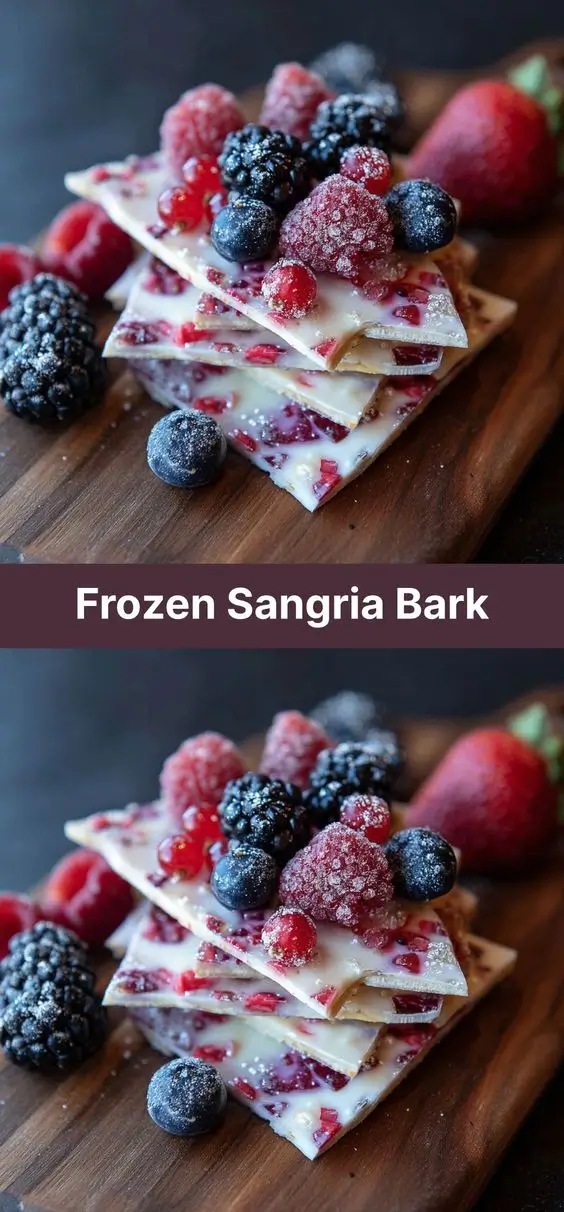
Frozen Sangria Bark: A Refreshing Twist on a Classic Cocktail
Introduction
If you’re looking for a fun, festive, and refreshing treat that captures the essence of summer in every bite, look no further than Frozen Sangria Bark. This innovative dessert combines the bold, fruity flavors of traditional Spanish sangria with the satisfying crunch and chill of a frozen bark confection. Perfect for poolside lounging, outdoor parties, or as a unique after-dinner delight, this sweet-and-slightly-tangy treat brings together wine, fruit, and creamy elements into a shareable (or not-so-shareable!) frozen masterpiece. Whether you’re hosting a gathering or simply treating yourself, Frozen Sangria Bark offers a delightful fusion of cocktail culture and dessert artistry.
The History
Sangria, the beloved wine-based punch originating from Spain and Portugal, has been enjoyed for centuries. The name “sangria” comes from the Spanish word *sangre*, meaning “blood,” a nod to the deep red hue of the classic version made with red wine. Historical records suggest that variations of fruit-infused wines were consumed as far back as ancient Rome, where wine was mixed with spices and fruits to improve flavor and mask spoilage. Over time, the drink evolved, especially in the Iberian Peninsula, where it became a staple at festivals, family gatherings, and warm-weather celebrations.
In modern times, sangria has seen countless adaptations—from white and rosé versions to non-alcoholic renditions—reflecting global tastes and culinary creativity. The concept of turning this beloved beverage into a dessert form, however, is relatively new. Frozen Sangria Bark emerged in the 2010s as part of the broader trend of transforming drinks into edible treats, such as coffee ice creams, cocktail gummies, and wine jellies. By combining the layered flavors of sangria with chocolate, fruit, and cream, this frozen bark bridges the gap between cocktail hour and dessert, offering a novel way to enjoy everyone’s favorite summer sipper—with a spoon.
Ingredients Breakdown
The magic of Frozen Sangria Bark lies in its carefully balanced ingredients, each contributing texture, flavor, and visual appeal. Here’s a detailed breakdown of what goes into this show-stopping treat:
- Red Wine – The foundation of traditional sangria, a dry or semi-sweet red wine like Tempranillo, Merlot, or Garnacha adds depth and authenticity. Opt for a drinkable quality—not too expensive, but nothing you wouldn’t pour into a glass.
- Orange Liqueur (e.g., Triple Sec or Cointreau) – A splash enhances fruitiness and adds a subtle citrus warmth. For a non-alcoholic version, substitute with orange juice concentrate or extract.
- Fresh Citrus Zest and Juice – Orange, lemon, and lime zest infuse bright aromatic notes, while their juices amplify tanginess and help balance sweetness.
- Honey or Agave Syrup – Natural sweeteners that blend smoothly into cold mixtures without crystallizing. They enhance fruit flavors while keeping the bark dairy-free if desired.
- Fresh Seasonal Fruits – Strawberries, oranges, green apples, peaches, and grapes are commonly used. These are sliced thin or diced small to distribute evenly across the bark.
- White Chocolate or Dark Chocolate – Melted chocolate forms the base layer, adding richness and helping bind toppings. White chocolate pairs beautifully with fruit, while dark chocolate offers a bolder contrast.
- Coconut Oil or Cocoa Butter – A small amount helps the chocolate set firmly in the freezer and gives a smooth, glossy finish.
- Optional Add-ins – Chopped nuts (like pistachios or almonds), shredded coconut, edible flowers, mint leaves, or even crushed pretzels for a sweet-and-salty twist.
- Vanilla Greek Yogurt or Coconut Cream (optional) – Adds a creamy middle layer for extra indulgence and protein content.
Step-by-Step Recipe
Creating Frozen Sangria Bark is easier than you might think—and incredibly fun! Follow these detailed steps to craft your own stunning dessert:
- Prepare the Fruit Infusion: In a bowl, combine 1 cup of red wine, 2 tablespoons of orange liqueur (or substitute), the juice and zest of 1 orange, ½ lemon, and ½ lime. Stir in 2 tablespoons of honey or agave. Add 1 cup of chopped seasonal fruits (halved grapes, sliced strawberries, diced peaches). Let the mixture macerate at room temperature for 30 minutes to allow flavors to meld.
- Drain and Pat Dry: After marinating, drain excess liquid using a fine-mesh strainer. Gently pat the fruits dry with paper towels to prevent excess moisture from interfering with freezing.
- Melt the Chocolate Base: Line a rimmed baking sheet with parchment paper or a silicone mat. In a double boiler or microwave-safe bowl, melt 12 oz (about 2 cups) of chopped white or dark chocolate with 1 tablespoon of coconut oil until smooth. Stir frequently to avoid burning.
- Pour and Spread the Chocolate: Pour the melted chocolate onto the prepared tray. Use an offset spatula or the back of a spoon to spread it into an even layer, roughly ¼ inch thick. Aim for an irregular, organic shape rather than perfect symmetry—this enhances the artisanal look.
- Add the Creamy Layer (Optional): If using yogurt or coconut cream, drop spoonfuls over the chocolate and gently swirl with a knife for a marbled effect. Don’t overmix—just create soft streaks.
- Scatter the Sangria Fruits: Evenly distribute the marinated and drained fruits over the chocolate layer. Press them down lightly so they adhere. Sprinkle with optional toppings: chopped nuts, shredded coconut, citrus zest, or mint.
- Freeze Thoroughly: Place the tray in the freezer for at least 3–4 hours, or until completely firm. For best results, cover loosely with plastic wrap after the first hour to prevent freezer odors.
- Break Into Pieces: Once solid, lift the bark by the parchment edges and transfer to a cutting board. Use a sharp chef’s knife or simply snap into rustic shards by hand.
- Serve Immediately or Store: Serve straight from the freezer on chilled plates. For storage, place layers of bark in an airtight container separated by parchment paper and keep frozen for up to 3 weeks.
Tips
- Use High-Quality Chocolate: Since chocolate is a primary ingredient, choosing a good brand ensures a smooth texture and rich flavor. Look for couverture or baking-grade chocolate with at least 30% cocoa butter.
- Don’t Skip Drying the Fruit: Excess moisture causes ice crystals and can make the bark soggy. Always drain and pat dry marinated fruit before placing it on the chocolate.
- Work Quickly: Chocolate sets fast, especially when cold ingredients are added. Have all toppings ready before pouring the base.
- Chill the Tray First: For faster setting, place the baking sheet in the freezer for 10–15 minutes before spreading the chocolate.
- Customize for Occasions: Use seasonal fruits—cranberries and pomegranate seeds in winter, mango and kiwi in summer. Add edible glitter or gold leaf for holiday glamour.
- Double-Deck Layers: For more complexity, pour a second thin layer of melted chocolate over the fruit-topped bark before final freezing to seal everything in.
- Label for Guests: If serving at a party, include a small sign indicating alcohol content, especially if liqueur is used.
Variations and Customizations
The beauty of Frozen Sangria Bark lies in its versatility. Here are some exciting ways to reinvent the recipe:
- White Sangria Bark: Use white wine (like Sauvignon Blanc or Pinot Grigio), peach schnapps, and tropical fruits (mango, pineapple, kiwi). Pair with white chocolate and toasted coconut flakes.
- Rosé Sangria Bark: Made with dry rosé wine, raspberries, strawberries, and a hint of elderflower liqueur. Drizzle with pink-hued white chocolate for a blush effect.
- Kids’ Version (Non-Alcoholic): Replace wine with grape juice and sparkling water; use orange juice instead of liqueur. Sweeten with maple syrup and add colorful berries and banana slices.
- Vegan Bark: Use dairy-free chocolate, coconut cream, and agave. Ensure all additives are plant-based.
- Protein-Packed Version: Mix a scoop of unflavored or vanilla collagen peptides or plant-based protein powder into the melted chocolate or yogurt layer.
- Herbal Infusion: Steep fresh rosemary, basil, or thyme in warm wine before mixing to add a sophisticated herbal note.
- Spiced Sangria Bark: Add a pinch of ground cinnamon, nutmeg, or star anise to the wine mixture for a cozy fall-inspired twist.
- Coffee-Sangria Fusion: Blend cold brew concentrate into the base for a dessert that tastes like a sangria latte.
Health Considerations and Nutritional Value
While Frozen Sangria Bark is undeniably indulgent, mindful preparation can make it a relatively balanced treat. Here’s what to consider:
Nutritional Highlights:
- Fruit Content: Provides natural sugars, dietary fiber, vitamin C, and antioxidants from berries, citrus, and stone fruits.
- Chocolate Benefits: Dark chocolate (70%+ cocoa) contains flavonoids linked to heart health and improved mood. Even white chocolate offers calcium and energy from healthy fats—when consumed in moderation.
- Protein Option: Adding Greek yogurt or coconut cream boosts satiety and adds probiotics (in yogurt).
Considerations:
- Alcohol Content: While most alcohol doesn’t fully evaporate during chilling, the amount per serving is minimal (about 0.5–1 tsp of wine per piece). Still, avoid giving to children, pregnant individuals, or those avoiding alcohol.
- Sugar Levels: Depending on sweeteners and fruit, sugar content can be moderate to high. Reduce by using less honey or opting for monk fruit or stevia blends.
- Calories: A typical serving (about 2 oz) ranges from 150–250 calories, influenced by chocolate type, fruit quantity, and add-ins.
- Allergens: Contains potential allergens such as tree nuts, dairy, and soy (depending on chocolate brand). Always check labels and inform guests.
Enjoy this bark as an occasional treat rather than a daily snack. Its portion-controlled nature (you break only what you eat) supports mindful consumption.
Ingredients
- 1 cup dry red wine (e.g., Tempranillo or Merlot)
- 2 tbsp orange liqueur (Triple Sec or Cointreau; omit for non-alcoholic)
- Juice and zest of 1 orange, ½ lemon, ½ lime
- 2 tbsp honey or agave syrup
- 1 cup mixed fresh fruit (strawberries, grapes, peaches, apples), chopped
- 12 oz (2 cups) high-quality white or dark chocolate, chopped
- 1 tbsp coconut oil or cocoa butter
- Optional: ½ cup vanilla Greek yogurt or coconut cream
- ¼ cup chopped nuts (pistachios, almonds)
- 2 tbsp shredded coconut or mint leaves for garnish
Directions
- In a medium bowl, combine red wine, orange liqueur, citrus juice, zest, and honey. Stir well.
- Add chopped fruits and let sit for 30 minutes to marinate.
- Strain the fruit, reserving liquid (can be used in smoothies or cocktails), and pat dry with paper towels.
- Line a 9×13-inch baking sheet with parchment paper or a silicone mat.
- Melt chocolate and coconut oil together using a double boiler or microwave (30-second intervals, stirring between).
- Pour melted chocolate onto the tray and spread into a ¼-inch thick, uneven layer.
- If using, dollop yogurt or coconut cream over chocolate and gently swirl with a knife.
- Sprinkle marinated fruit evenly over the surface. Press lightly to embed.
- Top with nuts, coconut, extra zest, or mint.
- Freeze for 3–4 hours, or until completely solid.
- Remove from tray, break into pieces, and serve immediately.
- Store leftovers in an airtight container in the freezer for up to 3 weeks.
FAQ
Can I make Frozen Sangria Bark without alcohol?
Yes! Substitute wine with grape juice, pomegranate juice, or a mix of fruit juice and sparkling water. Replace liqueur with orange extract or concentrated juice.
How long does it last in the freezer?
Up to 3 weeks when stored properly in an airtight container with parchment between layers to prevent sticking.
Why is my bark too icy?
This usually happens if fruit wasn’t dried thoroughly or if too much liquid was absorbed. Always drain and pat dry marinated fruit.
Can I use frozen fruit?
Not recommended. Frozen fruit releases too much water when thawed, leading to a soggy texture. Stick to fresh, ripe fruit.
Is it safe to eat raw egg in any variation?
No eggs are used in this recipe. However, always ensure your chocolate and other ingredients are pasteurized or food-safe.
Can I make it ahead of time?
Absolutely! Prepare up to a week in advance and store frozen. It actually benefits from longer freezing, which enhances texture.
What wine is best for this recipe?
A medium-bodied, fruit-forward red wine works best. Avoid overly tannic or oaky wines, as they can turn bitter when chilled.
Can I use milk chocolate?
Yes, though it’s sweeter and softer than dark or white chocolate. Combine with a bit more coconut oil for better freeze stability.
Summary
Frozen Sangria Bark is a dazzling fusion of cocktail culture and frozen dessert innovation, blending marinated fruit, wine essence, and creamy chocolate into a refreshing, shareable treat. Elegant yet easy to make, it’s the ultimate summer indulgence that turns a classic drink into a crunchy, cool masterpiece.