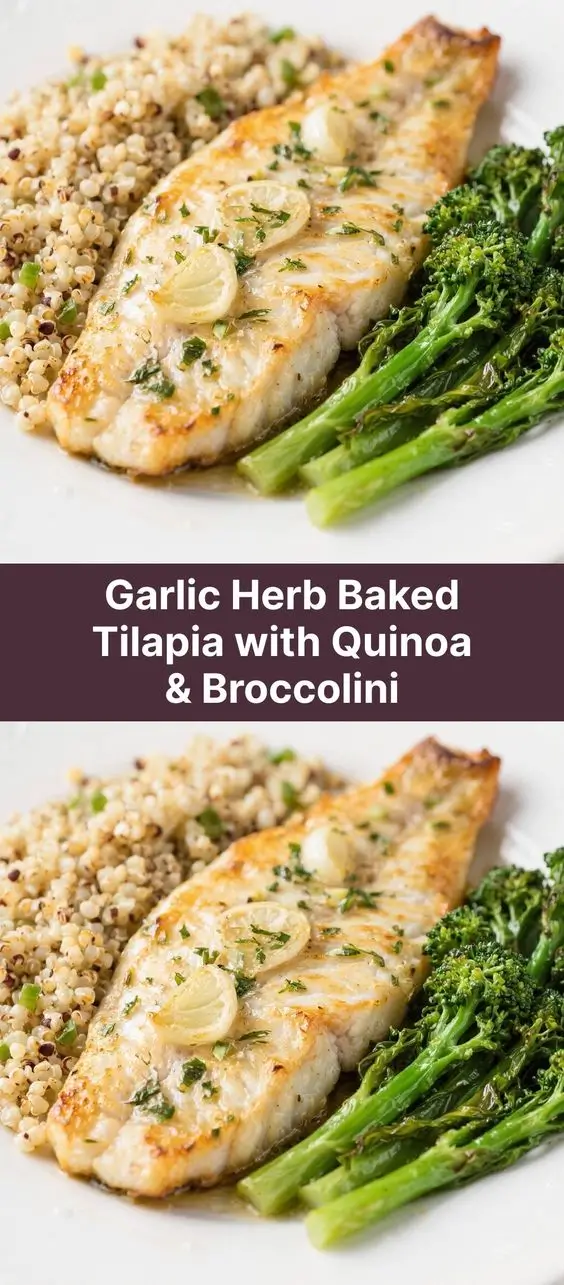
Garlic Herb Baked Tilapia with Quinoa & Broccolini
The History
The fusion of baked fish, whole grains, and nutrient-dense vegetables traces back to the culinary traditions of the Mediterranean, where simplicity, freshness, and balance are paramount. While tilapia itself has ancient roots—originating in the Nile River over 3,000 years ago—its modern preparation as a light, flaky white fish embraced by health-conscious eaters emerged in the late 20th century. As aquaculture made tilapia more accessible worldwide, chefs and home cooks alike began incorporating it into clean-eating regimens, particularly within the framework of heart-healthy diets recommended by nutritionists.
Quinoa, an ancient grain cultivated by the Incas in the Andes over 5,000 years ago, was revered as “the mother of all grains” for its complete protein profile. Long overlooked in Western cuisine, quinoa gained international acclaim in the 2000s as a gluten-free superfood. Meanwhile, broccolini—a hybrid cross between broccoli and Chinese kale developed in Japan in the 1990s—brought a tender-crisp texture and mild flavor ideal for roasting or steaming.
Combining these three elements—tilapia, quinoa, and broccolini—creates a dish that marries global influences with modern nutritional science. The garlic herb seasoning pays homage to classic French and Italian techniques, where fresh herbs like thyme, rosemary, and parsley are used to elevate simple ingredients. Today, Garlic Herb Baked Tilapia with Quinoa & Broccolini stands as a symbol of contemporary healthy eating: quick to prepare, rich in flavor, and balanced in macronutrients.
Ingredients Breakdown
Each ingredient in this recipe is selected not only for flavor but also for its contribution to texture, aroma, and nutritional value. Here’s a detailed look at what goes into this wholesome meal:
- Tilapia Fillets (1.5 lbs): A lean, mild-flavored fish that bakes quickly and absorbs seasonings beautifully. Its delicate texture pairs perfectly with bold herbs and garlic.
- Extra Virgin Olive Oil (3 tbsp): Used to coat the fish and vegetables, this oil adds richness, supports the absorption of fat-soluble vitamins, and contributes heart-healthy monounsaturated fats.
- Fresh Garlic (4 cloves, minced): Provides a pungent, aromatic base. When roasted, garlic mellows into a sweet, nutty depth of flavor.
- Fresh Lemon Juice (2 tbsp): Brightens the dish, cuts through richness, and enhances the natural flavor of the fish.
- Fresh Parsley (¼ cup, chopped): Adds a pop of color and a fresh, slightly peppery note. High in vitamin K and antioxidants.
- Fresh Thyme (1 tbsp, chopped): Offers earthy, floral undertones that complement seafood exceptionally well.
- Fresh Rosemary (1 tsp, finely chopped): A robust herb that stands up to baking; use sparingly to avoid overpowering the dish.
- Sea Salt (1 tsp, divided): Enhances all flavors and helps draw out moisture for a better sear-like finish on the fish.
- Black Pepper (½ tsp, freshly ground): Adds gentle heat and complexity.
- Red Pepper Flakes (¼ tsp, optional): Introduces a subtle warmth for those who enjoy a little spice.
- Quinoa (1 cup, uncooked): A complete protein containing all nine essential amino acids. Gluten-free and high in fiber, iron, and magnesium.
- Low-Sodium Vegetable or Chicken Broth (2 cups): Used instead of water to cook quinoa, adding depth and savoriness.
- Broccolini (1 lb): More tender than broccoli with edible stems. Rich in vitamin C, vitamin K, and folate.
- Lemon Zest (from 1 lemon): Intensifies citrus notes without extra acidity; adds a fragrant finish.
- Grated Parmesan Cheese (optional, 2 tbsp): For serving; adds umami and a slight saltiness that complements the herbs.
- Lemon Wedges (for serving): Essential for squeezing over the finished dish to brighten every bite.
Step-by-Step Recipe
- Preheat Oven & Prepare Pan: Preheat your oven to 400°F (200°C). Line a large baking sheet with parchment paper or lightly grease it with olive oil to prevent sticking.
- Cook the Quinoa: While the oven heats, rinse 1 cup of quinoa under cold water in a fine-mesh strainer to remove saponins (which can cause bitterness). In a medium saucepan, combine quinoa and 2 cups of broth. Bring to a boil, then reduce heat to low, cover, and simmer for 15 minutes or until liquid is absorbed and quinoa is fluffy. Remove from heat, fluff with a fork, cover, and let it steam for 5 more minutes. Stir in half the parsley and set aside.
- Prepare the Broccolini: Trim the ends of the broccolini and cut any thick stalks in half lengthwise for even cooking. Place on one side of the prepared baking sheet. Drizzle with 1 tablespoon of olive oil, sprinkle with ¼ teaspoon salt and a pinch of black pepper. Toss to coat evenly.
- Season the Tilapia: Pat the tilapia fillets dry with paper towels—this ensures proper browning. Place them on the other side of the baking sheet. In a small bowl, mix together the remaining 2 tablespoons of olive oil, minced garlic, lemon juice, chopped thyme, rosemary, remaining salt, black pepper, red pepper flakes (if using), and half the parsley. Spoon this mixture evenly over the tilapia, making sure each fillet is well-coated.
- Arrange & Bake: Spread the broccolini in a single layer. Position the seasoned tilapia beside it, leaving space between fillets for air circulation. Bake in the preheated oven for 12–15 minutes, or until the fish is opaque, flakes easily with a fork, and reaches an internal temperature of 145°F (63°C). The broccolini should be tender-crisp with slightly caramelized tips.
- Rest & Finish: Remove the baking sheet from the oven. Let the tilapia rest for 2–3 minutes. Sprinkle with lemon zest and the remaining fresh parsley. Optionally, top with a sprinkle of grated Parmesan cheese for added richness.
- Serve: Divide the quinoa among plates, top with a fillet of tilapia, and arrange broccolini alongside. Serve immediately with lemon wedges on the side for squeezing.
Tips
- Dry the Fish: Always pat tilapia dry before seasoning. Moisture prevents browning and can make the fish steam rather than roast, resulting in a soggy texture.
- Uniform Thickness: If your fillets vary in thickness, fold the thinner parts underneath so they cook evenly and don’t overcook.
- Don’t Overcrowd the Pan: Give both the fish and broccolini space on the baking sheet. Crowding leads to steaming instead of roasting, reducing flavor and texture.
- Fragile Fish Handling: Use a thin spatula to transfer baked tilapia to avoid breaking the delicate flesh.
- Make Ahead Components: Cook quinoa up to 3 days in advance and store in the fridge. Reheat gently with a splash of broth or water before serving.
- Boost Flavor Without Fat: Add a dash of white wine or fish stock to the baking pan before roasting for extra moisture and depth.
- Use Fresh Herbs: Dried herbs can work in a pinch, but fresh ones provide superior brightness and aroma. If substituting, use ⅓ the amount of dried herbs.
- Check Doneness Early: Tilapia cooks quickly. Start checking at 10 minutes to avoid drying it out.
- Double the Batch: This recipe reheats well and makes excellent leftovers for meal prep. Store components separately and reheat gently in the oven or microwave.
- Oil Temperature Tip: Warm the olive oil slightly before mixing with garlic and herbs—this helps release their essential oils and intensifies flavor.
Variations and Customizations
This dish is highly adaptable to different tastes, dietary needs, and seasonal ingredients. Consider these creative twists:
- Protein Swap: Replace tilapia with cod, halibut, salmon, or even chicken breasts. Adjust cooking time accordingly—salmon may need only 10–12 minutes, while chicken could take 20–25.
- Grain Alternatives: Substitute quinoa with brown rice, farro, couscous, or cauliflower rice for a lower-carb option.
- Veggie Variations: Swap broccolini with asparagus, green beans, zucchini, Brussels sprouts, or a mix of seasonal vegetables. Roast root vegetables like carrots or sweet potatoes at a higher temperature (425°F) if desired.
- Creamy Finish: Drizzle with a lemon-herb aioli, tzatziki, or garlic yogurt sauce after baking for extra richness.
- Mediterranean Style: Top the finished dish with chopped sun-dried tomatoes, kalamata olives, capers, and crumbled feta cheese.
- Asian-Inspired Twist: Replace herbs with ginger, soy sauce, sesame oil, and green onions. Serve over brown rice or soba noodles.
- Spicy Kick: Increase red pepper flakes or add a few dashes of hot sauce to the marinade. Garnish with sliced jalapeños.
- Dairy-Free Option: Skip Parmesan or use a vegan alternative. Nutritional yeast can mimic cheesy flavor.
- Gluten-Free Assurance: Ensure all broth and seasonings are certified gluten-free if needed.
- One-Pan Wonder: For easier cleanup, place everything on a single large sheet pan, ensuring fish isn’t touching veggies directly to prevent flavor transfer during cooking.
Health Considerations and Nutritional Value
This meal is designed with wellness in mind, offering a balanced profile of lean protein, complex carbohydrates, healthy fats, and fiber-rich vegetables.
Nutritional Highlights (per serving, serves 4):
- Calories: ~380–420 kcal
- Protein: ~35g – Supports muscle repair and satiety
- Carbohydrates: ~30g – Primarily from quinoa and broccolini, with a low glycemic index
- Dietary Fiber: ~5g – Promotes digestive health and blood sugar stability
- Fat: ~12g – Mostly unsaturated fats from olive oil and fish
- Omega-3 Fatty Acids: Moderate levels from tilapia (enhance with salmon for higher amounts)
- Vitamins & Minerals: High in vitamin C (broccolini), vitamin K (parsley, broccolini), iron (quinoa), magnesium (quinoa), selenium (tilapia), and folate (broccolini)
Heart Health: The American Heart Association recommends eating fish at least twice a week. This recipe fits perfectly, with heart-healthy fats and minimal saturated fat.
Weight Management: High protein and fiber content promote fullness, helping control appetite and reduce snacking.
Blood Sugar Control: Low in refined sugars and high in fiber, making it suitable for diabetics when portion-controlled.
Pregnancy & Nursing: Tilapia is low in mercury and safe for consumption during pregnancy (2–3 servings per week). Quinoa provides plant-based iron and protein crucial during this time.
Allergies & Sensitivities: Naturally gluten-free and dairy-free (if Parmesan is omitted). Ensure fish is sustainably sourced and free from additives if sensitive to preservatives.
Ingredients
- 1.5 lbs fresh tilapia fillets
- 3 tablespoons extra virgin olive oil, divided
- 4 cloves garlic, minced
- 2 tablespoons fresh lemon juice
- ¼ cup fresh parsley, chopped, divided
- 1 tablespoon fresh thyme, chopped
- 1 teaspoon fresh rosemary, finely chopped
- 1 teaspoon sea salt, divided
- ½ teaspoon black pepper, freshly ground
- ¼ teaspoon red pepper flakes (optional)
- 1 cup uncooked quinoa
- 2 cups low-sodium vegetable or chicken broth
- 1 pound broccolini, trimmed
- Zest of 1 lemon
- 2 tablespoons grated Parmesan cheese (optional)
- Lemon wedges, for serving
Directions
- Preheat oven to 400°F (200°C). Line a large baking sheet with parchment paper or lightly grease with olive oil.
- In a fine-mesh strainer, rinse quinoa under cold water. In a saucepan, combine quinoa and broth. Bring to a boil, reduce heat, cover, and simmer for 15 minutes. Remove from heat, let stand covered for 5 minutes, then fluff with a fork. Stir in 2 tablespoons parsley and set aside.
- On the baking sheet, toss broccolini with 1 tablespoon olive oil, ¼ teaspoon salt, and a pinch of pepper. Spread in a single layer on one side.
- Pat tilapia fillets dry. Place on the other side of the baking sheet. In a bowl, whisk remaining 2 tablespoons olive oil, garlic, lemon juice, thyme, rosemary, remaining salt, black pepper, red pepper flakes, and remaining parsley. Spoon over fillets, coating evenly.
- Bake for 12–15 minutes, until fish is flaky and broccolini is tender-crisp.
- Remove from oven. Rest fish 2–3 minutes. Sprinkle with lemon zest, remaining parsley, and Parmesan if using.
- Serve immediately over quinoa with lemon wedges on the side.
FAQ
Can I use frozen tilapia?
Yes, but thaw it completely in the refrigerator overnight. Pat dry thoroughly before seasoning to avoid excess moisture.
Is broccolini the same as broccoli rabe?
No. Broccolini is a hybrid of broccoli and Chinese kale; broccoli rabe (rapini) is more bitter and belongs to the turnip family. They are not interchangeable without adjusting cooking methods.
Can I grill this instead of baking?
Absolutely! Grill the fish on a well-oiled grilling basket or foil over medium heat for 4–5 minutes per side. Grill broccolini alongside, turning occasionally.
How long do leftovers last?
Store in airtight containers in the refrigerator for up to 3 days. Reheat gently in the oven at 300°F to preserve texture.
Can I freeze this dish?
Quinoa and broccolini freeze well, but baked tilapia tends to become dry and mealy when frozen and reheated. It’s best to freeze only the grains and veggies, then bake fresh fish when ready to serve.
Why is my quinoa bitter?
You likely skipped rinsing. Quinoa has a natural coating called saponin that tastes soapy. Always rinse under cold water before cooking.
Can I use dried herbs instead of fresh?
Yes, but use 1 teaspoon dried thyme and ¼ teaspoon dried rosemary. Fresh herbs are strongly preferred for optimal flavor.
Is tilapia sustainable?
It depends on the source. Look for tilapia certified by the Aquaculture Stewardship Council (ASC) or labeled “responsibly farmed” to ensure environmentally sound practices.
Summary
Garlic Herb Baked Tilapia with Quinoa & Broccolini is a nutritious, flavorful, and easy-to-make meal that brings together lean protein, whole grains, and antioxidant-rich vegetables in perfect harmony. Ready in under 30 minutes, it’s ideal for weeknight dinners, meal prep, or impressing guests with a healthy yet elegant plate.