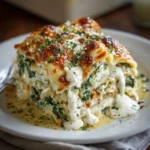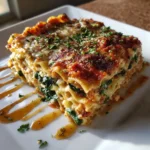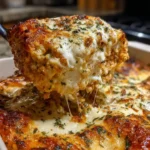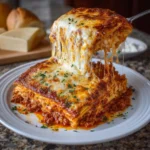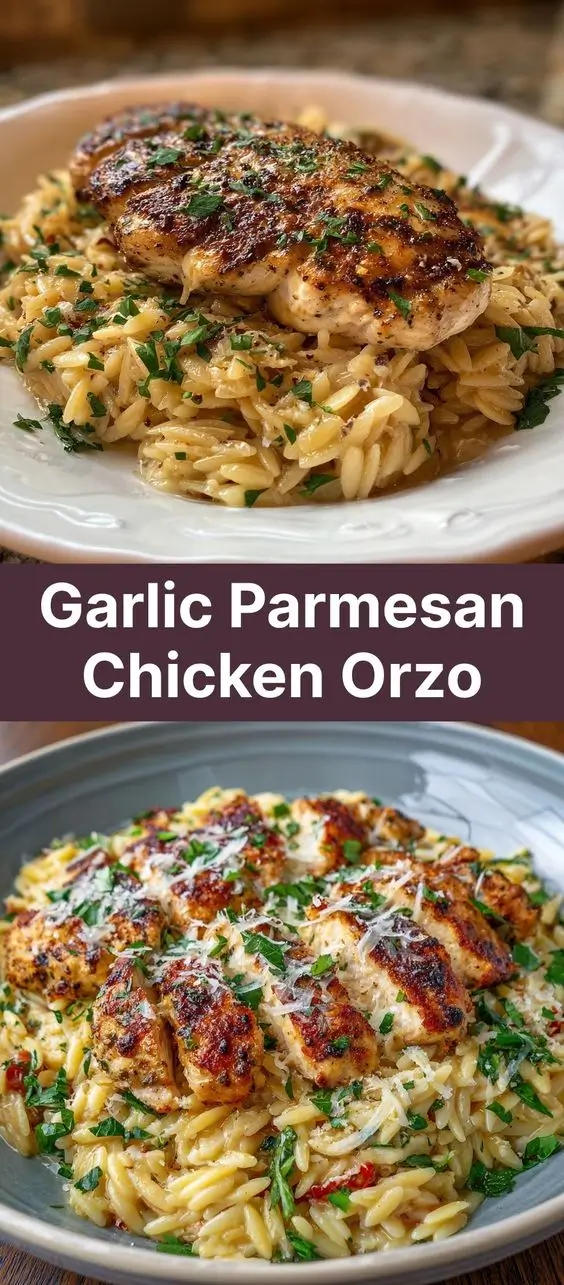
Garlic Parmesan Chicken Orzo: A Creamy, Comforting Delight
The History
Garlic Parmesan Chicken Orzo is a modern fusion dish that draws inspiration from both Italian culinary traditions and contemporary American comfort food. While orzo, the rice-shaped pasta, has roots in ancient Mediterranean cuisine—particularly in Greece and Italy—its pairing with creamy garlic sauce and Parmesan cheese reflects evolving tastes in home cooking over the past few decades. The rise of one-pot meals in the 2000s made dishes like this especially popular, as they combined protein, starch, and rich flavor in a single pan. Garlic and Parmesan have long been staples in Italian seasoning, celebrated for their bold umami depth, while chicken breast became a go-to lean protein in Western kitchens. This recipe likely emerged from the desire to create an elegant yet approachable weeknight meal, blending rustic Italian elements with the convenience of modern preparation techniques. Today, Garlic Parmesan Chicken Orzo is a staple on food blogs, Pinterest boards, and family dinner tables alike—a testament to its delicious versatility and heartwarming appeal.
Ingredients Breakdown
To achieve the perfect balance of creaminess, savoriness, and texture in Garlic Parmesan Chicken Orzo, each ingredient plays a vital role:
- Chicken Breast: Boneless, skinless chicken breasts are ideal for their mild flavor and tender texture when cooked properly. They absorb the garlicky, cheesy sauce beautifully and provide high-quality protein.
- Orzo Pasta: This small, rice-shaped pasta cooks quickly and soaks up sauces exceptionally well. It gives the dish a comforting, almost risotto-like consistency without requiring constant stirring.
- Garlic: Fresh garlic is non-negotiable here. Its pungent aroma and sharp bite mellow into sweet, nutty richness when sautéed, forming the aromatic backbone of the dish.
- Butter and Olive Oil: A combination of butter and olive oil provides both rich flavor and a stable cooking medium. Butter adds creaminess, while olive oil contributes a subtle fruitiness and helps prevent burning.
- Shallot or Onion: Finely diced shallots add sweetness and complexity. You can substitute yellow onion if needed, but shallots offer a more delicate flavor.
- Chicken Broth: Low-sodium broth ensures control over salt levels while adding savory depth. It’s used to cook the orzo, infusing every grain with flavor.
- Heavy Cream: This creates the luxurious, velvety sauce that coats the chicken and pasta. For a lighter version, half-and-half or whole milk can be used, though the sauce will be less rich.
- Grated Parmesan Cheese: Freshly grated Parmigiano-Reggiano melts smoothly and delivers a salty, nutty punch. Pre-grated cheese often contains anti-caking agents that can make the sauce grainy, so grating your own is highly recommended.
- Fresh Herbs: Parsley is most commonly used for brightness, but basil or thyme can also enhance the flavor profile. Fresh herbs are added at the end to preserve their vibrant taste and color.
- Salt and Black Pepper: Essential for seasoning at every stage—on the chicken, in the sauce, and to finish.
- Optional Add-ins: Spinach, sun-dried tomatoes, artichoke hearts, or mushrooms can be incorporated for added nutrition and flavor complexity.
Step-by-Step Recipe
- Prepare Ingredients: Slice 2 boneless, skinless chicken breasts into thin cutlets (about ½ inch thick). Season both sides generously with salt and freshly ground black pepper. Mince 4 cloves of garlic and finely dice 1 small shallot. Grate ¾ cup of Parmesan cheese and chop ¼ cup of fresh parsley.
- Cook the Chicken: In a large, deep skillet or Dutch oven, heat 2 tablespoons of olive oil and 1 tablespoon of butter over medium-high heat. Once hot, add the chicken in a single layer and cook for 5–6 minutes per side, until golden brown and cooked through (internal temperature should reach 165°F). Remove the chicken to a plate and cover loosely with foil to rest.
- Sauté Aromatics: In the same skillet, reduce heat to medium. Add another tablespoon of butter if needed, then add the diced shallot. Sauté for 2–3 minutes until softened and translucent. Add the minced garlic and cook for 30 seconds to 1 minute—just until fragrant. Be careful not to burn the garlic, as it will turn bitter.
- Toast the Orzo: Stir in 1 cup of dry orzo pasta. Toast for 2–3 minutes, stirring frequently, until the orzo begins to turn golden and emits a nutty aroma. This step enhances the final texture and flavor.
- Add Liquids: Carefully pour in 3 cups of low-sodium chicken broth. Stir to combine, scraping up any browned bits from the bottom of the pan (these add incredible flavor). Bring the mixture to a boil, then reduce heat to a simmer.
- Cook the Orzo: Cover the skillet and let the orzo simmer for about 8–10 minutes, stirring occasionally, until it has absorbed most of the liquid and is al dente. If the orzo seems too dry before it’s fully cooked, add a splash more broth or water.
- Incorporate Cream and Cheese: Reduce the heat to low. Stir in ½ cup of heavy cream and the grated Parmesan cheese. Mix gently until the cheese is fully melted and the sauce is smooth and creamy.
- Return Chicken to Pan: Slice the rested chicken into strips or bite-sized pieces and return it to the skillet. Gently fold everything together so the chicken reheats and gets coated in the sauce. Simmer for 2–3 more minutes.
- Finish with Herbs: Remove from heat. Stir in the chopped parsley and adjust seasoning with additional salt and pepper to taste. For extra richness, you can stir in a final tablespoon of butter at this stage.
- Serve Immediately: Spoon the Garlic Parmesan Chicken Orzo into warm bowls. Garnish with extra Parmesan, a sprinkle of parsley, and a crack of black pepper. Serve with a side salad or crusty bread for a complete meal.
Tips
- Don’t Overcook the Chicken: To keep the chicken tender, avoid overcooking. If using thick breasts, consider pounding them to an even thickness or slicing them horizontally.
- Toast the Orzo Well: Taking the time to toast the orzo brings out a deeper, toasted flavor that elevates the entire dish.
- Use Freshly Grated Cheese: Pre-shredded cheese often contains cellulose, which can prevent smooth melting and leave a gritty texture.
- Reserve Pasta Water: Although this is a broth-based dish, if you find the sauce too thick, a splash of warm water or extra broth can loosen it.
- Let the Chicken Rest: Allowing the chicken to rest after cooking keeps it juicy when sliced and returned to the pan.
- Control the Heat: Keep the heat low when adding dairy to prevent curdling. Heavy cream is stable, but sudden high heat can still cause separation.
- Double the Batch: This dish reheats well and makes excellent leftovers. Store in an airtight container in the fridge for up to 3 days.
Variations and Customizations
Garlic Parmesan Chicken Orzo is incredibly versatile and adapts well to different tastes, dietary needs, and pantry inventories:
- Creamier Version: Add a dollop of cream cheese or mascarpone along with the heavy cream for an even richer, silkier texture.
- Dairy-Free Option: Substitute butter with vegan butter, heavy cream with full-fat coconut milk or cashew cream, and Parmesan with nutritional yeast or a plant-based cheese alternative.
- Gluten-Free Adaptation: Replace orzo with gluten-free orzo (made from corn or rice) or use small gluten-free pasta like acini di pepe.
- Vegetarian Twist: Omit the chicken and add roasted vegetables like zucchini, bell peppers, or eggplant. Use vegetable broth instead of chicken broth.
- Seafood Variation: Swap chicken for cooked shrimp or scallops. Add them at the very end just to warm through, preserving their delicate texture.
- Extra Greens: Stir in 2 cups of baby spinach or arugula during the last minute of cooking. It wilts perfectly into the hot pasta.
- Lemon Zest Boost: Add 1 teaspoon of lemon zest at the end for a bright, citrusy lift that cuts through the richness.
- Spicy Kick
- Mushroom Lover’s Version: Sauté sliced cremini or white mushrooms with the shallots for an earthy, umami-rich upgrade.
- Baked Finish: Transfer the finished dish to an oven-safe dish, top with extra Parmesan and breadcrumbs, and broil for 2–3 minutes for a crispy topping.
: Add red pepper flakes (¼ to ½ teaspoon) when sautéing the garlic for a touch of heat.
Health Considerations and Nutritional Value
While Garlic Parmesan Chicken Orzo is undeniably rich and indulgent, it can still be part of a balanced diet when enjoyed in moderation. Here’s a breakdown of its nutritional components and ways to make it healthier:
- Protein Power: Chicken breast is a lean source of high-quality protein, essential for muscle repair and satiety. One serving (with 4 oz chicken) provides about 30–35 grams of protein.
- Carbohydrates: Orzo is made from durum wheat, so it’s relatively high in carbohydrates (about 40–45g per cup cooked). Opting for whole grain or legume-based orzo increases fiber and nutrients.
- Fat Content: The dish derives fat from butter, cream, and cheese, contributing to its creamy mouthfeel. A standard serving may contain 15–20g of fat, with a significant portion being saturated. To reduce fat, use reduced-fat dairy alternatives or decrease the amount of butter and cheese slightly.
- Sodium Levels: Parmesan and broth can be high in sodium. Using low-sodium broth and controlling added salt helps manage intake. Freshly grated Parmesan is often less salty than pre-grated versions.
- Calcium and Vitamins: Dairy ingredients contribute calcium, vitamin D, and vitamin A. Adding vegetables like spinach boosts iron, folate, and vitamins K and C.
- Portion Control: This dish is satisfying, so smaller portions (1 to 1.25 cups) paired with a large side salad can make it more balanced.
- Heart-Healthy Tweaks: Replace half the cream with evaporated skim milk, use olive oil as the primary fat, and increase vegetables to improve the overall nutrient profile.
Ingredients
- 2 boneless, skinless chicken breasts (about 1 lb), sliced into cutlets
- Salt and freshly ground black pepper, to taste
- 3 tablespoons olive oil, divided
- 2 tablespoons unsalted butter, divided
- 1 small shallot (or ½ small onion), finely diced
- 4 cloves garlic, minced
- 1 cup orzo pasta (uncooked)
- 3 cups low-sodium chicken broth
- ½ cup heavy cream
- ¾ cup freshly grated Parmesan cheese, plus extra for garnish
- ¼ cup fresh parsley, chopped
- Lemon zest (optional, for garnish)
Directions
- Season chicken breasts with salt and pepper on both sides.
- In a large skillet over medium-high heat, warm 2 tablespoons olive oil and 1 tablespoon butter. Add chicken and cook 5–6 minutes per side until golden and cooked through. Transfer to a plate and cover.
- In the same pan, reduce heat to medium. Add remaining 1 tablespoon butter. Sauté shallot for 2–3 minutes until soft. Add garlic and cook 30 seconds until fragrant.
- Stir in orzo and toast for 2–3 minutes until lightly golden.
- Pour in chicken broth, bring to a boil, then reduce to a simmer. Cover and cook for 8–10 minutes, stirring occasionally, until orzo is tender and liquid is mostly absorbed.
- Reduce heat to low. Stir in heavy cream and Parmesan until smooth and creamy.
- Return chicken and any juices to the skillet. Simmer gently for 2–3 minutes to reheat.
- Remove from heat. Stir in parsley and season to taste. Optional: add lemon zest.
- Serve immediately, garnished with extra Parmesan and parsley.
FAQ
Can I make this ahead of time?
Yes, you can prep ingredients in advance, but it’s best assembled fresh. Cooked components can be stored separately and combined when reheating.
Can I freeze Garlic Parmesan Chicken Orzo?
Freezing is not recommended due to the dairy content. Cream and cheese may separate upon thawing, resulting in a grainy texture. Refrigeration for up to 3 days is ideal.
Why is my sauce grainy?
This usually happens when heat is too high when adding cheese or if pre-grated cheese with additives is used. Always use freshly grated Parmesan and low heat.
Can I use frozen orzo?
No, orzo must be used uncooked. However, you can use leftover cooked orzo, but adjust liquid accordingly since it won’t absorb broth.
Is orzo the same as rice?
No. Orzo is a pasta shaped like rice but made from wheat flour. It has a higher protein and gluten content than rice.
What can I serve with this dish?
It pairs wonderfully with a simple green salad, garlic bread, roasted vegetables, or steamed broccoli.
Can I use chicken thighs instead?
Yes! Boneless, skinless chicken thighs work well and offer a juicier texture. Adjust cooking time as needed—they may take a few minutes longer.
Summary
Garlic Parmesan Chicken Orzo is a luxurious, one-pan meal that combines tender chicken, perfectly cooked orzo, and a creamy garlic-Parmesan sauce for a restaurant-quality experience at home.
Easily customizable and rich in flavor, this dish satisfies comfort food cravings while offering room for healthy tweaks and creative variations.