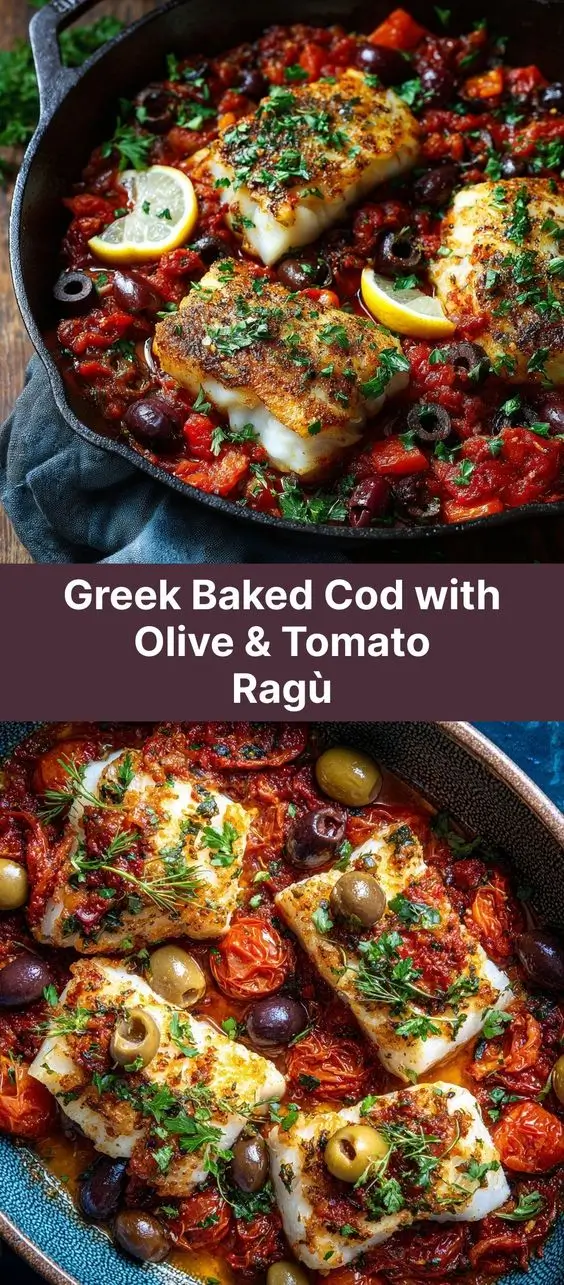
Greek Baked Cod with Olive & Tomato Ragù
The History
The culinary tradition of Greece is deeply rooted in the Mediterranean diet, a way of eating that has been celebrated for centuries for its balance, simplicity, and reliance on fresh, seasonal ingredients. Seafood plays a central role in Greek coastal cuisine, where fish from the Aegean and Ionian Seas have long sustained island communities. Cod, although not native to the warm waters surrounding Greece, became part of the Greek repertoire through trade and preservation techniques like salting—most famously seen in bakaliaros, salted cod fried during Lent. Over time, as refrigeration improved access to fresh fish, Greeks began incorporating fresh cod into their traditional stews and baked dishes.
The combination of tomatoes, olives, capers, and herbs in a simmered sauce reflects the influence of both local agriculture and historical cross-cultural exchanges with Italy and the broader Eastern Mediterranean. The tomato, introduced from the Americas in the 16th century, was slowly adopted into Greek cooking by the 19th century and is now a staple in dishes like domata salata (tomato salad) and gemista (stuffed vegetables). When paired with flaky white fish such as cod, this richly flavored ragù creates a harmonious blend of textures and tastes—tangy, briny, savory, and bright—that embodies the essence of Greek home cooking. This dish, while modern in presentation, draws from generations of resourceful, sun-drenched kitchens where every ingredient serves a purpose and nothing goes to waste.
Ingredients Breakdown
Each component of Greek Baked Cod with Olive & Tomato Ragù contributes to a layered, aromatic profile that celebrates the best of Mediterranean flavors. Here’s a detailed look at the key ingredients and their roles:
- Fresh Cod Fillets: A mild, firm white fish that holds up well to baking. Its delicate flavor absorbs the boldness of the ragù without overpowering it. Look for sustainably sourced Atlantic or Pacific cod with a clean, oceanic scent and firm, translucent flesh.
- Extra Virgin Olive Oil: The cornerstone of Greek cooking. It adds richness, helps carry flavors, and promotes even browning. Use a high-quality oil with fruity or peppery notes for maximum impact.
- Garlic: Minced fresh garlic provides an aromatic base. When sautéed gently, it becomes sweet and mellow, enhancing the depth of the sauce without overwhelming heat.
- Onion: Yellow or red onions add sweetness and body. Slow-cooked until soft, they form the foundation of the ragù’s savory backbone.
- Canned Crushed Tomatoes: Preferably San Marzano or another plum variety, these offer concentrated flavor, natural acidity, and a velvety texture. They break down easily into a luscious sauce.
- Dry White Wine: Adds complexity and acidity, helping deglaze the pan and lift browned bits. Choose a crisp, unoaked wine like Assyrtiko or Sauvignon Blanc—something you’d enjoy drinking.
- Kalamata Olives: These briny, purple Greek olives bring a distinctive tang and meaty texture. Pitted and halved, they burst with flavor during baking.
- Capers: Salty, lemony pickled flower buds that elevate the brightness of the dish. Rinse lightly before use to moderate saltiness.
- Fresh Oregano: A quintessential Greek herb, oregano imparts earthy, slightly floral notes. Fresh sprigs are preferred, though dried can work in a pinch (use one-third the amount).
- Fresh Parsley: Added at the end for color and freshness, flat-leaf parsley offers a clean, grassy contrast to the robust sauce.
- Lemon Zest and Juice: Brightens the entire dish, cutting through richness and enhancing other flavors. The zest contains aromatic oils that intensify the citrus profile.
- Red Pepper Flakes: Optional, but a pinch introduces subtle warmth without dominating the palate.
- Salt and Black Pepper: Essential seasonings used thoughtfully to enhance without oversalting, especially since olives and capers contribute sodium.
Step-by-Step Recipe
- Preheat the Oven: Set your oven to 375°F (190°C). This moderate temperature ensures the cod cooks evenly without drying out while allowing the ragù to meld and deepen in flavor.
- Prepare the Tomato Ragù Base: In a large oven-safe skillet or sauté pan, heat 3 tablespoons of extra virgin olive oil over medium heat. Add 1 finely chopped yellow onion and cook for 5–7 minutes, stirring occasionally, until translucent and beginning to caramelize. Stir in 3 cloves of minced garlic and a pinch of red pepper flakes (if using), cooking for another 30 seconds until fragrant.
- Build the Sauce: Pour in ½ cup of dry white wine to deglaze the pan, scraping up any browned bits with a wooden spoon. Allow the wine to reduce by half, about 2–3 minutes. Then stir in 2 cups of crushed tomatoes (preferably fire-roasted for added depth), 1 teaspoon of dried oregano (or 1 tablespoon fresh), and a generous grind of black pepper. Bring to a gentle simmer and let cook for 10 minutes, allowing the flavors to marry.
- Incorporate Briny Elements: Stir in ½ cup of pitted and halved Kalamata olives and 2 tablespoons of rinsed capers. Let the ragù continue to simmer for another 5 minutes. Taste and adjust seasoning—remember to account for salt from olives and capers before adding more.
- Prepare the Cod: While the sauce simmers, pat 4 cod fillets (about 6 oz each) dry with paper towels. Season lightly on both sides with salt, pepper, and a sprinkle of lemon zest. This step ensures proper browning and prevents steaming.
- Arrange in the Pan: Gently place the cod fillets on top of the ragù, nestling them into the sauce without submerging them completely. This allows the fish to poach slightly in the steam while absorbing flavor.
- Bake: Transfer the skillet to the preheated oven. Bake uncovered for 18–22 minutes, depending on thickness, until the cod is opaque throughout and flakes easily with a fork. Avoid overcooking, as cod can become dry.
- Finish with Freshness: Remove from the oven and sprinkle generously with chopped fresh parsley and a final grating of lemon zest. Drizzle with an additional tablespoon of high-quality olive oil for shine and aroma.
- Rest and Serve: Let the dish rest for 3–5 minutes before serving. This allows the juices to redistribute and the flavors to settle. Serve directly from the skillet for a rustic presentation.
Tips
- Choose Sustainable Cod: Opt for cod certified by organizations like MSC (Marine Stewardship Council) to support responsible fishing practices.
- Don’t Overcook the Fish: Cod turns rubbery when overdone. Use a thermometer if needed—the internal temperature should reach 145°F (63°C), but visual cues (flaking, opacity) are often sufficient.
- Oven-Safe Pan Is Key: Use a cast-iron skillet, enameled Dutch oven, or heavy stainless steel pan that can go from stove to oven safely.
- Enhance Flavor with Anchovy Paste (Optional): For umami depth without overt fishiness, stir in ½ teaspoon of anchovy paste into the ragù while sautéing the onions.
- Use Fresh Herbs Whenever Possible: Fresh oregano and parsley make a noticeable difference in brightness compared to dried versions.
- Balance Salt Carefully: Since olives and capers are naturally salty, always taste before adding extra salt. You may need none at all.
- Let It Rest: Allowing the dish to sit briefly after baking improves texture and flavor integration.
- Reheat Gently: If reheating leftovers, do so slowly in a covered pan over low heat or in the oven at 275°F to preserve moisture.
Variations and Customizations
This recipe is wonderfully adaptable to different tastes, dietary needs, and available ingredients:
- Protein Swap: Replace cod with haddock, halibut, sea bass, or even canned tuna steaks for a quicker version. For a vegetarian twist, use thick slices of roasted eggplant or cauliflower steaks.
- Tomato Alternatives: Try fire-roasted tomatoes for smokiness, sun-dried tomatoes (chopped finely) for intensity, or passata for a smoother texture.
- Add Vegetables: Stir in chopped bell peppers, zucchini, or artichoke hearts during the simmering phase for a heartier ragù.
- Mediterranean Grain Bowl: Serve the finished dish over cooked farro, orzo, or bulgur wheat for a satisfying one-bowl meal.
- Spice It Up: Add a diced fresh chili or increase red pepper flakes for more heat.
- Citrus Variations: Substitute orange zest or Meyer lemon juice for a sweeter citrus note.
- Creamy Twist: Stir in a spoonful of Greek yogurt or a splash of heavy cream at the end for a richer sauce (not traditional, but delicious).
- Herb Swaps: Thyme, marjoram, or dill can complement or replace oregano based on preference.
- Gluten-Free and Dairy-Free: This recipe is naturally gluten-free and dairy-free—just ensure all packaged ingredients (like canned tomatoes) meet your standards.
Health Considerations and Nutritional Value
Greek Baked Cod with Olive & Tomato Ragù aligns beautifully with the principles of the Mediterranean diet, widely recognized for promoting heart health, longevity, and overall wellness. Here’s a breakdown of its nutritional benefits:
- High-Quality Protein: Cod is low in fat and calories but rich in complete protein, supporting muscle maintenance and satiety.
- Heart-Healthy Fats: Extra virgin olive oil provides monounsaturated fats and antioxidants like polyphenols, which help reduce inflammation and improve cholesterol levels.
- Rich in Omega-3s: While cod contains less omega-3 than fatty fish like salmon, it still contributes to essential fatty acid intake, crucial for brain and cardiovascular health.
- Low in Saturated Fat: This dish avoids butter and cream, relying instead on plant-based fats and lean protein.
- Antioxidant-Rich Ingredients: Tomatoes supply lycopene (enhanced by cooking and fat), while garlic and onions contain allicin and quercetin—compounds linked to immune support and reduced chronic disease risk.
- Mineral Boost: Kalamata olives provide iron, copper, and calcium, while capers offer manganese and vitamin K.
- Digestive Benefits: The fiber from tomatoes and onions supports gut health, and fermented elements like capers may contribute beneficial probiotics.
- Low Glycemic Index: With no refined grains or sugars, this dish is suitable for blood sugar management.
Nutritional Estimate (per serving, based on 4 servings):
| Nutrient | Amount |
|---|---|
| Calories | ~320 kcal |
| Protein | 30 g |
| Total Fat | 18 g |
| Saturated Fat | 3 g |
| Monounsaturated Fat | 11 g |
| Carbohydrates | 12 g |
| Dietary Fiber | 3 g |
| Sugars | 8 g (naturally occurring) |
| Sodium | ~600 mg (varies with olives/capers) |
| Vitamin C | 45% DV |
| Vitamin A | 15% DV |
| Calcium | 10% DV |
| Iron | 12% DV |
Note: Sodium content can be reduced by rinsing olives and capers thoroughly or using low-sodium canned tomatoes.
Ingredients
- 4 fresh cod fillets (6 oz each), skinless
- ¼ cup extra virgin olive oil (plus extra for drizzling)
- 1 medium yellow onion, finely chopped
- 3 garlic cloves, minced
- ½ cup dry white wine (e.g., Assyrtiko, Sauvignon Blanc)
- 2 cups crushed tomatoes (canned or fresh)
- ½ cup pitted Kalamata olives, halved
- 2 tbsp capers, rinsed
- 1 tbsp fresh oregano leaves, chopped (or 1 tsp dried)
- 2 tbsp fresh parsley, chopped
- Zest and juice of 1 lemon
- ½ tsp red pepper flakes (optional)
- Salt and freshly ground black pepper to taste
Directions
- Preheat oven to 375°F (190°C).
- In an oven-safe skillet, heat olive oil over medium heat. Add chopped onion and sauté for 5–7 minutes until soft and golden.
- Add minced garlic and red pepper flakes; cook for 30 seconds until fragrant.
- Pour in white wine to deglaze, scraping up browned bits. Simmer until reduced by half, about 2–3 minutes.
- Stir in crushed tomatoes, oregano, and black pepper. Simmer for 10 minutes.
- Add Kalamata olives and capers. Simmer 5 more minutes. Taste and adjust seasoning.
- Pat cod fillets dry and season with salt, pepper, and lemon zest.
- Place fillets gently on top of the ragù, pressing slightly into the sauce.
- Transfer skillet to oven and bake for 18–22 minutes, until cod is flaky and opaque.
- Remove from oven, sprinkle with parsley and lemon juice, and drizzle with olive oil.
- Rest for 5 minutes before serving.
FAQ
Can I make this ahead of time?
Yes! Prepare the ragù up to two days in advance and refrigerate. When ready to cook, bring it to a simmer, add the cod, and bake as directed. Do not pre-bake the full dish, as the fish will dry out upon reheating.
Can I freeze this dish?
It’s best to freeze only the ragù (without fish) for up to 3 months. Thaw overnight, reheat, then add fresh cod and bake. Freezing cooked cod often results in a mushy texture.
What can I serve with this dish?
Excellent pairings include crusty whole-grain bread, lemon rice, roasted potatoes, grilled vegetables, or a simple Greek salad with feta and cucumbers.
Is this recipe suitable for a keto diet?
With minor adjustments, yes. Reduce tomato quantity slightly and serve without grains or potatoes. The dish is already low in carbs (~12g per serving).
Can I use frozen cod?
Yes, but thaw it completely in the refrigerator overnight. Pat very dry before seasoning to prevent excess moisture in the pan.
Why did my sauce turn out watery?
Ensure the ragù simmers sufficiently before baking to reduce excess liquid. Also, avoid covering the dish while baking, which traps steam.
Can I cook this entirely on the stovetop?
Yes. Cover the skillet and simmer gently over low heat for 12–15 minutes until cod is cooked through. Check frequently to avoid breaking the fillets.
Summary
Greek Baked Cod with Olive & Tomato Ragù is a vibrant, healthful dish that captures the soul of Mediterranean cuisine—simple ingredients transformed into something deeply flavorful and nourishing. Perfect for weeknight dinners or elegant gatherings, it brings together tender cod, briny olives, and a herb-kissed tomato sauce in perfect harmony.