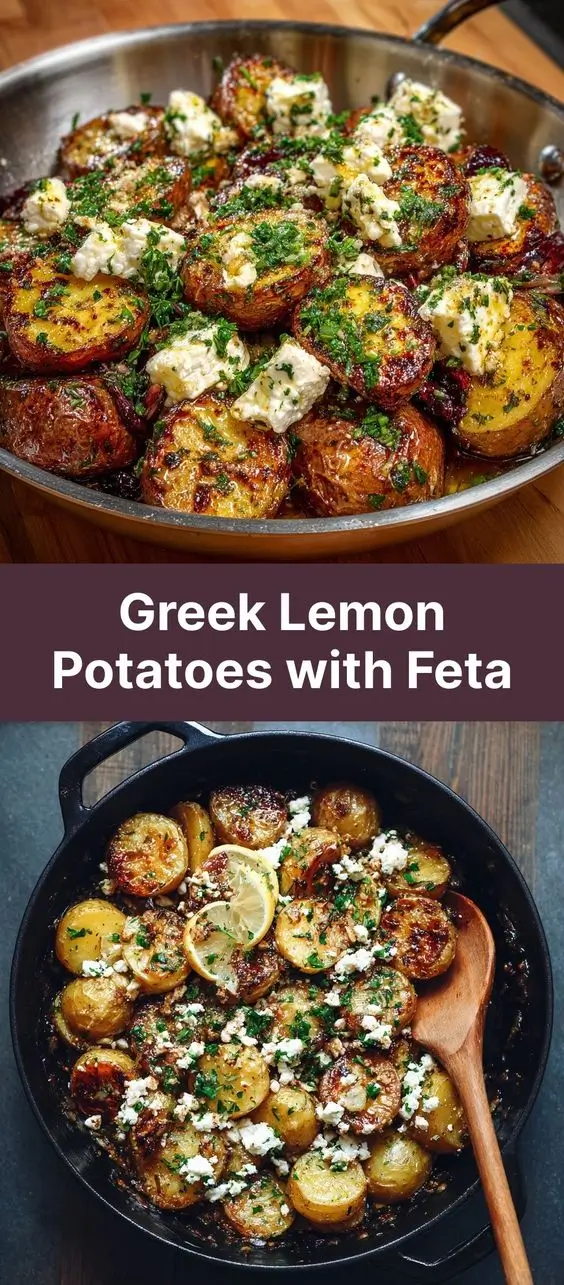
Greek Lemon Potatoes with Feta: A Zesty, Crispy Delight from the Mediterranean
The History: A Taste of Greece Rooted in Tradition
Greek Lemon Potatoes with Feta are more than just a side dish—they’re a celebration of Greek culinary heritage. Originating from the sun-drenched hills and coastal villages of Greece, this recipe reflects the essence of Mediterranean cooking: simple ingredients transformed into something extraordinary through bold flavors and time-honored techniques. The use of lemon and olive oil dates back centuries in Greek cuisine, where these staples were not only abundant but also believed to promote health and longevity.
Potatoes, though native to South America, were introduced to Europe in the 16th century and gradually became a beloved part of Greek home cooking by the 1800s. Over time, cooks began roasting them slowly in olive oil, infusing them with garlic, oregano, and fresh lemon juice—a method that allowed the potatoes to develop a golden, crispy exterior while remaining fluffy inside. The addition of feta cheese, a quintessential Greek ingredient made from sheep’s or goat’s milk, elevated the dish further, adding a tangy, creamy contrast that complements the citrusy potatoes perfectly.
Today, Greek Lemon Potatoes with Feta are served at family gatherings, festive occasions like Easter and weddings, and everyday meals across Greece and the global Greek diaspora. This dish embodies the heart of Greek hospitality—warm, generous, and deeply flavorful.
Ingredients Breakdown: Building Layers of Flavor
The magic of Greek Lemon Potatoes with Feta lies in its simplicity and quality of ingredients. Each component plays a crucial role in creating a harmonious blend of tangy, savory, herbal, and rich flavors:
- Potatoes: Waxy varieties such as Yukon Gold or red potatoes work best because they hold their shape during long roasting and absorb the lemony marinade beautifully.
- Fresh Lemons: Both the juice and zest are essential. The acidity brightens the dish, cuts through the richness of the oil and cheese, and helps tenderize the potatoes.
- Extra Virgin Olive Oil: A cornerstone of Mediterranean cuisine, high-quality olive oil adds fruitiness and aids in achieving a crisp crust. It also carries the flavors of the herbs and aromatics throughout the dish.
- Feta Cheese: Authentic Greek feta (preferably PDO-certified) offers a salty, creamy texture that softens in the oven and melts slightly around the potatoes.
- Fresh Garlic: Minced or thinly sliced, garlic infuses the oil with pungent warmth and becomes mellow and sweet when roasted.
- Dried Oregano: A hallmark herb in Greek cooking, oregano contributes an earthy, slightly floral note that pairs perfectly with lemon and olive oil.
- Salt and Black Pepper: Enhance all other flavors. Use sea salt for authenticity and a clean mineral taste.
- Vegetable Broth or Water (optional): Adding a small amount to the pan prevents drying and creates a light sauce as it reduces and emulsifies with the oil and lemon.
Optional additions might include rosemary for a pine-like aroma, thyme for subtle sweetness, or a pinch of red pepper flakes for gentle heat—all of which can personalize the dish without straying from tradition.
Step-by-Step Recipe: How to Make Perfect Greek Lemon Potatoes with Feta
- Preheat the Oven: Set your oven to 400°F (200°C). This ensures a hot environment for even roasting and proper browning.
- Prepare the Potatoes: Wash and peel (optional) 2 pounds (about 900g) of Yukon Gold or red potatoes. Cut them into evenly sized chunks—about 1.5 inches—to ensure uniform cooking.
- Make the Marinade: In a large bowl, whisk together ⅓ cup fresh lemon juice (from about 2–3 lemons), 1 tablespoon lemon zest, ½ cup extra virgin olive oil, 4 cloves minced garlic, 1½ teaspoons dried oregano, 1 teaspoon sea salt, and ½ teaspoon freshly ground black pepper.
- Coat the Potatoes: Add the potato pieces to the marinade and toss gently until fully coated. Let them marinate for at least 20–30 minutes at room temperature (or up to 1 hour in the fridge) to absorb the flavors.
- Arrange on Baking Sheet: Line a large baking sheet or roasting pan with parchment paper or lightly grease it. Spread the potatoes in a single layer, cut-side down where possible, to maximize surface contact and crispiness.
- Pour Remaining Marinade: Drizzle any leftover marinade over the potatoes. Pour ¼ cup of vegetable broth or water into the bottom of the pan—this helps steam the potatoes initially and prevents burning while allowing slow caramelization.
- Roast Initially: Place in the preheated oven and roast for 30 minutes. After this time, carefully flip each potato piece using a spatula to promote even browning on all sides.
- Add Feta: Crumble ¾ cup (about 150g) of feta cheese over the potatoes. You can scatter it evenly or nestle chunks between the potatoes.
- Continue Roasting: Return the pan to the oven and roast for another 25–35 minutes, or until the potatoes are deeply golden, crispy on the outside, and tender when pierced with a fork. The feta will soften and begin to brown slightly at the edges.
- Optional Broil: For extra color, switch the oven to broil for the last 2–3 minutes, watching closely to avoid burning.
- Garnish and Serve: Remove from the oven and let rest for 5 minutes. Sprinkle with chopped fresh parsley, additional lemon zest, or a final crack of black pepper before serving.
Tips for Success: Mastering the Perfect Batch
- Uniform Cutting: Ensure all potato pieces are roughly the same size to prevent some from burning while others remain undercooked.
- Don’t Skip the Marinating Time: Even a short rest allows the potatoes to soak up the lemon-garlic-oregano infusion, enhancing flavor from within.
- Use a Heavy Pan: A thick aluminum or cast iron roasting pan distributes heat evenly and promotes better browning compared to thin trays.
- Resist Stirring Too Often: Limit flipping to once during cooking to allow proper searing and crust development.
- Choose High-Quality Feta: Opt for block feta stored in brine rather than pre-crumbled versions, which tend to be drier and less flavorful.
- Adjust Acidity: If you find lemon overpowering, reduce juice to ¼ cup and balance with a touch of honey or maple syrup for complexity.
- Room Temperature Start: Cold potatoes from the fridge may cook unevenly; bring them close to room temp before roasting.
- Maximize Crispiness: For ultra-crispy results, increase oven rack height so potatoes are closer to the top heating element during the final phase.
Variations and Customizations: Make It Your Own
While traditional Greek Lemon Potatoes with Feta are delicious as-is, there are many ways to adapt the recipe to suit dietary preferences or creative inspiration:
- Vegan Version: Replace feta with vegan feta made from tofu, almonds, or coconut-based alternatives. Nutritional yeast can add a cheesy umami note.
- Herb Variations: Swap oregano for fresh rosemary, thyme, or marjoram. A mix of herbs adds depth and aromatic complexity.
- Add Vegetables: Toss in halved cherry tomatoes, sliced red onions, bell peppers, or zucchini for a colorful, nutrient-rich medley.
- Protein Boost: Top with grilled chicken souvlaki, lamb chops, or shrimp to turn this side into a hearty main course.
- Spicy Kick: Add ½ teaspoon smoked paprika or a pinch of crushed red pepper flakes to the marinade for warmth and intrigue.
- Dairy-Free Cheesy Flavor: Use kalamata olives or capers instead of feta for a briny, salty punch without dairy.
- Smoky Twist: Drizzle with a bit of liquid smoke or use smoked sea salt to mimic the flavor of traditional wood-fired ovens.
- Citrus Swaps: Try orange or grapefruit juice and zest for a sweeter, floral twist—especially lovely in spring and summer.
- Mini Skillet Version: Prepare individual portions in cast iron skillets for a rustic presentation ideal for dinner parties.
- Cold Salad Option: Chill leftovers and serve as a cold potato salad with extra herbs, cucumber, and a light vinaigrette.
Health Considerations and Nutritional Value
Greek Lemon Potatoes with Feta aren’t just tasty—they offer several nutritional benefits when enjoyed as part of a balanced diet:
- Complex Carbohydrates: Potatoes provide sustained energy, fiber (especially if skins are left on), and essential vitamins like vitamin C and B6.
- Heart-Healthy Fats: Extra virgin olive oil is rich in monounsaturated fats and antioxidants, linked to reduced inflammation and improved cardiovascular health.
- Calcium and Protein: Feta cheese contributes moderate amounts of protein and calcium, supporting bone and muscle function.
- Low in Sugar: Naturally free from added sugars, this dish relies on whole-food ingredients for flavor.
- Antioxidant-Rich Herbs: Oregano and garlic contain compounds with antimicrobial and anti-inflammatory properties.
That said, there are a few considerations:
- Sodium Content: Feta and added salt contribute to higher sodium levels. To reduce sodium, choose low-salt feta, decrease added salt, or rinse feta briefly before use.
- Fat Content: While healthy, olive oil is calorie-dense. Use measured amounts to keep portions in check.
- Glycemic Index: Potatoes have a moderate to high GI. Pairing them with protein, fiber, and healthy fats helps stabilize blood sugar.
- Lactose Sensitivity: Traditional feta contains lactose. Lactose-free or plant-based alternatives can be used if needed.
For a lighter version, try reducing oil by half and replacing some liquid with broth, or air-frying the potatoes after marinating for a crisp result with less fat.
Full Ingredient List
- 2 pounds (900g) Yukon Gold or red potatoes, unpeeled or peeled
- ⅓ cup (80ml) fresh lemon juice (about 2–3 large lemons)
- 1 tablespoon lemon zest
- ½ cup (120ml) extra virgin olive oil
- 4 cloves garlic, minced
- 1½ teaspoons dried oregano
- 1 teaspoon sea salt (adjust to taste)
- ½ teaspoon freshly ground black pepper
- ¾ cup (150g) crumbled Greek feta cheese
- ¼ cup (60ml) vegetable broth or water
- Chopped fresh parsley, for garnish
Directions Recap
- Preheat oven to 400°F (200°C).
- Peel and cut potatoes into 1.5-inch chunks.
- In a bowl, combine lemon juice, zest, olive oil, garlic, oregano, salt, and pepper.
- Add potatoes and toss to coat. Marinate 20–60 minutes.
- Transfer to a greased or parchment-lined baking sheet in a single layer.
- Pour remaining marinade and broth/water into the pan.
- Roast for 30 minutes, then flip potatoes.
- Sprinkle feta over the top.
- Roast another 25–35 minutes until golden and tender.
- Optional: Broil 2–3 minutes for extra browning.
- Garnish with parsley and serve warm.
Frequently Asked Questions (FAQ)
Can I make Greek Lemon Potatoes with Feta ahead of time?
Yes! You can prep the potatoes and marinade up to a day in advance. Assemble and roast just before serving for best texture. Leftovers reheat well in the oven or air fryer (avoid microwaving to preserve crispness).
Why are my potatoes soggy?
This usually happens if the pan is overcrowded, the oven isn’t hot enough, or too much liquid is added. Ensure single-layer spacing, accurate oven temperature, and minimal added liquid beyond what’s recommended.
Can I use frozen potatoes?
Not recommended. Frozen potatoes release excess moisture and won’t crisp properly. Always use fresh.
Is this dish gluten-free?
Yes, naturally gluten-free. Just confirm that your broth and feta are certified gluten-free if sensitivity is a concern.
Can I use a different cheese?
You can try halloumi (grilled first), pecorino, or goat cheese, but feta remains the most authentic choice for flavor and texture.
How long do leftovers last?
Store in an airtight container in the refrigerator for up to 4 days. Reheat in the oven at 350°F (175°C) for 10–15 minutes to restore crispiness.
Can I cook this in an air fryer?
Absolutely! Cook in batches at 380°F (190°C) for 20–25 minutes, shaking halfway. Add feta in the last 5 minutes.
Do I need to peel the potatoes?
Peeling is optional. Unpeeled potatoes add fiber and rustic charm, while peeled ones offer a smoother texture.
Summary
Greek Lemon Potatoes with Feta are a vibrant, aromatic dish that brings the sunny flavors of the Mediterranean to your table—crispy on the outside, tender within, and bursting with lemon, garlic, and oregano.
Easy to customize and perfect alongside grilled meats or as a standalone vegetarian delight, this timeless recipe is sure to become a weekly favorite in your kitchen.