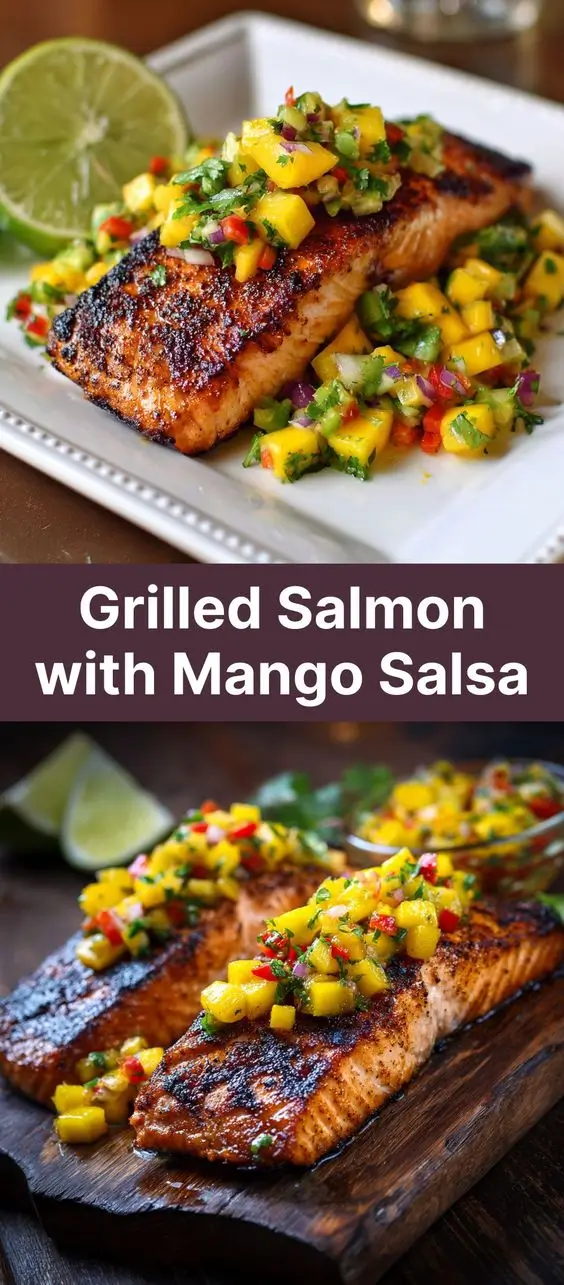
Grilled Salmon with Mango Salsa: A Tropical Fusion of Flavors
Introduction
Imagine a dish that combines the rich, buttery flavor of perfectly grilled salmon with the bright, zesty freshness of a tropical mango salsa. Grilled Salmon with Mango Salsa is more than just a meal—it’s a culinary experience that transports your taste buds to a sun-kissed beachside paradise. This recipe brings together the best of both worlds: the savory depth of high-quality salmon and the sweet-tangy punch of ripe mangoes, cilantro, red onion, and lime. Whether you’re cooking for a romantic dinner, a family gathering, or simply treating yourself to something delicious and nutritious, this dish delivers on every front—flavor, presentation, and health benefits.
Perfectly suited for summer barbecues or elegant weeknight dinners, this recipe balances simplicity with sophistication. The natural oils in the salmon keep it moist as it sizzles over the grill, while the mango salsa adds a refreshing contrast that cuts through the richness. It’s light yet satisfying, vibrant yet comforting—a true celebration of fresh ingredients and bold flavors.
The History
While grilled fish has been a staple in coastal cuisines around the world for centuries, the fusion of salmon with tropical fruit salsas like mango salsa is a relatively modern culinary innovation. Its roots lie in the late 20th-century rise of fusion cuisine, particularly in regions like California and Florida, where chefs began blending Latin American, Caribbean, and Pacific Rim influences into new and exciting dishes.
Mango salsa itself draws inspiration from traditional Mexican pico de gallo, which typically features tomatoes, onions, chili peppers, and cilantro. As global trade made exotic fruits more accessible, cooks began experimenting with alternatives, and mango—native to South Asia but now grown in tropical climates worldwide—emerged as a favorite due to its juicy sweetness and firm texture when diced.
Salmon, especially wild-caught Pacific salmon, has long been prized by Indigenous peoples of the Pacific Northwest for its nutritional value and ceremonial significance. When combined with the vibrant flavors of mango salsa, it represents a beautiful marriage of cultures—one rooted in tradition and sustainability, the other in creativity and global exchange. Today, this dish appears on menus from upscale seafood restaurants to backyard cookouts, symbolizing a harmonious blend of health, flavor, and cultural diversity.
Ingredients Breakdown
To create a truly exceptional Grilled Salmon with Mango Salsa, each ingredient must be chosen with care. Below is a detailed breakdown of what goes into this dish and why each component matters:
- Salmon Fillets (6–8 oz each): Opt for wild-caught Atlantic or sockeye salmon if possible. Wild salmon tends to have a richer color, firmer texture, and higher levels of heart-healthy omega-3 fatty acids compared to farmed varieties. Look for fillets with even thickness to ensure uniform cooking.
- Olive Oil: Extra virgin olive oil not only helps prevent the fish from sticking to the grill but also enhances moisture and carries flavor. Its monounsaturated fats contribute to the overall heart-healthy profile of the dish.
- Fresh Lime Juice: Adds acidity that brightens the salmon and complements the sweetness of the mango. Freshly squeezed juice is essential—bottled versions lack the vibrant tang needed for balance.
- Garlic (minced): Provides a subtle aromatic base that deepens the savory notes without overpowering the delicate fish.
- Sea Salt and Black Pepper: Enhance natural flavors and help form a light crust on the exterior during grilling.
- Fresh Mango (ripe but firm): The star of the salsa. Choose mangoes that yield slightly to gentle pressure and have a fragrant, floral aroma near the stem. Avoid overripe mangoes, which can turn mushy in the salsa.
- Red Onion: Offers a crisp bite and mild sharpness. Soaking in cold water for 5–10 minutes before use reduces its pungency and prevents it from dominating the salsa.
- Red Bell Pepper: Adds color, crunch, and a touch of sweetness. It pairs beautifully with mango and boosts vitamin C content.
- Fresh Cilantro: Delivers a citrusy, herbal freshness characteristic of Latin and Southeast Asian salsas. Use the leaves and tender stems for maximum flavor.
- Jalapeño (seeded and finely diced): Introduces a gentle heat. Removing the seeds and membranes controls spiciness. For a milder version, substitute with poblano pepper.
- Lime Zest: Concentrated lime flavor that intensifies the salsa without adding extra liquid. Use a microplane for fine shreds.
- Honey or Agave (optional): A small drizzle can enhance sweetness if the mango isn’t quite ripe enough, though most mangoes are naturally sweet.
- Avocado (optional addition to salsa): Adds creaminess and healthy fats. Fold in just before serving to prevent browning.
Step-by-Step Recipe
- Prepare the Mango Salsa: In a medium mixing bowl, combine 1 cup diced ripe mango, ¼ cup finely chopped red onion (soaked in cold water and drained), ¼ cup diced red bell pepper, 2 tablespoons chopped fresh cilantro, 1 tablespoon finely minced jalapeño (adjust to taste), and the zest and juice of one lime. Gently stir to combine. Season with a pinch of sea salt and optional honey. Cover and refrigerate for at least 20 minutes to allow flavors to meld. If using avocado, add it just before serving.
- Prep the Salmon: Pat the salmon fillets dry with paper towels—this ensures better searing and prevents steaming. Place them skin-side down (if skin-on) on a clean plate. Drizzle each fillet with about ½ teaspoon of olive oil, then rub evenly across the surface using your fingers or a brush.
- Season the Salmon: Sprinkle both sides of the fillets with salt and freshly ground black pepper. In a small bowl, mix 1 minced garlic clove with ½ teaspoon olive oil and ½ teaspoon lime juice; brush this mixture lightly over the top of each fillet for added flavor.
- Preheat the Grill: Heat your grill to medium-high (about 375°F–400°F). Clean the grates thoroughly and oil them using a high-smoke-point oil (like canola or vegetable oil) and a folded paper towel held with tongs to prevent sticking.
- Grill the Salmon: Place the salmon fillets skin-side down directly on the preheated grill. Close the lid and cook undisturbed for 4–5 minutes. You’ll know it’s ready to flip when the edges begin to turn opaque and the fish lifts easily from the grates. Using a wide spatula, carefully flip the fillets and cook for an additional 2–4 minutes, depending on thickness. The salmon is done when it reaches an internal temperature of 125°F–130°F and flakes gently with a fork.
- Rest Before Serving: Remove the salmon from the grill and let it rest for 2–3 minutes. This allows juices to redistribute, ensuring a moist and flavorful bite.
- Assemble and Serve: Plate the grilled salmon and top generously with chilled mango salsa. Garnish with extra cilantro sprigs and a lime wedge for presentation.
Tips
- Don’t Overcook the Salmon: Salmon continues to cook slightly after removal from heat (carryover cooking). Pull it off the grill just before it reaches your desired doneness.
- Skin-On vs. Skin-Off: Cooking with the skin on helps protect the delicate flesh and makes flipping easier. If you prefer skinless, place the salmon on a well-oiled grill mat or use indirect heat to minimize sticking.
- Use a Fish Spatula: Its thin, flexible edge slides easily under fragile fish without breaking it apart.
- Chill the Salsa Ahead: Preparing the mango salsa 30–60 minutes in advance enhances flavor integration. However, avoid making it more than 2 hours ahead unless you’re adding avocado later.
- Grill Temperature Matters: Too hot, and the outside burns before the inside cooks; too low, and the fish sticks. Medium-high is ideal.
- Check Doneness Visually: The center should be slightly translucent pink when done medium-rare, or fully opaque for well-done (though this is not recommended, as it dries out easily).
- Add Smoky Flavor: For a deeper smoky note, consider grilling the salmon over wood chips (such as alder or cedar) or using a cedar plank.
Variations and Customizations
This recipe is highly adaptable to suit different tastes, dietary needs, and seasonal availability:
- Pineapple Salsa: Substitute mango with fresh pineapple for a tangier, juicier twist. Add a sprinkle of chili powder for a hint of warmth.
- Stone Fruit Salsa: During summer months, peaches or nectarines make excellent substitutes or additions to mango. Their floral sweetness pairs wonderfully with salmon.
- Spicy Version: Add a dash of cayenne pepper or a few drops of hot sauce to the salsa. Alternatively, include a second type of chili like serrano for extra kick.
- Herb Swaps: Replace cilantro with fresh mint or basil for a different aromatic profile—especially good with Thai-inspired variations.
- Citrus Variations: Swap lime for lemon, orange, or yuzu juice to alter the acidity and brightness of the dish.
- Grilled Mango Salsa: Lightly grill mango slices before dicing to add a caramelized depth to the salsa.
- Gluten-Free and Paleo-Friendly: This entire recipe is naturally gluten-free and fits well within paleo, keto (with reduced fruit), Whole30 (skip honey), and clean-eating lifestyles.
- Make it a Bowl: Serve the grilled salmon and salsa over quinoa, brown rice, cauliflower rice, or a bed of arugula for a complete grain bowl.
- Smoked Salmon Option: For a no-cook variation, serve cold smoked salmon atop the mango salsa for an elegant appetizer or brunch item.
Health Considerations and Nutritional Value
Grilled Salmon with Mango Salsa isn’t just delicious—it’s a powerhouse of nutrition:
- Omega-3 Fatty Acids: Salmon is one of the best sources of EPA and DHA, essential fats linked to reduced inflammation, improved brain function, and lower risk of heart disease.
- High-Quality Protein: Each 6-ounce serving provides about 34 grams of protein, supporting muscle repair, satiety, and metabolic health.
- Vitamins and Minerals: Rich in B vitamins (especially B12 and niacin), selenium, potassium, and vitamin D—nutrients vital for energy metabolism, immune function, and bone health.
- Antioxidants: Mangoes are loaded with vitamin C and beta-carotene (a precursor to vitamin A), promoting healthy skin, vision, and immune defenses.
- Fiber and Phytonutrients: The vegetables in the salsa—onion, bell pepper, cilantro—contribute fiber, flavonoids, and sulfur compounds known for their anti-inflammatory and detoxifying properties.
- Low in Saturated Fat: Especially when using minimal added oils, this dish remains heart-healthy and suitable for cholesterol-conscious diets.
- Glycemic Index: Despite the natural sugars in mango, the overall glycemic load is moderate due to fiber and healthy fats slowing sugar absorption.
- Dietary Balance: This meal offers a balanced macronutrient profile—lean protein, unsaturated fats, and complex carbohydrates (when served with grains or starchy veggies).
However, those with specific conditions should take note:
- Seafood Allergies: Not suitable for individuals with fish allergies.
- High-Purine Content: Salmon contains purines, which may exacerbate gout in sensitive individuals when consumed in excess.
- Mango Sensitivity: Rare, but some people may react to urushiol (a compound also found in poison ivy) present in mango skin. Always peel mangoes thoroughly and wash hands after handling.
- Sodium Content: Keep salt moderate if managing hypertension. Use herbs and citrus instead of salt to season.
Ingredients
For the Grilled Salmon:
- 4 salmon fillets (6–8 oz each, skin-on or skin-off)
- 2 tablespoons extra virgin olive oil (divided)
- 1 clove garlic, minced
- 1 teaspoon fresh lime juice
- ¾ teaspoon sea salt (divided)
- Freshly ground black pepper to taste
For the Mango Salsa:
- 1 large ripe mango, peeled and finely diced (about 1 cup)
- ¼ cup finely chopped red onion
- ¼ cup diced red bell pepper
- 2 tablespoons chopped fresh cilantro
- 1 tablespoon finely minced jalapeño (seeds removed for milder heat)
- Zest and juice of 1 lime
- Pinch of sea salt
- 1 teaspoon honey or agave (optional)
- ½ ripe avocado, diced (optional, add just before serving)
Directions
- In a medium bowl, combine all mango salsa ingredients: diced mango, red onion, red bell pepper, cilantro, jalapeño, lime zest, lime juice, salt, and optional honey. Stir gently to combine. Cover and refrigerate for 20–30 minutes to chill and meld flavors. If using avocado, fold it in right before serving.
- Pat the salmon fillets dry with paper towels. Place them on a plate and brush both sides lightly with olive oil.
- In a small bowl, mix minced garlic, ½ teaspoon olive oil, and 1 teaspoon lime juice. Brush this mixture over the top side of each fillet.
- Season both sides of the salmon with salt and pepper.
- Preheat grill to medium-high heat (375°F–400°F). Clean and oil the grates well.
- Place salmon fillets on the grill, skin-side down if applicable. Close the lid and cook for 4–5 minutes until the bottom is golden and the fish releases easily.
- Using a wide spatula, carefully flip the fillets and cook for another 2–4 minutes, depending on thickness, until the internal temperature reaches 125°F–130°F and the flesh flakes with a fork.
- Remove from heat and let rest for 2–3 minutes.
- Serve each fillet topped generously with mango salsa. Garnish with extra cilantro and lime wedges.
FAQ
Q: Can I bake the salmon instead of grilling?
A: Absolutely! Preheat oven to 400°F. Place seasoned salmon on a parchment-lined baking sheet and bake for 12–15 minutes, depending on thickness.
Q: How do I know when the salmon is done?
A: The salmon should flake easily with a fork and appear opaque throughout, except possibly in the very center for medium-rare. Use a meat thermometer: 125°F for medium-rare, 130°F for medium, 145°F for well-done (though this is less ideal).
Q: Can I make the mango salsa ahead of time?
A: Yes, prepare up to 2 hours in advance and store covered in the refrigerator. Do not add avocado until serving.
Q: Is frozen salmon okay to use?
A: Yes, but thaw it slowly in the refrigerator overnight. Never cook frozen salmon directly on the grill, as it will cook unevenly.
Q: Can I use canned mango?
A: Not recommended. Canned mango often has added sugar and a softer texture that doesn’t work well in salsa. Always use fresh.
Q: What sides go well with this dish?
A: Try grilled asparagus, coconut rice, quinoa salad, roasted sweet potatoes, or a simple mixed green salad with citrus vinaigrette.
Q: Can I use other types of fish?
A: Yes—try this salsa with grilled tuna, mahi-mahi, swordfish, or even chicken breast for a different twist.
Summary
Grilled Salmon with Mango Salsa is a vibrant, nutrient-rich dish that combines the succulent richness of salmon with the refreshing sweetness of tropical fruit. Easy to prepare yet impressive enough for guests, it’s a perfect choice for healthy, flavorful meals year-round.