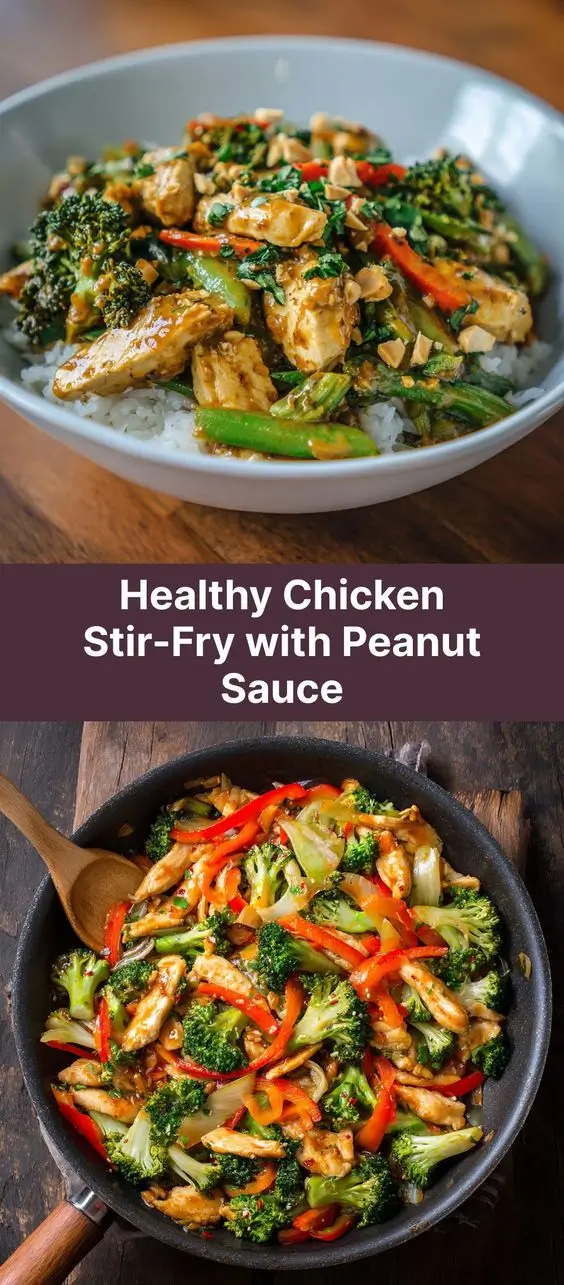
Healthy Chicken Stir-Fry with Peanut Sauce
Looking for a quick, delicious, and nutritious meal that satisfies your cravings while supporting your health goals? This Healthy Chicken Stir-Fry with Peanut Sauce is the perfect solution. Packed with lean protein, vibrant vegetables, and a creamy, flavor-packed peanut sauce, this dish combines bold Asian-inspired flavors with wholesome ingredients to create a balanced, satisfying meal in under 30 minutes.
The History of Stir-Frying and Peanut Sauces
Stir-frying is a cooking technique that originated in China over 2,000 years ago during the Han Dynasty. It became popular due to its efficiency—quick cooking over high heat preserves nutrients, texture, and color in vegetables while sealing in flavor. Traditionally done in a wok, stir-frying spread across Asia and eventually influenced global cuisines, especially through Chinese immigrant communities.
Peanut-based sauces, on the other hand, have roots in various culinary traditions, including Indonesian, Thai, and West African cuisines. In Southeast Asia, satay sauce—made from ground peanuts, spices, and coconut milk—became a staple condiment for grilled meats. Over time, fusion cuisine brought peanut sauces into stir-fries, particularly in modern American-Asian dishes where rich, nutty flavors complement savory proteins and fresh vegetables. Today, peanut sauce has evolved into a versatile ingredient used in everything from dipping sauces to salad dressings—and now, healthy stir-fries.
Ingredients Breakdown: What Makes This Dish Healthy?
This recipe emphasizes nutrient-dense, whole-food ingredients designed to support energy, immunity, and overall wellness:
- Skinless Chicken Breast: A lean source of high-quality protein essential for muscle repair and satiety.
- Mixed Vegetables (bell peppers, broccoli, carrots, snap peas): Rich in fiber, antioxidants, vitamins A, C, and K, and phytonutrients that reduce inflammation.
- Garlic and Ginger: Natural anti-inflammatory agents with immune-boosting properties.
- Low-Sodium Soy Sauce or Tamari: Adds umami depth without excessive salt; tamari is gluten-free for sensitive eaters.
- Natural Creamy Peanut Butter: Provides healthy monounsaturated fats, plant-based protein, and vitamin E. Choose unsweetened varieties without hydrogenated oils.
- Lime Juice: Enhances flavor and aids digestion while adding a boost of vitamin C.
- Coconut Aminos (optional): A soy-free, lower-sodium alternative to soy sauce, ideal for those avoiding soy or following paleo diets.
- Red Pepper Flakes or Fresh Chili: Capsaicin in chilies may boost metabolism and add a gentle kick.
- Olive Oil or Avocado Oil: Heart-healthy fats that withstand high-heat cooking better than many vegetable oils.
Step-by-Step Recipe
Ingredients
- 1 lb (450g) boneless, skinless chicken breast, thinly sliced
- 2 tbsp olive oil or avocado oil, divided
- 1 red bell pepper, thinly sliced
- 1 yellow bell pepper, thinly sliced
- 1 cup broccoli florets
- 1 medium carrot, julienned or thinly sliced
- 1 cup sugar snap peas
- 3 cloves garlic, minced
- 1 tbsp fresh ginger, grated
- ¼ cup low-sodium soy sauce (or tamari/coconut aminos)
- ¼ cup natural creamy peanut butter (unsweetened)
- 2 tbsp lime juice (about 1 lime)
- 1 tbsp rice vinegar
- 1 tsp honey or maple syrup (optional for slight sweetness)
- ½ tsp red pepper flakes (adjust to taste)
- ¼ cup water or low-sodium chicken broth
- 2 green onions, sliced (for garnish)
- 1 tbsp sesame seeds (for garnish)
- Cooked brown rice, quinoa, or cauliflower rice (for serving)
Directions
- Prepare the Peanut Sauce: In a medium bowl, whisk together peanut butter, soy sauce, lime juice, rice vinegar, honey (if using), red pepper flakes, and water until smooth. If the sauce is too thick, add another tablespoon of water at a time until it reaches a pourable consistency. Set aside.
- Prep Ingredients: Slice all vegetables and chicken into uniform, bite-sized pieces to ensure even cooking. Mince garlic and grate ginger.
- Cook the Chicken: Heat 1 tablespoon of oil in a large non-stick skillet or wok over medium-high heat. Add chicken slices in a single layer and cook for 5–6 minutes, stirring occasionally, until golden brown and cooked through (internal temperature should reach 165°F). Remove chicken and set aside.
- Stir-Fry Vegetables: In the same pan, add the remaining 1 tablespoon of oil. Add garlic and ginger, sautéing for 30 seconds until fragrant. Add broccoli and carrots first (as they take longer to cook), stir-frying for 3 minutes. Then add bell peppers and snap peas, cooking for another 3–4 minutes until vegetables are crisp-tender. Do not overcook—retain their bright color and crunch.
- Combine Everything: Return the cooked chicken to the pan. Pour the prepared peanut sauce over the mixture and stir well to coat everything evenly. Cook for 1–2 more minutes until heated through and the sauce slightly thickens.
- Serve: Divide cooked brown rice, quinoa, or cauliflower rice among bowls. Top with the chicken stir-fry. Garnish with sliced green onions and a sprinkle of sesame seeds.
- Enjoy Immediately: Serve hot for the best texture and flavor.
Expert Tips for the Perfect Stir-Fry
- Uniform Slicing: Cut chicken and vegetables into similar sizes so they cook evenly.
- High Heat, Quick Cooking: Stir-frying relies on high temperatures. Keep the heat up and keep ingredients moving to avoid burning.
- Don’t Crowd the Pan: Cook in batches if necessary. Overcrowding causes steaming instead of searing.
- Pre-Make Sauce: Prepare the peanut sauce ahead of time and store it in the fridge for up to 5 days. Just shake or stir before using.
- Use Fresh Garlic and Ginger: Avoid pre-minced versions for superior flavor.
- Add Veggies Strategically: Harder vegetables like carrots and broccoli go in first; softer ones like bell peppers and snap peas come later.
- Thicken or Thin the Sauce: Too thick? Add warm water or broth. Too thin? Simmer for an extra minute or add a bit more peanut butter.
- Boost Flavor: Finish with a splash of fish sauce or a dash of toasted sesame oil for added complexity (use sparingly).
Variations and Customizations
This recipe is highly adaptable—make it your own with these creative twists:
- Vegetarian/Vegan: Replace chicken with tofu, tempeh, or chickpeas. Use maple syrup instead of honey.
- Gluten-Free: Use tamari or coconut aminos instead of soy sauce.
- Nut-Free Option: Substitute sunflower seed butter or tahini for peanut butter.
- Extra Protein: Add edamame or top with a fried egg.
- Different Vegetables: Try zucchini, mushrooms, baby corn, bok choy, or cabbage based on seasonality.
- Spice It Up: Add sriracha, sambal oelek, or fresh jalapeños for more heat.
- Citrus Twist: Swap lime for orange juice in the sauce for a sweeter profile.
- Meal Prep Friendly: Assemble ingredients in containers and cook when ready. The sauce keeps well in glass jars.
Health Considerations and Nutritional Value
This Healthy Chicken Stir-Fry is designed to support a balanced diet. Here’s a breakdown per serving (based on 4 servings with brown rice):
| Nutrient | Amount per Serving |
|---|---|
| Calories | ~420 kcal |
| Protein | 32g |
| Total Fat | 18g |
| Saturated Fat | 3g |
| Carbohydrates | 35g |
| Dietary Fiber | 6g |
| Sugars | 9g (naturally occurring from veggies & minimal sweeteners) |
| Sodium | ~600mg (can be reduced further with coconut aminos and no-added-salt ingredients) |
| Vitamin A | 120% DV |
| Vitamin C | 150% DV |
| Iron | 15% DV |
| Calcium | 8% DV |
Key Health Benefits:
- Heart-Healthy Fats: Peanut butter contains monounsaturated fats linked to improved cholesterol levels.
- Blood Sugar Control: High fiber and protein content help stabilize blood glucose, making this meal suitable for diabetics when portion-controlled.
- Weight Management: High satiety value helps reduce snacking and overeating.
- Digestive Health: Fiber from vegetables and whole grains supports gut microbiome balance.
- Immune Support: Vitamin C from bell peppers and lime, plus antimicrobial properties of garlic and ginger.
Considerations:
- Allergies: Contains peanuts—avoid if allergic. Use seed butter alternatives as needed.
- Sodium Sensitivity: Opt for low-sodium soy sauce, tamari, or coconut aminos. Rinse canned ingredients if used.
- Kidney Concerns: Monitor potassium and phosphorus if on renal diet; adjust vegetables accordingly.
- Portion Control: While healthy, peanut butter is calorie-dense. Stick to recommended amounts.
Frequently Asked Questions (FAQ)
Can I make this stir-fry ahead of time?
Yes! Cook the components separately and store them in airtight containers in the fridge for up to 4 days. Reheat in a skillet over medium heat, adding a splash of water or broth to refresh the sauce.
Can I freeze this dish?
Freezing is possible, but vegetables may become softer upon thawing. Freeze without garnishes. Thaw in the refrigerator overnight and reheat gently on the stove.
Is this recipe keto-friendly?
Not in this form due to higher carbs from vegetables and rice. For a keto version, serve over cauliflower rice and reduce higher-carb veggies like carrots. Increase fat slightly with extra peanut butter or sesame oil.
How can I make the sauce creamier?
Add 1–2 tablespoons of coconut milk or Greek yogurt to the sauce for extra creaminess without sacrificing health benefits.
What can I use instead of peanut butter?
Sunflower seed butter, almond butter, or tahini work well. Note: tahini has a stronger, earthier flavor.
Can I use frozen vegetables?
Yes, but thaw and drain them first to prevent excess moisture in the stir-fry. Stir-fry slightly longer to remove residual water.
Why did my sauce separate?
Peanut butter can seize when mixed with acidic ingredients. Whisk vigorously or warm the sauce slightly before combining. Adding liquid gradually helps prevent clumping.
Is this safe for kids?
Absolutely! Kids love the creamy, mildly sweet flavor. Adjust spice levels by omitting red pepper flakes. Serve with fun shapes (use cookie cutters on veggies for picky eaters).
Summary
This Healthy Chicken Stir-Fry with Peanut Sauce delivers bold flavors, vibrant colors, and powerful nutrition in one quick and easy meal. Packed with lean protein, fiber-rich vegetables, and heart-healthy fats, it’s a balanced dish perfect for weeknight dinners, meal prep, or impressing guests.