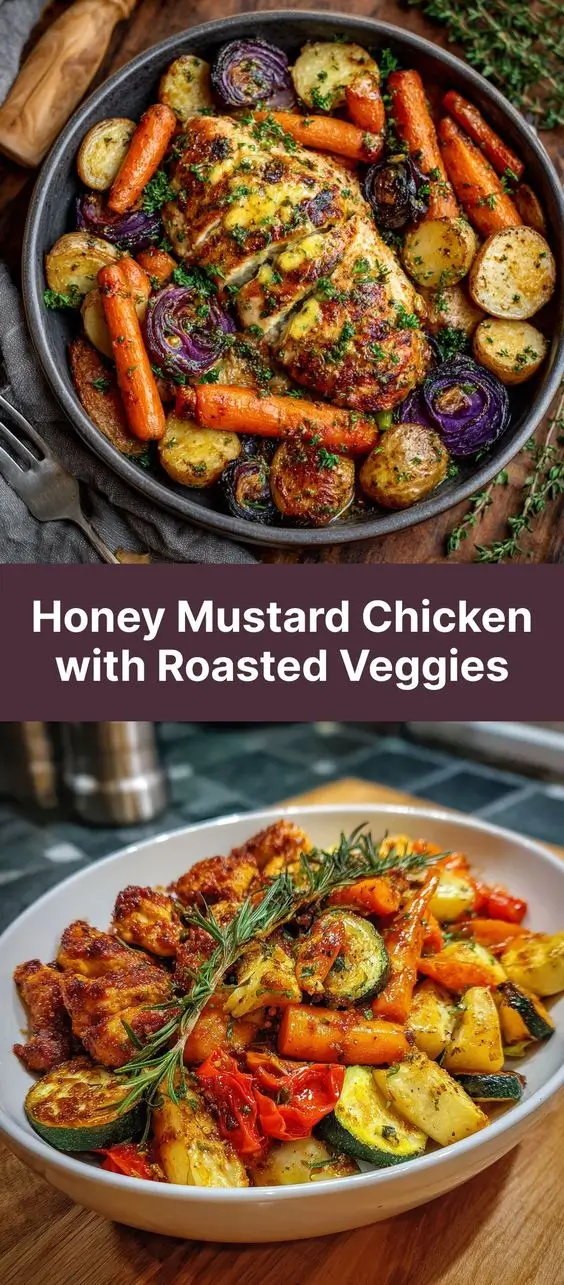
Honey Mustard Chicken with Roasted Veggies
If you’re in search of a wholesome, flavorful, and satisfying meal that’s both simple to prepare and packed with nutrition, look no further than Honey Mustard Chicken with Roasted Veggies. This dish seamlessly combines the sweet tanginess of honey mustard marinade with tender, juicy chicken breasts and a medley of vibrant roasted vegetables. Whether you’re cooking for your family on a weeknight or hosting friends for a casual dinner, this recipe is guaranteed to impress without overwhelming your schedule. Baked to golden perfection, the chicken develops a caramelized glaze while the veggies roast into crisp-tender deliciousness—each bite bursting with balanced flavors and textures.
The History
While there’s no definitive origin point for honey mustard as a flavor profile, its roots can be traced back centuries across multiple culinary traditions. The use of mustard as a condiment dates back to ancient Rome, where it was made by mixing ground mustard seeds with vinegar and unfermented grape juice. Honey, one of the oldest natural sweeteners known to humankind, has been used in cooking and preservation since prehistoric times, especially in Mediterranean and Middle Eastern cuisines.
The combination of honey and mustard likely emerged in European kitchens, particularly in French and German cooking, where sweet-savory pairings are celebrated. The French preparation moutarde au miel became popular as a table condiment and later evolved into marinades and glazes for meats, especially poultry. In modern American cuisine, honey mustard gained widespread popularity in the 20th century, especially through fast food chains introducing honey mustard dipping sauces.
Roasting vegetables, on the other hand, is an age-old technique used across cultures—from Roman hearths to colonial hearth ovens. The method enhances natural sugars through caramelization, making even the humblest root vegetables taste luxurious. Combining roasted seasonal vegetables with marinated proteins like chicken became a hallmark of healthy home cooking in the late 20th and early 21st centuries, aligning with growing interest in balanced diets, whole foods, and oven-baked meals.
Honey Mustard Chicken with Roasted Veggies, as we know it today, is a contemporary fusion of these historical threads—a perfect marriage of sweet, tangy, savory, and earthy notes, reflecting global influences adapted for modern kitchens and health-conscious eaters.
Ingredients Breakdown
Understanding each ingredient helps elevate your cooking experience and allows for informed substitutions based on dietary needs or availability. Here’s a detailed breakdown:
- Chicken Breasts (boneless, skinless): The star protein, prized for its lean texture and ability to absorb flavors. Uniform thickness ensures even cooking. You can substitute with chicken thighs for a juicier result, though cooking time may vary.
- Honey: Adds natural sweetness and aids in browning due to its high sugar content. Opt for raw or organic honey for deeper flavor. Avoid ultra-processed varieties with added corn syrup.
- Dijon Mustard: Offers a smooth, sharp, slightly acidic kick that balances the honey. Its emulsifying properties also help create a cohesive glaze.
- Yellow Mustard: Adds tang and depth. While milder than Dijon, it contributes to the overall mustard character and brightens the marinade.
- Garlic (freshly minced): Imparts aromatic pungency that mellows when roasted. Fresh garlic is essential—avoid jarred versions for optimal flavor.
- Olive Oil: Helps carry fat-soluble flavors, keeps the chicken moist during roasting, and aids in crisping the veggie exteriors. Extra virgin olive oil is recommended for its rich taste and health benefits.
- Lemon Juice (freshly squeezed): Brightens the sauce, cuts through richness, and enhances the perception of freshness. It also slightly tenderizes the chicken.
- Smoked Paprika: Adds subtle smokiness and a warm hue without excessive heat. Can be swapped with sweet paprika if smoke flavor isn’t desired.
- Dried Thyme: An herbal note that complements both chicken and root vegetables. Can be replaced with rosemary or herbes de Provence for variation.
- Salt and Black Pepper: Fundamental seasonings that enhance all other flavors. Always season to taste, preferably with kosher salt for better control.
- Assorted Vegetables: Typically includes bell peppers (red, yellow, orange), zucchini, red onion, cherry tomatoes, carrots, and broccoli. Choose seasonal, colorful produce for visual appeal and nutrient diversity.
- Balsamic Vinegar (optional drizzle): Used post-roast for a glossy finish and complex acidity that elevates the final dish.
Step-by-Step Recipe
- Preheat the Oven: Set your oven to 400°F (200°C). Preheating ensures immediate searing action when ingredients hit the pan, promoting caramelization.
- Prepare the Chicken Marinade: In a medium bowl, whisk together 1/3 cup honey, 2 tablespoons Dijon mustard, 1 tablespoon yellow mustard, 2 minced garlic cloves, 2 tablespoons olive oil, 1 tablespoon fresh lemon juice, 1 teaspoon smoked paprika, 1 teaspoon dried thyme, 1 teaspoon salt, and 1/2 teaspoon black pepper until smooth and emulsified.
- Marinate the Chicken: Place 4 boneless, skinless chicken breasts in a large resealable bag or shallow dish. Pour half of the honey mustard mixture over the chicken, reserving the other half for basting and serving. Seal or cover and refrigerate for at least 30 minutes (or up to 4 hours for deeper flavor infusion).
- Chop the Vegetables: While the chicken marinates, wash and cut 3 cups broccoli florets, 1 sliced zucchini, 1 sliced red bell pepper, 1 chopped red onion, 1 cup halved cherry tomatoes, and 2 peeled and sliced carrots into uniform 1–1.5-inch pieces. Uniformity ensures even roasting.
- Toss Vegetables with Seasonings: On a large rimmed baking sheet, spread the chopped vegetables. Drizzle with 2 tablespoons olive oil, 1/2 teaspoon salt, 1/4 teaspoon black pepper, 1/2 teaspoon dried thyme, and 1/2 teaspoon garlic powder. Toss thoroughly using clean hands or tongs to coat evenly.
- Arrange Ingredients on Pan: Push vegetables to one side of the baking sheet. Place the marinated chicken breasts on the other side, leaving space between each piece to allow airflow and even browning.
- Roast Initial Phase: Place the tray in the preheated oven and roast for 20 minutes. This allows the vegetables to begin softening and the chicken to start cooking through.
- Baste the Chicken: After 20 minutes, remove the tray from the oven. Carefully brush the tops of the chicken breasts with the reserved honey mustard sauce. Flip the chicken gently, then baste the other side. Stir the vegetables to promote even roasting.
- Continue Roasting: Return the pan to the oven and roast for another 15–20 minutes, or until the chicken reaches an internal temperature of 165°F (74°C) and the vegetables are tender with golden-brown edges.
- Rest and Glaze: Once cooked, remove the chicken from the oven and let it rest for 5 minutes. This allows juices to redistribute, preventing dryness. Optionally, broil the chicken for 1–2 minutes at the end for a shinier, more caramelized glaze (watch closely to avoid burning).
- Serve: Plate the chicken alongside the roasted vegetables. Drizzle lightly with extra honey mustard sauce or a splash of balsamic reduction for gourmet flair.
Tips
- Use a Meat Thermometer: Ensures perfect doneness every time. Insert into the thickest part of the chicken—165°F is safe and juicy.
- Don’t Overcrowd the Pan: Crowding causes steaming instead of roasting. Use two trays if needed for even crisping.
- Pat Chicken Dry Before Marinating: Moisture prevents browning. Blot chicken with paper towels before adding marinade.
- Double the Sauce: Make extra honey mustard sauce for dipping or drizzling—it’s delicious on salads, sandwiches, or grain bowls.
- Add Herbs at the End: For freshness, sprinkle chopped parsley or chives over the plated dish before serving.
- Line Your Pan: Use parchment paper or a silicone baking mat to prevent sticking and make cleanup effortless.
- Room Temperature Start: Let chicken sit out for 15 minutes before baking to ensure even cooking.
- Stir Veggies Midway: Promotes uniform browning and prevents scorching on one side.
- Adjust Sweetness: If you prefer less sweetness, reduce honey by 1–2 tablespoons and increase mustard proportionally.
- Watch the Glaze: The honey can burn easily under high heat. If edges darken too quickly, tent chicken loosely with foil.
Variations and Customizations
This recipe is incredibly versatile—here are creative ways to adapt it for different tastes, diets, and occasions:
- Spicy Kick: Add 1/2 teaspoon cayenne pepper, 1 teaspoon sriracha, or a few dashes of hot sauce to the marinade for heat lovers.
- Herb-Forward Version: Swap dried thyme for fresh rosemary, sage, or tarragon. Fresh herbs impart a garden-fresh aroma.
- Citrus Twist: Replace lemon juice with orange juice or add orange zest for a brighter, fruitier profile.
- Gluten-Free Option: This recipe is naturally gluten-free, but always verify labels on mustard and honey if cross-contamination is a concern.
- Keto/Low-Carb Adaptation: Replace honey with a low-carb alternative like monk fruit syrup or allulose-based honey substitute. Reduce or omit carrots and potatoes to lower carb count.
- Dairy-Free & Vegan Option: Substitute chicken with firm tofu, tempeh, or cauliflower steaks. Press and marinate tofu for at least 1 hour, then roast similarly.
- Mediterranean Style: Add kalamata olives, artichoke hearts, and feta cheese after roasting. Serve over couscous or quinoa.
- Asian Fusion: Use soy sauce, ginger, and rice vinegar in place of some ingredients. Try honey with sesame oil and tamari for an umami-rich twist.
- Sheet Pan Alternatives: Cook everything together from the start for a true one-pan meal—just place chicken on top of veggies to avoid direct contact with pooled moisture.
- Cooking Method Swaps: Grill the marinated chicken for a smoky flavor, or air fry at 370°F for 15–18 minutes, flipping halfway.
Health Considerations and Nutritional Value
Honey Mustard Chicken with Roasted Veggies is not only delicious but also nutritionally balanced when prepared mindfully. Here’s a closer look:
- Protein Powerhouse: Chicken breast provides about 35g of high-quality protein per 6 oz serving, supporting muscle repair, satiety, and metabolic health.
- Healthy Fats: Olive oil contributes monounsaturated fats, which support heart health and aid in the absorption of fat-soluble vitamins (A, D, E, K).
- Natural Sugars: Honey, while natural, still contains fructose and glucose. One serving of this recipe (with 1/3 cup honey divided among 4 servings) adds approximately 3–4 teaspoons of sugar per portion. Diabetics or low-sugar dieters should consider reduced-honey versions.
- Fiber-Rich Vegetables: A colorful mix of bell peppers, broccoli, carrots, and zucchini delivers fiber, antioxidants, vitamin C, beta-carotene, and potassium—key for digestion, immunity, and blood pressure regulation.
- Low in Saturated Fat: Using skinless chicken and moderate oil keeps saturated fat low, making it heart-friendly when consumed as part of a balanced diet.
- Sodium Awareness: Store-bought mustards can be high in sodium. Opt for low-sodium versions or make your own mustard blend to control salt intake.
- Calorie Estimate: One serving (1 chicken breast + 1.5 cups veggies) contains roughly 320–380 calories, depending on oil and honey amounts.
- Allergen Notes: Mustard is a recognized allergen in some regions (especially Europe). Those with mustard allergies should avoid this recipe or use a mustard-free alternative (e.g., tahini-based sauce with lemon and honey).
- Balanced Meal Potential: Serve with a side of quinoa, brown rice, or farro to increase fiber and transform it into a complete meal with complex carbs.
Ingredients
- 4 boneless, skinless chicken breasts (approx. 6 oz each)
- 1/3 cup honey (preferably raw)
- 2 tablespoons Dijon mustard
- 1 tablespoon yellow mustard
- 2 cloves garlic, minced
- 4 tablespoons olive oil (divided)
- 1 tablespoon fresh lemon juice
- 1 teaspoon smoked paprika
- 1 teaspoon dried thyme
- 1 teaspoon kosher salt (plus more to taste)
- 1/2 teaspoon black pepper
- 3 cups broccoli florets
- 1 medium zucchini, sliced
- 1 red bell pepper, sliced
- 1 red onion, chopped
- 1 cup cherry tomatoes, halved
- 2 medium carrots, peeled and sliced
- Optional: 1 tablespoon balsamic vinegar for finishing
- Optional garnish: chopped fresh parsley or chives
Directions
- Preheat oven to 400°F (200°C). Line a large rimmed baking sheet with parchment paper or a silicone mat.
- In a bowl, whisk together honey, Dijon mustard, yellow mustard, minced garlic, 2 tablespoons olive oil, lemon juice, smoked paprika, dried thyme, salt, and black pepper until smooth.
- Place chicken breasts in a resealable plastic bag or shallow dish. Pour half of the honey mustard mixture over the chicken, seal or cover, and refrigerate for 30 minutes to 4 hours.
- Meanwhile, prepare vegetables: wash, peel (if needed), and cut into even-sized pieces. Place in a large bowl.
- Add remaining 2 tablespoons olive oil, 1/2 teaspoon salt, 1/4 teaspoon black pepper, and 1/2 teaspoon garlic powder to the vegetables. Toss well to coat.
- Remove chicken from marinade (discard used marinade) and place on one side of the baking sheet. Spread vegetables on the other side, ensuring a single layer with space between pieces.
- Roast in the preheated oven for 20 minutes.
- Remove tray from oven. Brush both sides of chicken with reserved honey mustard sauce. Flip chicken and stir vegetables.
- Return to oven and roast for another 15–20 minutes, until chicken reaches 165°F internally and vegetables are tender and lightly charred.
- Let chicken rest for 5 minutes. Optional: broil for 1–2 minutes for a glossy glaze.
- Plate chicken with roasted vegetables. Drizzle with extra sauce or balsamic vinegar. Garnish with fresh herbs and serve immediately.
FAQ
Can I use frozen chicken?
It’s best to thaw chicken fully before marinating and roasting. Cooking frozen chicken leads to uneven results and potential food safety risks.
How long can I store leftovers?
Store in an airtight container in the refrigerator for up to 4 days. Reheat in the oven or microwave until warmed through.
Can I freeze this dish?
Yes! Freeze cooked chicken and veggies separately for up to 3 months. Thaw overnight in the fridge before reheating.
Why did my honey mustard burn?
Honey has a low smoke point. To prevent burning, avoid excessively high temperatures, cover with foil if browning too fast, or reserve glazing for the last 10–15 minutes.
Can I make this ahead of time?
Absolutely. Marinate the chicken and chop the vegetables the night before. Store separately in the fridge and roast just before serving.
What sides go well with this dish?
Try it with wild rice pilaf, mashed sweet potatoes, quinoa salad, or a simple arugula and apple salad with vinaigrette.
Is this recipe kid-friendly?
Yes! The mild sweetness appeals to children. Cut chicken into strips and veggies into bite-sized pieces for younger eaters.
Can I grill instead of bake?
Yes. Grill chicken over medium heat for 6–7 minutes per side, basting with sauce. Roast vegetables in a foil packet or grill basket.
Can I use pre-cut vegetables?
Yes, but check for added oils or seasonings. Freshly cut veggies give better control over flavor and texture.
How do I prevent soggy vegetables?
Ensure they’re dry before tossing with oil, avoid overcrowding, and use higher heat to drive off moisture quickly.
Summary
Honey Mustard Chicken with Roasted Veggies is a nutritious, flavorful one-pan meal that brings together sweet-tangy marinated chicken and caramelized seasonal vegetables in a simple yet elegant dish.
Perfect for busy weeknights or healthy meal prep, this recipe offers endless customization options while delivering restaurant-quality taste with minimal effort.