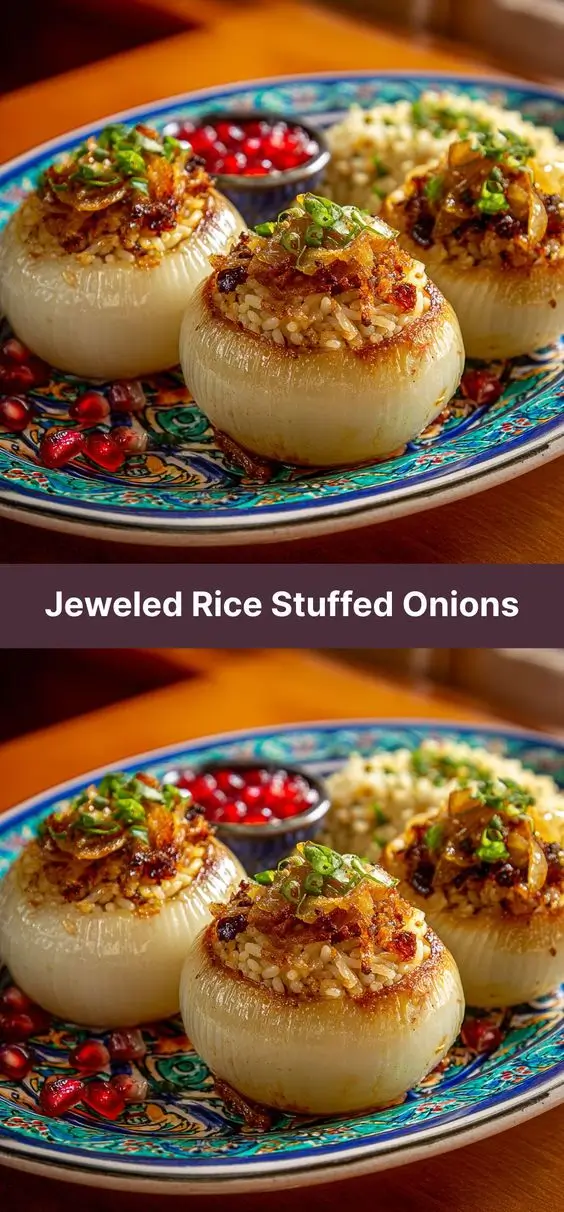
Jeweled Rice Stuffed Onions: A Festive, Flavorful Delight from the Heart of Persian and Middle Eastern Cuisine
The History: Tracing the Roots of a Culinary Treasure
The tradition of stuffing vegetables is one of the oldest culinary practices in human history, spanning across cultures from the Mediterranean to Central Asia. Jeweled Rice Stuffed Onions, while not as widely documented as other stuffed dishes like dolma or grape leaves, carries deep roots in Persian and Middle Eastern cooking, where the art of layering flavors and textures reaches its zenith. Historically, Persians were known for their elaborate rice dishes—pilafs enriched with dried fruits, nuts, saffron, and aromatic spices—that symbolized abundance, celebration, and hospitality.
Stuffed onions, in particular, appear in Ottoman and Safavid-era cookbooks, where large bulb onions were hollowed out and filled with spiced meats, grains, and sweet-savory mixtures. The use of “jeweled” ingredients—such as barberries, raisins, apricots, almonds, and pistachios—was symbolic of royalty and festivity, often served during Nowruz (Persian New Year), weddings, and religious holidays. Over time, regional variations emerged: Turkish versions leaned toward cinnamon and currants; Armenian cooks incorporated pomegranate molasses; while Afghan interpretations used lamb and cardamom.
Today, Jeweled Rice Stuffed Onions are a modern reinterpretation that marries ancient traditions with contemporary health-conscious sensibilities. Vegetarian and vegan adaptations have made this dish more accessible, preserving its ornate presentation while celebrating seasonal produce and plant-based nutrition. It remains a centerpiece dish at cultural gatherings—a testament to the enduring legacy of slow-cooked, soul-nourishing food crafted with intention and care.
Ingredients Breakdown: Crafting Layers of Flavor and Texture
The magic of Jeweled Rice Stuffed Onions lies in the harmony between sweet, savory, nutty, and tangy elements. Each ingredient plays a role—not just in flavor, but in color, aroma, and mouthfeel. Below is a detailed breakdown of every component:
- Large Yellow or Red Onions (6–8): Choose firm, evenly shaped onions with thick layers to hold the filling. Red onions add a slightly sweeter, milder flavor, while yellow onions provide depth and structure when slow-roasted.
- Basmati Rice (1 cup): Long-grain basmati offers a delicate floral aroma and fluffy texture when cooked. Rinse thoroughly before use to remove excess starch and prevent clumping.
- Olive Oil (3 tbsp): Extra virgin olive oil adds richness and helps caramelize the onions gently. It also binds the spices and enhances absorption of fat-soluble nutrients.
- Vegetable Broth (2 cups): Using homemade or low-sodium store-bought broth ensures a flavorful base for cooking both the rice and onions without overpowering other ingredients.
- Onion (1 medium, finely diced): Sautéed as part of the rice mixture to build foundational umami and sweetness.
- Garlic (3 cloves, minced): Adds pungency and depth. Freshly minced garlic is essential for optimal aroma and taste.
- Ground Cinnamon (1 tsp): Warm and subtly sweet, cinnamon ties together the dried fruits and nuts, evoking traditional Persian spice profiles.
- Ground Cardamom (½ tsp): Floral and citrusy, cardamom elevates the dish’s complexity and pairs beautifully with saffron.
- Saffron Threads (a pinch, steeped in 2 tbsp hot water): The crown jewel of Persian cuisine, saffron imparts golden hue, earthy notes, and luxurious fragrance. Always bloom it in warm liquid before use.
- Golden Raisins or Sultanas (⅓ cup): Provide natural sweetness and chewy contrast. Plump them briefly in warm water if dry.
- Dried Apricots (¼ cup, diced): Tart yet honeyed, apricots balance the richness and introduce vibrant orange flecks throughout the rice.
- Candied Orange Peel (2 tbsp, optional): For an extra layer of citrus zest and festive flair—common in holiday versions.
- Toasted Almonds (¼ cup, slivered or chopped): Crunchy and buttery, almonds contribute protein and satisfying texture.
- Pistachios (¼ cup, shelled and chopped): Bright green pistachios add visual appeal and a delicate, creamy nuttiness.
- Fresh Parsley (¼ cup, finely chopped): A burst of freshness and color, parsley cuts through the sweetness and rounds out the flavor profile.
- Lemon Juice (1 tbsp): Brightens the entire dish and prevents browning of cut fruits and nuts.
- Salt and Black Pepper (to taste): Essential seasonings to enhance all components and create balance.
- Pomegranate Seeds (for garnish): Juicy, tart poppy gems that elevate presentation and add a refreshing counterpoint to the warm spices.
Step-by-Step Recipe: How to Make Jeweled Rice Stuffed Onions at Home
- Prepare the Onions: Cut the tops off the large onions (reserve them), then carefully peel the outer skin. Using a small spoon or melon baller, hollow out the center by removing inner layers, leaving about a ½-inch thick wall to maintain structure. Place hollowed onions upright in a baking dish just large enough to fit them snugly. Set aside.
- Blanch the Onion Shells: Bring a pot of salted water to a boil. Gently place the hollowed onions and reserved tops into the water and blanch for 5 minutes. This softens them slightly and removes sharp raw flavor. Drain and let cool. Reduce oven to 375°F (190°C).
- Cook the Basmati Rice: In a saucepan, bring 2 cups of vegetable broth to a simmer. Add rinsed basmati rice, reduce heat, cover, and cook for 15–18 minutes until tender and liquid is absorbed. Fluff with a fork and set aside.
- Sauté the Aromatics: Heat olive oil in a skillet over medium heat. Add diced onion and sauté until translucent (about 5 minutes). Stir in garlic, cinnamon, and cardamom; cook for 1 minute until fragrant.
- Combine the Jewel Mixture: In a large bowl, combine cooked rice, sautéed aromatics, golden raisins, apricots, candied peel (if using), toasted almonds, pistachios, parsley, lemon juice, saffron with its soaking liquid, salt, and pepper. Mix gently but thoroughly. Taste and adjust seasoning—you want a balanced blend of sweet, nutty, herbal, and warm spice notes.
- Stuff the Onions: Spoon the jeweled rice mixture into each blanched onion cavity, pressing lightly to fill completely. Chop the reserved onion tops and scatter any extra into gaps around the onions in the baking dish for added flavor.
- Roast Until Tender and Golden: Pour ½ cup of vegetable broth around the base of the onions (not over the tops, to prevent sogginess). Cover the dish tightly with foil and bake for 40 minutes. Uncover, baste lightly, and continue roasting for another 15–20 minutes until onions are fork-tender, caramelized at edges, and filling is heated through.
- Garnish and Serve: Carefully transfer stuffed onions to serving plates. Drizzle with reduced pan juices if desired. Top each generously with fresh pomegranate seeds and a sprinkle of extra chopped pistachios or mint for contrast. Serve warm.
Tips for Perfect Jeweled Rice Stuffed Onions Every Time
- Choose Uniform Onions: Look for onions of similar size so they cook evenly. Vidalia or Walla Walla can be used for milder sweetness, though they may be softer when baked.
- Don’t Skip Blanching: Parboiling tames the sharpness of raw onion and pre-cooks the walls slightly, preventing undercooked centers.
- Toast Your Nuts: Lightly toast almonds and pistachios in a dry pan for 2–3 minutes to unlock deeper flavor and crunch.
- Use Real Saffron: Avoid saffron substitutes or powders labeled “safflower.” True saffron threads should be deep red-gold and expensive—just a pinch goes a long way.
- Prevent Soggy Fillings: When adding broth to the baking dish, pour it around—not over—the onions to keep the rice topping crisp.
- Make Ahead Friendly: Prepare the rice mixture and hollow the onions up to one day in advance. Assemble and bake just before serving for best texture.
- Double the Filling? If you end up with leftover rice mixture, shape it into small patties and pan-fry for delicious jeweled rice cakes on the side.
- Serve on a Bed of Greens: Present the stuffed onions over arugula or spinach tossed with lemon vinaigrette for a fresh, colorful base.
Variations and Customizations: Adapt This Dish to Any Diet or Occasion
Jeweled Rice Stuffed Onions are incredibly versatile. Whether you’re catering to dietary restrictions, seasonal availability, or global flavor inspirations, here are creative ways to personalize this dish:
- Vegan Version: Already naturally vegan if using vegetable broth and no dairy. Ensure candied peel doesn’t contain gelatin or animal-derived glazes.
- Gluten-Free: This recipe is inherently gluten-free. Just verify your broth is certified GF.
- Protein Boost: Stir in crumbled tempeh, lentils, quinoa, or plant-based ground meat into the rice mixture for added heartiness.
- Mediterranean Twist: Replace apricots with sun-dried tomatoes, swap almonds for pine nuts, and add capers and Kalamata olives for a briny kick.
- Indian-Inspired: Use basmati rice seasoned with garam masala, turmeric, and ginger. Add mango chutney, cashews, and cilantro for a fusion twist.
- Nut-Free Option: Substitute seeds like pumpkin or sunflower for almonds and pistachios. Toast for same crunch factor.
- Fruit Variations: Try dried figs, cherries, cranberries, or dates instead of apricots and raisins. Adjust sweetness accordingly.
- Meat Lovers’ Edition: Brown ground lamb or beef with onions and spices, then blend half-and-half with the jeweled rice for a richer, traditional take.
- Ashkenazi Jewish Influence: Inspired by stuffed cabbage rolls (holishkes), this dish echoes Eastern European techniques—sweeten the filling more and serve with sour cream or yogurt.
- Holiday Presentation: For Nowruz, Christmas, or Thanksgiving, arrange the stuffed onions in a circle on a platter, alternating with pomegranate arils and rose petals for a symbolic, celebratory display.
Health Considerations and Nutritional Value: A Wholesome Feast for Body and Soul
Jeweled Rice Stuffed Onions aren’t just beautiful—they’re packed with nutritional benefits when prepared mindfully:
- Rich in Antioxidants: Onions contain quercetin, a flavonoid linked to reduced inflammation and improved cardiovascular health. Pomegranate seeds and dried fruits further boost antioxidant levels.
- Heart-Healthy Fats: Olive oil, almonds, and pistachios supply monounsaturated fats that support healthy cholesterol levels.
- Dietary Fiber: Whole grains (rice), vegetables (onions), fruits (apricots, raisins), and nuts contribute significant fiber, promoting digestive wellness and satiety.
- Plant-Based Protein: Nuts and legumes (if added) offer complete amino acid profiles when combined, making this a satisfying vegetarian entrée.
- Low Glycemic Impact (When Balanced): Though dried fruits add natural sugars, pairing them with fiber and fat slows glucose absorption. Opt for unsweetened dried fruit and limit added sugar.
- Vitamins & Minerals: Vitamin E (nuts), vitamin C (pomegranate, lemon), potassium (onions, apricots), and B vitamins (whole grain rice) make this a nutrient-dense meal.
- Saffron Benefits: Studies suggest saffron may help regulate mood, reduce PMS symptoms, and possess anti-cancer properties due to crocin and safranal compounds.
Note: While nutritious, portion control matters—this dish is energy-dense due to nuts, oils, and dried fruits. Ideal for special occasions or balanced alongside a green salad. Those managing diabetes or nut allergies should adapt accordingly.
Ingredients
- 6–8 large yellow or red onions
- 1 cup basmati rice, rinsed well
- 3 tablespoons extra virgin olive oil
- 2 cups vegetable broth (plus extra for baking)
- 1 medium onion, finely diced
- 3 garlic cloves, minced
- 1 teaspoon ground cinnamon
- ½ teaspoon ground cardamom
- Pinch of saffron threads, steeped in 2 tbsp hot water
- ⅓ cup golden raisins or sultanas
- ¼ cup dried apricots, diced
- 2 tablespoons candied orange peel (optional)
- ¼ cup slivered almonds, toasted
- ¼ cup pistachios, shelled and chopped
- ¼ cup fresh parsley, finely chopped
- 1 tablespoon fresh lemon juice
- Salt and freshly ground black pepper, to taste
- Pomegranate seeds, for garnish
Directions
- Cut tops off large onions and peel outer skins. Hollow out centers, leaving ½-inch thick walls. Reserve removed parts.
- Bring a pot of salted water to boil. Blanch hollowed onions and tops for 5 minutes. Drain and cool. Preheat oven to 375°F (190°C).
- In a saucepan, bring 2 cups vegetable broth to a simmer. Add rinsed rice, cover, and cook 15–18 minutes until tender. Fluff and set aside.
- Heat olive oil in a skillet. Sauté diced onion until soft (~5 min). Add garlic, cinnamon, and cardamom; cook 1 minute.
- In a large bowl, combine cooked rice, sautéed mixture, raisins, apricots, candied peel (if using), almonds, pistachios, parsley, lemon juice, saffron with liquid, salt, and pepper. Mix well.
- Spoon mixture into blanched onions, packing firmly. Arrange in a baking dish. Scatter chopped reserved onion tops around base.
- Pour ½ cup broth around (not over) onions. Cover dish with foil and bake 40 minutes.
- Uncover, bake 15–20 minutes more until onions are tender and lightly caramelized.
- Transfer to plates. Garnish with pomegranate seeds and extra nuts. Serve warm.
FAQ
Can I prepare Jeweled Rice Stuffed Onions ahead of time?
Yes! You can blanch the onions and prepare the filling up to 24 hours in advance. Store separately in the fridge. Assemble and bake just before serving for best texture.
Can I freeze these?
While freezing is possible, the texture of the onions may become mushy upon thawing. It’s better to refrigerate leftovers for up to 3 days and reheat gently in the oven.
Why did my onions fall apart during baking?
This usually happens if the onion walls were too thin or if they weren’t blanched first. Also, avoid overstuffing—gentle pressure only when filling.
Is there a quicker version?
Yes! Use pre-cooked rice and microwave the hollowed onions for 3–4 minutes instead of blanching. Then stuff and finish in the oven for 25 minutes covered, 15 uncovered.
What can I serve with Jeweled Rice Stuffed Onions?
They pair beautifully with a cucumber-yogurt salad (tzatziki), roasted carrots, flatbread, or a simple arugula salad with lemon dressing.
Can I make this in a slow cooker?
Absolutely. Place stuffed onions in the slow cooker, add ½ cup broth around them, and cook on LOW for 4–5 hours until tender.
Are there lower-carb alternatives?
Replace half the rice with cauliflower rice. Note: this changes texture and reduces sweetness, so increase nuts and dried fruit slightly for balance.
Summary
Jeweled Rice Stuffed Onions are a stunning fusion of Persian-inspired pilaf and classic vegetable stuffing, combining sweet dried fruits, crunchy nuts, warm spices, and tender caramelized onions in a dish fit for royalty. Elegant enough for holidays yet adaptable for everyday meals, this nourishing vegetarian entree celebrates flavor, color, and tradition in every bite.