Introduction
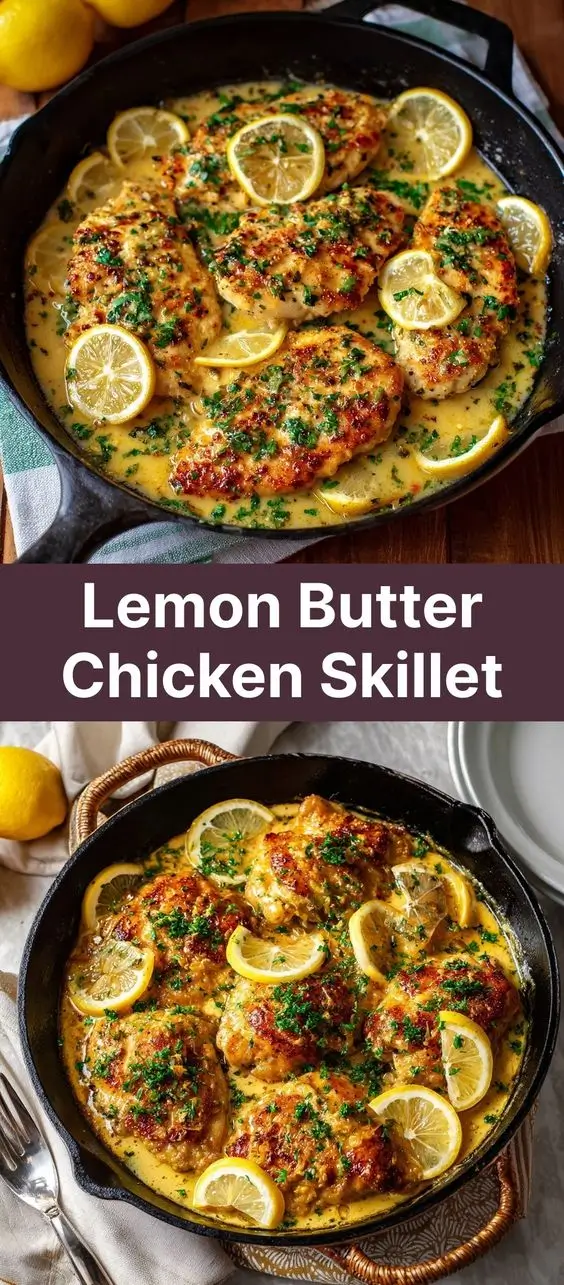
Welcome to a culinary journey that combines the bright, zesty tang of lemon with the rich, velvety comfort of butter in one of the most beloved weeknight dinners: Lemon Butter Chicken Skillet. This dish is a celebration of simplicity and flavor—tender chicken breasts seared to golden perfection and bathed in a luscious sauce made from fresh lemon juice, garlic, white wine, and herbs. It’s an elegant yet easy recipe that feels gourmet but comes together in under 30 minutes, making it perfect for busy evenings when you still want something delicious and satisfying. Whether you’re cooking for your family, hosting friends, or treating yourself to a restaurant-quality meal at home, this Lemon Butter Chicken Skillet delivers on every level.
What makes this skillet so special isn’t just its taste—it’s also the versatility and balance it offers. The acidity of the lemon cuts through the richness of the butter, creating a harmonious blend that awakens the palate without overwhelming it. Paired with vegetables, rice, or pasta, it becomes a complete meal that’s both nourishing and indulgent. In this comprehensive guide, we’ll walk you through everything you need to know about crafting the perfect Lemon Butter Chicken Skillet—from its historical roots and ingredient insights to step-by-step instructions, customization ideas, health benefits, and frequently asked questions. Let’s dive into the world of citrusy, savory goodness!
The History
While there may not be a single documented origin of “Lemon Butter Chicken Skillet” as a named dish, its roots can be traced back to classic European culinary traditions, particularly French and Italian cuisines, where lemon and butter have long been cherished flavor pairings. In France, dishes like poulet au citron (chicken with lemon) showcase the delicate interplay between citrus and creamy sauces, often enhanced with shallots, white wine, and fresh herbs like thyme and tarragon. These preparations were traditionally slow-cooked, emphasizing depth of flavor and refined technique.
In Italy, especially in regions like Liguria and Sicily—where lemons grow abundantly—the use of lemon zest, juice, and even preserved lemons in meat and seafood dishes has been common for centuries. One famous example is Pollo al Limone, which features pan-seared chicken cooked in a sauce of lemon, butter, and capers, echoing many elements found in today’s Lemon Butter Chicken Skillet.
The modern American version emerged during the mid-20th century, influenced by post-war enthusiasm for international flavors and the rise of convenience cooking. With the popularity of skillets and one-pot meals, home cooks began adapting these European recipes using accessible ingredients and faster methods. The result was a streamlined, weeknight-friendly version that maintained the essence of the original dishes while fitting into the fast-paced lifestyle of modern households.
Today, the Lemon Butter Chicken Skillet stands as a symbol of fusion cuisine—a marriage of Old World sophistication and New World practicality. Its enduring appeal lies in how effortlessly it bridges elegance and ease, making gourmet dining possible even on a Tuesday night. As food trends continue to emphasize fresh ingredients, bold flavors, and minimal cleanup, this dish remains a staple in kitchens around the world.
Ingredients Breakdown
To create the ultimate Lemon Butter Chicken Skillet, each ingredient plays a vital role in building layers of flavor, texture, and aroma. Here’s a detailed breakdown of what goes into this dish and why:
- Chicken Breasts (boneless, skinless): The star of the dish. Boneless, skinless chicken breasts are lean, widely available, and cook quickly. They absorb the flavors of the sauce beautifully while remaining tender when not overcooked. For more juiciness, some prefer using chicken thighs, though they contain more fat.
- Salt and Black Pepper: Essential seasonings that enhance all other flavors. Freshly ground black pepper adds a subtle heat and complexity.
- Flour (all-purpose): Used for dredging the chicken before searing. It creates a light crust that helps seal in moisture and aids in thickening the sauce later.
- Olive Oil: Ideal for high-heat searing due to its smoke point and fruity undertones. It gives the chicken a golden-brown exterior without burning.
- Unsalted Butter: Adds richness and silkiness to the sauce. Using unsalted butter allows control over sodium levels. When browned slightly, it develops a nutty flavor known as beurre noisette, adding another dimension.
- Garlic (minced): A cornerstone of savory cooking. Garlic brings pungency and warmth, mellowing as it cooks into the sauce.
- Shallot (finely chopped): More delicate than onion, shallots add sweetness and mild sharpness without overpowering the dish. They dissolve into the sauce, contributing body and depth.
- Dry White Wine (e.g., Sauvignon Blanc, Pinot Grigio): Deglazes the pan, lifting up flavorful browned bits (fond) left from searing the chicken. Wine also adds acidity and complexity, balancing the richness of butter. Alcohol evaporates during cooking, leaving behind nuanced fruit and mineral notes.
- Chicken Broth (low-sodium preferred): Forms the base of the sauce, providing savory umami. Low-sodium versions allow better control over salt content.
- Lemon Juice (freshly squeezed): The heart of the dish. Fresh lemon juice delivers vibrant acidity that lifts the entire recipe, cutting through fat and enhancing freshness. Bottled juice lacks brightness and can taste metallic.
- Lemon Zest: Often overlooked but incredibly important. The outer yellow peel contains aromatic oils that intensify the lemon flavor without adding extra acid. Always use organic lemons if zesting.
- Fresh Herbs (parsley, thyme, or oregano): Parsley adds color and a grassy freshness; thyme contributes earthy, floral notes. Dried herbs can substitute but lack the vibrancy of fresh.
- Capers (optional): Briny, salty bursts that elevate the dish with Mediterranean flair. They complement lemon exceptionally well.
- Heavy Cream (optional): For a richer, creamier sauce. Not traditional in all versions, but loved by those who enjoy a luxurious mouthfeel.
- Red Pepper Flakes (pinch, optional): Adds a hint of warmth and spice for contrast.
Each component works synergistically to build a balanced, complex, and deeply satisfying dish. Choosing high-quality, fresh ingredients ensures the best results.
Step-by-Step Recipe
Follow this detailed guide to make a flawless Lemon Butter Chicken Skillet every time:
- Prepare Ingredients: Pat the chicken breasts dry with paper towels—this ensures proper browning. Cut them into even-sized pieces (about 6–8 oz each) so they cook uniformly. Season both sides generously with salt and freshly ground black pepper.
- Dredge in Flour: Place about ¼ cup of all-purpose flour in a shallow bowl. Lightly coat each chicken piece in flour, shaking off excess. This step promotes browning and helps thicken the final sauce.
- Preheat Skillet: Heat a large oven-safe skillet (cast iron or stainless steel preferred) over medium-high heat. Add 1–2 tablespoons of olive oil. Wait until the oil shimmers but doesn’t smoke.
- Sear the Chicken: Carefully place the floured chicken in the hot skillet, leaving space between pieces for even cooking. Sear undisturbed for 5–6 minutes per side, until deeply golden brown. Reduce heat slightly if browning too fast. Once cooked through (internal temperature reaches 165°F), transfer chicken to a plate and cover loosely with foil.
- Sauté Aromatics: Lower heat to medium. In the same skillet, melt 2 tablespoons of unsalted butter. Add chopped shallot and sauté for 2–3 minutes until softened. Stir in minced garlic and cook for 30 seconds—don’t let it burn.
- Deglaze with Wine: Pour in ½ cup of dry white wine, scraping the bottom of the pan with a wooden spoon to release all the flavorful browned bits. Simmer for 2–3 minutes until reduced by half, concentrating flavor and removing raw alcohol taste.
- Add Liquids and Simmer: Stir in ¾ cup low-sodium chicken broth, followed by 3 tablespoons of freshly squeezed lemon juice and 1 teaspoon of lemon zest. Bring to a gentle simmer.
- Return Chicken to Pan: Nestle the seared chicken pieces back into the sauce. Spoon some liquid over them to rewarm and infuse with flavor. Let simmer gently for 4–5 minutes to reheat fully and allow flavors to meld.
- Finish with Butter and Herbs: Remove skillet from heat. Swirl in 2 additional tablespoons of cold butter—one at a time—for a glossy, emulsified sauce. Stir in chopped fresh parsley and optionally, a pinch of red pepper flakes or 1 tablespoon of capers.
- Taste and Adjust: Sample the sauce. Add more salt, pepper, or lemon juice as needed. If the sauce is too thin, simmer briefly to reduce further. If too thick, add a splash of broth.
- Serve Immediately: Plate the chicken with plenty of sauce spooned over the top. Garnish with extra parsley and a lemon wedge for presentation.
Tips
- Don’t Overcook the Chicken: Use a meat thermometer! Chicken should reach 165°F internally. Overcooking leads to dry, rubbery meat. Remove from heat just before reaching temp, as carryover cooking will finish it.
- Use Fresh Lemon Juice Only: Bottled lemon juice lacks brightness and contains preservatives that alter flavor. Roll the lemon on the counter before juicing to extract more juice.
- Brown Butter for Depth: After deglazing, consider browning the final butter addition. Cook it until golden and nutty-smelling before swirling into the sauce for added complexity.
- Rest Before Slicing: If serving whole breasts, let them rest 5 minutes after cooking to retain juices.
- Skillet Choice Matters: Non-reactive pans like stainless steel or enameled cast iron prevent unwanted metallic tastes when cooking acidic ingredients like lemon.
- Thicken Sauce Naturally: If you prefer a thicker sauce without flour, simmer longer to reduce liquids. Alternatively, mix 1 tsp cornstarch with 1 tbsp water and stir in at the end.
- Prevent Butter Separation: Add butter off the heat and swirl gently. High heat causes the sauce to break (separate).
- Batch Cooking Tip: Double the recipe and freeze leftovers in airtight containers for up to 3 months. Reheat gently on the stove with a splash of broth.
- Wine Substitute: No wine? Use extra chicken broth plus 1 tsp apple cider vinegar or white wine vinegar for acidity.
- Boost Flavor Early: Marinate chicken in lemon juice, garlic, salt, and olive oil for 15–30 minutes before cooking for deeper flavor penetration.
Variations and Customizations
The beauty of Lemon Butter Chicken Skillet lies in its adaptability. Here are creative ways to personalize it:
- Creamy Lemon Butter Chicken: Stir in ¼–½ cup heavy cream or half-and-half at the end for a richer, velvety sauce. Perfect served over fettuccine.
- Mediterranean Style: Add sun-dried tomatoes, Kalamata olives, artichoke hearts, and fresh oregano. Serve with couscous or roasted potatoes.
- Herb Infusion: Use fresh rosemary or tarragon instead of thyme. Tarragon pairs especially well with lemon and chicken.
- Spicy Kick: Add diced jalapeño with the shallots or increase red pepper flakes. Top with sliced chili peppers for garnish.
- Gluten-Free Version: Replace flour with rice flour, cornstarch, or arrowroot powder for dredging. Ensure all other ingredients (like broth) are certified GF.
- Dairy-Free Option: Skip butter entirely or use plant-based alternatives like vegan butter or olive oil. Coconut milk can replace cream if desired.
- Keto-Friendly: Omit flour dredge and serve with cauliflower mash or zucchini noodles. Increase healthy fats with extra olive oil or avocado slices.
- One-Pan Vegetable Addition: Add sliced mushrooms, baby spinach, cherry tomatoes, or asparagus directly to the skillet after deglazing. Sauté briefly before returning chicken.
- Asian-Inspired Twist: Swap white wine for mirin or sake. Add ginger, soy sauce (low-sodium), and green onions. Finish with sesame seeds.
- Pantry-Friendly Version: Use dried herbs, frozen garlic, and canned broth. While not ideal, it still yields a tasty meal in a pinch.
- Stovetop-to-Oven Method: For thicker chicken breasts, transfer skillet to a 375°F oven after searing to finish cooking evenly without drying out.
- Sheet Pan Alternative: Arrange seasoned chicken and veggies on a sheet pan, drizzle with lemon-butter mixture, and roast at 400°F for 20–25 minutes.
Health Considerations and Nutritional Value
A typical serving (one chicken breast with sauce) contains approximately:
- Calories: ~350–400 kcal
- Protein: ~35–40g (excellent source)
- Fat: ~18–22g (mostly from butter and olive oil)
- Saturated Fat: ~8–10g
- Carbohydrates: ~5–8g (primarily from flour and wine)
- Fiber: ~0–1g (unless vegetables are added)
- Sodium: ~400–600mg (varies based on broth and seasoning)
- Vitamin C: High from lemon juice (~30–40% DV)
- Niacin (B3): High from chicken (~70% DV)
- Selenium & Phosphorus: Good sources from poultry
Health Benefits:
- High-quality protein supports muscle repair and satiety.
- Lemons provide antioxidants like vitamin C and flavonoids, which support immune function and reduce inflammation.
- Extra virgin olive oil contains heart-healthy monounsaturated fats and polyphenols.
- Garlic has antimicrobial and cardiovascular benefits.
Considerations:
- Butter and olive oil contribute saturated and total fats—enjoy in moderation, especially for those managing cholesterol.
- Sodium content can be controlled by using low-sodium broth and limiting added salt.
- The dish is low in fiber unless paired with vegetables, whole grains, or legumes.
- For weight management, reduce butter quantity or use lighter dairy options.
This dish fits well within Mediterranean and heart-healthy diets when balanced with nutrient-dense sides.
Ingredients
- 4 boneless, skinless chicken breasts (about 6 oz each)
- Salt and freshly ground black pepper (to taste)
- ¼ cup all-purpose flour (or gluten-free alternative)
- 2 tbsp olive oil (plus more if needed)
- 4 tbsp unsalted butter (divided)
- 1 large shallot (finely chopped)
- 3 cloves garlic (minced)
- ½ cup dry white wine (e.g., Sauvignon Blanc)
- ¾ cup low-sodium chicken broth
- 3 tbsp freshly squeezed lemon juice (from 1–2 lemons)
- 1 tsp lemon zest (from 1 lemon)
- 2 tbsp fresh parsley (chopped)
- 1 tsp fresh thyme leaves (or ½ tsp dried)
- 1 tbsp capers (optional)
- Pinch of red pepper flakes (optional)
Directions
- Pat chicken breasts dry and season with salt and pepper. Lightly coat in flour, shaking off excess.
- Heat olive oil in a large skillet over medium-high heat. Sear chicken for 5–6 minutes per side until golden and cooked through. Transfer to a plate and cover.
- Reduce heat to medium. Melt 2 tbsp butter in the same skillet. Add shallot and cook for 2–3 minutes until soft.
- Add garlic and cook for 30 seconds until fragrant.
- Pour in white wine, scrape up browned bits, and simmer for 2–3 minutes until reduced by half.
- Stir in chicken broth, lemon juice, and lemon zest. Bring to a simmer.
- Return chicken to the skillet. Simmer gently for 4–5 minutes to reheat and absorb flavors.
- Remove from heat. Swirl in remaining 2 tbsp butter, one piece at a time.
- Stir in parsley, thyme, capers, and red pepper flakes (if using).
- Taste and adjust seasoning. Serve immediately with sauce spooned over chicken.
FAQ
Q: Can I make this recipe without wine?
A: Yes. Substitute with additional chicken broth and 1 teaspoon of white wine vinegar or apple cider vinegar to maintain acidity.
Q: Can I use chicken thighs instead?
A: Absolutely. Boneless, skin-on or skinless thighs work well. They’re more forgiving and stay juicier. Adjust cooking time as needed (may take 1–2 minutes longer).
Q: How do I store leftovers?
A: Cool completely and store in an airtight container in the refrigerator for up to 3 days. Reheat gently on the stove with a splash of broth to revive the sauce.
Q: Can I freeze Lemon Butter Chicken?
A: Yes. Freeze in portioned containers for up to 3 months. Thaw overnight in the fridge before reheating.
Q: Why did my sauce separate?
A: High heat or adding cold butter too quickly can cause separation. To fix, remove from heat and whisk vigorously. Adding a splash of cold water or broth can help re-emulsify.
Q: Is this dish gluten-free?
A: Not by default due to flour. Use a 1:1 gluten-free flour blend or skip dredging and thicken sauce by reduction or with cornstarch slurry.
Q: What sides go well with Lemon Butter Chicken?
A: Excellent pairings include mashed potatoes, risotto, quinoa, steamed broccoli, asparagus, roasted vegetables, or angel hair pasta.
Q: Can I make it dairy-free?
A: Yes. Replace butter with olive oil or vegan butter. Avoid heavy cream if used. The sauce will be lighter but still flavorful.
Q: How can I make the sauce thicker?
A: Simmer longer to reduce, or mix 1 tsp cornstarch with 1 tbsp water and stir in at the end. Let simmer 1–2 minutes to thicken.
Q: Can I prepare this ahead of time?
A: You can prep ingredients (chop, measure, juice) ahead. Fully cooked chicken reheats well, though sauce is best made fresh. Combine components just before serving for optimal texture.
Summary (in two lines)
Lemon Butter Chicken Skillet is a quick, elegant one-pan meal featuring tender chicken in a bright, creamy lemon-butter sauce infused with garlic, herbs, and white wine. Perfect for weeknights yet impressive enough for guests, it’s a timeless dish that balances richness with freshness in every bite.