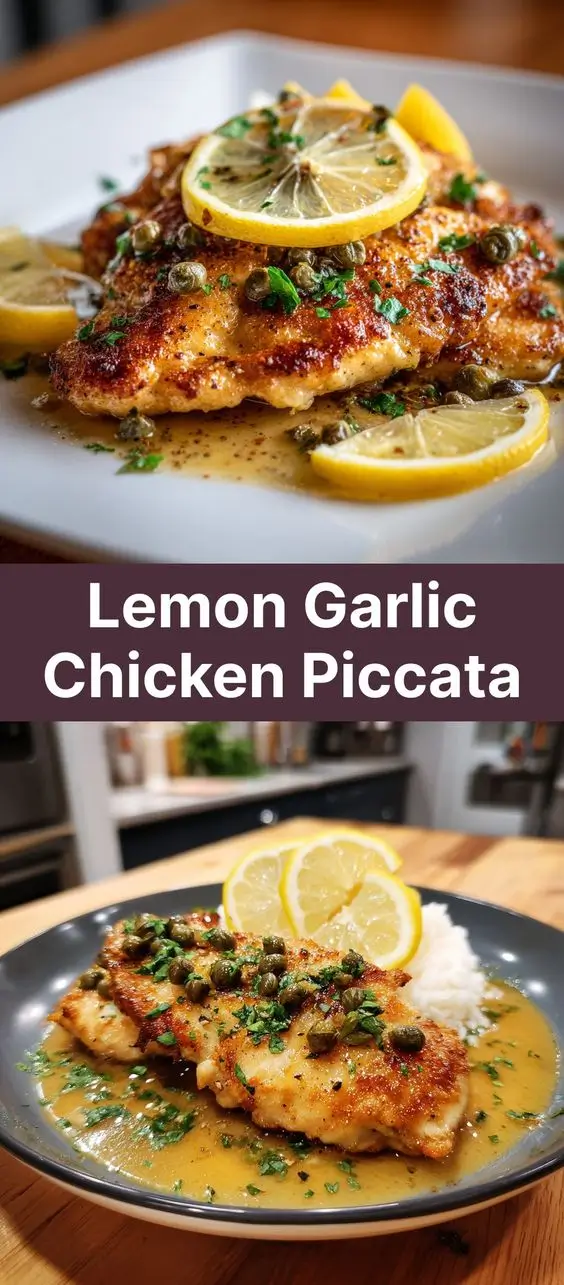
Lemon Garlic Chicken Piccata: A Zesty Culinary Masterpiece
Introduction
Chicken Piccata is a beloved dish that brings together the bright tang of lemon, the pungent depth of garlic, and the savory richness of tender chicken in a silky, buttery sauce. Originating from Italian-American cuisine, Lemon Garlic Chicken Piccata has evolved into a staple on restaurant menus and home dinner tables across the United States. Its vibrant flavor profile makes it a favorite for weeknight dinners, special occasions, or even elegant dinner parties. What sets this version apart is the bold use of fresh garlic, perfectly balanced with the zing of lemon juice and zest, creating a harmonious blend of acidity, umami, and comfort.
The History
While the exact origins of Chicken Piccata are somewhat debated, most culinary historians agree that it traces back to Southern Italy, particularly the regions of Campania and Sicily. The word “piccata” (sometimes spelled “picatta”) comes from the Italian word piccante, meaning “spicy” or “piquant,” which refers to the sharp, tangy flavor profile of the dish. Traditionally, piccata was made with veal—known as Vitello alla Piccata—thinly sliced, dredged in flour, pan-seared, and served with a sauce of lemon juice, capers, white wine, and butter.
As Italian immigrants brought their culinary traditions to America in the late 19th and early 20th centuries, ingredients were adapted based on availability and preference. Chicken became a more affordable and accessible alternative to veal, giving rise to Chicken Piccata. Over time, American home cooks began enhancing the dish with additional garlic, more robust herbs, and richer sauces, leading to the modern Lemon Garlic Chicken Piccata we enjoy today. It’s now considered a hallmark of Italian-American fusion cuisine—a delicious testament to cultural adaptation and culinary creativity.
Ingredients Breakdown
The magic of Lemon Garlic Chicken Piccata lies in its simplicity and quality of ingredients. Each component plays a vital role in building layers of flavor:
- Chicken breasts: Boneless, skinless chicken breasts are pounded thin for quick, even cooking. This ensures tenderness and allows them to absorb the flavors of the sauce.
- All-purpose flour: Used for dredging, flour creates a light crust when seared and helps thicken the final sauce.
- Salt and black pepper: Essential seasonings that enhance all other flavors.
- Olive oil and unsalted butter: Olive oil provides a stable base for high-heat searing, while butter adds richness and silkiness to the sauce. Using unsalted butter lets you control the salt level precisely.
- Garlic: Freshly minced garlic infuses the dish with aromatic depth. Don’t skimp—this recipe celebrates garlic!
- Chicken broth: Adds savory body to the sauce. Use low-sodium broth to manage salt content.
- Dry white wine: Such as Sauvignon Blanc or Pinot Grigio, deglazes the pan and introduces acidity and complexity. Alcohol cooks off during simmering.
- Fresh lemon juice and zest: The star ingredients! Freshly squeezed juice delivers bright acidity, while lemon zest intensifies citrus aroma without adding extra liquid.
- Capers: Briny, salty, and slightly floral, capers add the signature “piquant” note. Rinse them briefly if too salty.
- Parsley: Fresh flat-leaf parsley adds color and a subtle herbal freshness when sprinkled on top.
- Optional enhancements: A splash of heavy cream for richness, red pepper flakes for heat, or Dijon mustard for depth.
Step-by-Step Recipe
- Prepare the Chicken: Place 4 boneless, skinless chicken breasts between two sheets of plastic wrap or parchment paper. Using a meat mallet or rolling pin, gently pound them to an even thickness of about ¼ inch. This ensures uniform cooking and tenderness. Cut larger breasts in half horizontally if needed.
- Dredge the Chicken: In a shallow bowl, combine ½ cup all-purpose flour with 1 teaspoon salt and ½ teaspoon freshly ground black pepper. Lightly coat each chicken piece in the flour mixture, shaking off excess. Set aside on a plate.
- Heat the Pan: In a large skillet (preferably stainless steel or nonstick), heat 2 tablespoons olive oil and 1 tablespoon butter over medium-high heat until shimmering but not smoking.
- Sear the Chicken: Add chicken pieces in a single layer, being careful not to overcrowd the pan. Cook for 3–4 minutes per side, until golden brown and cooked through (internal temperature should reach 165°F). Transfer to a plate and cover loosely with foil to keep warm.
- Build the Sauce: Reduce heat to medium. Add another tablespoon of butter to the same skillet. Once melted, add 4–6 cloves of minced garlic and sauté for 30–60 seconds until fragrant—do not let it burn.
- Deglaze the Pan: Pour in ½ cup dry white wine, scraping up any browned bits (fond) from the bottom of the pan with a wooden spoon. Let simmer for 2–3 minutes until reduced by half.
- Add Liquids: Stir in ¾ cup low-sodium chicken broth, ⅓ cup freshly squeezed lemon juice (from about 2 lemons), and 1 tablespoon lemon zest. Bring to a gentle simmer.
- Incorporate Capers: Add 3 tablespoons rinsed capers and let the sauce simmer for another 3–4 minutes to meld flavors.
- Thicken the Sauce: In a small bowl, mix 1 tablespoon cornstarch with 1 tablespoon cold water to make a slurry. Whisk into the simmering sauce and cook for 1–2 minutes until slightly thickened and glossy.
- Finish with Butter: Remove the pan from heat and swirl in 2 tablespoons cold unsalted butter, one piece at a time, to create a rich, velvety texture. This technique, called monter au beurre, elevates the sauce.
- Return Chicken to Pan: Gently place the seared chicken back into the skillet, spooning sauce over each piece. Simmer for 1–2 minutes to reheat and absorb flavors.
- Garnish and Serve: Sprinkle generously with ¼ cup chopped fresh parsley. Serve immediately.
Tips
- Don’t skip pounding the chicken: Even thickness prevents dry spots and ensures fast, consistent cooking.
- Use fresh lemon juice: Bottled lemon juice lacks brightness and can have off-flavors. Always juice lemons just before cooking.
- Control garlic browning: Garlic burns easily. Keep heat at medium and watch closely; burnt garlic turns bitter.
- Don’t overcrowd the pan: Searing in batches may be necessary. Overcrowding steams the chicken instead of browning it.
- Adjust acidity: If the sauce is too tart, balance it with a pinch of sugar or a bit more butter. For more tang, add extra lemon juice at the end.
- Make it gluten-free: Substitute flour with rice flour or a gluten-free all-purpose blend, and ensure broth and wine are certified GF.
- Rest the chicken: After searing, letting it rest ensures juices stay inside when you cut into it later.
- Use room-temperature butter: When finishing the sauce, cold butter integrates better and emulsifies smoothly.
Variations and Customizations
Lemon Garlic Chicken Piccata is wonderfully adaptable. Here are some creative twists to personalize your dish:
- Seafood Piccata: Substitute chicken with scallops, shrimp, or sole for a lighter, coastal variation.
- Creamy Piccata: Stir in ¼ cup heavy cream or crème fraîche at the end for a richer, more luxurious sauce.
- Herb-Infused: Add fresh thyme, rosemary, or oregano during the sauté step for earthy complexity.
- Spicy Kick: Add ¼–½ teaspoon red pepper flakes with the garlic for a spicy contrast to the lemon.
- Mushroom Addition: Sauté sliced mushrooms (cremini or shiitake) before adding garlic for umami depth.
- Dijon Piccata: Whisk 1–2 teaspoons Dijon mustard into the sauce for tang and body.
- Wine-Free Version: Replace wine with additional broth and a splash of apple cider vinegar or white wine vinegar.
- Low-Fat Option: Skip the final butter swirl and use a cornstarch-thickened broth-lemon base for a lighter sauce.
- Vegetarian Twist: Use thick slices of pressed tofu or cauliflower steaks coated in flour and pan-seared similarly.
- Sheet Pan Version: For easier cleanup, bake floured chicken at 400°F for 20 minutes, then pour pre-made sauce over and broil briefly.
Health Considerations and Nutritional Value
When prepared mindfully, Lemon Garlic Chicken Piccata can be part of a balanced diet. Here’s a nutritional breakdown per serving (1 chicken breast with sauce):
- Calories: ~350–400 kcal
- Protein: ~35–40g (excellent source of lean protein)
- Fat: ~18–22g (mostly from healthy olive oil and butter; moderate saturated fat)
- Carbohydrates: ~12–15g (primarily from flour and minimal natural sugars)
- Sodium: ~600–800mg (can be reduced using low-sodium broth and rinsed capers)
- Vitamin C: High from lemon juice—supports immune function and iron absorption.
- B Vitamins: Found in chicken and garlic, important for energy metabolism.
Health Tips:
- Use heart-healthy olive oil as the primary fat.
- Limits added butter to one tablespoon per serving for richness without excess saturated fat.
- Boost fiber by serving over whole wheat pasta, quinoa, or farro.
- Add steamed vegetables like asparagus, broccoli, or green beans for extra nutrients.
- Monitor portion sizes—chicken should fill about ¼ of your plate.
- Those with acid reflux may want to reduce lemon juice or serve with a side of mashed potatoes to buffer acidity.
Ingredients
- 4 boneless, skinless chicken breasts (about 6 oz each)
- ½ cup all-purpose flour
- 1 tsp salt
- ½ tsp freshly ground black pepper
- 2 tbsp olive oil
- 4 tbsp unsalted butter, divided
- 4–6 cloves garlic, minced (adjust to taste)
- ½ cup dry white wine (e.g., Sauvignon Blanc)
- ¾ cup low-sodium chicken broth
- ⅓ cup freshly squeezed lemon juice (2 medium lemons)
- 1 tbsp lemon zest
- 3 tbsp capers, rinsed and drained
- 1 tbsp cornstarch + 1 tbsp water (slurry)
- ¼ cup fresh flat-leaf parsley, chopped
Directions
- Pound chicken breasts to ¼-inch thickness and cut if necessary.
- Mix flour, salt, and pepper in a shallow dish. Dredge chicken lightly and shake off excess.
- Heat olive oil and 1 tbsp butter in a large skillet over medium-high heat.
- Sear chicken 3–4 minutes per side until golden and cooked through. Transfer to a plate and cover.
- Reduce heat to medium. Melt 1 tbsp butter, then sauté garlic for 30–60 seconds until fragrant.
- Pour in white wine, scrape up browned bits, and simmer 2–3 minutes until reduced by half.
- Add chicken broth, lemon juice, and lemon zest. Simmer 3–4 minutes.
- Stir in capers and simmer another 2 minutes.
- Whisk cornstarch slurry and add to sauce. Cook 1–2 minutes until thickened.
- Remove from heat and whisk in remaining 2 tbsp cold butter until smooth and glossy.
- Return chicken to skillet, spoon sauce over, and simmer 1–2 minutes to warm through.
- Garnish with fresh parsley and serve immediately.
FAQ
Can I make Chicken Piccata ahead of time?
Yes, but best served fresh. You can prepare components in advance: pound and flour chicken, make sauce base (without butter finish), and store separately. Reheat and combine before serving.
Can I freeze Lemon Garlic Chicken Piccata?
Freezing is not ideal due to the dairy-based sauce, which may separate upon thawing. However, cooked chicken (without sauce) freezes well for up to 3 months. Make fresh sauce when ready to serve.
Why is my sauce too thin?
The sauce may need more reduction or thickening. Simmer longer to evaporate liquid or add a bit more cornstarch slurry. Avoid adding too much flour directly to prevent lumps.
Can I use bottled lemon juice?
Freshly squeezed is always recommended for superior flavor. Bottled juice often contains preservatives and lacks vibrancy.
What sides go well with Chicken Piccata?
Excellent pairings include:
- Buttered noodles or linguine
- Garlic mashed potatoes
- Roasted asparagus or broccoli
- Arugula salad with shaved Parmesan
- Risotto or creamy polenta
Is Chicken Piccata spicy?
Not traditionally. “Piccata” refers to the tangy, zesty flavor from lemon and capers, not heat. Add red pepper flakes if you prefer spice.
Can I make this dairy-free?
Yes! Replace butter with vegan butter or omit the final butter swirl. Use olive oil throughout and a plant-based broth. The sauce will be less rich but still flavorful.
Summary
Lemon Garlic Chicken Piccata is a vibrant, restaurant-quality dish that combines tender chicken in a zesty lemon-garlic sauce with capers and white wine. Easy to make yet impressive enough for guests, it’s a timeless favorite in Italian-American cuisine.