Introduction
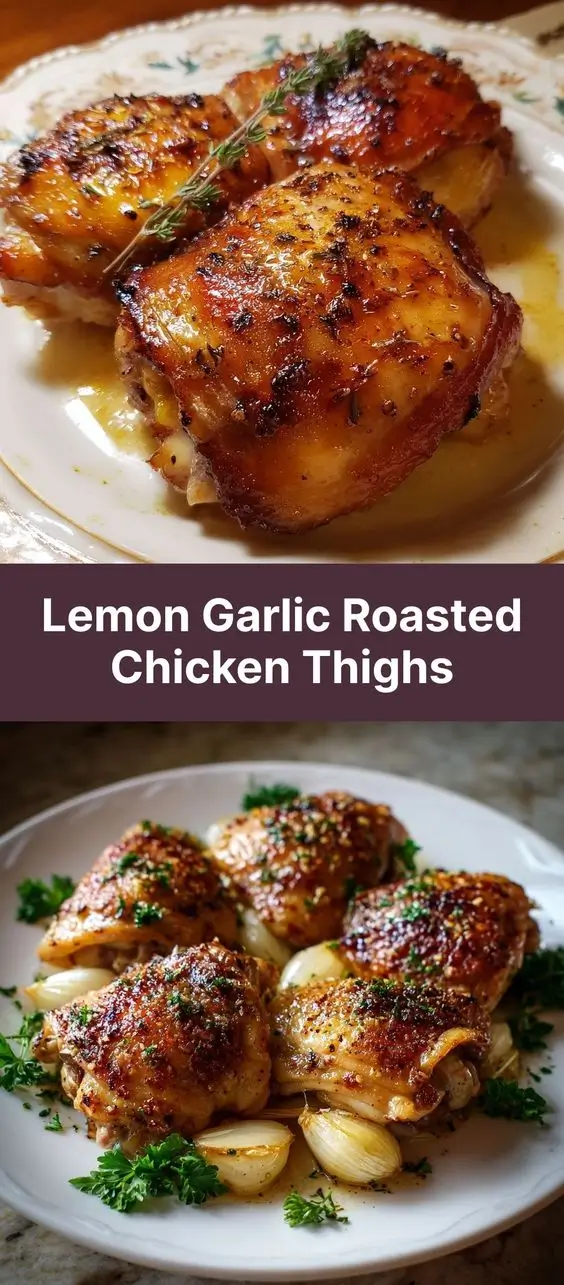
Lemon Garlic Roasted Chicken Thighs are a flavorful, aromatic dish that brings together the bright tang of lemon, the rich depth of roasted garlic, and the succulent texture of chicken thighs. Perfect for weeknight dinners or elegant weekend meals, this recipe is both simple to prepare and packed with bold Mediterranean-inspired flavors. The natural fats in the chicken thighs keep the meat juicy during roasting, while the lemon and garlic create a golden, fragrant crust that elevates the entire dish. Whether you’re cooking for your family or hosting guests, this recipe delivers restaurant-quality results with minimal effort.
The History
The tradition of roasting meats with citrus and aromatics dates back centuries across various culinary cultures, particularly in Southern Europe, the Middle East, and North Africa. In regions like Greece, Italy, and Spain, lemons have long been used not only for their zest and juice but also for preserving and enhancing the flavor of poultry and seafood. Garlic, often referred to as “the stinking rose,” has been prized since ancient times for its medicinal properties and pungent taste. When combined, lemon and garlic form a classic pairing that cuts through richness and adds complexity.
Roasting chicken thighs specifically became popular due to their affordability, tenderness, and higher fat content compared to white meat, which makes them ideal for dry-heat cooking methods. Over time, home cooks perfected the balance of olive oil, fresh herbs, lemon, and garlic to create deeply savory, slightly acidic dishes that could be served with bread, potatoes, or grains. This particular recipe draws inspiration from these old-world techniques while being adapted for modern kitchens—offering convenience without sacrificing authenticity.
Ingredients Breakdown
- Chicken Thighs (bone-in, skin-on): Using bone-in, skin-on thighs ensures maximum juiciness and crispiness. The skin crisps beautifully in the oven, while the bone helps conduct heat evenly, keeping the meat moist.
- Fresh Lemons: Two lemons are typically used—one sliced for roasting alongside the chicken, and one juiced to marinate. Lemon adds acidity that tenderizes the chicken slightly and brightens the overall flavor.
- Garlic: A full head of garlic is recommended because roasting whole cloves mellows their sharpness into a sweet, buttery spreadable goodness. Some cloves are minced for the marinade; others are left whole to roast alongside the chicken.
- Olive Oil: Extra virgin olive oil acts as a carrier for flavors, helps crisp the skin, and prevents sticking. It also aids in browning and emulsifies the lemon juice and spices.
- Fresh Herbs: Rosemary and thyme are classic choices—their woody stems stand up well to high heat and infuse the chicken with earthy notes. Parsley can be added at the end for freshness.
- Salt and Black Pepper: Essential seasonings that enhance all other flavors. Coarse sea salt works best for creating a seasoned crust on the skin.
- Optional Additions: Red pepper flakes for heat, Dijon mustard for depth, honey for subtle sweetness, or white wine for deglazing the pan and making a sauce.
Step-by-Step Recipe
- Preparation (30 minutes to overnight): Begin by patting the chicken thighs dry with paper towels—this is crucial for achieving crispy skin. Place them in a large bowl or baking dish.
- Make the Marinade: Zest one lemon and set aside the zest. Juice both lemons—you should get about 1/3 cup of juice. In a mixing bowl, whisk together the lemon juice, 1/4 cup olive oil, minced garlic (about 6–8 cloves), 1 tablespoon chopped rosemary, 1 tablespoon chopped thyme, lemon zest, 1 teaspoon salt, and 1/2 teaspoon black pepper. For extra flavor, add 1 teaspoon Dijon mustard and 1/2 teaspoon red pepper flakes (optional).
- Marinate the Chicken: Pour the marinade over the chicken thighs, turning to coat each piece thoroughly. Cover and refrigerate for at least 30 minutes, but ideally 2–4 hours or overnight for deeper flavor penetration.
- Preheat Oven: Remove chicken from the fridge 30 minutes before cooking to bring it closer to room temperature. Preheat your oven to 425°F (220°C).
- Prepare Roasting Pan: Use a large oven-safe skillet (like cast iron) or a rimmed baking sheet lined with parchment paper. Slice the second lemon into thin rounds. Peel 6–8 whole garlic cloves (leave them uncut). Scatter lemon slices and whole garlic cloves across the bottom of the pan.
- Arrange Chicken: Place the marinated chicken thighs skin-side up on top of the lemons and garlic. Spoon any remaining marinade over the chicken. Sprinkle additional salt and freshly ground black pepper over the skin.
- Roast: Place in the preheated oven and roast for 40–45 minutes, or until the internal temperature reaches 165°F (74°C) when measured with a meat thermometer inserted near the bone. The skin should be deep golden brown and crispy.
- Baste (Optional): About halfway through cooking, use a spoon to baste the chicken with the juices pooling in the pan. This enhances flavor and promotes even browning.
- Rest: Once done, remove from the oven and let the chicken rest for 5–10 minutes. This allows the juices to redistribute, ensuring every bite is moist and flavorful.
- Serve: Garnish with fresh chopped parsley and serve directly from the pan for a rustic presentation. Squeeze any roasted lemon halves over the top for an extra burst of citrus.
Tips
- Dry the Skin Well: Moisture is the enemy of crispiness. Always pat chicken skin completely dry before marinating or seasoning.
- Don’t Skip the Resting Time: Cutting into the chicken too soon causes juices to spill out, leading to drier meat.
- Use a Meat Thermometer: To avoid undercooking or overcooking, always check the internal temperature. Insert the thermometer into the thickest part of the thigh, avoiding the bone.
- Rotate the Pan Halfway: If your oven has hot spots, rotate the pan 180 degrees midway through roasting for even cooking.
- Broil for Crispiness: If the skin isn’t as crispy as desired after roasting, switch the oven to broil for 2–3 minutes at the end—but watch closely to prevent burning.
- Save the Pan Juices: The drippings are liquid gold! Skim off excess fat and drizzle the flavorful juices over the chicken or use them to make a quick sauce.
- Roast Vegetables with It: Add halved potatoes, carrots, or onions to the pan before roasting for a complete one-pan meal.
Variations and Customizations
- Herb Swaps: Try oregano, tarragon, or marjoram instead of rosemary and thyme for a different herbal profile.
- Citrus Alternatives: Substitute lemon with lime, orange, or grapefruit for unique twists. Blood oranges add a sweet-tart complexity.
- Spicy Version: Add more red pepper flakes, a diced jalapeño to the pan, or a splash of hot sauce to the marinade.
- Mediterranean Style: Add Kalamata olives, capers, and cherry tomatoes to the roasting pan for a Greek-inspired variation.
- Asian Fusion: Replace some lemon juice with rice vinegar, add ginger, soy sauce, and a touch of sesame oil to the marinade.
- Honey-Garlic-Lemon: Add 2 tablespoons of honey to the marinade for a sweet-savory glaze that caramelizes beautifully.
- Wine-Enhanced: Deglaze the pan with 1/2 cup of dry white wine after roasting, scrape up the browned bits, and reduce into a silky sauce.
- Vegetarian Option: While not traditional, roasted cauliflower or tofu can be marinated and cooked using the same method for plant-based diners.
Health Considerations and Nutritional Value
Chicken thighs are often misunderstood—they contain more fat than breast meat, but much of it is monounsaturated fat, which supports heart health when consumed in moderation. The inclusion of olive oil, garlic, and lemon brings additional benefits:
- Garlic: Known for its immune-boosting and anti-inflammatory properties, thanks to allicin, a sulfur-containing compound.
- Lemons: High in vitamin C, antioxidants, and citric acid, which may aid digestion and help with iron absorption from plant foods.
- Olive Oil: A cornerstone of the Mediterranean diet, linked to reduced risk of cardiovascular disease and improved cholesterol levels.
A typical serving (one bone-in, skin-on chicken thigh, ~6 oz raw weight) contains approximately:
- Calories: 320–360
- Protein: 26–30g
- Fat: 22–26g (with ~7g saturated)
- Carbohydrates: 2–3g (mostly from lemon and herbs)
- Sodium: 400–600mg (depending on added salt)
To make the dish healthier:
- Use skinless thighs to reduce fat content (though you’ll sacrifice some crispiness).
- Limit added salt and rely more on herbs and lemon for flavor.
- Serve with nutrient-dense sides like quinoa, roasted Brussels sprouts, or a mixed green salad.
- Drain excess fat from pan juices before serving.
Ingredients
- 6 bone-in, skin-on chicken thighs (about 2.5–3 lbs total)
- 2 large lemons
- 1 whole head of garlic
- 1/4 cup extra virgin olive oil
- 1 tbsp fresh rosemary, finely chopped
- 1 tbsp fresh thyme, finely chopped
- 1 tsp kosher salt (plus more to taste)
- 1/2 tsp freshly ground black pepper
- 1 tsp Dijon mustard (optional)
- 1/2 tsp red pepper flakes (optional)
- Fresh parsley, chopped (for garnish)
Directions
- Pat chicken thighs dry with paper towels and place in a bowl or dish.
- Zest one lemon and juice both lemons (you need about 1/3 cup juice).
- In a bowl, whisk together lemon juice, olive oil, minced garlic (6–8 cloves), lemon zest, rosemary, thyme, salt, pepper, Dijon mustard, and red pepper flakes if using.
- Pour marinade over chicken, coating evenly. Cover and refrigerate for 30 minutes to overnight.
- Remove chicken from fridge. Preheat oven to 425°F (220°C).
- Slice the second lemon and peel 6–8 garlic cloves. Scatter across the bottom of an oven-safe skillet or baking sheet.
- Arrange chicken thighs skin-side up on top of lemon and garlic. Spoon extra marinade over the top.
- Roast for 40–45 minutes, until internal temperature reaches 165°F and skin is golden and crisp.
- Let rest 5–10 minutes. Garnish with parsley and serve warm.
FAQ
Can I use chicken breasts instead?
Yes, but adjust cooking time to 25–30 minutes and monitor closely, as breasts cook faster and can dry out. Consider brining first for moisture.
Can I make this ahead of time?
Absolutely. Marinate up to 24 hours in advance. You can also fully cook, cool, and reheat in a 350°F oven for 15–20 minutes.
How do I store leftovers?
Store cooled chicken in an airtight container in the refrigerator for up to 4 days. Reheat gently in the oven or microwave.
Can I freeze this dish?
Yes. Freeze cooked chicken in a freezer-safe container for up to 3 months. Thaw overnight in the fridge before reheating.
Why are my chicken thighs soggy?
This usually happens if the skin wasn’t dried properly, the pan was overcrowded, or the oven wasn’t hot enough. Ensure proper spacing and preheating.
Can I grill instead of roast?
Yes! Grill over medium indirect heat for 35–40 minutes, turning once, until done. Baste occasionally with marinade (before it contacts raw chicken).
Is it safe to eat the roasted garlic?
Yes! Roasted garlic becomes soft, mild, and edible. Spread it on bread or mash into potatoes.
What sides go well with this?
Excellent pairings include mashed potatoes, roasted vegetables, couscous, rice pilaf, arugula salad, or crusty bread to soak up juices.
Summary
Lemon Garlic Roasted Chicken Thighs deliver juicy, tender meat with a crispy, flavor-packed crust, enhanced by bright citrus and mellow roasted garlic. Simple to make yet impressive enough for guests, this one-pan wonder is a versatile, healthy, and delicious addition to any dinner rotation.