Introduction
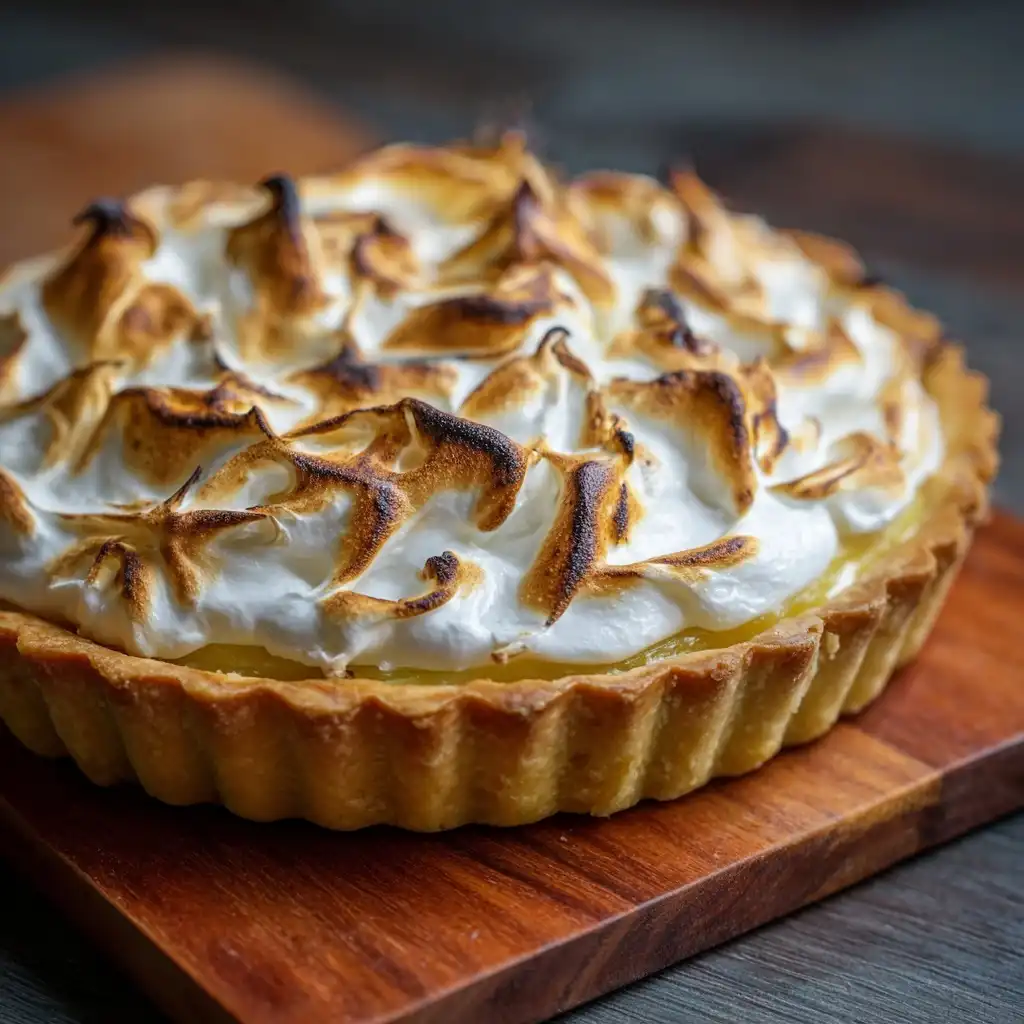
Lemon Meringue Pie is a timeless American classic—a luminous, sun-kissed dessert that strikes the perfect balance between tart, sweet, creamy, and airy. With its vibrant yellow lemon filling nestled in a crisp, buttery shortcrust pastry and crowned by a cloud-like, golden-browned meringue, this pie evokes nostalgia, summer afternoons, and generations of home baking tradition. Its bright citrus zing cuts through richness with refreshing precision, while the pillowy meringue adds delicate sweetness and textural contrast—making it as visually stunning as it is delicious. Whether served at holiday tables, potlucks, or quiet Sunday suppers, Lemon Meringue Pie remains an enduring symbol of comfort, craftsmanship, and culinary joy.
The History
The origins of Lemon Meringue Pie are deeply rooted in 19th-century culinary evolution, though its precise birthplace remains delightfully contested among food historians. While lemon-based custards date back to medieval Europe—and meringues were documented as early as the 17th century in France—the marriage of the two into a unified pie structure likely emerged in the United States during the mid-to-late 1800s. Early printed recipes appear in American cookbooks such as Fannie Farmer’s Boston Cooking-School Cook Book (1896), which included a “Lemon Pie with Meringue” featuring a boiled lemon custard and stiffly beaten egg whites. The rise of affordable granulated sugar, widespread availability of lemons via expanding rail networks, and improved refrigeration all contributed to the pie’s popularity in the early 20th century. Notably, the 1930s saw a surge in home economics education, where Lemon Meringue Pie became a staple demonstration of proper tempering, starch gelatinization, and meringue stabilization—solidifying its status as both a technical benchmark and beloved dessert. Though sometimes mistakenly attributed to Canadian or British origins, archival evidence overwhelmingly supports its development and refinement in American kitchens, where regional variations—from Midwest farmstead versions with lard crusts to Southern iterations using cornstarch instead of flour—further cemented its cultural resonance.
Ingredients Breakdown
Every exceptional Lemon Meringue Pie begins with intentionality—understanding not just *what* goes into the pie, but *why* each ingredient plays its irreplaceable role:
- For the Crust: All-purpose flour provides structure and tenderness; cold unsalted butter delivers flakiness and rich flavor (lard or shortening may be added for extra lift and stability); ice water hydrates without activating gluten excessively; a pinch of salt enhances all other flavors; optional apple cider vinegar or vodka inhibits gluten formation for maximum tenderness.
- For the Filling: Freshly squeezed lemon juice offers volatile citrus oils and bright acidity unattainable with bottled juice; finely grated lemon zest contributes aromatic terpenes and floral depth; granulated sugar balances acidity and aids in thickening; cornstarch (or sometimes flour or tapioca starch) acts as the primary heat-activated thickener—cornstarch yields a glossy, translucent, and smooth texture ideal for lemon curd; egg yolks enrich the filling with fat and emulsifying lecithin, lending silkiness and body; a small amount of whole milk or cream softens sharpness and adds subtle creaminess without dulling brightness; a touch of unsalted butter stirred in at the end imparts sheen, mouthfeel, and prevents surface skinning.
- For the Meringue: Egg whites must be impeccably clean—free of even trace yolk or grease—to achieve full volume; granulated sugar is gradually whisked in to stabilize the foam and add structure; cream of tartar (potassium bitartrate) lowers pH, strengthening protein bonds and preventing weeping; vanilla extract or a drop of lemon oil adds aromatic nuance without compromising stability; a pinch of salt heightens sweetness perception and balances richness.
Crucially, ingredient quality directly impacts outcome: organic, tree-ripened lemons yield superior juice and zest; pasture-raised eggs produce sturdier, more flavorful meringue; and freshly milled flour (though less common) can lend nuanced wheat notes to the crust. Substitutions alter chemistry—bottled lemon juice lacks complexity and often contains preservatives that interfere with thickening; artificial lemon flavoring cannot replicate the layered top, middle, and base notes of real citrus; and low-fat dairy compromises the luxurious mouthfeel essential to a balanced filling.
Step-by-Step Recipe
- Prepare the Crust: In a large bowl, whisk together 1 ¼ cups (156g) all-purpose flour, ½ teaspoon salt, and 1 tablespoon granulated sugar. Cut in ½ cup (113g) cold, unsalted butter (cut into ½-inch cubes) using a pastry cutter or fingertips until the mixture resembles coarse crumbs with some pea-sized pieces remaining. Sprinkle 3–4 tablespoons ice water, one tablespoon at a time, mixing gently with a fork until the dough just begins to clump. Gather into a disc, wrap tightly in plastic wrap, and refrigerate for at least 1 hour (or up to 3 days).
- Roll and Blind-Bake: Preheat oven to 375°F (190°C). On a lightly floured surface, roll chilled dough into a 12-inch circle. Transfer to a 9-inch pie plate, trim edges to ½ inch beyond rim, tuck under, and crimp decoratively. Prick bottom and sides thoroughly with a fork. Line with parchment paper and fill with pie weights or dried beans. Bake for 18 minutes. Carefully remove weights and parchment; bake 10–12 minutes more until golden and dry. Cool completely on a wire rack—this step is non-negotiable for preventing a soggy bottom.
- Make the Lemon Filling: In a heavy-bottomed, non-reactive saucepan (stainless steel or enamel), whisk together 1 cup (200g) granulated sugar, ¼ cup (30g) cornstarch, and ¼ teaspoon salt. Gradually whisk in 1 cup (240ml) fresh lemon juice (about 5–6 medium lemons), 2 tablespoons finely grated lemon zest, ⅔ cup (160ml) whole milk, and 4 large egg yolks (reserve whites for meringue). Cook over medium-low heat, whisking constantly, until mixture thickens and begins to bubble gently around the edges—about 8–10 minutes. Continue whisking vigorously for 2 full minutes after first bubble to fully activate cornstarch and eliminate raw starch taste. Remove from heat and immediately stir in 2 tablespoons (28g) cold, unsalted butter, one piece at a time, until fully melted and incorporated. Stir in 1 teaspoon pure vanilla extract. Pour hot filling into cooled crust immediately—do not let it cool first, as residual heat helps set the base layer and discourages separation.
- Prepare the Meringue: In a spotlessly clean, dry stainless-steel or copper bowl, combine 4 large egg whites (at room temperature), ¼ teaspoon cream of tartar, and a pinch of salt. Using a stand mixer fitted with the whisk attachment (or hand mixer), beat on medium speed until soft peaks form—about 2 minutes. Gradually add ½ cup (100g) granulated sugar, 1 tablespoon at a time, beating well after each addition. Increase speed to high and continue beating until stiff, glossy peaks form—another 3–4 minutes. Optional: beat in 1 teaspoon vanilla extract or ¼ teaspoon lemon oil for aromatic lift.
- Assemble and Bake: Working quickly, spoon or pipe meringue over the still-warm (but not hot) lemon filling, ensuring it touches the crust edge completely all the way around—this “seal” prevents shrinkage and weeping. Use the back of a spoon to create dramatic swirls and peaks. Place pie on middle oven rack and reduce temperature to 350°F (175°C). Bake for 10–12 minutes, or until meringue is evenly golden brown—not just toasted on tips, but uniformly caramelized across peaks and valleys. Avoid overbaking, which causes drying and beading.
- Cool and Set: Transfer pie to a wire rack and cool at room temperature for at least 2 hours—this allows the filling to fully set and the meringue to relax its structure. For optimal slice integrity and flavor development, refrigerate uncovered for 4–6 hours (or overnight) before serving. Do not cover with plastic wrap directly on meringue—it traps moisture and encourages sogginess.
Tips
- Crust Perfection: Keep everything cold—chill your flour and bowl for 15 minutes pre-mixing; use a metal bench scraper to lift and fold dough rather than overhandling; freeze rolled dough-lined pie plate for 15 minutes before blind-baking to lock in shape.
- Acid Management: Lemon juice acidity can weaken cornstarch if added too early—always mix dry starch with sugar first to coat granules and buffer acid exposure.
- Filling Consistency: If filling appears thin after cooking, return to low heat and whisk continuously for another 60–90 seconds—undercooked cornstarch yields runny pie. Conversely, overcooking causes breakdown and weeping; watch for gentle bubbling, not vigorous boiling.
- Meringue Mastery: Room-temperature whites whip faster and higher; add sugar only after soft peaks form to avoid deflation; never substitute brown or powdered sugar—they contain moisture or anti-caking agents that destabilize foam.
- Weep Prevention: Seal meringue to crust edge; avoid humid days if possible; ensure filling is warm—not hot—when topping (excess steam = moisture condensation); bake meringue long enough to set proteins but not so long that sugar recrystallizes.
- Slicing Success: Use a long, thin, non-serrated knife dipped in hot water and wiped dry between each cut. Chill pie thoroughly—cold filling holds shape better. Serve with a dollop of unsweetened whipped cream or a scoop of lavender-honey ice cream for elevated contrast.
- Storage Wisdom: Store leftover pie loosely covered with toothpick-supported parchment (never plastic wrap touching meringue) in the refrigerator for up to 3 days. Freezing is not recommended—meringue becomes rubbery and weeps catastrophically upon thawing.
Variations and Customizations
Lemon Meringue Pie is remarkably adaptable—offering creative avenues for seasonal, dietary, and flavor-forward interpretations without sacrificing its soul:
- Lime or Grapefruit Meringue Pie: Substitute equal parts fresh lime or pink grapefruit juice and zest. Lime yields a sharper, more tropical profile; grapefruit adds bitter-sweet complexity—balance with slightly increased sugar (up to +2 tbsp) and consider adding a splash of Grand Marnier or Campari for depth.
- Herbal Infusion: Steep lemon zest and 1 tsp fresh thyme or lavender buds in warm milk for 15 minutes before straining and incorporating into filling—creates an elegant, garden-fresh dimension.
- Graham Cracker or Nut Crust: Replace traditional pastry with a pressed graham cracker, almond, or toasted coconut crust—adds earthy sweetness and crunch that complements lemon’s acidity beautifully.
- Italian Meringue Version: For ultra-stable, marshmallow-soft meringue, make Italian meringue by whisking room-temp egg whites to soft peaks, then slowly streaming in 240°F (115°C) sugar syrup while beating to stiff, glossy peaks. This method virtually eliminates weeping and yields a denser, more luxurious crown.
- Vegan Adaptation: Use a flaxseed or aquafaba-based meringue (¾ cup aquafaba + ½ cup sugar + ¼ tsp cream of tartar, whipped 12+ minutes); replace butter with refined coconut oil; thicken filling with arrowroot or kudzu starch; use lemon-infused coconut milk for richness.
- Gluten-Free Crust: Substitute 1:1 gluten-free flour blend with xanthan gum; add 1 tbsp psyllium husk powder to improve elasticity and prevent crumbling.
- Mini Individual Pies: Bake in muffin tins lined with pre-baked mini crusts—filling and meringue scale perfectly. Reduce meringue bake time to 6–8 minutes at 350°F. Ideal for portion control and entertaining.
- “Lemon Curd Swirl” Twist: Fold ¼ cup high-quality homemade lemon curd into warm filling just before pouring into crust—creates marbled elegance and intensifies citrus intensity.
- Spiced Variation: Add ¼ tsp freshly ground cardamom or ginger to the crust dough, or infuse zest with a cinnamon stick while heating milk—warm spice harmonizes unexpectedly well with lemon’s brightness.
Health Considerations and Nutritional Value
A standard slice (1/8 of a 9-inch pie) contains approximately 340–380 calories, with variations depending on crust fat content, sugar quantity, and meringue thickness. Macronutrient distribution typically includes ~50g carbohydrates (of which 32–36g are sugars), ~5g protein, and ~14–18g total fat (9–12g saturated, primarily from butter and egg yolks). From a micronutrient perspective, Lemon Meringue Pie offers modest but meaningful contributions: vitamin C (≈15–20mg per slice—nearly 25% DV—from fresh lemon juice and zest), small amounts of B vitamins (B2, B12, folate) from eggs, and trace minerals including selenium and choline. However, several health considerations warrant mindful consumption:
- Sugar Content: Traditional recipes use significant added sugars (up to 1 ½ cups total)—consider reducing granulated sugar by 2–3 tbsp in filling and meringue without sacrificing structure, or substituting up to 25% with monk fruit or erythritol blends (note: these do not caramelize like sugar, affecting browning).
- Cholesterol & Saturated Fat: Egg yolks and butter contribute dietary cholesterol (~120mg/slice) and saturated fat. Those managing cardiovascular risk may opt for a partial yolk substitution (e.g., 2 whole yolks + 2 additional whites) or use grass-fed butter (higher in omega-3s and CLA).
- Digestive Sensitivity: High acidity may trigger reflux in susceptible individuals; pairing with alkaline foods (e.g., a small handful of almonds) can help buffer pH.
- Allergens: Contains eggs, wheat, and dairy—top allergens requiring strict avoidance for those with IgE-mediated allergies. Always verify ingredient sourcing for cross-contamination risks (e.g., shared equipment in commercial facilities).
- Glycemic Impact: Moderate-to-high glycemic load due to refined carbs and sugars; best enjoyed alongside protein/fiber-rich foods (e.g., Greek yogurt or roasted chickpeas) to slow glucose absorption.
- Functional Benefits: Lemon zest contains limonene—a bioactive compound studied for antioxidant, anti-inflammatory, and potential mood-enhancing properties. Egg whites provide high-biological-value protein essential for tissue repair.
Ultimately, Lemon Meringue Pie is best approached as a joyful, occasional indulgence—enhanced by whole-food ingredients, mindful preparation, and shared celebration rather than daily consumption. Its nutritional value shines brightest when viewed holistically: as a vehicle for fresh citrus, artisanal technique, and intergenerational connection.
Ingredients
For the Flaky All-Butter Pie Crust:
- 1 ¼ cups (156g) all-purpose flour, plus extra for dusting
- ½ teaspoon fine sea salt
- 1 tablespoon granulated sugar
- ½ cup (113g) unsalted butter, cold and cut into ½-inch cubes
- 3–4 tablespoons ice water
- 1 teaspoon apple cider vinegar (optional, for extra tenderness)
For the Bright, Silky Lemon Filling:
- 1 cup (200g) granulated sugar
- ¼ cup (30g) cornstarch
- ¼ teaspoon fine sea salt
- 1 cup (240ml) freshly squeezed lemon juice (5–6 medium lemons)
- 2 tablespoons finely grated lemon zest (preferably organic)
- ⅔ cup (160ml) whole milk
- 4 large egg yolks, room temperature (whites reserved)
- 2 tablespoons (28g) cold unsalted butter, cubed
- 1 teaspoon pure vanilla extract
For the Cloud-Like, Golden Meringue:
- 4 large egg whites, room temperature (from above)
- ¼ teaspoon cream of tartar
- Pinch of fine sea salt
- ½ cup (100g) granulated sugar
- 1 teaspoon pure vanilla extract or ¼ teaspoon lemon oil (optional)
Directions
- Make the Crust Dough: In a large bowl, whisk flour, salt, and sugar. Add cold butter cubes and cut in using a pastry cutter or fingers until mixture resembles coarse meal with visible pea-sized butter pieces. Sprinkle vinegar (if using) and 1 tablespoon ice water over mixture; gently toss with fork. Add water 1 tsp at a time, tossing gently, until dough just begins to clump when squeezed. Gather into disc, wrap in plastic, and chill 1 hour minimum.
- Pre-Bake the Crust: Preheat oven to 375°F (190°C). Roll dough on floured surface to 12-inch circle. Fit into 9-inch pie plate; trim to ½ inch overhang, tuck under, and crimp. Prick base and sides. Line with parchment and fill with pie weights. Bake 18 min. Remove weights and parchment; bake 10–12 min more until golden. Cool completely on wire rack.
- Prepare Filling: In heavy saucepan, whisk sugar, cornstarch, and salt. Whisk in lemon juice, zest, milk, and egg yolks until smooth. Cook over medium-low heat, whisking constantly, until thickened and bubbling gently at edges—8–10 min. Whisk vigorously 2 min more. Off heat, whisk in cold butter and vanilla. Pour immediately into cooled crust.
- Beat Meringue: In clean, dry bowl, beat egg whites, cream of tartar, and salt on medium until foamy. Increase to medium-high; beat until soft peaks. Gradually add sugar, 1 tbsp at a time, beating well after each. Increase to high; beat until stiff, glossy peaks form—3–4 min. Beat in vanilla or lemon oil if using.
- Top and Bake: Spoon meringue over warm filling, sealing to crust edge. Create peaks with spoon back. Bake at 350°F (175°C) for 10–12 min until evenly golden. Cool on wire rack 2 hrs room temp, then refrigerate uncovered 4–6 hrs before slicing.
FAQ
- Why does my meringue weep?
- Weeping (beading or liquid pooling under meringue) stems from several causes: insufficient sealing to crust edge, undercooked filling (releasing steam), overbaked meringue (causing sugar recrystallization), or high humidity. Prevention: seal thoroughly, bake filling until fully thickened and bubbling, bake meringue just until golden—not dark—and store pie uncovered in fridge.
- Can I make this pie ahead of time?
- Yes—with caveats. Fully baked pie keeps beautifully refrigerated for up to 3 days. For best texture, bake crust and prepare filling up to 1 day ahead; assemble and bake meringue the day of serving. Unbaked crust freezes well for 3 months; cooked filling can be refrigerated 2 days or frozen 1 month (thaw overnight in fridge, reheat gently before pouring into crust).
- What’s the difference between French, Swiss, and Italian meringue?
- French meringue (used here) is raw egg whites + sugar—simplest but most fragile. Swiss meringue heats whites and sugar over simmering water to 140°F (60°C) before whipping—safer and more stable. Italian meringue streams hot sugar syrup into whipping whites—most stable and heat-resistant, ideal for torching or humid climates.
- My filling is lumpy—can I fix it?
- Yes! Immediately after cooking, strain filling through a fine-mesh sieve into crust—this catches any cooked egg bits or undissolved starch. For future batches, whisk filling vigorously *before* heating to fully hydrate starch, and maintain constant motion while cooking.
- Can I use bottled lemon juice?
- Technically yes—but strongly discouraged. Bottled juice lacks volatile citrus oils, has inconsistent acidity, and often contains sodium benzoate, which reacts with ascorbic acid and interferes with cornstarch thickening. Fresh juice guarantees brightness, proper set, and authentic flavor.
- How do I prevent a soggy bottom crust?
- Blind-bake thoroughly until deep golden and dry; cool completely before filling; brush warm, pre-baked crust interior with beaten egg white and return to oven 1 min to create moisture barrier; avoid overfilling with hot filling (let cool 2–3 min if steaming violently).
- Is there a lower-sugar version?
- Absolutely. Reduce sugar in filling by 2–3 tbsp (maintains thickening); use erythritol-monk fruit blend (1:1 ratio) in meringue (though browning will be lighter); add 1 tsp inulin fiber to boost body without sweetness; emphasize zest quantity to enhance perceived lemon intensity.
- Why does my meringue shrink away from the crust?
- Failure to seal meringue to the crust edge is the #1 cause. Also, cooling pie too rapidly (e.g., refrigerating before room-temp cooling) creates contraction stress. Always ensure full contact and allow gradual, room-temp cooling before chilling.
- Can I freeze Lemon Meringue Pie?
- Not recommended. Freezing disrupts meringue protein structure, causing severe weeping, rubbery texture, and separation upon thawing. Freeze components separately instead: unbaked crust, cooked filling (cool, freeze in container), and meringue (unbaked, freeze in piping bag)—then assemble and bake fresh.
- What’s the best way to zest a lemon?
- Use a microplane grater—finest teeth yield maximum aromatic oil without bitter pith. Wash lemons thoroughly first; zest only the yellow outer layer, avoiding white pith. One medium lemon yields ~2 tsp zest—measure after grating for accuracy.
Summary
Lemon Meringue Pie is a masterclass in contrast and harmony—tangy-sweet lemon curd, tender buttery crust, and ethereal toasted meringue unite to create a dessert that is technically rewarding, emotionally resonant, and endlessly customizable.
With careful attention to ingredient quality, temperature control, and foundational techniques—from blind-baking to starch activation to meringue stabilization—any home baker can craft a showstopping, slice-perfect pie worthy of generations of admiration.