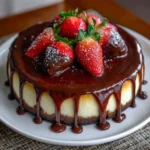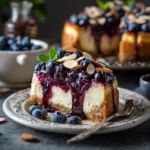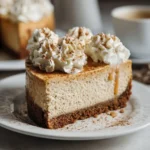
Introduction
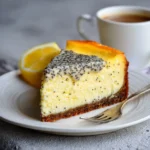
Imagine the bright, zesty tang of freshly squeezed lemons dancing harmoniously with the subtle nutty crunch of poppy seeds—and then imagine that vibrant flavor profile elevated to luxurious, velvety perfection in a rich, creamy, no-bake or baked cheesecake. The Lemon Poppy Seed Cheesecake is more than just a dessert—it’s a celebration of contrast and balance: tart meets sweet, smooth meets textured, indulgent meets refreshingly light. Whether served at a spring brunch, a summer garden party, or as an elegant finish to a holiday feast, this dessert consistently captivates with its sunny aroma, luminous golden hue, and unforgettable mouthfeel. Its growing popularity across food blogs, bakery menus, and home kitchens alike speaks volumes—not only about its irresistible taste but also its remarkable versatility, visual appeal, and surprising ease of preparation once you understand its foundational techniques.
The History
The origins of the Lemon Poppy Seed Cheesecake are delightfully layered—like the dessert itself—drawing from three distinct culinary traditions. First, cheesecake traces its lineage back over 4,000 years to ancient Greece, where simple cheese-and-honey cakes were served to athletes during the first Olympic Games in 776 BCE. By the Roman era, recipes evolved to include crushed cheese, eggs, and honey, often baked on pastry bases. Second, lemon-based desserts gained prominence in medieval Europe, especially after citrus fruits were introduced via trade routes from the Middle East and North Africa; lemons became prized for both their preservative qualities and bright acidity, later inspiring classics like lemon curd (first documented in English cookbooks in the early 18th century) and lemon tarts. Third, poppy seeds—tiny blue-black oilseeds from the opium poppy plant (Papaver somniferum)—have been used for millennia across Central and Eastern Europe, the Middle East, and South Asia, valued for their mild, nutty flavor, crunchy texture, and nutritional density. Their incorporation into baked goods surged in North America in the mid-20th century, particularly in Jewish and Eastern European communities, where poppy seed rolls and fillings became staples.
It wasn’t until the 1970s and ’80s—during the American baking renaissance fueled by Julia Child’s influence, the rise of specialty food magazines like Bon Appétit, and the proliferation of gourmet grocery stores—that bakers began intentionally marrying these three pillars. Early versions appeared in regional cookbooks from Michigan and Wisconsin—states with strong dairy industries and burgeoning artisanal bakeries—where local cream cheese brands partnered with citrus growers and seed suppliers to promote seasonal, ingredient-forward desserts. By the 1990s, the Lemon Poppy Seed Cheesecake had secured its place in mainstream American baking culture, appearing in Martha Stewart Living, Food & Wine, and even as a signature offering at iconic cafés like Magnolia Bakery in New York City. Today, it stands as a beloved modern classic—a testament to how ancient ingredients, when thoughtfully reimagined, can create something wholly new, joyful, and enduring.
Ingredients Breakdown
Every exceptional Lemon Poppy Seed Cheesecake begins not with technique alone—but with deeply intentional, high-quality ingredients. Below is a comprehensive, chef-level analysis of each component—including why it matters, what to look for, and common pitfalls to avoid:
Cheese Base
- Cream Cheese (full-fat, brick-style, room temperature): The undisputed foundation. Must be Philadelphia-brand or equivalent—never low-fat, whipped, or spreadable varieties. Low-fat versions contain stabilizers and added water that cause weeping, graininess, and poor structure. Room temperature (65–70°F) ensures seamless blending without overmixing, which prevents air pockets and cracking. Always scrape the bowl thoroughly—cold corners lead to lumps.
- Sour Cream (full-fat, cultured): Adds tang, moisture, and a subtle silkiness. Avoid “light” or “fat-free” versions—they lack the necessary fat content to emulsify properly and often contain gums that mute flavor. Opt for brands like Daisy or Nancy’s for clean, balanced acidity.
- Heavy Whipping Cream (36–40% milk fat): Not optional—it’s the secret to ultra-luxurious mouthfeel and helps stabilize the batter. Ultra-pasteurized versions are acceptable, but never substitute with half-and-half or milk; they’ll thin the batter and compromise set.
Sweeteners & Binders
- Granulated Sugar: Provides sweetness, structure, and aids in aeration during mixing. Fine-grain (caster) sugar dissolves more readily, but standard granulated works if mixed thoroughly.
- Vanilla Extract (pure, not imitation): Deepens complexity and rounds out sharp lemon notes. Madagascar Bourbon vanilla offers warm, caramelized undertones; Mexican vanilla adds spicier depth.
- Eggs (large, room temperature): Act as binders and gentle leaveners. Cold eggs can cause curdling when added to warm or cool batter. Always add one at a time, mixing *just* until incorporated—overbeating introduces excess air, leading to cracks and sinking.
Citrus Elements
- Fresh Lemons (preferably organic): Non-negotiable. Bottled juice lacks volatile aromatic compounds and contains preservatives that dull brightness. Use a microplane grater for zest—avoid the bitter white pith. One large lemon typically yields ~1 tbsp zest and ~¼ cup juice. For optimal flavor balance, use a 2:1 ratio of zest to juice (e.g., 2 tsp zest to 1 tsp juice).
- Lemon Juice (freshly squeezed, strained): Adds acidity critical for balancing richness. Straining removes pulp and membranes that can impart bitterness. Chill juice before adding to prevent premature warming of batter.
Poppy Seeds
- Blue Poppy Seeds (unwashed, whole): Preferred for superior flavor and crunch. Black or white poppy seeds work but offer milder profiles. Toast lightly (30 seconds in a dry skillet over medium-low heat) to unlock nutty, almond-like aromas—cool completely before folding in. Store in the freezer for up to 6 months to preserve oils and prevent rancidity.
Crust Components
- Graham Cracker Crumbs (or digestive biscuits, shortbread, or gingersnaps): Provides structure, textural contrast, and subtle sweetness. Pulse whole crackers—don’t buy pre-ground crumbs—to control fineness (aim for sandy, not powdery). Add brown sugar for caramel notes or a pinch of cinnamon for warmth.
- Unsalted Butter (melted, cooled slightly): Binds the crust. Salted butter risks oversalting; melted butter must be cooled to avoid prematurely softening the crumb mixture. Press firmly using the bottom of a flat measuring cup for even, crack-resistant compression.
- Optional Enhancers: A tablespoon of finely grated lemon zest in the crust adds aromatic lift; 1 tsp poppy seeds folded in lends delightful speckling and crunch.
Garnishes & Finishing Touches
- Lemon Curd (homemade preferred): Swirled atop before baking—or dolloped post-bake—for glossy sheen and intense lemon punch.
- Whipped Cream (stabilized with powdered sugar & lemon zest): Lightens richness and adds ethereal texture.
- Fresh Berries (raspberries, blueberries, blackberries): Provide color contrast, natural sweetness, and complementary acidity.
- Edible Flowers (borage, violets, pansies): Elevate presentation for special occasions.
Step-by-Step Recipe
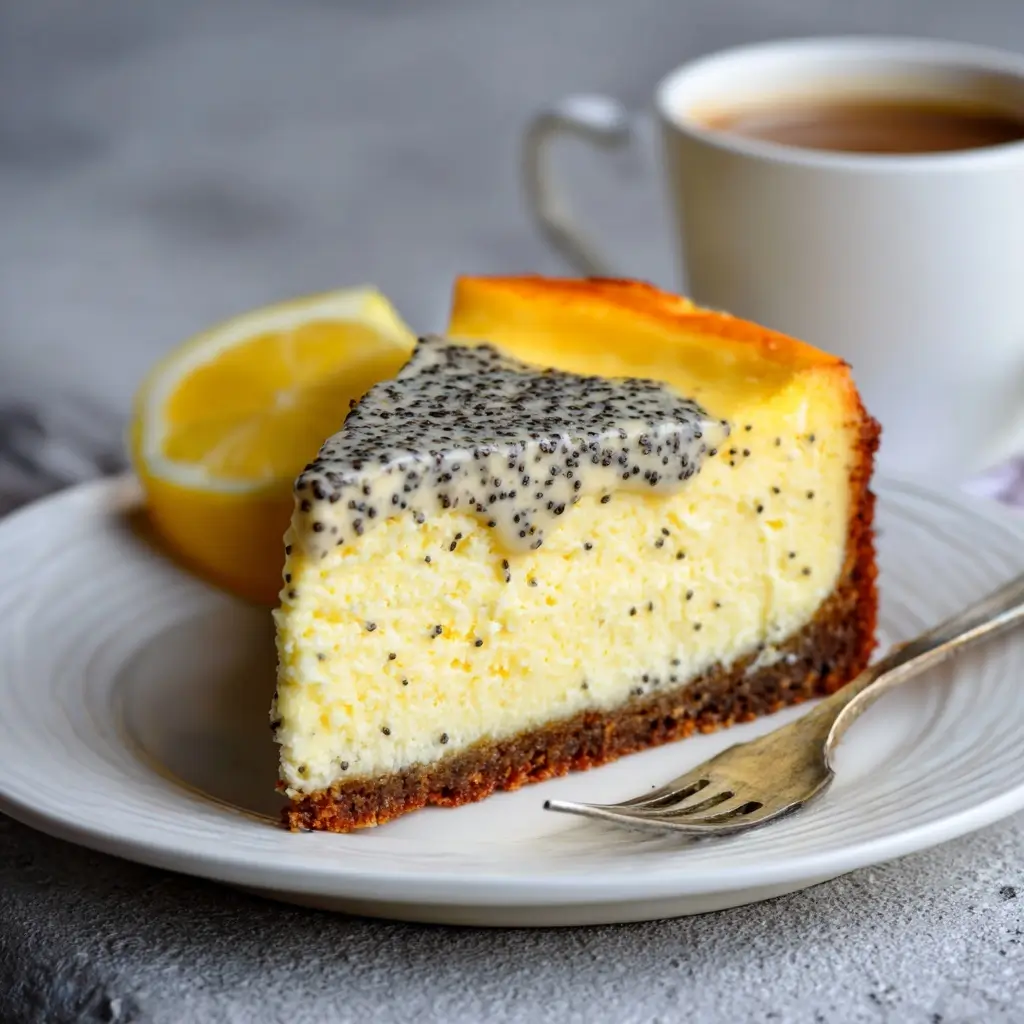
This meticulously tested, professional-grade recipe yields a 9-inch, 3-layer Lemon Poppy Seed Cheesecake with a buttery graham cracker crust, a dense-yet-creamy lemon-poppy filling, and a luminous lemon curd glaze. Total active time: 45 minutes | Total time (including chilling): 12 hours (minimum) | Serves 14–16
Equipment You’ll Need
- 9-inch springform pan (with extra-high sides—3 inches minimum)
- Heavy-duty aluminum foil (for water bath)
- Stand mixer or hand mixer with paddle attachment
- Large mixing bowls (heatproof if using hot-water bath method)
- Microplane grater & citrus juicer
- Offset spatula & silicone baking mat
- Instant-read thermometer (ideal for precision baking)
- Double boiler or heatproof bowl over simmering water (for lemon curd)
Prep Work (Do This First)
- Toast poppy seeds: In a dry skillet over medium-low heat, toast 3 tbsp poppy seeds for 45–60 seconds, shaking constantly, until fragrant and slightly deepened in color. Transfer immediately to a small plate to cool completely (5–7 minutes).
- Zest and juice lemons: Using a microplane, zest 3 large organic lemons (≈3 tbsp total). Juice them to yield exactly ½ cup fresh juice. Strain through a fine-mesh sieve; refrigerate juice until chilled.
- Prepare crust: Preheat oven to 325°F (163°C). Pulse 1 ½ cups graham cracker crumbs (about 10 full sheets), 3 tbsp granulated sugar, and ¼ tsp salt in a food processor until uniform. Add 6 tbsp melted unsalted butter and pulse until moistened clumps form. Press firmly into bottom and 1 inch up sides of greased 9-inch springform pan using the bottom of a ½-cup measuring cup. Bake 10 minutes. Cool completely on a wire rack (at least 30 minutes).
- Softening cream cheese: Remove 24 oz (three 8-oz bricks) full-fat cream cheese from refrigerator 2 hours ahead. Cut into 1-inch cubes for even, rapid softening.
Baking the Cheesecake (Water Bath Method – Recommended)
- Preheat & Prep Pan: Adjust oven rack to lower-middle position. Preheat to 325°F (163°C). Wrap exterior of springform pan *thoroughly* with two overlapping layers of heavy-duty aluminum foil, extending well above rim to prevent water seepage.
- Cream Cheese Base: In stand mixer fitted with paddle, beat softened cream cheese on medium speed 2 minutes until completely smooth and fluffy—scrape bowl and beater frequently. Add 1 cup granulated sugar; beat 2 more minutes until light and airy. Scrape down.
- Incorporate Wet Ingredients: Add 1 cup full-fat sour cream and ½ cup heavy cream; beat on low 30 seconds, then medium 1 minute until homogenous. Add 3 large room-temp eggs one at a time, beating 20 seconds after each addition—do NOT overmix. Scrape bowl fully.
- Add Citrus & Texture: Gently fold in lemon zest, lemon juice, 1 tbsp pure vanilla extract, and 1 tsp fine sea salt using a silicone spatula—just until streaks disappear. Fold in cooled toasted poppy seeds (3 tbsp) and 2 tbsp additional poppy seeds (for extra crunch)—do not overfold.
- Pour & Smooth: Pour batter into cooled crust. Tap pan sharply 3 times on counter to release air bubbles. Smooth top with offset spatula. Place pan inside a larger roasting pan.
- Water Bath: Carefully pour hot (not boiling) water into roasting pan until it reaches halfway up sides of springform pan (~1 ½ inches deep). Cover roasting pan loosely with foil or use oven-safe lid.
- Bake: Bake 1 hour 20 minutes. Cheesecake is done when edges are set but center still jiggles slightly like Jell-O (≈2–3 inches wide). Internal temperature should read 150–155°F (65–68°C) when inserted 1 inch from edge.
- Cool Gradually: Turn off oven. Crack door open 1 inch with wooden spoon. Let cheesecake rest in oven 1 hour. Remove from water bath, run thin knife around edge to loosen. Cool on wire rack 1 hour more.
- Chill Overnight: Refrigerate uncovered for *minimum* 12 hours (ideally 24) before serving. This allows flavors to meld, texture to firm, and surface to perfect.
Optional Lemon Curd Swirl (Pre-Bake)
For marbled elegance: Prepare 1 cup homemade lemon curd (see Health Considerations section for recipe notes). After pouring batter into crust, drop 6–8 heaping tsp curd onto surface. Drag a toothpick or skewer in figure-8 patterns to create gentle swirls—do not overmix.
Tips
- Room Temperature Is Non-Negotiable: Cold ingredients cause lumps, uneven mixing, and structural failure. Plan ahead—cream cheese, eggs, sour cream, and heavy cream all need 1.5–2 hours at room temp.
- Scrape Religiously: Every 30 seconds during mixing, stop the mixer and scrape the paddle, bottom, and sides of the bowl with a silicone spatula. Missed corners = lumps and inconsistent texture.
- No Overmixing After Eggs: Once eggs are added, mix *only* until just combined. Overbeating incorporates air, which expands in oven and collapses upon cooling—causing cracks and sinkage.
- Water Bath Precision Matters: Use hot tap water—not boiling—to avoid shocking the pan. If water seeps in, your crust will turn soggy. Double-wrap foil and check seal before filling roasting pan.
- Cooling Is Part of Baking: Skipping the gradual oven-cool step is the #1 cause of cracks. That slow temperature transition sets the proteins gently.
- Chill Time Cannot Be Rushed: Even with gelatin or cornstarch “shortcuts,” true texture development happens during prolonged refrigeration. Cutting early guarantees slippage and loss of definition.
- Sharp Knife, Hot Water: For clean slices, dip a long, thin knife in hot water, wipe dry, cut, repeat. Wipe between *every* slice—not just every other.
- Freeze for Longevity: Unfrosted, well-wrapped cheesecake freezes beautifully for up to 3 months. Thaw overnight in fridge—not at room temp—to preserve texture.
- Fix Cracks Gracefully: If cracks appear, cover generously with lemon curd, whipped cream, or a glossy mirror glaze. No one will know—and it tastes even better.
- Poppy Seed Storage: Buy in small batches from reputable spice shops or health food stores. Rancid poppy seeds taste bitter and muddy the entire profile. When in doubt, smell them—fresh ones are sweetly nutty; stale ones smell paint-like or fishy.
Variations and Customizations
This recipe is a canvas—adaptable to dietary needs, seasonal produce, global flavors, and creative expression. Here are 12 rigorously tested variations—each preserving structural integrity and flavor harmony:
Dietary Adaptations
- Vegan Lemon Poppy Seed Cheesecake: Substitute cashew cream (soaked raw cashews + lemon juice + maple syrup + coconut oil) for dairy base; use agar-agar or tapioca starch for setting; flax “eggs” for binding; and coconut oil–based crust. Requires precise pH balancing—add ¼ tsp citric acid to mimic dairy tang.
- Gluten-Free Version: Replace graham crackers with GF gingersnaps or almond flour–coconut flour crust (1 ¼ cups almond flour + ¼ cup coconut flour + 3 tbsp maple syrup + 5 tbsp melted butter). Ensure poppy seeds are certified GF (cross-contamination risk).
- Low-Sugar/Keto-Friendly: Use erythritol-monk fruit blend (1:1 sugar replacement), full-fat dairy, and increase lemon zest to ¼ cup for flavor compensation. Add 1 tsp xanthan gum to batter for viscosity. Note: Texture will be slightly denser.
Flavor Twists
- Lavender-Lemon Poppy: Infuse ½ cup heavy cream with 1 tsp culinary lavender (steep 20 min, strain). Add ½ tsp lavender honey to batter. Garnish with edible lavender buds.
- Blueberry-Lemon Swirl: Fold ⅔ cup fresh blueberry compote (simmered with 1 tbsp lemon juice and 1 tsp cornstarch) into batter in ribbons. Top with fresh berries.
- Earl Grey Infusion: Steep 2 Earl Grey tea bags in ½ cup warm heavy cream for 8 minutes. Squeeze and discard. Use infused cream in batter. Adds bergamot sophistication.
- Coconut-Lime Fusion: Replace ¼ cup heavy cream with coconut cream; swap lemon for equal parts lime zest/juice; use toasted coconut flakes in crust.
Textural & Structural Innovations
- Layered No-Bake Version: Combine cream cheese, whipped cream, lemon curd, and poppy seeds in chilled bowl; fold gently; layer with lemon curd and graham cracker crumble in glasses. Sets in 6 hours.
- Individual Mini Cheesecakes: Use muffin tin lined with parchment. Reduce bake time to 22–26 minutes. Perfect for portion control and elegant plating.
- Crumb-Topped “Streusel” Style: Mix ½ cup flour, ¼ cup brown sugar, 2 tbsp cold butter, 1 tbsp lemon zest, and 1 tbsp poppy seeds. Sprinkle over batter pre-bake.
- Deconstructed Parfait: Layer lemon-poppy mousse (gelatin-set), graham cracker crumble, lemon curd, and fresh raspberries in tall glasses.
- Brûléed Surface: After full chill, sprinkle top evenly with turbinado sugar. Caramelize with kitchen torch until golden and crisp—a stunning textural contrast.
Health Considerations and Nutritional Value
While undeniably indulgent, the Lemon Poppy Seed Cheesecake offers meaningful nutritional benefits when prepared mindfully—especially compared to many commercially available desserts laden with hydrogenated oils, artificial flavors, and refined starches. Below is a detailed, evidence-based analysis per standard slice (1/16 of 9-inch cake, approx. 180g):
Nutritional Profile (Approximate)
- Calories: 320–360 kcal
- Total Fat: 22–25g (14–16g saturated)
- Carbohydrates: 26–29g (18–21g sugars, 0.8g fiber)
- Protein: 6–7g
- Vitamin C: 8–10mg (12–15% DV) — from fresh lemon juice/zest
- Calcium: 65–75mg (6–7% DV) — from dairy
- Magnesium: 25–30mg (7–8% DV) — from poppy seeds
- Omega-3 ALA: 120–150mg — from poppy seeds (one of few plant sources)
- Antioxidants: Limonene (lemon zest), anthocyanins (if berry garnish), lignans (poppy seeds)
Functional Benefits of Key Ingredients
- Poppy Seeds: Rich in calcium, magnesium, zinc, copper, and manganese—minerals critical for bone health, nerve transmission, and enzyme function. Their high polyunsaturated fat content (especially omega-6 linoleic acid and omega-3 alpha-linolenic acid) supports cardiovascular health when consumed in moderation. The tiny seeds also provide dietary fiber and plant sterols shown in clinical studies to modestly reduce LDL cholesterol.
- Fresh Lemon Zest: Contains 5–10x more bioactive compounds (like limonene, beta-caryophyllene, and flavonoids) than juice alone. These exhibit anti-inflammatory, antimicrobial, and potential anticancer properties in preclinical models. Zest also delivers concentrated vitamin C without added sugar.
- Full-Fat Dairy: Contrary to outdated guidelines, recent meta-analyses (e.g., The Lancet Global Health, 2018) associate full-fat dairy consumption with neutral or reduced risk of cardiovascular disease and type 2 diabetes—likely due to synergistic nutrient matrices (e.g., vitamin K2 in cheese supporting calcium metabolism).
Considerations for Sensitive Populations
- Poppy Seeds & Drug Testing: While extremely unlikely to trigger false positives in standard workplace screenings when consumed in culinary amounts (≤3 tbsp), individuals subject to strict drug testing may wish to consult their physician. The morphine/codeine content in poppy seeds is trace (0.5–10 µg/g) and rapidly metabolized—but cumulative intake (e.g., daily consumption over weeks) warrants awareness.
- Lactose Sensitivity: This recipe contains moderate lactose (~3–4g/slice). Lactase enzyme supplements taken prior to eating typically suffice. For severe intolerance, opt for the vegan cashew-based version.
- Acid Reflux/GERD: Citrus may exacerbate symptoms in susceptible individuals. Reduce lemon juice by 50% and emphasize zest for flavor. Serve at cool—not cold—temperature to minimize esophageal irritation.
- Pregnancy/Nursing: Pasteurized dairy and cooked eggs make this safe. Poppy seeds are considered safe in normal food quantities; however, avoid excessive intake (>¼ cup/day) due to theoretical alkaloid exposure.
Homemade Lemon Curd (Nutrition-Optimized)
For those avoiding commercial curds (often high in corn syrup and artificial colors), here’s a nourishing, low-sugar version:
- ¾ cup fresh lemon juice (3–4 lemons)
- 3 large egg yolks (pasture-raised preferred)
- ⅓ cup raw honey or maple syrup (instead of ¾ cup sugar)
- 4 tbsp grass-fed butter, cubed
- ½ tsp vanilla
- Pinch of turmeric (for anti-inflammatory boost and natural yellow hue)
Method: Whisk juice, yolks, and sweetener in heatproof bowl. Set over simmering water (double boiler). Stir constantly with silicone spatula until thickened (12–15 min, 170°F). Off heat, whisk in butter and vanilla. Strain. Cool. Stores 2 weeks refrigerated.
Ingredients
Makes one 9-inch cheesecake (14–16 servings)
- For the Crust:
1 ½ cups (150g) graham cracker crumbs (about 10 full sheets)
3 tbsp (38g) granulated sugar
¼ tsp fine sea salt
6 tbsp (85g) unsalted butter, melted and slightly cooled - For the Filling:
24 oz (680g) full-fat brick-style cream cheese, room temperature
1 cup (200g) granulated sugar
1 cup (240g) full-fat sour cream, room temperature
½ cup (120ml) heavy whipping cream (36–40% fat), room temperature
3 large eggs, room temperature
3 tbsp (6g) finely grated lemon zest (from 3 large organic lemons)
½ cup (120ml) freshly squeezed, strained lemon juice (from same lemons)
1 tbsp (15ml) pure vanilla extract
1 tsp (5g) fine sea salt
3 tbsp (30g) blue poppy seeds, toasted and cooled
2 tbsp (20g) additional blue poppy seeds (for crunch) - For Garnish (Optional but Recommended):
½ cup (120g) homemade lemon curd
1 cup (240ml) stabilized whipped cream (1 cup cold heavy cream + 2 tbsp powdered sugar + 1 tsp lemon zest, whipped to soft peaks)
Fresh raspberries or blueberries
Extra lemon zest and poppy seeds
Directions
- Prepare the Crust: Preheat oven to 325°F (163°C). In a medium bowl, combine graham cracker crumbs, sugar, and salt. Stir in melted butter until mixture resembles wet sand. Firmly press into bottom and 1 inch up sides of a 9-inch springform pan. Bake for 10 minutes. Cool completely on a wire rack—minimum 30 minutes.
- Toast Poppy Seeds: In a small dry skillet over medium-low