Introduction
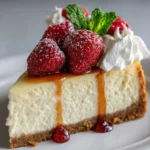
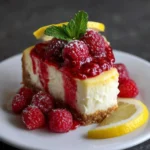
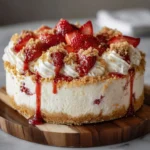
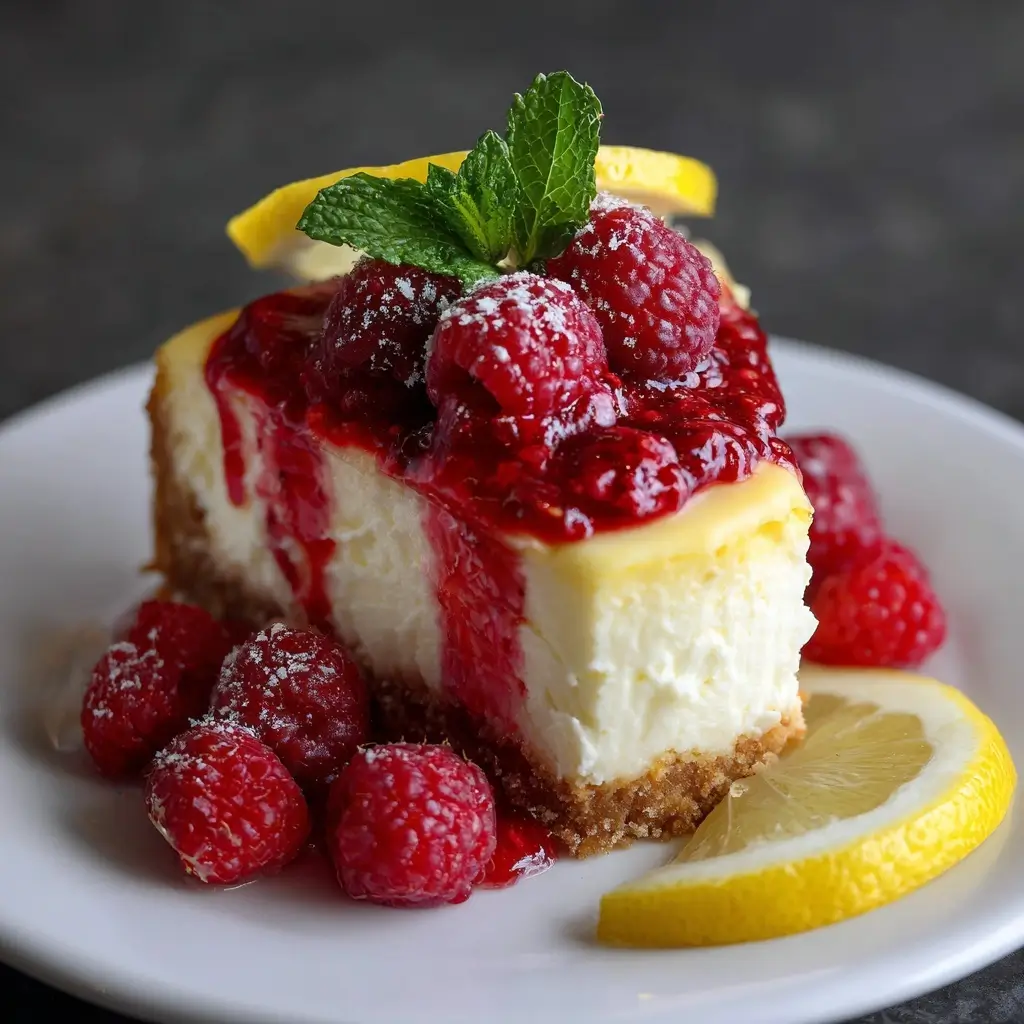
Indulge in the perfect harmony of bright citrus zest and luscious berry sweetness with our Lemon Raspberry Cheesecake — a showstopping dessert that marries tangy sophistication with velvety richness. Unlike traditional cheesecakes that lean heavily into decadence, this version strikes an elegant balance: the sharp, sun-kissed brightness of fresh lemon cuts through the creamy density of New York–style cream cheese filling, while vibrant, jewel-toned raspberries add both visual drama and a delicate floral-tart counterpoint. Whether served at a spring garden party, a summer soirée, or as a refined finish to a holiday meal, this dessert is as memorable for its nuanced flavor profile as it is for its stunning layered presentation — featuring a buttery graham cracker crust, a silky lemon-infused cheesecake layer, a glossy raspberry swirl, and often crowned with a delicate raspberry coulis drizzle and fresh berries. It’s not just a dessert; it’s a sensory experience — tart, creamy, airy, textural, and utterly unforgettable.
The History
The origins of cheesecake trace back over 4,000 years to ancient Greece, where early versions made with honey-sweetened cheese, flour, and wheat were served to athletes at the first Olympic Games in 776 BCE. By the time of the Roman Empire, recipes evolved to include crushed cheese, eggs, and honey baked in pastry shells — a precursor to modern interpretations. The concept traveled through medieval Europe, gaining regional variations: Italian ricotta-based versions, German quark cheesecakes, and French fromage blanc tarts all contributed techniques and philosophies.
In the United States, the iconic “New York-style” cheesecake emerged in the late 19th and early 20th centuries, popularized by immigrant bakers—particularly Jewish delis in Brooklyn—who elevated cream cheese (invented by William Lawrence in Chester, NY, in 1872) into dense, ultra-creamy, oven-baked masterpieces. Lemon entered the fold as a natural pairing — its acidity balanced the richness and prevented cloying sweetness. Raspberries, native to Northern Asia and cultivated across Europe since the Middle Ages, gained popularity in American baking post–World War II, especially as frozen and pureed forms became widely available. The marriage of lemon and raspberry — long celebrated in European tarts, sorbets, and clafoutis — found its ultimate expression in the 1980s and ’90s American bakery renaissance, when chefs began swirling fruit purées into cheesecake batters for dramatic marbling and complex layering. Today, Lemon Raspberry Cheesecake stands as a beloved contemporary classic — a testament to centuries of culinary evolution, cross-cultural exchange, and the timeless appeal of perfectly calibrated contrast.
Ingredients Breakdown
Every element of this Lemon Raspberry Cheesecake serves a precise functional and sensory purpose — no ingredient is arbitrary. Below is a deep-dive analysis of each component:
- Graham Cracker Crust Base: Finely ground graham crackers provide structure, subtle caramelized sweetness, and gentle whole-grain texture. The addition of brown sugar (rather than just granulated) enhances molasses notes and improves moisture retention. Melted unsalted butter binds the crumbs and adds richness and flakiness upon baking, while a pinch of fine sea salt balances sweetness and heightens overall flavor perception.
- Cream Cheese: Full-fat, brick-style Philadelphia or other high-quality full-fat cream cheese is non-negotiable. Its high fat content (at least 33%) ensures smooth emulsification, prevents graininess, and delivers luxurious mouthfeel. Low-fat or whipped versions contain stabilizers and excess moisture that compromise texture and cause cracking.
- Sour Cream & Heavy Cream: Sour cream adds tang, tenderness, and moisture without diluting flavor; its lactic acid helps tenderize proteins for a more supple crumb. Heavy cream (not half-and-half or milk) contributes fat and viscosity, yielding a silkier, more stable batter with improved heat tolerance during baking.
- Granulated Sugar: Not only sweetens but also aids in aeration during mixing and stabilizes the protein matrix. Fine-grain sugar dissolves more readily than coarse varieties, reducing risk of grittiness.
- Fresh Lemon Zest & Juice: Zest contains volatile citrus oils — concentrated aromatic compounds (limonene, citral) responsible for bright, floral top notes. Juice provides tart malic and citric acids that cut through fat and activate leavening (if used). Bottled juice lacks nuance and contains preservatives that can dull flavor and destabilize proteins.
- Eggs: Large, room-temperature eggs act as emulsifiers and structural agents. Their yolks add richness and color; whites contribute lift and stability. Overmixing after adding eggs introduces excess air, leading to puffing and subsequent collapse/cracking.
- Vanilla Extract: Pure Madagascar bourbon vanilla adds warm, woody depth that bridges citrus and berry notes — a subtle but essential aromatic anchor.
- Raspberries: Fresh, ripe (but not overripe) raspberries are preferred for peak fragrance and firmness. Frozen raspberries work well too — just ensure they’re unsweetened and fully thawed/drain excess liquid to avoid waterlogging the batter. Their natural pectin and acidity make them ideal for swirling without bleeding excessively.
- Optional Additions: A touch of cornstarch (1–2 tsp) in the batter reinforces structure without gumminess. A small amount of gelatin (½ tsp bloomed in 1 tbsp cold water) may be added for extra insurance against cracking and improved slice integrity — especially for no-bake or hybrid versions.
Step-by-Step Recipe
- Prepare the Crust: Preheat oven to 325°F (163°C). In a food processor, pulse 1 ½ cups (150g) finely crushed graham crackers, ¼ cup (50g) light brown sugar, and ¼ tsp fine sea salt until uniform. Add 6 tbsp (85g) melted unsalted butter and pulse until moistened clumps form. Press firmly and evenly into the bottom and 1 inch up the sides of a 9-inch springform pan lined with parchment on the bottom. Chill for at least 30 minutes (or freeze for 15) to set before baking.
- Bake the Crust: Bake chilled crust for 10 minutes. Remove and let cool completely on a wire rack. Reduce oven temperature to 300°F (149°C) for the cheesecake bake.
- Make the Lemon Cheesecake Batter: In a large bowl using a stand mixer fitted with the paddle attachment (or hand mixer), beat 24 oz (680g / four 8-oz bricks) full-fat cream cheese at medium speed for 2–3 minutes until completely smooth, scraping down bowl and paddle frequently. Add 1 cup (200g) granulated sugar and beat 2 minutes more until fluffy and pale. Scrape thoroughly. Add 1 cup (240g) full-fat sour cream and ½ cup (120ml) heavy cream; beat on medium-low 1 minute until homogenous. Add 3 large room-temperature eggs one at a time, beating on low just until incorporated after each (do NOT overmix). Stir in 2 tbsp (24g) finely grated lemon zest and ¼ cup (60ml) freshly squeezed lemon juice, followed by 1 tsp pure vanilla extract. Beat on low 15 seconds to combine. Optional: whisk in 1 tsp cornstarch for added stability.
- Prepare Raspberry Swirl: In a small saucepan, combine 1 cup (125g) fresh or thawed frozen unsweetened raspberries, 2 tbsp (25g) granulated sugar, and 1 tsp lemon juice. Simmer over medium-low heat for 5–7 minutes, stirring, until berries break down and mixture thickens slightly. Strain through a fine-mesh sieve into a bowl, pressing with a spatula to extract all pulp and discard seeds. Let cool completely (refrigerate 10–15 min if needed). For a more defined swirl, gently stir in 1 tsp cornstarch slurry (½ tsp cornstarch + 1 tsp cold water) and simmer 30 seconds more — cool completely before using.
- Assemble & Swirl: Pour cheesecake batter over cooled crust and smooth top. Spoon cooled raspberry purée in 6–8 even dollops across surface. Using a thin skewer, toothpick, or butter knife, drag gently in figure-eight or zig-zag motions — just 3–4 passes per area — to create elegant marbling. Avoid over-swirling, which causes bleeding and muddying.
- Water Bath Baking (Essential): Wrap the *outside* of the springform pan tightly with two overlapping layers of heavy-duty aluminum foil to prevent water seepage. Place pan inside a larger roasting pan. Carefully pour hot (not boiling) water into the roasting pan until it reaches halfway up the sides of the springform. Carefully transfer to center rack of preheated 300°F oven.
- Bake with Precision: Bake for 1 hour 25 minutes–1 hour 40 minutes. The cheesecake is done when edges are set and center jiggles *slightly* like Jell-O (not sloshes). A thermometer inserted 1 inch from center should read 150–152°F (65–67°C). Turn off oven, crack door open 1 inch with a wooden spoon, and let cheesecake cool undisturbed in water bath for 1 hour.
- Chill Thoroughly: Remove from water bath, discard foil, run a thin knife around inner edge to loosen. Cool completely on wire rack (about 1 hour), then refrigerate *uncovered* for at least 12 hours — preferably 24–48 hours — to fully set, develop flavor, and achieve clean slicing.
- Finish & Serve: Before serving, prepare optional garnish: Simmer ½ cup (60g) raspberries + 1 tbsp sugar + 1 tsp lemon juice until reduced by half (~5 min); strain. Drizzle coulis over slices. Top with fresh raspberries, lemon zest ribbons, mint leaves, or edible flowers. Run knife under hot water and wipe dry between each slice.
Tips
- Room-Temperature Ingredients Are Non-Negotiable: Cold cream cheese, eggs, or dairy will not emulsify properly — resulting in lumpy batter, uneven baking, and increased cracking risk. Plan ahead: remove from fridge 2–3 hours before starting.
- Scrape Religiously: Scrape bowl, paddle/beaters, and spatula after *every* addition — especially after sugar, eggs, and citrus — to prevent pockets of unmixed ingredients that bake unevenly.
- Low & Slow Is the Mantra: Baking at 300°F instead of the traditional 325–350°F dramatically reduces thermal shock and steam buildup — the two primary causes of cracks. The water bath adds further insurance via gentle, ambient heat and humidity.
- Don’t Skip the Water Bath: Even experienced bakers report higher success rates with water baths. If you’re concerned about leaks, double-wrap foil *and* place pan on a silicone mat inside the roasting pan for extra protection.
- Patience in Chilling Pays Off: Rushing the chill leads to soft, smearing slices and muted flavor. Overnight chilling allows proteins to fully relax and starches (if used) to set. For best results, chill 24+ hours and bring to cool room temperature (15–20 min) before slicing.
- Knife Technique Matters: Use a long, thin, non-serrated knife. Dip in hot water, wipe dry, slice cleanly, then repeat. Wiping removes residue and prevents dragging.
- Freeze for Longevity: Fully chilled, uncut cheesecake (well-wrapped in plastic + foil) freezes beautifully for up to 3 months. Thaw overnight in fridge before serving.
- Acid Balance Check: If your lemons taste unusually mild or your raspberries overly sweet, increase zest by ½ tsp or add ½ tsp additional lemon juice to preserve brightness.
Variations and Customizations
This recipe is a versatile canvas — adaptable for dietary needs, seasonal availability, equipment constraints, and personal preference. Here’s how to make it uniquely yours:
- No-Bake Version: Replace baked crust with a no-bake graham cracker base (same ingredients, pressed and chilled). For filling: whip 24 oz cold cream cheese with 1 cup powdered sugar, ½ cup heavy cream, 2 tbsp lemon zest, 3 tbsp lemon juice, and 1 tsp vanilla until stiff peaks form. Fold in ⅓ cup seedless raspberry jam (warmed and cooled). Pour into crust, swirl with ¼ cup more jam, chill 8+ hours. Ideal for summer or no-oven days.
- Gluten-Free: Substitute gluten-free graham crackers or almond flour–coconut crust (1 ½ cups almond flour + ¼ cup shredded coconut + 3 tbsp maple syrup + 3 tbsp melted butter + pinch salt). Ensure all other ingredients (vanilla, baking powder if used) are certified GF.
- Vegan: Use soaked cashews (2 cups) blended with ⅓ cup coconut cream, ⅓ cup lemon juice, ¼ cup maple syrup, 2 tbsp lemon zest, 1 tsp apple cider vinegar, and 1 tsp vanilla. Set with 1 tbsp agar-agar (bloomed) or 2 tsp tapioca starch. Crust: GF oats + dates + coconut oil. Chill 12+ hours.
- Mini Cheesecakes: Use a lined muffin tin. Reduce bake time to 22–26 minutes. Cool in pan 10 min, then chill 8+ hours. Perfect for parties and portion control.
- Flavor Twists: Add 1 tsp lavender buds (steeped in warm cream, then strained) for Provence elegance; fold in ½ cup toasted pistachios for crunch; swirl with blackberry or blueberry purée; infuse crust with crushed rosemary; top with candied lemon peel.
- Crust Alternatives: Digestive biscuits (UK), vanilla wafers, shortbread, gingersnaps (for spice contrast), or crushed pretzels + brown sugar (for sweet-salty intrigue).
- Dairy-Free Sour Cream Swap: Use plain, unsweetened coconut yogurt (full-fat, well-drained) or cashew sour cream (soaked cashews + lemon + salt, blended smooth).
- Protein Boost: Add 1–2 scoops unflavored collagen peptides or whey isolate (ensure heat-stable) to batter — no impact on texture or flavor, but increases satiety.
Health Considerations and Nutritional Value
While inherently indulgent, this Lemon Raspberry Cheesecake offers surprising nutritional merit when viewed holistically — especially compared to many commercial desserts laden with hydrogenated oils, artificial flavors, and excessive refined sugars.
Nutrient Highlights (per standard slice, ~1/12 of 9-inch cake):
- Calcium & Vitamin D: Full-fat dairy contributes ~15–20% DV calcium per slice; fortified cream cheese or sour cream may add vitamin D — supporting bone health and immune function.
- Antioxidant Powerhouse: Raspberries rank among the highest in anthocyanins (potent anti-inflammatory flavonoids), ellagic acid (linked to cellular protection), and vitamin C — with one cup delivering over 50% DV vitamin C. Lemon zest contains limonene, studied for potential chemoprotective properties.
- Healthy Fats: Butter and full-fat dairy provide conjugated linoleic acid (CLA) and fat-soluble vitamins (A, E, K2) — essential for hormone synthesis and nutrient absorption.
- Fiber Contribution: Graham cracker crust (especially whole-wheat versions) and raspberries supply modest soluble and insoluble fiber — aiding digestion and microbiome support.
Considerations & Mindful Modifications:
- Sugar Awareness: Total sugar per slice averages 22–28g (including natural fruit sugars). To reduce: decrease granulated sugar by 2 tbsp (10g), rely more on raspberry’s natural sweetness, and use unsweetened raspberry purée (not jam).
- Saturated Fat Context: At ~14–18g saturated fat per slice, moderation is key. Pair with a leafy green salad or fresh fruit to balance the meal and slow glucose response.
- Lactose Sensitivity: Sour cream and cream cheese contain less lactose than milk; many with mild sensitivity tolerate them well. Lactase enzyme supplements taken beforehand can further aid digestion.
- Portion Mindfulness: Serving size matters. A 1.5-inch slice (~180–200 calories) satisfies cravings without excess — especially when savored slowly and intentionally.
- Not a “Health Food” — But a Nourishing Indulgence: When made with whole, minimally processed ingredients and enjoyed occasionally as part of a varied, plant-forward diet, this dessert supports both physical satisfaction and emotional well-being — an essential, often overlooked, pillar of holistic health.
Ingredients
For the Crust:
- 1 ½ cups (150g) graham cracker crumbs (about 12 full sheets)
- ¼ cup (50g) light brown sugar, packed
- ¼ tsp fine sea salt
- 6 tbsp (85g) unsalted butter, melted
For the Lemon Cheesecake Filling:
- 24 oz (680g) full-fat brick-style cream cheese, at room temperature (four 8-oz packages)
- 1 cup (200g) granulated sugar
- 1 cup (240g) full-fat sour cream, at room temperature
- ½ cup (120ml) heavy cream (36–40% fat), at room temperature
- 3 large eggs, at room temperature
- 2 tbsp (24g) finely grated lemon zest (from 2–3 organic lemons)
- ¼ cup (60ml) freshly squeezed lemon juice (from ~2 lemons)
- 1 tsp pure vanilla extract
- Optional: 1 tsp cornstarch or ½ tsp unflavored gelatin (bloomed in 1 tsp cold water)
For the Raspberry Swirl & Garnish:
- 1 cup (125g) fresh or unsweetened frozen raspberries
- 2 tbsp (25g) granulated sugar
- 1 tsp fresh lemon juice
- Optional garnish: Additional fresh raspberries, lemon zest ribbons, mint leaves, raspberry coulis (½ cup raspberries + 1 tbsp sugar + 1 tsp lemon juice, simmered & strained)
Directions
- Prep & Crust: Preheat oven to 325°F (163°C). Pulse graham crackers, brown sugar, and salt in food processor until fine crumbs form. Add melted butter; pulse until mixture resembles wet sand. Press firmly into bottom and 1″ up sides of 9-inch springform pan lined with parchment. Chill 30 min (or freeze 15 min).
- Bake Crust: Bake 10 min. Cool completely on wire rack. Reduce oven to 300°F (149°C).
- Make Filling: Beat cream cheese on medium 2–3 min until smooth. Add sugar; beat 2 min until fluffy. Add sour cream and heavy cream; mix 1 min. Add eggs one at a time, mixing *just* until combined. Stir in lemon zest, juice, and vanilla. Optional: whisk in cornstarch/gelatin. Scrape bowl thoroughly.
- Make Raspberry Purée: Simmer raspberries, sugar, and lemon juice 5–7 min. Strain, cool completely.
- Assemble: Pour batter into crust. Dollop raspberry purée evenly. Swirl gently 3–4 times with skewer.
- Water Bath: Wrap pan tightly in double-layer heavy foil. Place in roasting pan. Pour hot water to halfway up sides.
- Bake: Bake 1 hr 25 min–1 hr 40 min until edges set and center jiggles slightly. Internal temp: 150–152°F. Turn off oven; crack door open 1″; cool in water bath 1 hr.
- Chill: Remove from water bath, cool on rack 1 hr. Refrigerate uncovered ≥12 hrs (ideally 24–48 hrs).
- Serve: Loosen edges with knife. Slice with hot, wiped knife. Garnish as desired.
FAQ
- Q: Can I make this without a springform pan?
- A: Yes — use a 9-inch regular cake pan lined *very* generously with parchment (overhang on all sides). After chilling, lift out using parchment “handles.” Note: removing clean edges may be trickier.
- Q: Why did my cheesecake crack?
- A: Most common causes: 1) Overmixing after adding eggs, 2) Rapid temperature change (no water bath or cooling too quickly), 3) Overbaking (center should jiggle), 4) Cold ingredients causing lumps and uneven setting. Follow low-temp + water bath + gradual cooling religiously.
- Q: Can I use bottled lemon juice?
- A: Not recommended. Bottled juice lacks volatile oils (flavor) and contains preservatives (e.g., sodium benzoate) that can interfere with protein coagulation and cause curdling or off-notes. Fresh is essential for authenticity and texture.
- Q: How do I prevent raspberry bleeding into the batter?
- A: Use cooled, thickened purée (simmered and strained). Swirl *gently* and *minimally*. Avoid overmixing batter before swirling. Chill batter 15–20 min before swirling if room is warm.
- Q: Can I freeze this cheesecake?
- A: Absolutely. Once fully chilled and sliced (optional), wrap individual slices tightly in plastic wrap, then foil. Or freeze whole, unwrapped, for 2 hours, then wrap airtight. Freeze up to 3 months. Thaw overnight in fridge.
- Q: My batter looks curdled — is it ruined?
- A: If caused by cold ingredients or overbeating, it may recover with continued mixing — but best practice is prevention. If truly separated (oil slicks, watery), it’s likely due to cold dairy or acid added too fast. Start over with properly tempered ingredients.
- Q: Can I substitute Greek yogurt for sour cream?
- A: Yes — use full-fat, plain Greek yogurt (not low-fat or flavored). Drain ¼ cup in a fine sieve for 10 min to remove excess whey, ensuring thickness matches sour cream.
- Q: How far in advance can I make this?
- A: Ideal timeline: Make crust and purée Day 1. Bake cheesecake Day 2. Chill Day 2–3. Serve Day 3 or 4. Flavor deepens beautifully over 48 hours.
Summary
A Lemon Raspberry Cheesecake is a masterclass in balance — where the electrifying zing of fresh lemon zest and juice lifts the dense, velvety richness of a slow-baked, water-bathed cream cheese filling, while vibrant, seedless raspberry swirls lend floral-tart complexity and stunning visual artistry.
Rooted in ancient cheesecake traditions yet refined by modern technique, it rewards patience with flawless texture, clean slices, and layered flavor — making it equally suited for intimate gatherings or grand celebrations, and endlessly customizable to suit dietary preferences, seasons, and creative whims.