Introduction
Limoncello Lemon Sorbet is a dazzling fusion of Italian zest and icy elegance—a dessert that captures the sun-kissed essence of Southern Italy in every spoonful. Light, refreshing, and bursting with citrusy brightness, this sorbet combines the bold tang of fresh lemons with the smooth, liqueur-infused warmth of limoncello, resulting in a palate-cleansing treat perfect for warm afternoons, elegant dinner parties, or as a sophisticated end to any meal. Unlike traditional ice creams, this dairy-free delight offers a guilt-free indulgence without sacrificing flavor, making it ideal for those seeking a vibrant, low-fat dessert option that still feels luxurious.
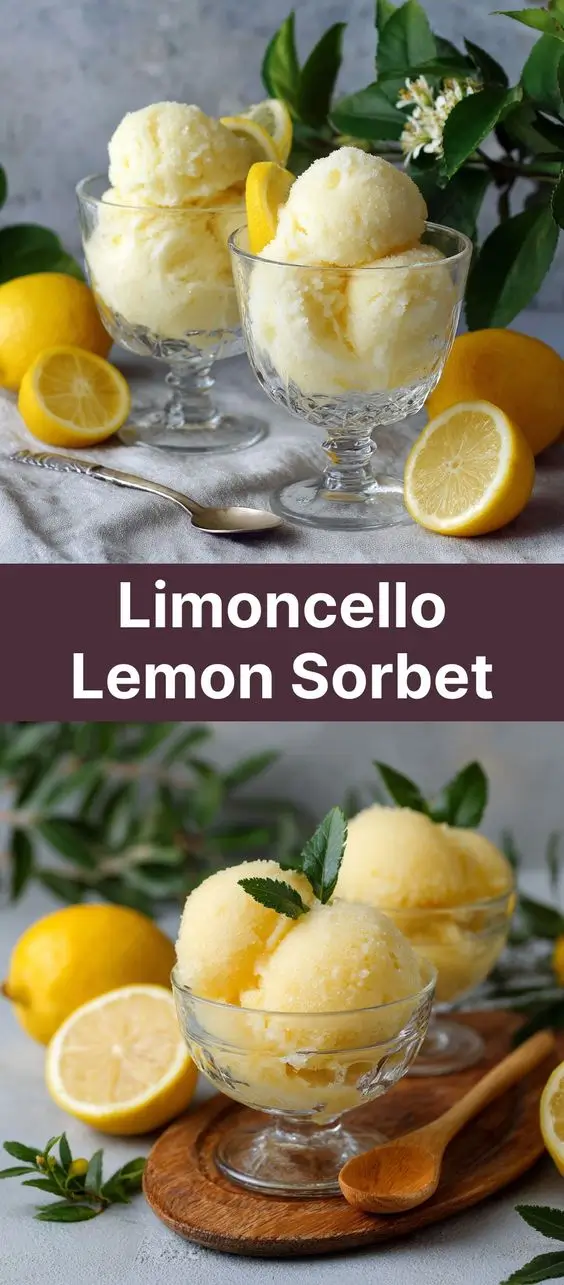
Whether you’re hosting an al fresco brunch under the summer sun or simply craving a moment of Mediterranean serenity in your kitchen, Limoncello Lemon Sorbet delivers both simplicity and sophistication. Its vibrant yellow hue evokes images of lemon groves along the Amalfi Coast, while its crisp finish leaves your mouth tingling with refreshment. This recipe honors the timeless tradition of Italian sorbetti while adding a spirited twist that elevates it beyond the ordinary.
The History
The roots of Limoncello Lemon Sorbet trace back to two distinct yet harmoniously intertwined Italian traditions: the art of sorbet-making and the legendary production of limoncello liqueur. Sorbets, known as “sorbetto” in Italian, have been enjoyed since the Renaissance era, when Sicilian artisans perfected methods of freezing fruit purees using snow from Mount Etna and salt to lower the freezing point—essentially creating one of the earliest forms of gelato. These early frozen desserts were reserved for nobility but gradually spread across Italy as refrigeration technology advanced.
Limoncello, on the other hand, hails primarily from the Amalfi Coast, particularly around Sorrento, Capri, and Positano, where sun-drenched lemons grow thick-skinned and intensely fragrant. Traditionally made by steeping lemon zest in grain alcohol, then sweetening the infusion with simple syrup, limoncello has long been served chilled as a digestif after meals. The practice dates back to at least the early 20th century, though some claim it originated even earlier among local monks.
The marriage of these two iconic elements—sorbet and limoncello—into a single dessert is a modern culinary innovation, born from the desire to blend authentic regional flavors into novel textures. While not historically documented in ancient cookbooks, Limoncello Lemon Sorbet reflects contemporary trends in Italian-inspired cuisine, where chefs experiment with adult-friendly desserts that balance sweetness with alcohol’s complexity. Today, it stands as a symbol of artisanal craftsmanship meeting creative flair, often featured in high-end restaurants and coastal trattorias alike.
Ingredients Breakdown
Creating the perfect Limoncello Lemon Sorbet hinges on selecting premium ingredients that work together in harmony. Each component plays a critical role in achieving the ideal balance of tartness, sweetness, aroma, and texture. Below is a detailed breakdown of each ingredient and its purpose:
- Fresh Lemons (6–8 medium): The star of the show. Use organic, unwaxed lemons for zesting and juicing to avoid pesticides and waxes. Varieties like Femminello St. Teresa (commonly grown on the Amalfi Coast) offer superior flavor—bright acidity balanced with floral notes. You’ll need approximately 1 cup of freshly squeezed juice and 2 tablespoons of finely grated zest.
- Limoncello Liqueur (½ cup / 120 ml): High-quality store-bought or homemade limoncello adds depth, subtle alcohol warmth, and enhances the lemon profile. It also helps prevent the sorbet from freezing too hard, contributing to a smoother scoopable texture. Choose a brand with natural ingredients and no artificial coloring.
- Granulated Sugar (¾ to 1 cup): Essential for balancing the intense tartness of lemon juice and aiding in texture development. Sugar lowers the freezing point of water, preventing large ice crystals and yielding a silkier sorbet. Adjust quantity based on lemon acidity and personal preference.
- Water (1 cup): Used to create a simple syrup base, which dissolves sugar completely and ensures even distribution throughout the mixture. Filtered water is recommended for purity of taste.
- Honey or Agave Nectar (optional, 1–2 tbsp): Adds mild floral undertones and can enhance mouthfeel. Particularly useful if reducing sugar content but wanting to maintain creaminess.
- Pinch of Fine Sea Salt: Enhances overall flavor by rounding out sharp edges and amplifying citrus notes without making the sorbet taste salty.
- Clear Corn Syrup or Glucose Syrup (optional, 1–2 tbsp): Helps inhibit crystallization and improves texture stability during freezing, especially important if storing longer than 24 hours.
- Organic Lemon Oil (a few drops, optional): For an ultra-intense aromatic lift, though use sparingly—it’s highly concentrated.
Together, these ingredients form a symphony of bright, clean, and slightly boozy flavors that define authentic Limoncello Lemon Sorbet.
Step-by-Step Recipe
Follow this meticulous guide to craft a restaurant-quality Limoncello Lemon Sorbet at home. Patience and attention to detail will reward you with a smooth, intensely flavored frozen dessert.
- Prepare the Lemons: Wash 6–8 organic lemons thoroughly under warm water, scrubbing gently with a brush. Dry completely. Using a fine microplane grater, remove only the outer yellow zest from 3–4 lemons, avoiding the bitter white pith underneath. Set aside the zest. Roll each lemon firmly on the countertop before cutting in half and juicing. Strain the juice through a fine-mesh sieve to remove seeds and pulp. Measure out exactly 1 cup (240 ml) of fresh lemon juice.
- Make the Simple Syrup: In a small saucepan, combine 1 cup of water and ¾ cup of granulated sugar. Add the reserved lemon zest. Heat over medium heat, stirring occasionally, until the sugar fully dissolves—do not boil vigorously. Once dissolved, bring to a gentle simmer for 3 minutes to extract maximum flavor from the zest. Remove from heat and let steep for 20 minutes. Strain through a cheesecloth-lined sieve into a clean bowl, pressing lightly on the zest to extract oils. Discard the solids. Allow the syrup to cool completely; refrigerate for faster chilling.
- Combine Ingredients: In a large mixing bowl, whisk together the cooled lemon syrup, 1 cup of fresh lemon juice, ½ cup of limoncello, and a pinch of sea salt. Taste carefully—the mixture should be sharply tangy but balanced, not overwhelmingly sour. If desired, add up to an additional ¼ cup of sugar dissolved in 1 tablespoon hot water and cooled, adjusting sweetness gradually. For improved texture, stir in 1 tablespoon of glucose syrup or light corn syrup.
- Chill Thoroughly: Cover the mixture and refrigerate for at least 4 hours, preferably overnight. A well-chilled base freezes more evenly and develops a finer texture.
- Strain Again (Optional but Recommended): Before churning, strain the mixture once more through a fine-mesh sieve to ensure absolute smoothness and remove any residual particles.
- Churn in Ice Cream Maker: Pour the chilled mixture into a pre-frozen ice cream maker bowl. Churn according to manufacturer’s instructions (typically 20–25 minutes) until it reaches a soft-serve consistency—thick, creamy, and opaque.
- Freeze to Set: Transfer the churned sorbet into an airtight, freezer-safe container. Smooth the top with a spatula and press a sheet of parchment paper directly onto the surface to prevent ice formation. Seal tightly and freeze for at least 4 hours or until firm enough to scoop.
- Serve: Let sit at room temperature for 3–5 minutes before serving to soften slightly. Scoop into chilled glasses or martini coupes. Garnish with lemon twists, mint sprigs, or edible flowers for presentation.
Tips
- Use Organic Lemons: Since you’re using the zest, non-organic lemons may contain wax or chemical residues that affect flavor and safety.
- Zest First, Then Juice: Always grate the zest before cutting and juicing the lemons—it’s much easier when the fruit is whole.
- Avoid Over-Churning: Stop the machine just as the sorbet becomes thick and creamy. Over-churning can introduce air and cause iciness.
- Pre-Freeze Your Container: Place the storage container in the freezer ahead of time to maintain consistent temperature when transferring the sorbet.
- Don’t Skip the Resting Time: Allowing the base to chill overnight melds the flavors and results in a smoother final texture.
- Alcohol Content Matters: Too much alcohol can prevent freezing altogether. Keep limoncello to no more than ⅓ of the total liquid volume. Most commercial limoncellos are 28–32% ABV, which works well.
- Test Sweetness Before Freezing: Chill a spoonful of the mix in the freezer for 2 minutes to simulate frozen taste. Adjust sweetness accordingly—cold dulls perception of sugar.
- For Alcohol-Free Version: Replace limoncello with extra lemon juice plus 1 tsp lemon extract and 1 tbsp glycerin (food-grade) to mimic viscosity.
- Blender Alternative (No Ice Cream Maker): Pour the mixture into a shallow metal pan and freeze. Every 30 minutes for 3–4 hours, scrape with a fork to break up ice crystals, mimicking churning. Less smooth but still delicious.
- Serving Temperature: Serve between -12°C and -8°C (10°F to 18°F). Warmer than typical ice cream for optimal flavor release.
Variations and Customizations
Limoncello Lemon Sorbet is wonderfully adaptable. Here are inspired ways to personalize your batch:
- Lemon-Basil Sorbet: Infuse the simple syrup with 6–8 fresh basil leaves during heating. Strain before cooling. The herbal note complements the limoncello beautifully.
- Lavender-Limoncello Twist: Add ½ teaspoon of culinary-grade dried lavender to the syrup while steeping. Strain thoroughly. Creates a Provençal-inspired variation.
- Sparkling Limoncello Sorbet: Replace ¼ cup of water with chilled prosecco or sparkling wine for a bubbly texture sensation.
- Meyer Lemon Version: Substitute regular lemons with Meyer lemons for a sweeter, mandarin-like profile. Reduce sugar accordingly.
- Spiked with Vodka: Add 1–2 tablespoons of unflavored vodka to improve scoopability and shelf life without altering taste significantly.
- Tropical Fusion: Blend in ¼ cup of strained passionfruit or yuzu juice for an exotic edge.
- Dairy-Infused Creaminess: Stir in 2–3 tablespoons of heavy cream or coconut milk after churning for a richer mouthfeel (technically making it a “water ice” rather than strict sorbet).
- Layered Parfait: Alternate scoops with layers of mascarpone whipped with honey and lemon zest for a deconstructed tiramisu effect.
- Sorbet Cocktails: Float a scoop in a flute of chilled Prosecco for a “Limoncello Granita Spritz.”
- Kid-Friendly Mocktail Version: Omit alcohol entirely and serve in small cups with colorful straws and lemon candy garnishes.
Health Considerations and Nutritional Value
Limoncello Lemon Sorbet is naturally dairy-free, gluten-free, and cholesterol-free, making it suitable for many dietary lifestyles including vegan (if alcohol used is plant-based), kosher, and lactose-intolerant diets. However, several health factors should be considered:
- Sugar Content: Despite being fruit-based, sorbet can be high in added sugars. One serving (½ cup) contains approximately 20–25g of sugar depending on recipe adjustments. Diabetics should consume in moderation or explore sugar substitutes like erythritol or monk fruit sweetener (note: may affect texture).
- Alcohol Presence: Contains about 3–4% residual alcohol per serving due to limoncello. Not appropriate for children, pregnant individuals, or those avoiding alcohol for medical or religious reasons.
- Acidity Levels: High citric acid content may trigger heartburn or enamel erosion in sensitive individuals. Rinse mouth with water after eating, and avoid brushing teeth immediately.
- Vitamin C Boost: Rich in vitamin C—one serving provides nearly 50% of the daily recommended intake—supporting immune function and skin health.
- Low in Fat and Calories: Compared to ice cream, sorbet is significantly lower in calories (~120 kcal per ½ cup vs. ~250+ for premium ice cream) and contains zero fat, making it a popular choice for weight-conscious consumers.
- Hydration Support: High water content contributes to fluid intake, beneficial in hot weather.
- Allergens: Generally allergen-friendly, but always verify limoncello ingredients—some brands use honey or derivatives that may concern vegans.
When enjoyed mindfully, Limoncello Lemon Sorbet can be part of a balanced diet, offering a refreshing way to satisfy sweet cravings without heavy fats.
Ingredients
- 6–8 organic lemons (for ~1 cup juice + 2 tbsp zest)
- 1 cup (240 ml) water
- ¾ to 1 cup (150–200 g) granulated sugar (adjust to taste)
- ½ cup (120 ml) high-quality limoncello liqueur
- Pinch of fine sea salt
- 1 tbsp glucose syrup or light corn syrup (optional, for texture)
Directions
- Wash lemons and zest 3–4 of them using a microplane, avoiding the white pith.
- Juice all lemons and strain to get exactly 1 cup of juice.
- In a saucepan, combine water, sugar, and lemon zest. Bring to a simmer, stir until sugar dissolves, then remove from heat and steep for 20 minutes.
- Strain the syrup into a bowl and chill completely in the refrigerator.
- In a large bowl, whisk together chilled syrup, lemon juice, limoncello, salt, and glucose syrup (if using).
- Taste and adjust sweetness if needed.
- Cover and refrigerate for at least 4 hours or overnight.
- Strain again if desired for ultra-smooth texture.
- Pour into ice cream maker and churn 20–25 minutes until thick and creamy.
- Transfer to a sealed container, press parchment paper on surface, and freeze for 4+ hours.
- Let sit at room temperature 3–5 minutes before serving.
FAQ
Can I make Limoncello Lemon Sorbet without an ice cream maker?
Yes! Pour the mixture into a shallow metal pan and freeze. Every 30 minutes, scrape with a fork to break up ice crystals. Repeat 3–4 times over 3 hours for best results.
Why did my sorbet turn out too icy?
This usually happens due to insufficient sugar, lack of alcohol or stabilizers, or inadequate churning. Ensure proper sugar-to-liquid ratio and consider adding glucose syrup next time.
How long does it keep in the freezer?
Up to 2 months in an airtight container with parchment pressed on the surface. Flavor remains vibrant for 3–4 weeks.
Can I use bottled lemon juice?
Freshly squeezed is strongly recommended. Bottled juice lacks brightness and often contains preservatives that dull flavor.
Is this recipe vegan?
Most limoncellos are vegan, but some brands use animal-derived filtration agents. Check labels or opt for certified vegan brands.
Can I reduce the sugar?
You can reduce sugar slightly, but too little will result in a hard, icy block. Consider using alternative sweeteners designed for freezing applications.
What if my sorbet won’t churn properly?
Ensure your ice cream maker bowl was frozen for at least 24 hours. Also confirm the base is completely cold before starting.
Can I make this with other citrus?
Absolutely! Try blending with grapefruit, blood orange, or clementine for seasonal variations.
Does the alcohol cook off?
No, the alcohol remains present since there’s no cooking after mixing. It contributes to both flavor and texture.
Can I serve this as a palate cleanser?
Perfect for that! Serve small scoops between courses in tasting menus—its acidity resets the taste buds beautifully.
Summary (in two lines)
Limoncello Lemon Sorbet is a radiant, alcohol-kissed dessert that marries the zesty punch of Amalfi lemons with the silky warmth of Italian liqueur. Refreshing, elegant, and effortlessly sophisticated, it brings a taste of coastal Italy straight to your spoon.