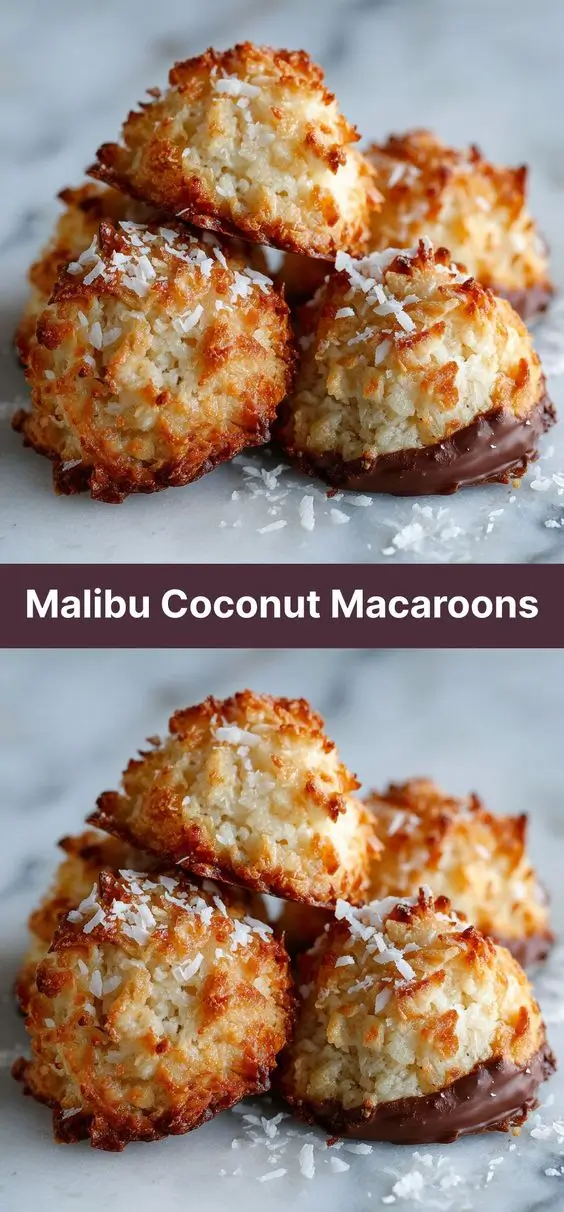
Malibu Coconut Macaroons: A Tropical Delight for Every Occasion
Indulge in the sweet, creamy, and tropical flavors of Malibu Coconut Macaroons — a decadent twist on the classic coconut macaroon. Infused with the smooth essence of Malibu coconut rum, these soft, chewy cookies bring a vacation-like experience to your taste buds with every bite. Whether you’re enjoying them at a summer barbecue, holiday gathering, or simply as an after-dinner treat, these macaroons are sure to become a favorite in your dessert repertoire.
The History of Coconut Macaroons
Coconut macaroons have a rich and varied history that traces back centuries. Unlike their French cousin, the almond-based macaron, coconut macaroons originated from Jewish communities in Europe, particularly during Passover when leavened products were prohibited. The simplicity of ingredients — primarily coconut, sugar, and egg whites — made them ideal for religious observances. These early versions were dense, chewy, and often dipped in chocolate.
Over time, the recipe traveled across continents, evolving with regional influences. In the Caribbean, where coconuts grow abundantly, coconut sweets became staples, and the addition of local spirits like rum began to appear in recipes. With the introduction of Malibu coconut-flavored rum in 1983 by Barton Brands, a new era of tropical desserts was born. Malibu’s smooth, sweet coconut profile made it a natural fit for baked goods, leading to modern creations like the Malibu Coconut Macaroon — a fusion of tradition and island-inspired indulgence.
Ingredients Breakdown: What Makes These Macaroons Special?
The magic of Malibu Coconut Macaroons lies not just in their flavor but in the careful selection and role of each ingredient. Here’s a detailed look at what goes into making these heavenly treats:
- Sweetened Shredded Coconut (4 cups): This is the star of the show. Sweetened coconut adds both texture and sweetness, giving the macaroons their signature chewiness and tropical aroma. Unsweetened coconut can be used for a less sugary version, but it will alter the traditional taste and moisture level.
- Condensed Milk (1 can, 14 oz): Acts as a binder and adds creaminess. It also contributes to the golden-brown exterior when baked and enhances chewiness without requiring additional sugar.
- Malibu Coconut Rum (3 tablespoons): The defining ingredient. Malibu infuses a distinct tropical flavor and subtle alcoholic warmth. While most of the alcohol bakes off, the essence remains, elevating the coconut notes.
- Vanilla Extract (1 teaspoon): Enhances overall flavor complexity, rounding out the sweetness and complementing the coconut and rum.
- Eggs (2 large, room temperature): Provide structure and help bind the mixture. They also contribute to a slightly crisp outer shell while keeping the inside tender.
- Salt (1/4 teaspoon): Balances the sweetness and brings out the other flavors, preventing the macaroons from tasting one-dimensionally sweet.
- Optional Add-ins: Chocolate chips, chopped nuts (like macadamia), or a drizzle of white chocolate for garnish. Some bakers even dip the cooled macaroons in dark chocolate for a luxurious finish.
Step-by-Step Recipe: How to Make Malibu Coconut Macaroons
Follow this detailed guide to create perfect Malibu Coconut Macaroons at home. This recipe yields approximately 18–20 macaroons and takes about 45 minutes from start to finish.
Ingredients
- 4 cups sweetened shredded coconut
- 1 (14 oz) can sweetened condensed milk
- 3 tablespoons Malibu coconut rum
- 1 teaspoon pure vanilla extract
- 2 large eggs, lightly beaten
- 1/4 teaspoon salt
- Optional: 1/2 cup mini chocolate chips or chopped macadamia nuts
Directions
- Preheat Oven & Prepare Baking Sheets: Preheat your oven to 325°F (165°C). Line two large baking sheets with parchment paper or silicone baking mats. This prevents sticking and ensures easy removal after baking.
- Mix Wet Ingredients: In a large mixing bowl, combine the sweetened condensed milk, Malibu coconut rum, vanilla extract, beaten eggs, and salt. Whisk until smooth and well blended.
- Incorporate Coconut: Gradually add the shredded coconut into the wet mixture. Stir with a wooden spoon or spatula until all the coconut is evenly moistened and the mixture holds together. If using chocolate chips or nuts, fold them in at this stage.
- Chill the Mixture (Optional but Recommended): For easier handling and more defined shapes, cover the bowl and refrigerate the mixture for 20–30 minutes. This step helps the macaroons hold their shape during baking.
- Shape the Macaroons: Using a cookie scoop or tablespoon, portion out heaping tablespoons of the mixture. Roll gently between your palms into round balls (about 1.5 inches in diameter) and place them on the prepared baking sheets, spacing them about 1.5 inches apart to allow for slight spreading.
- Bake: Place the baking sheets in the preheated oven and bake for 18–22 minutes, or until the macaroons are puffed and golden brown around the edges. The centers should still feel soft but set.
- Cool Completely: Remove from the oven and let the macaroons cool on the baking sheet for 5 minutes before transferring them to a wire rack to cool completely. They will firm up as they cool.
- Garnish (Optional): Once cooled, drizzle with melted white or dark chocolate, sprinkle with toasted coconut flakes, or serve as-is for a rustic look.
Tips for Perfect Malibu Coconut Macaroons
- Don’t Overbake: These macaroons should remain soft and chewy. Overbaking leads to dryness and brittleness. Watch them closely during the last few minutes of baking.
- Use Fresh Coconut: Stale or overly dry coconut can affect texture. For best results, use high-quality, fresh shredded coconut. Toasted coconut can be used for a deeper flavor, but reduce baking time slightly to prevent burning.
- Room Temperature Eggs: Cold eggs can cause the mixture to curdle. Letting them come to room temperature ensures a smoother batter.
- Uniform Sizing: Use a cookie scoop for consistent size and even baking. This also ensures all macaroons bake at the same rate.
- Chill Before Baking: Chilling firms up the dough, making it easier to shape and helping the macaroons maintain their form in the oven.
- Storage Tips: Store in an airtight container at room temperature for up to 5 days. For longer storage, freeze in a single layer and transfer to freezer bags; they keep well for up to 3 months.
- Alcohol Sensitivity: While most alcohol evaporates during baking, the flavor lingers. For a non-alcoholic version, substitute Malibu with coconut milk or coconut extract mixed with water.
Variations and Customizations
One of the joys of Malibu Coconut Macaroons is how easily they can be adapted to suit different tastes, occasions, or dietary needs. Here are some creative variations:
- Chocolate-Dipped Macaroons: Melt dark, milk, or white chocolate and dip the cooled macaroons halfway. Place on parchment and chill until set for an elegant finish.
- Tropical Twist: Add dried pineapple, mango, or crystallized ginger for a fruity, island-inspired flair.
- Nutty Version: Fold in chopped macadamia nuts, pecans, or almonds for added crunch and richness.
- Gluten-Free Friendly: This recipe is naturally gluten-free, making it a great option for those with gluten sensitivities. Just ensure all ingredients (especially additives like chocolate chips) are certified gluten-free.
- Mini Macaroons: Use a small teaspoon to make bite-sized versions, perfect for parties or dessert platters.
- Passover-Friendly: Replace regular condensed milk with a kosher-for-Passover brand to make these suitable for the holiday.
- Adult-Only Cocktail Macaroons: Increase Malibu to 1/4 cup for a stronger rum flavor — ideal for dessert trays at themed parties.
- Coconut Oil Boost: Add 1 tablespoon of melted coconut oil for extra moisture and shine.
Health Considerations and Nutritional Value
While Malibu Coconut Macaroons are undeniably delicious, it’s important to enjoy them in moderation due to their high sugar and fat content. Here’s a general nutritional breakdown per serving (based on 20 macaroons, one macaroon per serving):
- Calories: ~180–200 kcal
- Total Fat: 10–12g (mostly from coconut and condensed milk)
- Saturated Fat: 8–9g (coconut is high in saturated fat, though some studies suggest medium-chain triglycerides may have unique metabolic effects)
- Carbohydrates: 20–22g
- Sugars: 18–20g (primarily from sweetened coconut and condensed milk)
- Protein: 2–3g
- Cholesterol: ~20mg (from eggs)
- Sodium: ~50–70mg
Considerations:
- Sugar Content: Due to sweetened coconut and condensed milk, these are high in added sugars. Diabetics or those monitoring sugar intake should consume sparingly.
- Alcohol Content: Though minimal alcohol remains after baking, these are not suitable for children, pregnant women, or individuals avoiding alcohol for medical or religious reasons.
- Dietary Modifications: To reduce sugar, experiment with unsweetened coconut and sugar-free condensed milk (though texture and flavor will change). For lower fat, results may vary as coconut is central to the recipe.
- Allergens: Contains eggs and dairy (in condensed milk). Not suitable for strict vegans or those with egg allergies unless substitutes are used.
Frequently Asked Questions (FAQ)
Can I make Malibu Coconut Macaroons without alcohol?
Yes! Substitute the Malibu with an equal amount of coconut milk or a mix of coconut extract (1/2 tsp) and water. The flavor will be less complex but still delicious.
Why are my macaroons falling apart?
This usually happens if there’s not enough binder. Ensure you’re using the full can of condensed milk and properly beaten eggs. Chilling the mixture before baking also helps cohesion.
Can I use egg whites only?
Yes, but whole eggs provide better binding and richness. If using only whites, increase to 3–4 egg whites and consider adding 1 tablespoon of oil to retain moisture.
How long do they last?
Stored in an airtight container at room temperature: 5 days. In the refrigerator: up to 1 week. In the freezer: up to 3 months.
Can I toast the coconut first?
Yes, toasting 1 cup of the coconut before mixing adds depth, but don’t toast all of it — it can make the macaroons too dry.
Are these macaroons keto-friendly?
No, due to high sugar from sweetened coconut and condensed milk. A low-carb version would require significant substitutions and may not resemble traditional macaroons.
Can I use fresh coconut meat?
Fresh coconut can be used, but it has higher moisture content. You’ll need to dry it thoroughly and adjust the ratio, which may affect consistency.
Why did my macaroons spread too much?
Possible causes include warm dough, overcrowding on the tray, or insufficient chilling. Always space them apart and consider refrigerating the shaped dough before baking.
Summary
Malibu Coconut Macaroons blend the nostalgic charm of classic coconut cookies with the tropical luxury of coconut rum, creating a rich, chewy, and aromatic treat perfect for any celebration. Easy to make and endlessly customizable, they bring a taste of the islands to your kitchen with minimal effort.