Introduction
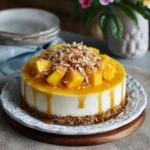
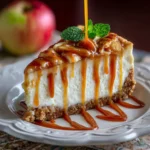
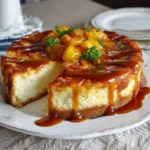
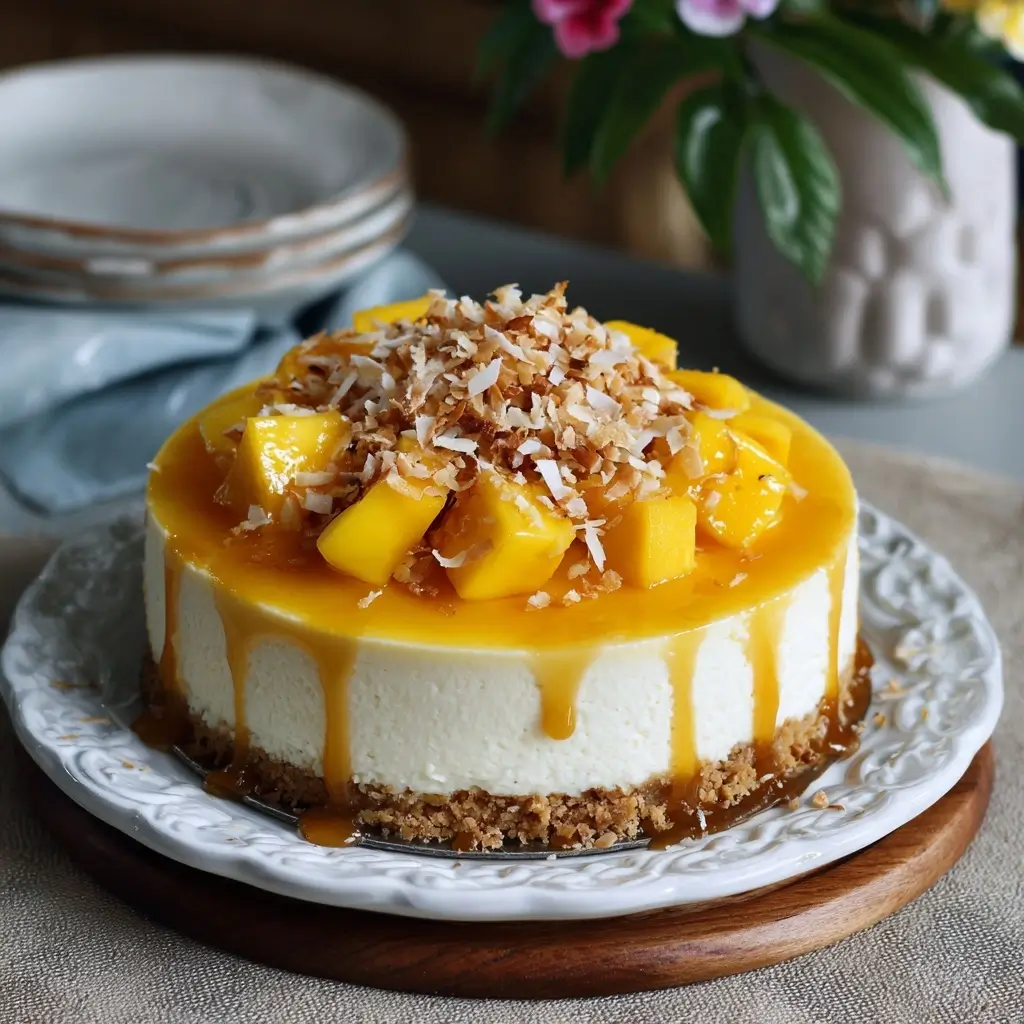
Welcome to the luscious, tropical world of Mango Coconut Cheesecake — a decadent fusion of creamy richness, vibrant fruitiness, and island-inspired elegance. This dessert transcends the boundaries of traditional cheesecake by harmonizing the velvety tang of New York–style cream cheese with the sun-kissed sweetness of ripe mangoes and the fragrant, buttery depth of toasted coconut. Whether you’re hosting a summer soiree, celebrating a milestone, or simply treating yourself to a moment of pure sensory joy, this cake delivers an unforgettable experience: cool yet comforting, luxurious yet refreshingly light. Its golden coconut crust crackles beneath a luxuriously smooth mango-swirled filling, crowned with glossy mango coulis, delicate coconut curls, and perhaps a whisper of lime zest — a symphony of textures and flavors that evokes palm-fringed beaches and lazy afternoons under azure skies.
The History
The origins of Mango Coconut Cheesecake are not rooted in a single documented moment but rather represent a delicious evolution born from global culinary cross-pollination. Cheesecake itself boasts ancient lineage — dating back to ancient Greece, where early versions made with honey-sweetened cheese and flour were served to athletes at the first Olympic Games in 776 BCE. Over centuries, it migrated through Roman kitchens, medieval European monasteries, and ultimately into American homes via Eastern European Jewish immigrants in the late 19th and early 20th centuries — giving rise to the iconic dense, baked New York style.
Mangoes, native to South Asia over 4,000 years ago, traveled along spice routes to East Africa, the Middle East, and eventually the Americas via Portuguese explorers in the 16th century. Coconut, equally ancient and indigenous to tropical coastal regions across the Indian and Pacific Oceans, was carried by Austronesian seafarers and later embraced globally for its versatility — from milk and oil to shredded flesh and toasted flakes. The marriage of mango and coconut is deeply embedded in Southeast Asian, Caribbean, and South Indian cuisines — think Thai mango sticky rice, Jamaican coconut mango sorbet, or Goan amboli with fresh mango chutney.
Mango Coconut Cheesecake as we know it today emerged in earnest during the late 20th and early 21st centuries — fueled by rising consumer demand for exotic, health-conscious, and visually stunning desserts. Food bloggers, celebrity chefs like Ina Garten and David Lebovitz, and gourmet bakeries began experimenting with fruit purées in no-bake and baked cheesecakes, while coconut flour, coconut cream, and toasted coconut garnishes surged in popularity alongside gluten-free and dairy-reduced trends. By the 2010s, this hybrid dessert had become a staple at high-end brunch spots, wedding dessert tables, and tropical-themed bake-offs — symbolizing both indulgence and mindful, ingredient-driven creativity.
Ingredients Breakdown
Every extraordinary Mango Coconut Cheesecake begins with intention — selecting ingredients not just for function, but for flavor integrity, texture balance, and aromatic authenticity. Below is a meticulous breakdown of each component’s role:
- Graham Cracker Crumbs (or Coconut Graham Alternative): Provides structural base and subtle caramelized sweetness; using coconut-infused graham crackers or adding toasted coconut flakes enhances cohesion and aroma.
- Unsweetened Shredded Coconut (toasted): Adds nutty depth, crunch contrast, and authentic tropical resonance. Toasting unlocks volatile oils — intensifying fragrance without bitterness.
- Unsalted Butter (melted): Binds the crust and imparts richness; clarified butter may be substituted for higher smoke point and cleaner coconut flavor.
- Cream Cheese (full-fat, room temperature): The foundational canvas — must be impeccably softened (65–70°F) to ensure lump-free emulsification and maximum silkiness.
- Full-Fat Coconut Milk (canned, refrigerated overnight): Not “light” or “carton” versions — the thick, creamy top layer (coconut cream) provides fat content essential for stability, mouthfeel, and dairy-free richness. Acts as both moisture source and flavor amplifier.
- Granulated Sugar & Brown Sugar (light or dark): Granulated ensures clean sweetness and proper setting; brown sugar contributes molasses notes that complement coconut’s caramel tones and add subtle complexity.
- Fresh Ripe Mangos (Ataulfo or Kent varieties preferred): Ataulfo (Honey or Champagne mangos) offer floral sweetness, low fiber, and high pectin — ideal for smooth purées and natural thickening. Kent mangos provide bold color and balanced acidity. Avoid underripe or fibrous Tommy Atkins unless blended ultra-finely and strained.
- Fresh Lime Juice & Zest: Critical acidulators — lime juice cuts through fat, brightens mango’s sweetness, and prevents cloying; zest adds aromatic citrus oil that lifts every bite.
- Vanilla Bean Paste or Pure Extract: Vanilla’s warm, creamy profile bridges mango and coconut seamlessly. Real vanilla bean paste adds tiny black specks and deeper, more nuanced flavor than extract alone.
- Unflavored Gelatin (for no-bake version) or Sour Cream (for baked): Gelatin offers firm yet tender set for chilled versions; sour cream adds tang, moisture retention, and tender crumb structure in oven-baked iterations.
- Heavy Cream (cold, for whipped topping): Used in optional cloud-like whipped coconut-mango topping — stabilized with powdered sugar and a touch of coconut cream for cohesion.
- Pinch of Sea Salt: Enhances all other flavors, balances sweetness, and deepens umami perception — never omit.
Step-by-Step Recipe
Makes one 9-inch springform cheesecake (12–14 servings); total time: 3 hours active + 12–16 hours chilling (no-bake) or 1 hour 45 minutes + cooling (baked)
- Prepare the Coconut Crust: Preheat oven to 350°F (175°C). In a food processor, pulse 1 ½ cups graham cracker crumbs (or 1 cup coconut graham + ½ cup unsweetened shredded coconut) until fine. Add ⅓ cup toasted coconut flakes and pulse 3–4 times to combine. Melt 6 tbsp unsalted butter; pour over crumb mixture. Pulse until evenly moistened and clumping slightly. Press firmly and evenly into bottom and 1 inch up sides of a 9-inch springform pan using the back of a measuring cup. Bake 10 minutes until fragrant and lightly golden. Cool completely on wire rack — minimum 30 minutes.
- Make the Mango Purée: Peel and dice 3 large ripe Ataulfo mangos (about 2 ½ cups flesh). Blend in high-speed blender with 2 tbsp fresh lime juice, 1 tsp lime zest, and 1 tbsp granulated sugar until perfectly smooth (60–90 seconds). Strain through fine-mesh sieve to remove any micro-fibers — reserve 1 cup purée for filling, ½ cup for swirl, and ¼ cup for glaze/topping. Refrigerate all portions.
- Prepare the Cheesecake Filling (No-Bake Method): In large bowl, beat 24 oz full-fat cream cheese (room temp), ¾ cup granulated sugar, and ¼ cup light brown sugar with electric mixer on medium until creamy and fluffy (~3 min). Scrape bowl. Add 1 tsp vanilla bean paste and pinch of sea salt; beat 1 min. In separate bowl, bloom 2 ¼ tsp unflavored gelatin in 3 tbsp cold water for 5 min. Heat ½ cup reserved mango purée in small saucepan over low heat until steaming (not boiling); whisk in bloomed gelatin until fully dissolved (~1 min). Slowly drizzle warm gelatin-mango mixture into cream cheese mixture while beating on low — then increase to medium until fully incorporated and glossy. In chilled bowl, whip 1 cup chilled full-fat coconut cream (solid part only, scraped from refrigerated can) with 2 tbsp powdered sugar until soft peaks form. Gently fold coconut cream into cream cheese mixture in two additions using silicone spatula — avoid overmixing. Pour filling over cooled crust. Tap pan sharply on counter 3x to release air bubbles. Chill uncovered 4 hours — then cover with plastic wrap and refrigerate minimum 12 hours (preferably 16+).
- Create the Mango Swirl: Before final chill, spoon reserved ½ cup mango purée over surface. Use a thin skewer or toothpick to drag gentle figure-eights and concentric circles — creating marbled effect without over-blending. Return to refrigerator.
- Prepare the Glaze & Garnish (After Chilling): Gently warm remaining ¼ cup mango purée with 1 tsp honey and ½ tsp lime juice until fluid but cool. Brush thinly over top. Garnish with: toasted coconut flakes, edible orchid petals, lime zest ribbons, and/or fresh mango dice. Optional: Pipe rosettes of stabilized coconut-mango whipped cream around perimeter.
- For Baked Version (Alternative): Follow steps 1 & 2. In stand mixer, beat 24 oz cream cheese, 1 cup granulated sugar, ⅓ cup brown sugar, 1 tsp salt, 1 tbsp lime zest, and 2 tsp vanilla until smooth. Add 1 cup full-fat coconut milk (well-stirred), ¾ cup sour cream, and 3 large eggs (room temp) — mix on low just until combined. Fold in 1 cup mango purée. Pour into cooled crust. Place springform pan inside larger roasting pan; fill roasting pan with 1 inch hot water (water bath). Bake at 325°F (165°C) for 75–85 minutes — center should jiggle slightly like Jell-O. Turn off oven; crack door open 2 inches; let cool inside oven 1 hour. Chill uncovered 2 hours, then covered overnight.
Tips
- Room Temperature Is Non-Negotiable: Cream cheese, eggs (if baking), and coconut milk must be truly at room temperature — cold ingredients cause separation, lumps, and cracking. Let cream cheese sit out 2–3 hours; submerge sealed coconut milk can in warm water for 10 minutes before opening.
- Toast Coconut Like a Pro: Spread unsweetened shredded coconut on parchment-lined baking sheet. Toast at 325°F (160°C) for 5–8 minutes — stir every 90 seconds — until golden at edges, fragrant, and uniformly pale tan. Cool completely before using — residual heat continues cooking.
- Strain That Purée: Even “fiberless” mangos contain microscopic strands that compromise texture. Always press purée through fine-mesh sieve — use back of spoon to extract every drop of silky liquid.
- Water Bath Wisdom: For baked version, wrap springform pan *tightly* in double layers of heavy-duty foil — go up sides at least 3 inches. Leakage ruins texture and creates soggy crust. Use a tea kettle to gently pour hot water into roasting pan — avoids splashing.
- Chill Patience Pays Off: No-bake cheesecakes require *minimum* 12 hours — 24 hours yields optimal sliceability and flavor melding. Do not rush with freezer — causes condensation, graininess, and separation.
- Cutting Clean Slices: Dip sharp knife in hot water, wipe dry, cut, repeat. For flawless presentation, use dental floss: loop behind cake, cross ends, and pull gently upward.
- Prevent Cracking (Baked): Avoid overmixing after adding eggs. Cool gradually in oven. Run thin knife around edge immediately after removing from water bath — releases tension before contraction begins.
- Flavor Layering: Brush cooled crust with reduced coconut milk syrup (simmer ½ cup coconut milk + 1 tbsp sugar until thickened) before adding filling — intensifies coconut presence.
- Acid Balance: Taste purée before adding to filling — adjust lime juice incrementally. Too much acid curdles cream cheese; too little results in flat, cloying dessert.
- Freezing Success: Unfrosted, fully chilled cheesecake freezes beautifully for up to 3 months. Wrap tightly in plastic + foil. Thaw overnight in fridge — never at room temp — to preserve texture.
Variations and Customizations
This recipe is a vibrant canvas — adaptable for dietary needs, seasonal produce, and creative expression:
- Dairy-Free & Vegan: Substitute cashew cream (soaked raw cashews blended with coconut milk, lemon juice, and maple syrup) for cream cheese base; use agar-agar instead of gelatin; top with coconut yogurt swirl.
- Gluten-Free: Use certified GF graham-style crackers or almond flour + toasted coconut + coconut oil crust. Ensure all extracts and sugars are GF-certified.
- Low-Sugar/Keto: Replace sugars with erythritol + monk fruit blend (1:1 ratio); use keto-friendly crust (almond flour, coconut flour, melted coconut oil); reduce mango to ¾ cup and supplement with mango extract + additional coconut cream.
- Tropical Medley: Fold in ⅓ cup diced pineapple (well-drained), 2 tbsp macadamia nuts (toasted and chopped), and 1 tsp passionfruit pulp into filling before pouring.
- Spiced Chai-Mango: Infuse coconut milk with 1 cinnamon stick, 4 cardamom pods, and 1 star anise (simmer 10 min, cool, strain) before using. Add ½ tsp ground ginger to crust.
- Chocolate-Coconut Swirl: Melt 4 oz dark chocolate (70%); cool slightly. Drizzle over filling before mango swirl — use skewer to create triple-marble effect.
- Mini Mason Jar Versions: Layer crust, filling, and mango coulis in 8-oz jars. Chill 6 hours. Top with coconut whip and mint. Perfect for parties and gifts.
- Grilled Mango Variation: Grill ripe mango slices (brushed with coconut oil) for 2–3 min per side until caramelized. Blend grilled pieces into purée for smoky-sweet depth.
- Coconut-Lime Curd Topping: Replace simple glaze with vibrant coconut-lime curd (coconut milk, lime juice/zest, eggs, sugar, butter) — piped in rosettes or swirled.
- Deconstructed Parfait: Serve components separately in glasses: coconut crumble, mango-coconut mousse, fresh mango dice, toasted coconut, lime foam.
Health Considerations and Nutritional Value
While undeniably indulgent, Mango Coconut Cheesecake offers surprising functional benefits when crafted mindfully — transforming it from mere dessert to a thoughtfully composed treat:
- Vitamin C Powerhouse: One serving (⅛ of cake) delivers ~35–45 mg vitamin C — 45–60% DV — supporting immune function, collagen synthesis, and iron absorption from plant sources.
- Healthy Fats Profile: Coconut milk contributes medium-chain triglycerides (MCTs), metabolized differently than long-chain fats — offering quick energy and potential cognitive support. Paired with mango’s natural antioxidants, this creates a satiating, nutrient-dense fat source.
- Dietary Fiber & Digestive Support: Mango provides ~2g dietary fiber per serving (soluble pectin), aiding digestion and gut microbiome diversity. Toasted coconut adds modest insoluble fiber for regularity.
- Natural Enzymes: Raw mango contains amylase and magneferin — enzymes shown to assist carbohydrate digestion and reduce post-meal inflammation.
- Electrolyte Balance: Coconut milk is naturally rich in potassium (≈120 mg/serving), supporting healthy blood pressure and nerve conduction — especially valuable after physical activity or hot weather.
- Antioxidant Synergy: Mangiferin (a xanthone in mango) and phenolic compounds in coconut work synergistically to combat oxidative stress — linked to reduced chronic disease risk.
- Mindful Modifications: Reduce added sugar by 25% without sacrificing satisfaction (mango’s fructose provides ample sweetness); boost protein with Greek yogurt swirl; add chia seeds to crust for omega-3s and binding.
- Portion Awareness: Serving size matters — a 2-inch slice (~180–220 calories) fits comfortably within balanced eating patterns. Pair with herbal tea or sparkling lime water to enhance satiety.
- Allergen Notes: Naturally nut-free (unless modified), but verify graham cracker ingredients for soy or wheat derivatives. For tree-nut allergies, ensure coconut is processed in dedicated facility if severe.
- Notable Considerations: High in natural sugars — moderate for gestational diabetes or insulin resistance. Contains saturated fat — appropriate for most, but consult dietitian for cardiovascular concerns. Gelatin is animal-derived — use agar for vegetarian/vegan.
Nutrition Facts (per 1/12th slice, no-bake version): Calories: 215 • Total Fat: 14g (Sat Fat: 10g) • Cholesterol: 32mg • Sodium: 145mg • Total Carbohydrate: 21g (Dietary Fiber: 1.8g • Sugars: 16g) • Protein: 3.2g • Vitamin A: 12% DV • Vitamin C: 52% DV • Calcium: 3% DV • Iron: 4% DV
Ingredients
Makes one 9-inch cheesecake (12–14 servings)
For the Toasted Coconut Crust:
- 1 ½ cups graham cracker crumbs (about 10 full sheets) — or 1 cup coconut graham + ½ cup unsweetened shredded coconut
- ⅓ cup unsweetened shredded coconut, toasted
- 6 tablespoons unsalted butter, melted and slightly cooled
- 2 tablespoons granulated sugar (optional, for extra sweetness)
- ¼ teaspoon fine sea salt
For the Mango Purée:
- 3 large ripe Ataulfo (Honey) mangos, peeled and cubed (≈2 ½ cups flesh)
- 2 tablespoons fresh lime juice (from 1–2 limes)
- 1 teaspoon finely grated lime zest
- 1 tablespoon granulated sugar (adjust to taste)
For the No-Bake Cheesecake Filling:
- 24 ounces (3 standard packages) full-fat brick cream cheese, room temperature
- ¾ cup granulated sugar
- ¼ cup light brown sugar, packed
- 1 teaspoon pure vanilla bean paste (or 1 ½ tsp pure extract)
- ¼ teaspoon fine sea salt
- 2 ¼ teaspoons unflavored powdered gelatin
- 3 tablespoons cold water (for blooming gelatin)
- ½ cup reserved mango purée (warmed for gelatin infusion)
- 1 cup full-fat coconut cream (solid portion only, chilled — from 1–2 refrigerated 13.5-oz cans)
- 2 tablespoons powdered sugar (for coconut cream)
For Garnish & Finish:
- ¼ cup reserved mango purée
- 1 teaspoon raw honey or agave nectar
- ½ teaspoon fresh lime juice
- ¼ cup toasted unsweetened coconut flakes
- Fresh mango dice
- Lime zest ribbons
- Edible flowers (e.g., pansies, violets, orchids)
- Optional: Stabilized Coconut-Mango Whipped Cream (see Tips section)
Directions
- Make the Crust: Preheat oven to 350°F (175°C). In food processor, combine graham cracker crumbs, toasted coconut, sugar (if using), and salt. Pulse until uniform. Add melted butter and pulse until mixture resembles wet sand and holds together when pinched. Press firmly into bottom and 1 inch up sides of 9-inch springform pan. Bake 10 minutes until golden and fragrant. Cool completely on wire rack — at least 30 minutes.
- Prepare Mango Purée: In blender, combine mango cubes, lime juice, lime zest, and 1 tbsp sugar. Blend on high 60–90 seconds until completely smooth. Immediately strain through fine-mesh sieve into bowl, pressing with back of spoon. You should yield ≈1 ¼ cups purée. Measure out: 1 cup for filling, ½ cup for swirl, ¼ cup for glaze. Refrigerate all portions.
- Bloom Gelatin: In small bowl, sprinkle gelatin over cold water. Let sit 5 minutes until spongy and opaque.
- Beat Cream Cheese Base: In large bowl of stand mixer fitted with paddle attachment (or large bowl with hand mixer), beat cream cheese, granulated sugar, brown sugar, vanilla, and salt on medium speed 3–4 minutes until ultra-smooth, creamy, and free of lumps. Scrape bowl thoroughly.
- Incorporate Gelatin: In small saucepan, warm ½ cup reserved mango purée over low heat until steaming (≈160°F — do NOT boil). Whisk in bloomed gelatin until fully dissolved (≈1 minute). With mixer on low, slowly drizzle warm gelatin mixture into cream cheese mixture. Increase speed to medium and beat 1–2 minutes until glossy and homogeneous.
- Whip Coconut Cream: In chilled metal bowl, combine chilled coconut cream (solid part only) and powdered sugar. Whip with chilled beaters on medium-high until soft peaks form (≈2–3 minutes). Do not over-whip — it will turn grainy.
- Fold & Fill: Using silicone spatula, gently fold whipped coconut cream into cream cheese mixture in two additions — just until no streaks remain. Pour filling over cooled crust. Tap pan firmly on counter 3 times to release air bubbles.
- Create Swirl: Spoon ½ cup reserved purée over surface. Drag toothpick or skewer in gentle figure-8s and concentric circles — creating elegant marbling. Do not over-swirl.
- Chill Thoroughly: Refrigerate uncovered 4 hours — then cover tightly with plastic wrap. Chill minimum 12 hours (ideally 16–24 hours) until firm and sliceable.
- Finish & Serve: Warm ¼ cup purée with honey and lime juice until fluid. Cool slightly. Unmold cheesecake: run thin knife around edge, release springform clamp, lift off band. Place on serving platter. Brush top lightly with mango glaze. Garnish generously with toasted coconut, mango dice, lime zest, and flowers. Slice with hot knife. Serve chilled.
FAQ
- Can I use frozen mango?
- Yes — but only unsweetened, flash-frozen Ataulfo or Champagne mango chunks. Thaw completely, drain excess liquid in fine mesh, then pat dry with paper towels. Frozen mango may yield slightly less vibrant color and subtle textural variance — but remains delicious and convenient.
- Why did my cheesecake crack?
- In no-bake versions, cracks usually stem from rapid temperature shifts (e.g., moving straight from fridge to warm room), overmixing after gelatin addition, or insufficient chilling. In baked versions, causes include overbaking, skipping the water bath, cooling too quickly, or not running knife around edge post-bake.
- Can I make this ahead?
- Absolutely — in fact, it improves! Assemble up to 3 days ahead. Store covered in refrigerator. Add fresh garnishes (coconut, lime zest, flowers) within 2 hours of serving for best appearance and texture.
- What if I don’t have a springform pan?
- You can use a 9-inch regular cake pan lined with parchment paper (overhanging edges act as handles). Chill thoroughly, then lift out using parchment. Trim edges if needed. Avoid glass or ceramic for no-bake — thermal shock may cause condensation.
- Is there a substitute for gelatin?
- For vegetarian/vegan: Use agar-agar powder (1 tsp agar + 1 tbsp water, boiled 1 min, cooled slightly before adding). Note: Agar sets firmer and more brittle — reduce by 20% if preferring softer texture.
- My mango purée is too thin — will it ruin the set?
- Yes — excess water inhibits gelatin. Simmer purée in small saucepan over low heat 3–5 minutes until reduced by 20%. Cool before measuring. Or, add ¼ tsp extra gelatin (bloomed separately) to compensate.
- Can I use sweetened condensed milk?
- Not recommended — its high sugar and cooked milk proteins interfere with gelatin setting and create undesirable density. Stick to full-fat coconut cream or sour cream for balanced richness.
- How do I prevent a soggy crust?
- Ensure crust is fully cooled before adding filling. For extra insurance, brush cooled crust with thin layer of melted white chocolate or coconut oil — chill 10 minutes before filling.
- Can I add alcohol?
- Yes — 1–2 tbsp mango liqueur