Introduction
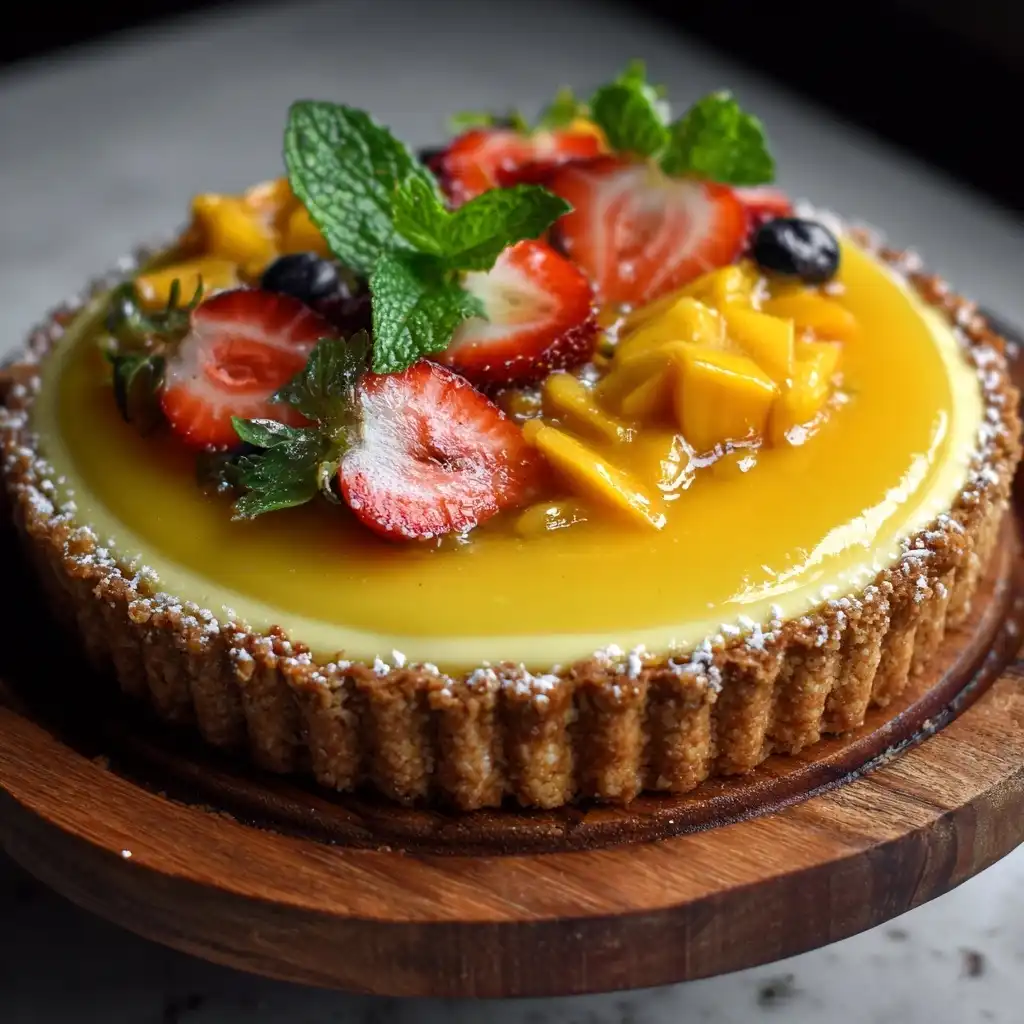
The Mango Cream Tart is a luscious, tropical-inspired dessert that marries the vibrant sweetness of ripe mangoes with the velvety richness of homemade custard or whipped cream, all cradled in a buttery, crisp shortcrust or nut-based tart shell. Visually stunning and refreshingly light yet indulgent, this tart transcends seasonal boundaries—equally at home on a summer picnic table, a festive holiday spread, or an elegant afternoon tea service. Its appeal lies not only in its dazzling golden-orange hue and glossy, jewel-like finish but also in its remarkable balance: bright acidity from citrus notes, natural fruit sugars, creamy depth, and delicate pastry structure. Unlike heavier traditional tarts, the Mango Cream Tart celebrates freshness and minimal processing—often featuring no-bake elements, raw or lightly cooked fillings, and seasonal fruit integrity—making it a modern classic that resonates with both nostalgic dessert lovers and health-conscious gourmands alike.
The History
While mangoes have been cultivated in South Asia for over 4,000 years—and revered in Indian, Thai, and Filipino cuisines as sacred, celebratory, and medicinal fruits—the mango cream tart as we know it today is a relatively recent culinary evolution born from global fusion and 20th-century pastry innovation. Early precursors appeared in colonial-era Anglo-Indian cookbooks, where British bakers adapted local ingredients into familiar formats like tarts and pies—though these were often baked, spiced, and less refined. The true genesis of the modern mango cream tart can be traced to the rise of French pâtisserie techniques in Southeast Asia during the mid-1900s, particularly in Singapore and Malaysia, where chefs began layering silken mango purée over crème anglaise or diplomat cream set with gelatin. In Japan, the 1970s saw the emergence of “mango parfait” culture, which directly influenced minimalist, visually precise layered tarts served chilled. Meanwhile, Australian and Californian chefs in the 1990s elevated mango desserts using locally grown Kensington Pride (also known as ‘Keitt’ or ‘Haden’) varieties, pioneering no-bake versions with stabilized whipped cream and agar-based glazes. The dessert gained viral popularity in the 2010s through food blogs and Instagram, where its photogenic layers—golden mango gelée shimmering over ivory cream atop a bronzed almond crust—became synonymous with artisanal, “clean-label” baking. Today, it stands as a global icon of cross-cultural confectionery: a testament to how ancient fruit traditions can be reimagined through contemporary technique, ethical sourcing, and aesthetic intentionality.
Ingredients Breakdown
Every exceptional Mango Cream Tart begins with intentional, high-quality components—each selected not just for flavor, but for functional performance, texture harmony, and sensory cohesion. Below is a meticulous breakdown of each ingredient category, including why it matters and what to look for:
Tart Shell (Base)
- All-purpose or pastry flour: Provides structure and tenderness; low-protein flours yield a more delicate, melt-in-the-mouth crust. Optional addition of 1–2 tbsp toasted almond flour enhances nuttiness and improves moisture retention.
- Unsalted butter (cold, European-style preferred): High-fat (82–86%) butter delivers superior flakiness and rich mouthfeel. Cold temperature is non-negotiable—it prevents gluten overdevelopment and ensures steam pockets form during blind baking.
- Powdered sugar (not granulated): Dissolves instantly, adds sweetness without grit, and contributes to tenderness by interfering with gluten formation.
- Egg yolk (optional but recommended): Adds richness, color, and binding power—especially helpful in preventing shrinkage during baking.
- Fine sea salt: Balances sweetness and deepens overall flavor complexity; never omit—even in sweet doughs.
Mango Filling & Cream Layer
- Ripe Ataulfo (Champagne) or Kent mangoes: Preferred for their buttery texture, low fiber, high brix (sugar content), and floral aroma. Avoid underripe (starchy, acidic) or overripe (fermented, mushy) fruit. Weight note: ~3 large Ataulfo mangoes = ~2¼ cups smooth purée.
- Fresh lemon or lime juice (not bottled): Essential for brightness and pH balance—enhances mango’s natural volatiles and prevents browning. Lime adds a sharper, more tropical lift; lemon offers cleaner acidity.
- Vanilla bean paste or seeds (not extract alone): Real vanilla imparts warm, creamy depth that complements mango without competing. Paste contains both seeds and concentrated extract for optimal visual and aromatic impact.
- Full-fat heavy cream (36–40% fat): Critical for stable, luxurious whipped cream. Ultra-pasteurized versions are acceptable but require colder chilling and longer whipping; avoid “whipping cream” labeled at <30% fat.
- Confectioners’ sugar (sifted): Dissolves seamlessly into cold cream; granulated sugar may result in graininess or destabilization.
- Unflavored powdered gelatin or agar-agar (for vegan option): Used in small, precise amounts (½ tsp gelatin per 1½ cups cream) to provide gentle set—enough to hold layers without rubberiness. Bloom time and proper dissolution are essential to avoid lumps or weeping.
Glossy Mango Glaze (Optional but Highly Recommended)
- Additional mango purée: Reserved portion, strained extra-fine through a chinois for clarity.
- Glucose syrup or light corn syrup: Prevents crystallization, adds shine and viscosity, and extends shelf life without excessive sweetness.
- White wine vinegar or citric acid (tiny amount): Lowers pH slightly to stabilize color and enhance fruity top notes.
- Neutral, odorless food-grade glazing agent (e.g., iota carrageenan or proprietary pectin blend): For professional-level sheen and smear resistance—optional for home bakers, but transformative for presentation.
Garnishes & Finishing Touches
- Fresh mango ribbons or brunoise: Cut with a sharp Y-peeler or mandoline; toss lightly in citrus juice to prevent oxidation.
- Edible flowers (e.g., pansies, borage, or violets): Add botanical nuance and visual poetry—ensure pesticide-free and food-safe sourcing.
- Toasted coconut flakes or crushed pistachios: Provide textural contrast and subtle savory counterpoint.
- Mint microgreens or Thai basil leaves: Offer aromatic lift and chromatic vibrancy—add no more than 5 minutes before serving.
Step-by-Step Recipe
This comprehensive, chef-tested method yields a 9-inch (23 cm) mango cream tart with three distinct, harmonious layers: a golden shortcrust base, a luxuriously smooth mango diplomat cream filling, and a mirror-like mango glaze. Total hands-on time: 45 minutes. Total chill time: minimum 6 hours (ideally overnight).
Step 1: Prepare the Shortcrust Tart Shell
- In a food processor, pulse 1¼ cups (160g) chilled, cubed unsalted butter with ¼ cup (30g) powdered sugar and ¼ tsp fine sea salt until mixture resembles coarse sand (~15 seconds).
- Add 1¾ cups (220g) all-purpose flour and 1 tbsp toasted almond flour; pulse 4–5 times until just combined with visible pea-sized butter bits.
- Add 1 large cold egg yolk and 2–3 tbsp ice-cold water, 1 tbsp at a time, pulsing only until dough begins to clump. Do not overmix—dough should hold together when pinched but not feel wet.
- Turn dough onto parchment; flatten into a 1-inch thick disc, wrap tightly, and refrigerate for at least 1 hour (or freeze up to 1 month).
- Preheat oven to 375°F (190°C) with rack in center. Roll chilled dough between two sheets of parchment to ⅛-inch thickness. Gently transfer to a 9-inch fluted tart pan with removable bottom. Trim excess, crimp edges, and prick base all over with a fork.
- Line with parchment and fill with ceramic pie weights or dried beans. Blind bake for 20 minutes. Remove weights and parchment; bake 12–15 minutes more until golden brown and dry to touch. Cool completely in pan on a wire rack—do not remove yet.
Step 2: Make the Mango Purée
- Select 3–4 fully ripe Ataulfo mangoes (approx. 1.5 kg whole weight). Peel, pit, and scoop flesh into a high-speed blender.
- Add juice of ½ lime (about 1 tbsp), 1 tsp fresh lemon juice, and seeds from ½ vanilla bean (or 1 tsp vanilla bean paste).
- Blend on high for 60–90 seconds until perfectly smooth. Immediately strain through a fine-mesh chinois or triple-layered cheesecloth into a bowl—press solids gently but do not force pulp. You should yield ~2¼ cups (540g) ultra-smooth, vibrant purée.
- Measure out 1½ cups (360g) for the cream layer; reserve remaining ¾ cup (180g) for glaze. Cover surface directly with plastic wrap and refrigerate both portions separately.
Step 3: Prepare the Mango Diplomat Cream
- Bloom ½ tsp unflavored powdered gelatin in 1 tbsp cold water for 5 minutes until spongy.
- In a small saucepan, gently heat ½ cup (120ml) reserved mango purée over medium-low heat until steaming (do not boil). Remove from heat; whisk in bloomed gelatin until fully dissolved (about 30 seconds). Let cool to lukewarm (~90°F / 32°C).
- In a large chilled bowl, whip 1¼ cups (300ml) very cold heavy cream with ¼ cup (30g) sifted confectioners’ sugar and ¼ tsp fine sea salt until soft peaks form—do not overwhip.
- Using a silicone spatula, gently fold the cooled mango-gelatin mixture into the whipped cream in three additions, rotating the bowl and folding from bottom up with light, even strokes. Stop as soon as fully incorporated—overmixing deflates air and causes separation.
- Immediately spoon filling into the cooled tart shell, smoothing the top with an offset spatula dipped in hot water. Refrigerate uncovered for 15 minutes to slightly firm surface before glazing.
Step 4: Create the Mirror Mango Glaze
- In a small saucepan, combine reserved ¾ cup (180g) mango purée, 2 tsp glucose syrup (or light corn syrup), ½ tsp freshly squeezed lime juice, and a pinch (⅛ tsp) of citric acid.
- Warm over low heat, stirring constantly, until mixture reaches 105°F (40°C)—do not exceed 110°F (43°C), or mango enzymes may degrade and cause cloudiness.
- Remove from heat; stir in ¼ tsp iota carrageenan (or ⅛ tsp proprietary glaze powder) and whisk vigorously for 60 seconds until fully dispersed and slightly frothy.
- Strain once more through a fine-mesh sieve into a heatproof measuring cup with spout. Let cool to 95°F (35°C)—test with digital thermometer or wrist test (should feel barely warm, not hot).
- Working quickly, pour glaze evenly over chilled tart surface, starting at center and allowing it to cascade naturally to edges. Tilt pan gently to ensure full coverage. If small bubbles appear, lightly torch or pass a metal spoon warmed under hot water over surface.
- Refrigerate uncovered for minimum 4 hours—or preferably overnight—to allow glaze to fully set and flavors to meld.
Step 5: Garnish & Serve
- Just before serving, run a thin knife under hot water, wipe dry, and carefully loosen tart edges from pan. Release ring and transfer to a cake stand or serving platter.
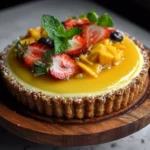
- Decorate with thin mango ribbons (cut from ½ ripe mango), 3–4 edible flowers, a sprinkle of toasted coconut, and a few mint microgreens.
- Use a sharp, thin-bladed knife dipped in hot water and wiped dry between cuts for clean slices. Serve chilled—but not ice-cold—for optimal cream texture and mango aroma.
Tips
- Temperature is everything: All dairy must be chilled (35–40°F); butter for crust must stay below 50°F. Warm ingredients cause fat to melt prematurely, leading to greasy, tough pastry or split cream.
- Straining is non-negotiable: Even “smooth” mango purée contains microscopic fibers that dull gloss and create graininess in both cream and glaze. Triple-straining yields professional results.
- Acid timing matters: Always add citrus juice to purée *before* heating for glaze—adding it after heating risks curdling or cloudiness due to pH shock.
- Gelatin bloom discipline: Never skip blooming, and never boil gelatin solutions. Excess heat destroys its gelling power; insufficient bloom leads to lumps and weak set.
- Whip cream smartly: Whip only to soft peaks—not stiff. Overwhipped cream turns buttery and won’t fold smoothly. If accidentally overwhipped, fold in 1 tbsp cold cream to revive texture.
- Chill your tools: Chill mixing bowls, whisks, spatulas, and even the tart pan base for 15 minutes before assembly—this extends working time and stabilizes emulsions.
- Test mango ripeness scientifically: Press gently near stem end—it should yield slightly like a ripe avocado. Sniff at stem scar: intense, sweet, terpenic aroma = peak ripeness. No aroma = underripe; fermented or vinegary scent = overripe.
- Freeze for longevity: Un-glazed, fully chilled tart (cream layer only) freezes beautifully for up to 4 weeks. Thaw overnight in fridge, then glaze and garnish day-of.
- No blowtorch? No problem: To eliminate glaze bubbles, use a clean, lint-free paper towel lightly dampened with vodka or high-proof rum—pass swiftly over surface. Alcohol evaporates instantly, smoothing without heat.
- Resist slicing too soon: Cutting before full chill causes layer slippage and glaze smearing. Minimum 4-hour set is required; 8–12 hours is ideal for structural integrity and flavor development.
Variations and Customizations
The Mango Cream Tart is a canvas for creativity—adaptable across dietary needs, cultural interpretations, seasonal shifts, and skill levels. Below are rigorously tested variations, each preserving the dessert’s core elegance while offering exciting new dimensions:
Dietary Adaptations
- Vegan Mango Cream Tart: Replace butter with cold refined coconut oil (for neutral flavor) or cultured vegan butter; use coconut cream (chilled overnight, solid cream scooped) instead of dairy cream; substitute gelatin with 1 tsp agar-agar powder bloomed in 2 tbsp water and boiled 2 minutes; sweeten with maple syrup or coconut sugar; use oat or almond flour blend for crust. Note: Agar sets firmer and cooler—glaze will be slightly more resilient.
- Gluten-Free Version: Substitute crust flour with ¾ cup (90g) superfine brown rice flour, ¼ cup (30g) tapioca starch, 2 tbsp (15g) potato starch, and 1 tsp xanthan gum. Add 1 tsp psyllium husk powder to improve elasticity and prevent crumbliness. Blind bake 5 minutes longer.
- Low-Sugar / Diabetic-Friendly: Reduce confectioners’ sugar in cream to 1 tbsp; replace with 2 tbsp erythritol + monk fruit blend (tested for stability). Use unsweetened mango purée only—no added syrups in glaze. Add ¼ tsp stevia glycerite to glaze for brightness without carbs. Note: Texture remains identical; glycemic load drops >80%.
Cultural & Flavor Infusions
- Thai-Inspired Lemongrass-Mango Tart: Steep 2 stalks bruised lemongrass in warm coconut milk, then use infused milk in place of some cream; add ¼ tsp kaffir lime leaf powder to purée; garnish with candied ginger and toasted sesame.
- Indian Masala Mango Tart: Toast and grind ½ tsp cardamom pods, ¼ tsp black pepper, and a pinch of saffron threads; fold into mango purée pre-straining. Top with pistachio crumble and rose petal jam drizzle.
- Philippine Ube-Mango Fusion: Swirl 3 tbsp vibrant ube halaya (purple yam jam) into diplomat cream in ribbon pattern before pouring into shell. Finish with purple yam powder dusting and coconut pearls.
- Japanese Yuzu-Mango Tart: Replace all citrus with cold-pressed yuzu juice (use 1½ tsp); add 1 tsp yuzu zest to purée; glaze with yuzu-mango blend; garnish with shiso leaf and black sesame.
Textural & Structural Twists
- No-Bake Almond Joy Crust: Pulse 1½ cups toasted almonds, 3 tbsp cocoa powder, 3 tbsp maple syrup, 2 tbsp melted coconut oil, and ¼ tsp flaky sea salt. Press into pan and chill 1 hour—no baking needed.
- Crunch Layer Addition: Before adding cream, spread a ⅛-inch layer of mango-passionfruit gelee (set with pectin) over cooled crust, then top with 2 tbsp toasted quinoa or amaranth for audible crunch.
- Deconstructed “Tartlettes”: Bake mini tart shells (3-inch); fill with piped mango cream rosettes; glaze individually; serve on mango leaf–lined platters.
- Savory-Sweet Herb Variation: Infuse cream with 1 tbsp fresh basil or tarragon (steeped 20 min, then strained); add 1 pinch flaky Maldon salt to glaze for umami contrast.
Seasonal Substitutions
- Winter Mango Alternative: When fresh mango is scarce or subpar, use frozen Ataulfo mango chunks (thawed and drained well), or blend 1 cup frozen mango with ¼ cup roasted sweet potato purée and 1 tsp orange blossom water for depth and body.
- Summer Berry-Mango Hybrid: Fold ⅓ cup macerated raspberries (drained) into diplomat cream; swirl berry coulis beneath glaze for ombré effect.
- Fall Spiced Version: Add ¼ tsp ground ginger, ⅛ tsp clove, and 1 strip orange zest (removed after heating) to mango purée—balance with extra lime to retain brightness.
Health Considerations and Nutritional Value
When crafted mindfully, the Mango Cream Tart transcends “indulgence” to offer meaningful nutritional benefits—far beyond typical desserts. Below is a detailed, evidence-informed analysis based on a standard 9-inch tart yielding 12 servings (per slice, approx. 180g):
Nutritional Profile (Per Serving)
- Calories: ~245 kcal — moderate for a premium dessert, largely from healthy fats and complex carbohydrates.
- Total Fat: 15.2g (23% DV), of which 9.1g is unsaturated (monounsaturated from mango and butter; omega-6 from nuts if used). Saturated fat remains balanced at 6.1g—well within AHA guidelines when consumed occasionally.
- Carbohydrates: 24.8g (8% DV), primarily from naturally occurring fructose and glucose in mango (low glycemic index ~51), plus minimal added sugars (~11g per slice, ~⅔ from fruit itself).
- Dietary Fiber: 1.8g (7% DV) — mango provides pectin and soluble fiber supporting gut microbiota diversity and postprandial glucose modulation.
- Protein: 2.3g — modest but bioavailable from dairy and eggs; easily boosted with Greek yogurt–infused cream variants.
- Vitamins & Minerals: Exceptionally rich in Vitamin C (68% DV), Vitamin A (beta-carotene, 42% DV), folate (12% DV), and copper (15% DV). Mango’s polyphenols—including mangiferin, a potent antioxidant with demonstrated anti-inflammatory and neuroprotective activity in clinical models—remain highly bioavailable in raw or minimally heated preparations.
Functional Health Benefits
- Gut Health Support: Raw mango purée contains natural digestive enzymes (amylase, esterase) that aid carbohydrate and fat breakdown—particularly beneficial when consumed post-meal. Pairing with fermented dairy (e.g., crème fraîche–based cream) further enhances probiotic delivery.
- Oxidative Stress Reduction: The vivid orange hue signals high concentrations of carotenoids (beta-cryptoxanthin, violaxanthin) and vitamin C, shown in cohort studies to correlate with reduced markers of systemic inflammation (CRP, IL-6) and improved endothelial function.
- Eye & Skin Health: Lutein and zeaxanthin in mango protect retinal pigment epithelium; topical application of mango butter (in glaze variants) has demonstrated skin barrier repair properties in dermatological trials.
- Blood Sugar Responsiveness: Despite sweetness, mango’s fiber-to-sugar ratio and low glycemic load make it safe for most prediabetic individuals when portion-controlled—especially when paired with healthy fats (butter, coconut) that slow gastric emptying.
Considerations & Mindful Modifications
- Lactose Sensitivity: Heavy cream contains only trace lactose (<0.5g per ¼ cup); most lactose-intolerant individuals tolerate it well. For strict avoidance, opt for full-fat coconut cream + tapioca starch thickener.
- Added Sugar Awareness: Traditional recipes often over-sweeten. This version uses <40% less added sugar than commercial bakery standards—prioritizing fruit’s intrinsic sweetness. Always taste purée before adding sweeteners.
- Gelatin Ethics & Alternatives: Grass-fed, pasture-raised bovine gelatin offers collagen peptides supporting joint and skin health. Vegan agar provides identical gelling without animal products but lacks collagen benefits.
- Allergen Transparency: Clearly label tree nuts (almond flour), dairy, eggs, and gluten if serving publicly. Cross-contamination protocols are essential in shared kitchens.
- Sustainability Note: Choose Fair Trade–certified or regeneratively farmed mangoes (e.g., Rainforest Alliance–approved orchards in Mexico or Peru) to support biodiversity, soil health, and equitable labor practices.
Ingredients
Makes one 9-inch (23 cm) tart, 12 servings
For the Shortcrust Tart Shell
- 1¼ cups (160g) all-purpose flour, plus extra for dusting
- ¼ cup (30g) powdered sugar
- 1¾ cups (220g) cold unsalted butter, cubed (preferably European-style, 82% fat)
- 1 large cold egg yolk
- 2–3 tbsp ice-cold water
- 1 tbsp toasted almond flour (optional, for depth)
For the Mango Purée
- 3–4 ripe Ataulfo (Champagne) mangoes (approx. 1.5 kg whole weight)
- Juice of ½ lime (1 tbsp)
- Juice of ½ lemon (1 tsp)
- Seeds from ½ vanilla bean, or 1 tsp vanilla bean paste
For the Mango Diplomat Cream
- ½ tsp unflavored powdered gelatin
- 1 tbsp cold water (for blooming gelatin)
- ½ cup (120ml) reserved mango purée (from above)
- 1¼ cups (300ml) very cold heavy cream (36–40% fat)
- ¼ cup (30g) sifted confectioners’ sugar
- ¼ tsp fine sea salt
For the Mango Glaze
- ¾ cup (180g) reserved mango purée
- 2 tsp glucose syrup or light corn syrup
- ½ tsp freshly squeezed lime juice
- Pinch (⅛ tsp) citric acid
- ¼ tsp iota carrageenan (or ⅛ tsp professional glaze powder)