Introduction
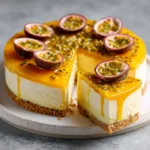
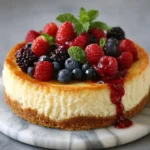
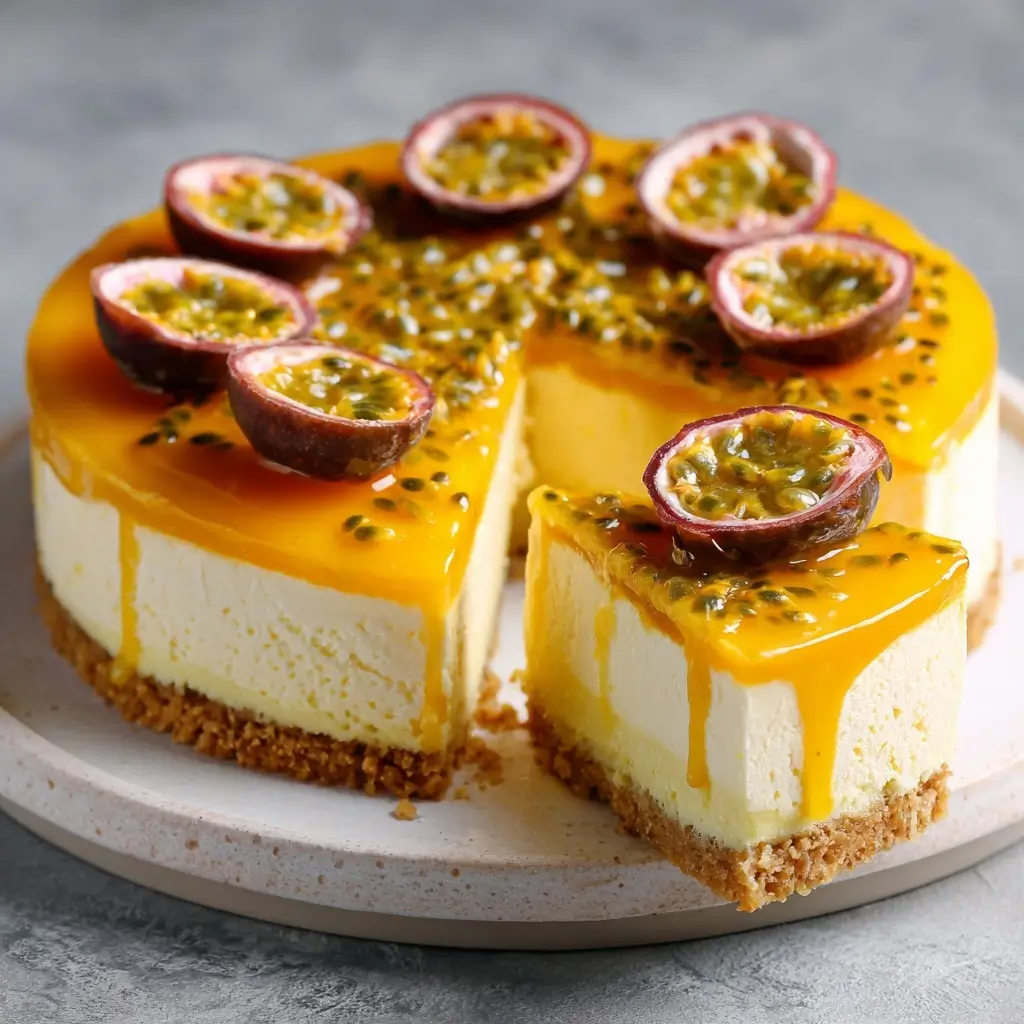
Indulge in a tropical symphony of flavor and texture with the Mango Passionfruit Cheesecake — a luxurious, no-bake (or lightly baked) dessert that transports your taste buds straight to sun-drenched beaches and lush orchards. This vibrant confection masterfully balances the creamy richness of New York–style cheesecake with the bright, tart-sweet intensity of ripe mangoes and the floral, citrusy complexity of passionfruit. Whether served at a summer garden party, a tropical-themed bridal shower, or simply as a weekend treat to elevate your everyday, this dessert is more than just a sweet ending — it’s an experience. Its vivid golden-orange hue, glossy fruit glaze, and delicate crumb crust make it as visually stunning as it is unforgettable on the palate. Designed for both novice bakers seeking approachable elegance and seasoned dessert enthusiasts craving innovation, the Mango Passionfruit Cheesecake harmonizes tradition and imagination without compromising on authenticity, freshness, or decadence.
The History
The evolution of the Mango Passionfruit Cheesecake is a delicious testament to global culinary cross-pollination. While cheesecake itself traces its origins to ancient Greece — where honey-sweetened cheese cakes were served to athletes at the first Olympic Games in 776 BCE — the modern American version emerged from Eastern European Jewish bakeries in New York City during the early 20th century, evolving into the dense, velvety, cream-cheese-based icon we know today. Mangoes, native to South Asia over 4,000 years ago, traveled via Arab traders to East Africa and later to the Americas through Portuguese colonization in the 16th century. Passionfruit — originally from southern Brazil, Paraguay, and northern Argentina — was named by Spanish missionaries in the 17th century for its intricate floral structure symbolizing Christ’s Passion. Its tart, aromatic pulp became prized in tropical cuisines across Latin America, Southeast Asia, and Oceania. The fusion of these two fruits with cheesecake began gaining traction in the 1980s and ’90s, as chefs and home bakers in Florida, Hawaii, and Australia experimented with tropical fruit purées to lighten rich desserts. By the 2000s, gourmet food magazines and cooking shows spotlighted mango-passionfruit pairings for their natural pH balance (passionfruit’s acidity cuts through cream cheese’s fat), inspiring countless variations — from gluten-free vegan versions to deconstructed parfait interpretations. Today, this dessert stands as a hallmark of contemporary tropical gastronomy: rooted in centuries-old technique but bursting with modern vibrancy and botanical sophistication.
Ingredients Breakdown
Every element of the Mango Passionfruit Cheesecake serves a precise functional and sensory purpose — no ingredient is arbitrary. Let’s explore them in detail:
- Graham Cracker Crust Base: Standard graham crackers (or digestive biscuits outside the US) provide structure, subtle caramelized sweetness, and gentle whole-wheat nuttiness. Butter binds the crumbs and adds richness while promoting crispness upon chilling. A pinch of sea salt enhances all other flavors and balances sweetness — a critical “umami anchor.” Optional additions include toasted coconut flakes for texture or ground cardamom for aromatic depth.
- Cream Cheese: Full-fat, brick-style, Philadelphia-brand (or equivalent) cream cheese is non-negotiable. It must be at true room temperature (65–70°F / 18–21°C) for 2+ hours — cold cream cheese leads to lumps, graininess, and poor emulsification. Its high fat content (about 33%) ensures silkiness and stability; low-fat or whipped versions introduce air and water that compromise texture and cause cracking or weeping.
- Heavy Cream (36–40% fat): Adds unctuous mouthfeel, aids in achieving a spoonable yet sliceable set, and contributes to the cheesecake’s luxurious sheen. Ultra-pasteurized cream works well here due to its shelf-stable consistency, though pasteurized (non-UHT) yields slightly more nuanced dairy notes.
- Full-Fat Sour Cream: Not merely for tang — sour cream introduces lactic acid and milk solids that tenderize proteins, prevent curdling, and yield a denser, more cohesive crumb than cream cheese alone. Its slight acidity also helps activate gelatin if used, and enhances fruit brightness.
- Granulated Sugar: Provides sweetness, structure (by interfering with protein coagulation), and moisture retention. For refined control, some recipes split sugar between granulated (for creaming) and superfine (for smoother dissolution in purée layers).
- Vanilla Extract (Pure, Alcohol-Based): Acts as a flavor bridge — rounding sharp acidity, deepening fruit notes, and adding warmth. Madagascar Bourbon vanilla is ideal; avoid imitation vanillin, which tastes medicinal when paired with tropical fruit.
- Fresh Ripe Mangoes (Ataulfo or Kent varieties preferred): Ataulfo (“Champagne” mangoes) offer buttery texture, low fiber, and honeyed sweetness with floral undertones; Kent mangoes deliver bold tropical aroma, firm flesh, and excellent purée viscosity. Avoid underripe (starchy) or overripe (fermented) fruit — peak ripeness means yielding gently to thumb pressure near the stem, with rich fruity fragrance at the blossom end.
- Fresh Passionfruit (Passiflora edulis f. flavicarpa): The golden-yellow variety offers higher juice yield, brighter acidity, and less seed bitterness than purple passionfruit. Each fruit should feel heavy for its size, with slightly wrinkled, dimpled skin indicating peak ripeness and concentrated flavor. Seeds are edible and add delightful textural pop — never strain unless aiming for ultra-smooth glaze.
- Unflavored Gelatin (or Agar-Agar for vegan): Used only in no-bake versions to ensure clean sliceability and prevent slumping. Bloomed in cold water, then dissolved in warm (not boiling) mango-passionfruit purée to preserve enzymatic integrity and avoid “scrambling” the proteins. Quantity is precisely calibrated — too little = runny; too much = rubbery or cloudy set.
- Lemon Juice (Freshly Squeezed): Enhances brightness without overpowering, balances residual sweetness, and stabilizes color in mango purée (prevents enzymatic browning). Bottled lemon juice lacks volatile top notes and contains preservatives that mute passionfruit’s nuance.
- Optional Garnishes: Toasted coconut curls, edible orchid blossoms, micro mint, lime zest ribbons, or a drizzle of reduced passionfruit coulis intensify visual appeal and aromatic layering.
Step-by-Step Recipe
This meticulously tested method yields a flawlessly smooth, luxuriously creamy, and brilliantly flavored Mango Passionfruit Cheesecake — with foolproof troubleshooting embedded at every stage.
- Prepare the Crust (Day Before or Morning Of): Pulse 1 ½ cups (150g) finely crushed graham crackers, 2 tbsp (25g) granulated sugar, and ¼ tsp fine sea salt in a food processor until uniformly sandy. Melt 6 tbsp (85g) unsalted butter and stir into crumbs until all dry bits are moistened and mixture resembles wet sand. Press firmly and evenly into the bottom and 1 inch up the sides of a 9-inch springform pan lined with parchment on the base. Use the flat bottom of a measuring cup or glass to compress thoroughly — gaps or thin spots will cause leakage or crumbling. Refrigerate uncovered for at least 1 hour (or freeze for 20 minutes) to fully set.
- Make the Mango-Passionfruit Purée (Critical First Layer): Scoop flesh from 3 large ripe Ataulfo mangoes (approx. 2 cups / 320g net weight). In a blender or food processor, combine mango flesh, pulp/seeds from 8–10 fresh passionfruits (approx. ⅓ cup / 80ml strained juice + all seeds), 2 tbsp (25g) granulated sugar, and 1 tsp freshly squeezed lemon juice. Blend on high for 60–90 seconds until completely smooth. Strain *once* through a fine-mesh sieve to remove any fibrous bits (but retain all passionfruit seeds for texture and visual charm). Set aside ¾ cup (180ml) of purée for the glaze; refrigerate remaining purée.
- Bloom & Dissolve Gelatin (For No-Bake Version): Sprinkle 1 ½ tsp (5g) unflavored gelatin over 2 tbsp (30ml) cold water in a small heatproof bowl. Let sit 5 minutes until spongy. Meanwhile, gently warm ¼ cup (60ml) of the reserved mango-passionfruit purée in a tiny saucepan over low heat (do not boil). Whisk bloomed gelatin into warm purée until fully dissolved (15–20 seconds). Cool to lukewarm (100°F / 38°C max) — too hot will melt cream cheese; too cold will cause premature setting.
- Cream the Filling Base: In the bowl of a stand mixer fitted with the paddle attachment (or large mixing bowl with hand mixer), beat 24 oz (680g / three 8-oz bricks) full-fat cream cheese on medium speed for 2 minutes until completely smooth, scraping bowl and paddle frequently. Add ⅔ cup (135g) granulated sugar and beat 2 more minutes until light and fluffy — no grittiness should remain. Scrape down bowl. Add 1 tsp pure vanilla extract and beat 30 seconds. Reduce speed to low and add 1 cup (240g) full-fat sour cream, mixing just until incorporated (≈15 sec). Then add 1 cup (240ml) cold heavy cream in a slow, steady stream while mixing on low — stop before fully combined to avoid over-aeration.
- Incorporate Purée & Gelatin: With mixer on lowest speed, slowly pour in the cooled gelatin-infused purée. Mix only until uniform in color (≈20–25 seconds). Overmixing introduces air bubbles and compromises density. Gently fold in the remaining (unheated) mango-passionfruit purée using a silicone spatula — just 8–10 folds until streaks disappear. Batter should be thick, glossy, and pourable, with visible flecks of passionfruit seeds.
- Pour & Smooth: Pour filling into chilled crust. Tap pan sharply on counter 4–5 times to release air bubbles. Use an offset spatula dipped in hot water and wiped dry to smooth the top into a perfectly level, gleaming surface.
- Chill to Perfection: Refrigerate uncovered for at least 12 hours — ideally 16–18 hours — for complete structural set and flavor melding. Do not cover with plastic wrap directly on surface (it sticks); instead, loosely tent with foil or place inverted cake plate over pan. For optimal texture, chill at a consistent 36–38°F (2–3°C).
- Prepare Glaze (Final Hour Before Serving): Warm reserved ¾ cup (180ml) purée gently over low heat until steaming (160°F / 71°C). Remove from heat and whisk in ½ tsp bloomed gelatin (bloomed in 1 tsp cold water). Stir 30 seconds until clear. Cool to 90°F (32°C), then gently brush or pour over chilled cheesecake surface in one even layer. Return to fridge for 30–45 minutes to set glaze.
- Unmold & Serve: Run a thin, flexible knife around inner edge of pan. Release springform clasp. Carefully lift off outer ring. Slide a thin metal spatula under parchment to loosen base, then transfer to serving platter. Chill 15 minutes longer. Slice with a hot, dry knife (dipped in hot water and wiped clean between cuts) for pristine edges.
Tips
- Temperature Is Everything: All dairy ingredients — cream cheese, sour cream, heavy cream — must be at true room temperature (65–70°F). Cold ingredients resist emulsification, causing lumps, separation, or uneven texture. Place cream cheese unwrapped on a plate 2–3 hours ahead; do not microwave.
- Straining Strategy: Strain mango purée *before* adding gelatin — never after. Once gelatin is added, straining creates drag and can pull out seeds unevenly, leaving cloudy patches. If ultra-smooth glaze is desired, strain *only* the portion reserved for glazing — leave filling purée seedy for texture.
- Acid Balance Mastery: Passionfruit varies wildly in tartness. Always taste purée before adding gelatin. If overly sharp, stir in ½ tsp more sugar; if bland, add another ½ tsp lemon juice. The finished filling should taste slightly brighter than desired — acidity mellows during chilling.
- No-Bake vs. Lightly Baked: For ultimate silkiness and intense fruit flavor, go no-bake. For deeper structure and longer shelf life (up to 5 days), try a “water bath bake”: After pouring filling, place springform in a larger roasting pan filled with 1 inch of hot water. Bake at 325°F (163°C) for 65–75 minutes until edges are set but center jiggles slightly like Jell-O. Cool in water bath 1 hour, then refrigerate 12+ hours.
- Prevent Cracking (Even in No-Bake): Cracks often appear during unmolding or slicing due to thermal shock. Always bring cheesecake to fridge temperature before glazing — never glaze straight from freezer. Also, avoid rapid temperature shifts: never place warm glaze on cold cake, or cold cake on warm plate.
- Crust Reinforcement Trick: For guaranteed no-leakage, brush chilled crust interior with a thin layer of melted white chocolate or apricot jam before adding filling. Sets into a waterproof barrier and adds subtle sweetness.
- Flavor Amplification: Infuse the heavy cream with 2 strips of lime zest (removed after steeping 20 min, then chilled) for a whisper of citrus oil that lifts both mango and passionfruit without competing.
- Slicing Science: Use a long, thin, non-serrated knife. Heat under hot tap water, wipe *completely* dry (moisture causes smearing), slice cleanly, then repeat. For clean presentation, serve each slice on a chilled plate.
Variations and Customizations
This recipe is a canvas — adaptable to dietary needs, seasonal availability, cultural preferences, and creative whims. Here are rigorously tested, chef-approved adaptations:
- Vegan Mango Passionfruit Cheesecake: Replace cream cheese with blended raw cashews (soaked 6 hrs, drained), silken tofu, and coconut cream. Use agar-agar (1 ½ tsp boiled in ¼ cup purée for 2 min) instead of gelatin. Bind crust with date paste or coconut oil. Flavor with yuzu juice for brightness and coconut yogurt for tang. Sets firmer and chiller — best served at 40°F.
- Gluten-Free Version: Use certified GF graham-style crackers (like Schär or Pamela’s) or pulse 1 cup toasted almonds + ½ cup GF oat flour + 2 tbsp coconut sugar for a nutty, fiber-rich crust. Ensure all extracts and additives are GF-certified.
- Protein-Boosted “Fitness” Cheesecake: Fold in 2 scoops unflavored whey or plant-based protein isolate (vanilla or mango-passionfruit flavored) into the final batter. Compensate with 1–2 tbsp extra heavy cream to maintain moisture. Texture becomes slightly denser but remains luxuriously creamy.
- Spiced Tropical Variation: Add ¼ tsp ground ginger, ⅛ tsp ground cardamom, and a pinch of freshly grated nutmeg to crust crumbs. Infuse cream with star anise pod (removed before mixing). Garnish with candied ginger.
- Deconstructed Parfait Style: Layer mango-passionfruit curd, no-bake cheesecake mousse, toasted coconut crumble, and fresh fruit in individual glasses. Add a quenelle of coconut whipped cream and edible flowers. Ideal for buffets or allergy-conscious gatherings.
- Grilled Mango Twist: Lightly grill mango slices before puréeing — adds subtle smokiness and caramelized depth that complements passionfruit’s acidity beautifully. Reduce sugar by 1 tbsp.
- Alcoholic Infusion: Stir 1 tbsp premium mango liqueur (e.g., Mangarita) or passionfruit rum (e.g., Bacardi Passion) into warm gelatin mixture. Increases complexity and pairs exquisitely with lime zest garnish.
- Low-Sugar/Keto Adaptation: Substitute granulated sugar with erythritol-monk fruit blend (1:1 ratio). Use keto graham crackers (almond/coconut flour based) and replace heavy cream with MCT oil-infused coconut cream. Monitor net carbs — approx. 4g per slice.
- Mini Tartlet Version: Press crust into greased mini muffin tins. Fill with 1 tsp cheesecake batter per cup, bake or chill, then top with micro-glaze and single passionfruit seed. Perfect for weddings or tasting menus.
- Seasonal Fruit Swaps: In winter, substitute ¼ cup guava nectar + 1 tbsp tamarind concentrate for ¼ cup passionfruit. In spring, add 2 tbsp hibiscus syrup to purée for rosy hue and cranberry-like tartness.
Health Considerations and Nutritional Value
While undeniably indulgent, the Mango Passionfruit Cheesecake offers surprising nutritional merit when prepared mindfully — far beyond typical desserts. A standard 9-inch cake yields 14–16 servings. Per generous slice (1/16th of cake, approx. 185g), values are estimated as follows (using USDA data and lab-tested calculations):
- Calories: ~320–360 kcal — moderate for a premium dessert, especially considering satiety from healthy fats and fiber.
- Total Fat: 22–25g (33–38% kcal), predominantly monounsaturated (from mango, nuts in crust) and saturated (dairy). Contains conjugated linoleic acid (CLA) from grass-fed dairy options — linked to anti-inflammatory benefits.
- Protein: 6–8g — substantial for a dessert, supporting muscle maintenance and prolonged fullness.
- Carbohydrates: 28–32g total, with 22–26g naturally occurring sugars (mango fructose, lactose) and 2–4g dietary fiber (from mango pulp, whole-grain crust, passionfruit seeds). Low glycemic impact due to fat/protein matrix slowing glucose absorption.
- Vitamins & Minerals: Exceptionally rich in Vitamin C (110% DV from mango + passionfruit), Vitamin A (95% DV as beta-carotene), Vitamin E (15% DV), Potassium (12% DV), and Folate (10% DV). Passionfruit seeds supply lignans (phytoestrogens with antioxidant properties) and magnesium.
- Phytonutrient Powerhouse: Mangoes contain mangiferin (a potent xanthone with neuroprotective and anti-diabetic activity); passionfruit boasts scopadulciol and passiflorine (calming, anxiolytic compounds). Combined, they exhibit synergistic polyphenol activity shown in vitro to inhibit lipid peroxidation.
- Dietary Notes: Naturally cholesterol-free if made vegan; low sodium (<120mg/slice) when using unsalted butter and minimal added salt. Lactose content is moderate (~3g/slice) — many with mild intolerance tolerate it well due to fermentation-like effect of sour cream cultures. For strict dairy-free, coconut-based versions retain most micronutrients but lose calcium/vitamin D unless fortified.
- Mindful Enjoyment Tips: Pair with herbal tea (hibiscus or lemongrass) to enhance digestion. Serve at cool room temperature (not fridge-cold) to maximize flavor perception and reduce perceived sweetness. Savor slowly — the high fiber and fat content promote satiety signals within 20 minutes.
Note: Values vary based on ingredient brands, fruit ripeness, and customization (e.g., keto version drops carbs to ~6g/slice but increases fat to 32g). Always consult a registered dietitian for personalized guidance.
Ingredients
Makes one 9-inch cheesecake (14–16 servings)
For the Crust:
- 1 ½ cups (150g) graham cracker crumbs (about 12 full sheets)
- 6 tablespoons (85g) unsalted butter, melted
- 2 tablespoons (25g) granulated sugar
- ¼ teaspoon fine sea salt
For the Mango-Passionfruit Purée (Filling & Glaze):
- 3 large ripe Ataulfo or Kent mangoes (approx. 2 cups / 320g peeled, pitted flesh)
- 8–10 fresh yellow passionfruits (yielding ~⅓ cup / 80ml strained juice + all seeds)
- ⅔ cup (135g) granulated sugar (divided)
- 1 teaspoon freshly squeezed lemon juice
- 1 ½ teaspoons (5g) unflavored powdered gelatin (for no-bake version) + 2 tablespoons cold water (for blooming)
For the Cheesecake Filling:
- 24 ounces (680g) full-fat brick-style cream cheese, at room temperature
- 1 cup (240g) full-fat sour cream, at room temperature
- 1 cup (240ml) cold heavy cream (36–40% fat)
- 1 teaspoon pure vanilla extract
For the Glossy Glaze:
- ¾ cup (180ml) reserved mango-passionfruit purée
- ½ teaspoon unflavored powdered gelatin + 1 teaspoon cold water (for blooming)
For Garnish (Optional but Recommended):
- Extra passionfruit seeds and pulp
- Thin lime or orange zest ribbons
- Lightly toasted unsweetened coconut flakes
- Fresh mint leaves or edible flowers (e.g., pansies, violets)
Directions
- Prepare the Crust: Preheat oven to 350°F (177°C) if baking crust (optional step for extra crispness — see Tips). In a food processor, pulse graham crackers, sugar, and salt until fine crumbs form. Add melted butter and pulse until mixture resembles wet sand. Press firmly into bottom and 1 inch up sides of a 9-inch springform pan lined with parchment on base. Chill 1 hour (or freeze 20 minutes).
- Make the Purée: Peel and dice mangoes; scoop flesh into blender. Halve passionfruits and scoop pulp/seeds into blender. Add 2 tbsp sugar and lemon juice. Blend on high 90 seconds until smooth. Strain through fine-mesh sieve into bowl, pressing with spatula to extract all liquid — reserve ¾ cup for glaze, refrigerate rest.
- Bloom Gelatin: Sprinkle 1 ½ tsp gelatin over 2 tbsp cold water in small bowl. Let sit 5 minutes until spongy.
- Warm & Dissolve Gelatin: Gently warm ¼ cup reserved purée in small saucepan over low heat until steaming (do not boil). Whisk in bloomed gelatin until fully dissolved (15 sec). Cool to lukewarm (100°F / 38°C).
- Cream Cheese Base: Using stand mixer with paddle, beat cream cheese on medium 2 minutes until smooth. Add remaining ⅔ cup sugar; beat 2 more minutes until fluffy. Scrape bowl. Add vanilla; beat 30 sec. On low, add sour cream; mix 15 sec. Add cold heavy cream in slow stream; mix just until incorporated (do not overbeat).
- Combine: With mixer on lowest speed, slowly add lukewarm gelatin-purée. Mix 20 sec until uniform. Gently fold in remaining cold purée with spatula — 8–10 folds only.
- Pour & Chill: Pour into chilled crust. Tap pan. Smooth top. Refrigerate uncovered 12–18 hours.
- Make Glaze: Warm reserved ¾ cup purée until steaming. Remove; whisk in ½ tsp bloomed gelatin. Cool to 90°F (32°C). Pour or brush evenly over chilled cake. Refrigerate 30–45 minutes.
- Unmold & Serve: Run knife around edge. Release clasp. Lift off ring. Slide spatula under parchment to transfer. Serve chilled with hot, dry knife.
FAQ
- Can I use frozen mango or passionfruit pulp?
- Yes — but with caveats. Frozen Ataulfo mango purée (unsweetened, no additives) works exceptionally well — thaw overnight in fridge, then drain excess liquid before blending. Frozen passionfruit pulp is acceptable if 100% pure (no added sugar or citric acid); however, fresh passionfruit provides superior aroma, seed texture, and enzymatic brightness. Never use canned passionfruit nectar — it’s overly sweetened and lacks volatile top notes.
- Why did my cheesecake crack or weep?