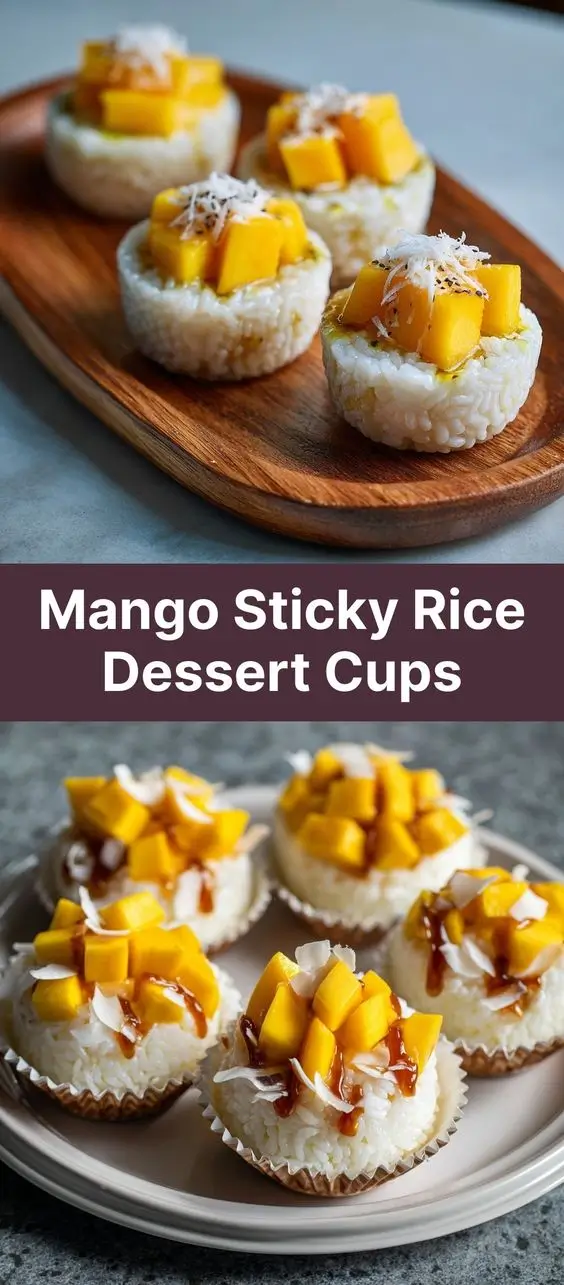
Mango Sticky Rice Dessert Cups: A Tropical Delight in Every Bite
Introduction
Mango Sticky Rice Dessert Cups are a modern twist on the classic Thai dessert known as Khao Niew Mamuang. Loved across Southeast Asia for its rich, creamy texture and sweet-tart flavor profile, this portable version brings elegance and convenience to one of the world’s most beloved desserts. Served in individual cups, these layered treats are perfect for dinner parties, brunches, picnics, or simply satisfying your sweet tooth with a tropical flair. Combining plump, juicy mangoes with luxuriously soft sticky rice soaked in coconut milk, each spoonful is an indulgent harmony of textures and flavors.
What makes Mango Sticky Rice Dessert Cups especially appealing is their versatility. They can be dressed up with edible flowers, toasted mung beans, or sesame seeds for a gourmet touch, or kept simple for a quick homemade treat. Whether you’re new to Thai cuisine or a longtime fan, these dessert cups offer an accessible entry point into the vibrant world of Southeast Asian sweets—no special equipment required beyond a rice cooker or saucepan.
The History
The origins of mango sticky rice trace back centuries to Thailand, where it has long been a seasonal delicacy enjoyed during the peak of mango season—typically from April to June. Traditionally eaten with the hands, this dessert was originally served on banana leaves, combining glutinous rice, fresh ripe mangoes, and rich coconut cream seasoned with palm sugar and salt. It was particularly popular in rural communities where both mango trees and rice paddies thrived.
Over time, mango sticky rice evolved from a humble village snack into a national treasure, eventually gaining international acclaim. By the late 20th century, Thai restaurants around the globe began featuring it on menus, introducing Western palates to its unique balance of sweetness and creaminess. Today, it consistently ranks among the top Thai desserts worldwide and has even been featured in global food publications like Bon Appétit, Saveur, and Food & Wine.
The “dessert cup” adaptation emerged alongside the growing trend of deconstructed and portable desserts. As consumers sought more convenient yet aesthetically pleasing options, chefs and home cooks alike began layering the components in clear glasses or jars—making them ideal for events, food trucks, and Instagram-worthy presentation. This innovation preserves the soul of the original dish while adapting it to modern lifestyles and visual culture.
Ingredients Breakdown
To create authentic-tasting Mango Sticky Rice Dessert Cups, every ingredient plays a vital role in achieving the perfect balance of flavor, texture, and aroma. Here’s a detailed look at what goes into this luscious treat:
- Glutinous Rice (Sticky Rice): Also known as sweet rice or糯米 (nuòmǐ), this short-grain rice is essential for its chewy, sticky texture when cooked. Unlike regular rice, it contains almost no amylose, allowing it to become delightfully cohesive when steamed. Look for white glutinous rice labeled specifically for desserts.
- Ripe Mangoes: The star of the show! Choose fragrant, golden-yellow mangoes such as Ataulfo (also called Champagne mangoes) or Kent varieties. These are less fibrous and have a creamy, custard-like flesh with a balanced sweet-tart taste that pairs perfectly with coconut-infused rice.
- Coconut Milk: Full-fat canned coconut milk provides richness and depth. Avoid “light” versions, which dilute the luxurious mouthfeel. Shake the can well before opening to ensure proper blending of cream and liquid.
- Palm Sugar: Offers a complex caramel-like sweetness with earthy undertones. It dissolves beautifully into warm coconut milk and enhances the overall depth of flavor. Brown sugar can substitute in a pinch, though palm sugar is preferred for authenticity.
- Salt: A pinch of sea salt or kosher salt intensifies all other flavors, balancing sweetness and enhancing the savory notes in coconut and rice.
- Water: Used primarily for soaking and rinsing the rice. Filtered water is recommended if your tap water has a strong odor or taste.
- Optional Garnishes: Toasted mung beans add nuttiness and crunch; black sesame seeds provide visual contrast and a mild roasted flavor; fresh mint or edible flowers elevate the presentation; a drizzle of additional coconut cream adds decadence.
<
Step-by-Step Recipe
Creating Mango Sticky Rice Dessert Cups is easier than you might think. With careful attention to timing and technique, you can achieve restaurant-quality results right in your kitchen.
- Soak the Rice: Rinse 1 cup of glutinous rice under cold water until the water runs clear. Place in a large bowl, cover with plenty of water (at least 2 inches above the rice), and soak for 4–6 hours, or preferably overnight. Soaking ensures even cooking and a tender-chewy texture.
- Drain and Steam: After soaking, drain the rice thoroughly using a fine-mesh strainer. Transfer to a heatproof plate or bamboo steamer lined with cheesecloth or banana leaf (if available). Steam over boiling water for 20–25 minutes, or until fully cooked and translucent. Do not boil the rice—steaming preserves its integrity.
- Prepare Coconut Sauce: While the rice steams, combine 1 can (13.5 oz) of coconut milk, 1/2 cup palm sugar, and 1/4 teaspoon salt in a small saucepan. Warm over medium-low heat, stirring constantly until the sugar dissolves completely. Remove from heat and set aside.
- Infuse the Rice: Once the rice is done, transfer it to a large mixing bowl. Immediately pour about 3/4 of the warm coconut mixture over the hot rice. Gently fold with a wooden spoon or spatula to coat evenly without mashing. Cover with a clean cloth and let sit for 15–20 minutes so the rice absorbs the flavors and becomes glossy.
- Chill the Mango: Peel and slice 2 large ripe mangoes into thin wedges or cubes. Refrigerate until ready to assemble. Chilled mango offers a refreshing contrast to the warm, creamy rice.
- Finalize the Sauce: Reheat the remaining coconut sauce slightly if it has thickened too much. For a richer finish, stir in 1 tablespoon of cornstarch slurry (1 tsp cornstarch + 1 tbsp water) and simmer until smooth and slightly thickened.
- Assemble the Dessert Cups: Begin layering in clear glass jars or dessert cups: Start with a spoonful of sticky rice, followed by a layer of mango slices, then another spoonful of rice, topped with more mango. Drizzle generously with the reserved coconut sauce. Repeat based on cup size, aiming for 2–3 visible layers.
- Garnish and Serve: Finish each cup with a sprinkle of toasted mung beans, black sesame seeds, or a few fresh mint leaves. Serve immediately at room temperature, or chill for 30 minutes for a cooler treat. If chilled, allow to sit for 5 minutes before serving to soften the coconut layer.
Tips
- Use a Bamboo Steamer Basket: If possible, steam the rice over water using a bamboo steamer lined with parchment or banana leaf. It imparts subtle fragrance and prevents sticking.
- Don’t Skip the Soak: Skipping the soaking step may result in unevenly cooked rice—some grains hard, others mushy. Patience here pays off in texture.
- Warm Rice Absorbs Better: Always mix the coconut sauce into freshly steamed, hot rice. Cold rice won’t absorb the liquid properly, leading to a dry or separated texture.
- Banana Leaf Hack: For extra aroma, place a small piece of fresh banana leaf at the bottom of the mixing bowl before adding the rice. Remove before serving.
- Consistency Control: If the coconut sauce thickens too much upon cooling, re-warm gently and add a splash of warm water or extra coconut milk to reach desired pourable consistency.
- Prevent Drying Out: Keep the prepared rice covered during assembly. Exposure to air will cause it to form a skin or dry out slightly.
- Serve in Clear Containers: Transparent cups, mason jars, or parfait glasses highlight the beautiful layers and make the dessert visually enticing.
- Make Ahead Option: You can cook and flavor the rice a day ahead. Store it covered in the fridge and bring to room temperature before assembling.
Variations and Customizations
Mango Sticky Rice Dessert Cups are wonderfully adaptable. Feel free to experiment with flavors, textures, and dietary preferences:
- Vegan Version: Already naturally vegan if using plant-based palm sugar and ensuring no additives in coconut milk. Confirm labels if strict.
- Gluten-Free Friendly: Glutinous rice is gluten-free despite its name—it refers to “glue-like” stickiness, not gluten content. Ensure all ingredients are certified GF if needed.
- Dairy-Free Alternative: Naturally dairy-free—no substitutions necessary!
- Fruit Swaps: Try pairing with pineapple, lychee, or ripe papaya for different tropical vibes. Passion fruit puree swirled on top adds tanginess.
- Flavor Infusions: Add a split vanilla bean, pandan leaf, or lemongrass stalk to the coconut sauce while heating for aromatic complexity.
- Crunchy Toppings: Crushed peanuts, toasted coconut flakes, or crispy fried shallots introduce contrasting textures.
- Boozy Twist: For adult servings, brush mango slices with a touch of rum or coconut liqueur before layering.
- Protein Boost: Sprinkle chia seeds, hemp hearts, or crushed edamame for added nutrition.
- No-Steam Method: In a pinch, some use microwave-safe bowls with a damp towel over the soaked rice, microwaved in intervals—but steaming yields superior results.
- Mini Jars for Parties: Serve in 4-oz shot glasses for bite-sized portions at weddings or buffets.
Health Considerations and Nutritional Value
While undeniably delicious, Mango Sticky Rice Dessert Cups should be enjoyed in moderation due to their natural sugar and fat content. However, they do offer some nutritional benefits when prepared thoughtfully.
Nutrition Highlights (per average serving – approx. 1 cup):
- Calories: ~380–420 kcal
- Carbohydrates: ~60g (from rice and mango)
- Sugars: ~30g (mostly natural from fruit and palm sugar)
- Fat: ~15g (primarily healthy saturated fats from coconut milk)
- Protein: ~4g
- Dietary Fiber: ~3g (from mango and whole grain rice)
- Vitamins: Rich in Vitamin C (from mango), Vitamin A (beta-carotene), and small amounts of B-vitamins and iron.
Health Notes:
- Coconut milk contains medium-chain triglycerides (MCTs), which some studies suggest may support metabolism and heart health in moderation.
- Mangoes are antioxidant-rich, containing compounds like mangiferin, quercetin, and beta-carotene that may support immune function and reduce inflammation.
- Glutinous rice has a high glycemic index (GI), meaning it can spike blood sugar quickly. Diabetics or those managing insulin levels should consume smaller portions or consider alternatives like cauliflower rice bases (though texture differs significantly).
- Palm sugar has a slightly lower GI than refined white sugar and retains trace minerals like potassium, magnesium, and zinc—but it is still sugar and should be used sparingly.
- To lighten the recipe: Use reduced-fat coconut milk (though creaminess suffers), decrease sugar by 25%, increase mango volume, or serve in smaller cups.
Ingredients
- 1 cup glutinous rice (also called sticky rice or sweet rice)
- 1¾ cups water (for soaking and steaming adjustment)
- 1 can (13.5 oz) full-fat coconut milk (divided)
- ½ cup palm sugar (or light brown sugar)
- ¼ teaspoon sea salt
- 2 large ripe mangoes (preferably Ataulfo or Kent), peeled and sliced
- Optional garnishes: toasted mung beans, black sesame seeds, fresh mint leaves, edible flowers, extra coconut cream
Directions
- In a large bowl, rinse the glutinous rice under cold water until the water runs clear. Cover with at least 2 inches of fresh water and soak for 4–6 hours or overnight.
- Drain the soaked rice thoroughly in a fine-mesh strainer. Line a steamer basket with cheesecloth or banana leaf, then add the rice in an even layer.
- Steam over boiling water for 20–25 minutes, covering the pot, until the rice is fully translucent and tender-chewy.
- While the rice cooks, prepare the coconut sauce: In a saucepan, combine ¾ of the coconut milk (about 1 cup), palm sugar, and salt. Warm over medium heat, stirring until sugar dissolves completely. Remove from heat.
- Transfer the steamed rice to a large bowl. Pour the warm coconut mixture over the hot rice and gently mix to combine. Cover with a clean kitchen towel and let rest for 15–20 minutes to absorb the flavors.
- Refrigerate the mango slices while the rice rests.
- Reheat the remaining coconut milk (¼ can) with a splash of water if too thick. Optionally thicken with a cornstarch slurry for a silkier drizzle.
- Begin assembling the dessert cups: Spoon a layer of coconut rice into each clear glass or jar, followed by a layer of mango slices. Repeat to create 2–3 layers, finishing with mango on top.
- Drizzle generously with the reserved coconut sauce. Garnish with toasted mung beans, sesame seeds, or mint.
- Serve immediately at room temperature, or chill briefly for a cooler dessert. Let refrigerated versions sit for 5 minutes before serving for optimal texture.
FAQ
Q: Can I use instant rice or regular rice instead?
A: No—regular rice (like jasmine or basmati) lacks the starch structure to become sticky. Instant or pre-cooked sticky rice may work in emergencies but often lacks texture and flavor depth.
Q: Why does my sticky rice come out hard?
A: Likely causes include insufficient soaking, inadequate steaming time, or using too little water during steaming. Always soak for at least 4 hours and ensure consistent steam coverage.
Q: Can I make this ahead of time?
A: Yes! Cook and flavor the rice up to one day in advance. Store covered in the refrigerator and bring to room temperature before assembling. Fresh mango should be added just before serving to prevent sogginess.
Q: Is glutinous rice gluten-free?
A: Yes! Despite the name, glutinous rice contains no gluten. It’s safe for people with celiac disease or gluten sensitivity.
Q: My coconut sauce separated—what went wrong?
A: Coconut milk naturally separates when cooled. Simply reheat gently and whisk well before using. Adding a tiny bit of cornstarch can stabilize it.
Q: Where can I buy glutinous rice?
A: Found in the Asian foods section of most supermarkets, health food stores, or online. Often labeled as “sweet rice” or “sticky rice.”
Q: Can I freeze mango sticky rice?
A: Not recommended. Freezing alters the texture of both rice and mango, resulting in a mushy, watery consistency upon thawing.
Q: Are there low-sugar versions?
A: Yes. Reduce palm sugar by half and enhance flavor with vanilla or pandan extract. Alternatively, use monk fruit-sweetened coconut milk blends, though results vary.
Summary
Mango Sticky Rice Dessert Cups blend the creamy richness of coconut-infused glutinous rice with sweet, juicy mangoes in an elegant, portable format that delights the senses. Perfect for any occasion, this modern take on a Thai classic brings tradition and innovation together in every bite.