Introduction
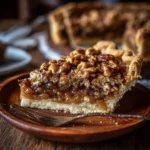
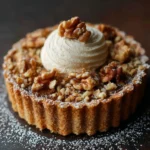
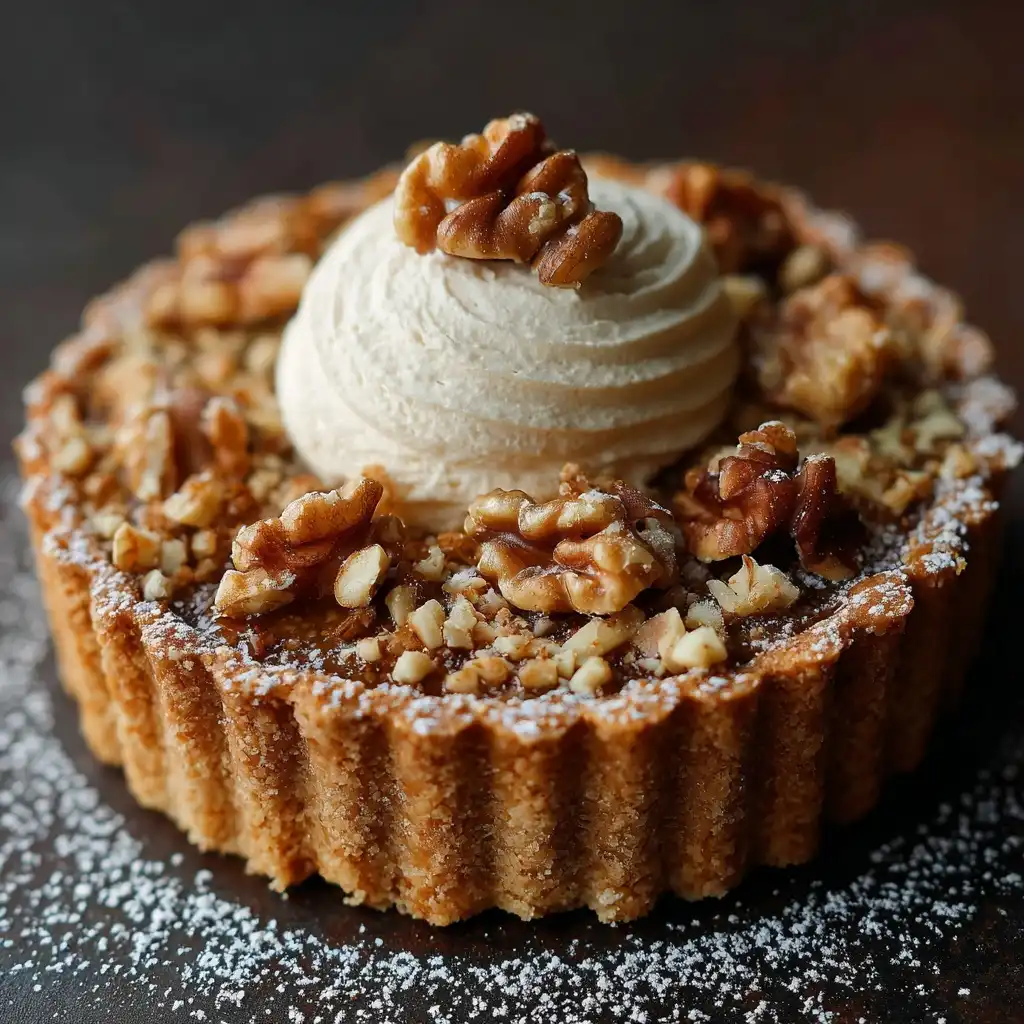
The Maple Walnut Tart is a sublime celebration of autumnal elegance and rustic sophistication—a dessert that marries the deep, caramelized warmth of pure maple syrup with the earthy, buttery crunch of toasted walnuts in a tender, flaky, or rich shortcrust pastry shell. Unlike its more austere cousins—think plain walnut pie or generic nut tarts—this confection stands apart through its refined balance: not overly sweet, never cloying, and always layered with nuanced depth. It evokes cozy New England kitchens, maple sugaring season at dawn, and the quiet luxury of slow food traditions. Whether served warm with a scoop of bourbon vanilla ice cream or chilled with crème fraîche, the Maple Walnut Tart transcends mere dessert status to become a sensory narrative—one bite tells a story of terroir, craftsmanship, and mindful indulgence.
The History
The origins of the Maple Walnut Tart are deeply rooted in North American culinary heritage—specifically in the maple-producing regions of Quebec, Vermont, Ontario, and New Hampshire, where sugar maples have been tapped for centuries. Indigenous peoples of the Northeast Woodlands—including the Haudenosaunee (Iroquois), Abenaki, and Mi’kmaq—were the first to discover and refine the process of boiling sap into syrup and sugar, using it both as sustenance and ceremonial offering. European settlers adopted and adapted these techniques in the 17th and 18th centuries, integrating maple into pies, puddings, and cakes as a prized domestic sweetener—especially during colonial times when cane sugar was expensive and heavily taxed.
Walnuts, native to eastern North America (particularly the black walnut and butternut), were also foraged and used by Indigenous communities for oil, flour, and flavor. As orchards expanded in the 19th century—and particularly with the rise of commercial English walnut cultivation in California—the pairing of maple and walnut became increasingly common in regional baking, appearing in church social cookbooks, agricultural extension pamphlets, and early 20th-century home economics manuals. The tart format gained prominence mid-century as bakers sought elegant, presentation-worthy alternatives to traditional slab pies—favoring individual or large free-form tarts with visible nut clusters and glossy, amber glazes. Notably, James Beard referenced a “maple-nut crostata” in his 1972 American Cookery, while Canadian chef Anne Lindsay’s 1985 Maple Magic included one of the first published recipes explicitly titled “Maple Walnut Tart,” cementing its identity as a distinct, celebrated dessert rather than a seasonal variation.
Ingredients Breakdown
Every exceptional Maple Walnut Tart begins not with technique—but with intentionality in ingredient selection. Below is an exhaustive, chef-level breakdown of each component—including why substitutions matter, sourcing guidance, and functional roles in structure, flavor, and texture:
- All-Purpose Flour (or Pastry Flour): Forms the structural backbone of the crust. Pastry flour (low-protein, ~8–9% gluten) yields unparalleled tenderness; all-purpose (10–11.5%) offers greater stability for blind-baking. Avoid bread flour—it creates toughness. Organic, stone-milled options enhance nuttiness and reduce chalkiness.
- Unsalted Butter (Cold, High-Fat, European-Style Preferred): Provides flakiness, richness, and laminated layers when cut properly into flour. Cold temperature is non-negotiable—butter must remain solid until baking, releasing steam that lifts dough strata. European-style butters (82–86% fat, e.g., Plugrá, Kerrygold) yield superior browning and less water content, minimizing shrinkage.
- Granulated Sugar (for Crust): Adds subtle sweetness and promotes browning via Maillard reaction. A small amount (1–2 tbsp) balances flour’s blandness without compromising structure.
- Salt (Fine Sea Salt or Kosher): Enhances all other flavors and controls gluten development. Use Diamond Crystal for volume equivalence; Morton for weight-based precision.
- Ice Water (or Vodka-Water Blend): Hydrates flour proteins to form gluten *just enough* for cohesion—no more. Vodka (40% alcohol) inhibits gluten formation while evaporating fully during baking—ideal for ultra-tender, crumbly crusts.
- Pure Grade A Dark Amber or Robust Maple Syrup (Not “Pancake Syrup”): The soul of the filling. Must be 100% maple—no corn syrup, caramel color, or artificial flavorings. Darker grades (Grade A Dark or Grade B/“Robust Flavor”) offer deeper molasses, toasted sugar, and woody notes essential for complexity. Lighter grades (Golden/Delicate) lack sufficient depth and burn more easily. Look for certifications like “Pure Maple from Vermont” or “Québec Maple Federation Seal.”
- Brown Sugar (Dark, Packed): Complements maple’s natural bitterness with molasses-driven depth, moisture retention, and acidity to brighten richness. Light brown works, but dark imparts unmistakable warmth.
- Eggs (Large, Room Temperature): Act as emulsifiers and binders—holding liquid and fat together while contributing structure and leavening via trapped air. Room temperature ensures even incorporation and prevents seizing cold maple syrup.
- Heavy Cream (or Half-and-Half for Lighter Version): Adds unctuous mouthfeel, slows sugar crystallization, and contributes dairy-sweet nuance. Ultra-pasteurized cream may scorch; prefer pasteurized, local dairy when possible.
- Vanilla Extract (Pure, Bourbon or Madagascar): Not merely aromatic—it bridges maple’s earthiness and walnut’s tannins with floral, creamy resonance. Alcohol-based extracts integrate seamlessly; avoid imitation or ethyl vanillin.
- Walnuts (Fresh, Raw, Preferably Local or Oregon-Grown): Use halves or coarsely chopped—not pre-toasted or pre-chopped. Freshness is critical: walnuts oxidize rapidly due to high polyunsaturated fat content. Smell for rancidity (paint-thinner or cardboard notes); discard if detected. Toasting *in-house*, just before assembly, unlocks enzymatic nuttiness and volatile aromatics.
- Optional Enhancements: A pinch of freshly grated nutmeg (not pre-ground), a whisper of flaky sea salt (Maldon or Fleur de Sel) sprinkled post-bake, or ¼ tsp orange zest stirred into filling for citrus lift—all serve to elevate, not distract.
Step-by-Step Recipe
This meticulously tested, professional-grade method yields a tart with a shatteringly crisp, golden-brown crust; a luxuriously thick, glossy, non-runny filling; and walnuts suspended in perfect, chew-crisp harmony—not soggy, not burnt, but gloriously bronzed. Total time: ~3 hours (includes chilling).
- Prepare the Tart Dough (Day Before or Morning Of): In a food processor, pulse 1 ¼ cups (160g) chilled, cubed European-style butter with 1 ¾ cups (210g) pastry flour, 2 tbsp granulated sugar, and ½ tsp fine sea salt until mixture resembles coarse meal with pea-sized butter pieces. Drizzle in 3–4 tbsp ice-cold water (or 2 tbsp water + 2 tbsp vodka), pulsing only until dough just begins to clump. Turn onto parchment, gather into a disc, wrap tightly, and refrigerate ≥2 hours—or ideally, overnight—to fully hydrate flour and relax gluten.
- Roll & Blind-Bake the Crust: On a lightly floured surface, roll chilled dough into a 12-inch circle, ⅛-inch thick. Transfer to a 10-inch tart pan with removable bottom. Trim edges, crimp decoratively, and freeze 20 minutes. Preheat oven to 375°F (190°C). Line frozen crust with parchment and pie weights (or dried beans). Bake 20 minutes. Remove weights and parchment; prick base with fork. Return to oven 12–15 minutes until golden and dry-looking. Cool completely on wire rack—do not skip cooling; residual heat causes filling separation.
- Toast Walnuts to Perfection: Spread 1 ½ cups (150g) raw walnut halves on a parchment-lined sheet. Bake at 350°F (175°C) for 8–10 minutes, shaking pan halfway, until fragrant and edges just begin to darken. Cool completely—warm nuts melt butter in filling and cause graininess.
- Make the Maple Custard Filling: In a heavy-bottomed saucepan, combine ¾ cup (180ml) pure dark maple syrup, ½ cup (100g) packed dark brown sugar, ¼ tsp salt, and ¼ cup (60ml) heavy cream. Bring to a gentle simmer over medium-low heat, stirring until sugars dissolve (~3 minutes). Remove from heat; whisk in 2 large room-temperature eggs *one at a time*, fully incorporating after each. Stir in 1 tsp pure vanilla extract and optional ¼ tsp freshly grated nutmeg. Do NOT boil after adding eggs—curdling risk is high.
- Assemble & Bake: Reduce oven to 325°F (165°C). Scatter cooled, toasted walnuts evenly over cooled crust. Pour warm (not hot) filling gently over nuts—tilt pan slightly to distribute. Bake 35–42 minutes, rotating halfway, until edges are set and center jiggles *slightly* like firm gelatin (not liquid). A knife inserted 1 inch from edge should come out clean; center will firm upon cooling.
- Cool & Set with Patience: Transfer tart to wire rack. Cool at room temperature 2 hours minimum—this allows starches and proteins to fully coagulate and prevents cracking or weeping. For clean slices, refrigerate uncovered 4+ hours (or overnight). Bring to cool room temp 30 minutes before serving.
Tips
- Chill Everything—Especially the Crust: Warm dough = greasy, tough, shrunken crust. Always chill dough before rolling, after shaping, and again after blind-baking if ambient temps exceed 72°F (22°C).
- Maple Syrup Is Not Interchangeable: Substituting light maple syrup, imitation syrup, or agave will produce flat, thin, or overly sweet filling lacking signature umami and bitterness. When in doubt, buy from a verified producer with harvest year on label.
- Don’t Rush the Toasting: Walnuts go from golden to bitter in 45 seconds. Watch closely—remove at first whiff of toast, not visual cues alone. Let cool fully on wire rack, not tray (residual heat continues cooking).
- Temperature Matters for Eggs & Cream: Cold eggs + hot syrup = scrambled custard. Always bring eggs and cream to room temp (65–70°F / 18–21°C) for seamless emulsion.
- Rotate & Monitor Relentlessly: Ovens vary wildly. Begin checking at 32 minutes. Overbaking dries out filling and causes unsightly fissures. Underbaking leads to leakage and poor slice integrity.
- Cooling Is Non-Negotiable: Cutting into a warm tart guarantees crumbling crust and oozing filling. Minimum 2-hour counter cool + 4-hour fridge chill = restaurant-quality results.
- Use a Tart Pan With Removable Bottom: Essential for clean release and professional presentation. Springform pans work in a pinch—but tart pans have fluted sides designed for optimal crust height and support.
- For Glossier Finish: Brush cooled, set tart surface lightly with warmed maple syrup (1 tsp, strained) using pastry brush—adds sheen and intensifies maple aroma.
Variations and Customizations
The Maple Walnut Tart is remarkably adaptable—respecting tradition while inviting thoughtful innovation. Here are rigorously tested variations, each preserving structural integrity and flavor harmony:
- Maple Pecan Fusion: Substitute 50% walnuts with toasted pecan halves. Pecans add buttery sweetness and softer crunch—ideal for Southern-inspired iterations. Add ¼ tsp cinnamon to filling.
- Maple Walnut Chocolate Swirl: Melt 3 oz (85g) 65% dark chocolate; cool to 90°F (32°C). After pouring filling into crust, drizzle chocolate in zigzag pattern and swirl gently with toothpick. Adds bittersweet contrast and visual drama.
- Maple Walnut & Bourbon Caramel: Infuse ¼ cup heavy cream with 1 tbsp bourbon and 1 tsp vanilla bean seeds (scraped) for 30 minutes. Warm gently, strain, and use in place of plain cream. Deepens complexity without overpowering.
- Gluten-Free Version: Replace pastry flour with 1:1 GF blend containing xanthan gum (e.g., Bob’s Red Mill). Add 1 extra tbsp cold butter to compensate for reduced binding. Chill dough 30 minutes longer.
- Vegan Adaptation: Crust: Use vegan butter (Miyoko’s or Naturli’) + ice water. Filling: Replace eggs with ¼ cup aquafaba (chickpea brine) + 1 tbsp cornstarch; use coconut cream instead of dairy. Maple remains central—no compromise.
- Mini Tartlet Version: Press dough into 3-inch muffin tin cavities (greased + floured). Blind-bake 12–14 minutes. Fill with 1 tsp walnuts + 1 tbsp filling per tartlet. Bake 18–22 minutes. Perfect for parties or portion control.
- Maple Walnut & Sea Salt Caramel Drizzle: After cooling, drizzle with house-made salted caramel (simmer ½ cup maple syrup + ¼ cup brown sugar + 3 tbsp cream + 1 tbsp butter + ½ tsp flaky salt until thickened). Elevates with sweet-salty tension.
- Herb-Infused Maple: Steep 1 tsp fresh rosemary or thyme in warm maple syrup for 15 minutes before straining. Adds unexpected forest-floor elegance—pair with goat cheese garnish.
Health Considerations and Nutritional Value
While undeniably indulgent, the Maple Walnut Tart offers meaningful nutritional attributes when prepared mindfully—far surpassing many commercially produced desserts laden with HFCS, artificial fats, and preservatives. A standard 1/12th slice (approx. 120g) contains roughly:
- Calories: 285–310 kcal (varies by butter content and syrup grade)
- Total Fat: 17–19g (mostly monounsaturated from walnuts and butter; ~6g saturated)
- Carbohydrates: 30–33g (naturally occurring sugars from maple and brown sugar; no added refined white sugar)
- Dietary Fiber: 1.2–1.5g (from walnuts and whole-grain crust options)
- Protein: 3.5–4g (walnuts provide plant-based protein + L-arginine for vascular health)
- Key Micronutrients: Magnesium (walnuts), manganese (maple syrup), zinc (walnuts), calcium (butter), and polyphenols (maple’s quebecol compound—studied for anti-inflammatory properties)
Considerations:
- Glycemic Impact: Maple syrup has a lower glycemic index (~54) than table sugar (~65) and contains prebiotic oligosaccharides that support gut microbiota. Still, moderation is advised for diabetics—consult nutritionist before regular consumption.
- Nut Allergies: Walnuts are tree nuts; strict avoidance required for those with IgE-mediated allergy. Substitutions like roasted sunflower seeds or pumpkin seeds maintain crunch and nutrition safely.
- Sodium Content: Naturally low (<120mg/slice) unless enhanced with flaky salt—ideal for heart-conscious diets when unsalted butter and minimal added salt are used.
- Antioxidant Profile: Walnuts rank #1 among nuts in polyphenol density (especially ellagic acid and juglone); maple syrup contains over 24 unique antioxidants. Together, they create synergistic oxidative protection.
- Whole Food Integrity: When made from scratch with real ingredients, this tart avoids emulsifiers (e.g., polysorbate 60), artificial colors, and synthetic preservatives common in store-bought versions—supporting clean-label eating principles.
Ingredients
For the Pastry Crust:
• 1 ¼ cups (160g) chilled, unsalted European-style butter, cubed
• 1 ¾ cups (210g) pastry flour (or all-purpose)
• 2 tablespoons (25g) granulated sugar
• ½ teaspoon fine sea salt
• 3–4 tablespoons (45–60ml) ice-cold water (or 2 tbsp water + 2 tbsp vodka)
For the Maple Walnut Filling:
• 1 ½ cups (150g) raw walnut halves
• ¾ cup (180ml) pure Grade A Dark Amber or Robust maple syrup
• ½ cup (100g) packed dark brown sugar
• ¼ teaspoon fine sea salt
• ¼ cup (60ml) heavy cream (or full-fat coconut cream for vegan)
• 2 large eggs, room temperature
• 1 teaspoon pure vanilla extract
• Optional: ¼ teaspoon freshly grated nutmeg or orange zest
For Finishing (Optional):
• Flaky sea salt (Maldon or Fleur de Sel)
• Warm maple syrup for gloss
• Vanilla bean ice cream or crème fraîche for serving
Directions
- Prepare the dough: In a food processor, combine flour, sugar, and salt. Add chilled butter cubes. Pulse 10–12 times until mixture resembles coarse crumbs with visible pea-sized butter bits. Drizzle in ice water (or water/vodka mix) 1 tablespoon at a time, pulsing just until dough begins to clump together. Do not over-process.
- Turn dough onto a sheet of parchment paper. Gather and press into a 1-inch-thick disc. Wrap tightly and refrigerate for at least 2 hours—or preferably overnight.
- Preheat oven to 375°F (190°C). Roll chilled dough on a lightly floured surface into a 12-inch circle, ⅛-inch thick. Carefully transfer to a 10-inch tart pan with removable bottom. Gently press into corners and up sides. Trim excess dough, then crimp edges decoratively. Freeze for 20 minutes.
- Line frozen crust with parchment paper and fill with pie weights or dried beans. Bake for 20 minutes. Carefully remove parchment and weights. Prick bottom with a fork and bake 12–15 more minutes, until golden and dry. Cool completely on a wire rack.
- Reduce oven to 350°F (175°C) for toasting. Spread walnuts on a parchment-lined baking sheet. Toast 8–10 minutes, until fragrant and lightly golden. Cool completely on wire rack.
- In a heavy-bottomed saucepan, combine maple syrup, brown sugar, salt, and heavy cream. Heat over medium-low, stirring constantly, until sugar dissolves and mixture simmers gently (about 3 minutes). Remove from heat and let cool slightly (2 minutes).
- Whisk eggs in a bowl. Temper eggs by slowly whisking in ¼ cup of warm syrup mixture. Then pour tempered egg mixture back into saucepan, whisking constantly. Stir in vanilla (and nutmeg/orange zest if using). Do not boil.
- Reduce oven to 325°F (165°C). Scatter cooled walnuts evenly over cooled crust. Carefully pour filling over nuts.
- Bake 35–42 minutes, rotating halfway, until edges are set and center jiggles slightly when gently shaken. A knife inserted 1 inch from edge should come out clean.
- Cool tart on wire rack for 2 hours at room temperature. Refrigerate uncovered for at least 4 hours—or preferably overnight—for clean slicing.
- Before serving, bring to cool room temperature (30 minutes). Garnish with flaky salt and serve with vanilla ice cream or crème fraîche.
FAQ
- Can I make the crust ahead of time?
- Absolutely. Dough can be refrigerated for up to 3 days or frozen for 3 months. Thaw overnight in fridge before rolling. Fully baked crust stays fresh, wrapped tightly, at room temperature for 2 days or frozen for 1 month.
- Why did my filling crack or sink?
- Cracking usually results from rapid temperature change (cutting while warm) or overbaking. Sinking occurs when eggs are too cold, filling is poured over warm crust, or cooling is rushed. Always cool gradually and fully.
- Can I use maple sugar instead of syrup?
- Maple sugar can replace brown sugar (1:1 by weight), but syrup is irreplaceable for moisture, binding, and caramelization. Using only maple sugar yields dry, crumbly filling.
- My crust shrank during baking—what went wrong?
- Under-chilling, overworking dough, stretching dough while fitting pan, or insufficient resting before baking all contribute. Always chill shaped crust 20+ minutes before blind-baking.
- How do I store leftovers?
- Refrigerate covered with parchment-lined lid or foil for up to 5 days. Do not freeze filled tart—the custard texture suffers. Unfilled baked crust freezes well for 1 month.
- Can I substitute other nuts?
- Yes—pecans, hazelnuts, or almonds work beautifully. Adjust toasting time: pecans (7–9 min), hazelnuts (10–12 min, skin-removed), almonds (9–11 min). Avoid pine nuts—they burn instantly.
- Is there a low-sugar version?
- Reduce brown sugar to ¼ cup and add 1 tbsp unflavored collagen peptides (supports structure) + 1 tsp monk fruit extract (pure, no erythritol). Note: maple syrup cannot be reduced without compromising set and flavor.
- Why does my tart taste bitter?
- Likely from over-toasted walnuts or using Grade B syrup beyond its prime (oxidized maple turns acrid). Always taste syrup before using—it should smell sweet, woody, and clean—not sour or metallic.
- Can I make this dairy-free?
- Yes. Use vegan butter in crust and full-fat coconut cream in filling. Replace eggs with ¼ cup aquafaba + 1 tbsp arrowroot starch. Ensure maple syrup is certified vegan (some filtered with bone char—rare but possible).
- What’s the best way to get clean slices?
- Use a sharp, thin-bladed knife dipped in hot water and wiped dry between cuts. Serve chilled—not frozen—and allow tart to rest at cool room temp 30 minutes prior to slicing.
Summary
The Maple Walnut Tart is a masterclass in balance—where the deep, smoky-sweet resonance of premium maple syrup meets the toasted, tannic richness of freshly roasted walnuts, all enrobed in a buttery, flaky, golden-hued crust that shatters with reverence. It honors heritage while inviting creativity, delivers comfort without compromise, and transforms simple, honest ingredients into an heirloom dessert worthy of generations.
Whether served at a harvest feast, gifted in a parchment-wrapped box, or savored solo with morning coffee, this tart doesn’t just satisfy the palate—it grounds us in seasonality, craft, and the quiet joy of making something truly, unforgettably good.