Introduction
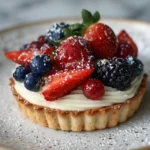
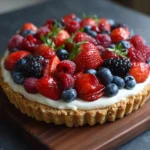
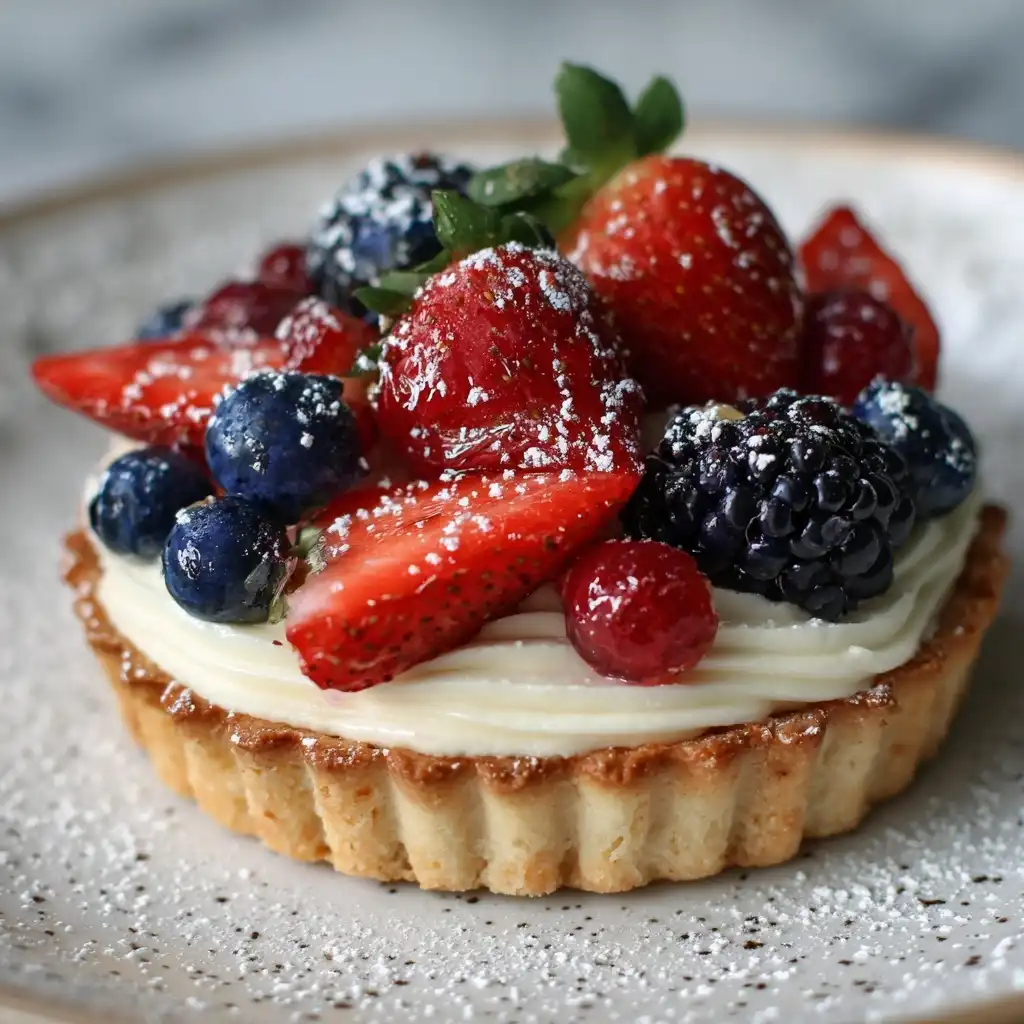
The Mascarpone Berry Tart is a luscious, elegant dessert that marries the velvety richness of Italian mascarpone cheese with the bright, vibrant acidity and natural sweetness of seasonal fresh berries. More than just a treat—it’s an experience: creamy yet light, tart yet indulgent, rustic yet refined. Whether served at a summer garden party, a holiday brunch, or as an intimate after-dinner delight, this tart effortlessly balances sophistication with approachability. Its buttery shortcrust base provides structural grace, while the luxuriously smooth mascarpone filling offers cloud-like texture—never cloying, always balanced—and a crown of jewel-toned strawberries, raspberries, blueberries, blackberries, and even edible flowers transforms each slice into a work of edible art. Unlike heavy cheesecakes or overly sweet custards, this tart celebrates freshness, simplicity, and ingredient integrity—making it a perennial favorite among home bakers, pastry chefs, and health-conscious gourmands alike.
The History
Though no single documented “origin story” exists for the Mascarpone Berry Tart, its lineage is deeply rooted in centuries-old European dessert traditions. Mascarpone—a double-cream, mild, slightly tangy Italian cheese originating in the Lombardy region as early as the 16th century—was historically used in savory preparations before evolving into a cornerstone of sweet Italian pastries, most famously tiramisu (born in Treviso in the late 20th century). Meanwhile, fruit tarts trace back to medieval Europe, where almond paste–lined pastry shells held stewed fruits preserved in honey or wine. The modern berry tart emerged prominently in French pâtisserie in the 19th century, refined by masters like Marie-Antoine Carême and later Auguste Escoffier, who championed seasonal, minimally manipulated fruit presentations. The fusion of Italian mascarpone with French tart structure gained momentum in the 1980s and ’90s as global culinary cross-pollination intensified—particularly through California’s farm-to-table movement and the rise of artisanal dairy producers. Chefs began substituting traditional crème pâtissière or lemon curd with stabilized mascarpone for its unparalleled silkiness and neutral canvas quality—ideal for highlighting peak-season berries without masking their terroir. Today, the Mascarpone Berry Tart stands as a transnational icon: Italian soul, French technique, American abundance, and global reverence for freshness—all encased in golden, flaky pastry.
Ingredients Breakdown
Every exceptional Mascarpone Berry Tart begins not with technique—but with thoughtful, layered ingredient selection. Below is a meticulous breakdown—not just of *what* goes in, but *why*, *how to choose it*, and *what to avoid*:
- For the Shortcrust Pastry (Pâte Brisée): All-purpose flour (or a blend of 70% all-purpose + 30% cake flour for tenderness), unsalted European-style butter (82–84% fat, e.g., Kerrygold or Plugrá—critical for flakiness and rich flavor), ice-cold water (filtered, if possible), granulated sugar (just 1–2 tbsp for subtle caramelization, not sweetness), fine sea salt (enhances all other flavors), and optionally, a teaspoon of vanilla bean paste or finely grated lemon zest for aromatic lift.
- For the Mascarpone Filling: Full-fat, ultra-fresh mascarpone (look for “DOP” certification or brands like Galbani, Locatelli, or imported Italian varieties—avoid pre-whipped or “light” versions, which contain stabilizers and lack body), full-fat Greek yogurt or crème fraîche (adds brightness and prevents cloying richness), powdered sugar (finely sifted—granulated won’t dissolve smoothly), pure Madagascar bourbon vanilla extract or scraped seeds from 1 whole pod, fresh lemon juice (not bottled—its volatile citrus oils cut through fat), and a pinch of fine sea salt (to heighten complexity).
- For the Berry Topping: A strategic medley—not random! Prioritize in-season, locally grown berries: ripe but firm strawberries (hulled and quartered), plump red raspberries (gently rinsed and patted dry), deep blueberries (taste-tested for sweetness), glossy blackberries (avoid mushy ones), and optional golden raspberries or boysenberries for contrast. For gloss and preservation, use a neutral, seedless glaze: warmed apricot jam (strained) or apple jelly—never corn syrup or store-bought “glaze” with artificial colors. Optional garnishes: edible violets, borage flowers, mint microgreens, or a dusting of freeze-dried raspberry powder.
- Pro-Tip on Substitutions: While authenticity matters, flexibility does too. Vegan? Use high-fat cashew cream (soaked, blended, strained) + coconut oil + lemon + agar-agar for set. Gluten-free? Swap flour for a certified GF 1:1 blend with xanthan gum. Dairy-free? Coconut mascarpone alternatives exist—but require precise pH balancing with lemon/tartar to mimic mouthfeel.
Step-by-Step Recipe
This recipe yields one stunning 9-inch (23 cm) tart, serving 10–12. Total time: ~3 hours (includes chilling; active prep: 45 minutes).
- Make the Pastry Dough: In a food processor, pulse 1 ¼ cups (160g) chilled, cubed butter with 1 ¾ cups (220g) all-purpose flour, 2 tbsp granulated sugar, and ½ tsp fine sea salt until mixture resembles coarse meal with pea-sized butter bits. Drizzle in 3–4 tbsp ice water, 1 tsp at a time, pulsing just until dough begins to clump. Turn onto parchment; gather into a disk, wrap tightly, and refrigerate ≥2 hours (overnight ideal).
- Blind-Bake the Crust: Preheat oven to 375°F (190°C). Roll dough to ⅛” thickness on lightly floured surface; fit into 9″ fluted tart pan with removable bottom. Trim edges; prick base with fork. Freeze 15 minutes. Line with parchment and pie weights (or dried beans); bake 20 min. Remove weights/parchment; bake 12–15 more min until golden and dry. Cool completely on wire rack—do not skip cooling; warm crust absorbs moisture from filling.
- Prepare the Mascarpone Filling: In a large bowl, beat 16 oz (450g) cold mascarpone with ½ cup (120g) full-fat Greek yogurt and ¼ tsp salt using hand mixer (low speed) until just combined—do not overbeat. Sift in ⅓ cup (40g) powdered sugar and 1 tsp vanilla; mix 30 sec. Add 1 tbsp fresh lemon juice; fold gently with spatula until uniform. Taste and adjust: more lemon for brightness, more sugar only if berries are very tart.
- Assemble & Chill: Spread filling evenly into cooled crust using an offset spatula. Smooth top. Refrigerate uncovered 1 hour to set filling surface (prevents berry slippage).
- Arrange Berries: Pat all berries *completely dry*. Start with largest (strawberries) around outer edge, points facing outward. Fill center with alternating raspberries, blueberries, and blackberries in concentric circles or organic clusters. Press gently—no sinking!
- Glaze & Finish: Warm ¼ cup (80g) strained apricot jam with 1 tsp water over low heat until fluid. Strain again. Using a pastry brush, *lightly* coat berries—avoid pooling in gaps. Refrigerate tart ≥2 hours (ideally overnight) to meld flavors and firm texture. Just before serving, dust with freeze-dried berry powder, add edible flowers, and serve chilled—but not icy (15 min at room temp ideal).
Tips
- Butter Temperature Is Non-Negotiable: Butter must be cold enough to hold shape when pressed, but not frozen—too hard = shattering; too soft = greasy, tough crust. 55–60°F (13–15°C) is goldilocks zone.
- No Overmixing—Ever: Both dough and filling suffer from gluten development or air incorporation. Mix dough until *just* cohesive. Beat mascarpone only until smooth—overwhipping causes graininess or separation.
- Dry Berries Are Sacred: Even a whisper of moisture = soggy crust and diluted glaze. Rinse berries *only if needed*, then spread on triple-layered paper towels, refrigerate uncovered 30 min, and pat individually.
- Chill Between Every Stage: Dough (pre-roll), crust (pre-bake), filling (pre-assembly), assembled tart (pre-glaze), and glazed tart (pre-service). Each chill prevents structural failure and sharpens flavor definition.
- Glazing Mastery: Brush glaze *after* berries are placed—not before. Use a clean, soft-bristled brush. Apply in one direction (e.g., clockwise) for even sheen. Too much? Wipe excess with cotton swab.
- Serving Wisdom: Slice with a hot, thin-bladed knife (dip in hot water, wipe dry between cuts). Serve on chilled plates. Offer a small spoon for the creamy center and a fork for the crust—this is a two-instrument dessert.
- Leftovers? Store covered in fridge up to 2 days. Do not freeze—berries weep, mascarpone breaks, crust turns leathery. Revive day-two slices by briefly torching the glaze or adding a dollop of crème fraîche.
Variations and Customizations
This tart is a canvas—not a cage. Here are inspired, chef-tested adaptations for every palate, season, and occasion:
- Seasonal Swaps: Summer: Peach-Mascarpone + blackberry coulis. Autumn: Roasted pear & walnut + cinnamon mascarpone + cranberry gel. Winter: Blood orange segments + rosewater mascarpone + pistachio crumble. Spring: Rhubarb compote + strawberry-mascarpone swirl + lemon thyme.
- Dietary Adaptations: Keto: Almond-flour crust + erythritol-sweetened filling + macadamia “berries” (candied nuts). Paleo: Cassava/tigernut flour crust + coconut cream filling + goji-berry “caviar”. Low-FODMAP: Lactose-free mascarpone (Green Valley Creamery) + maple-sweetened filling + blueberries only (low-FODMAP berry).
- Flavor Infusions: Lavender-honey mascarpone (1/4 tsp culinary lavender + 2 tbsp local honey). Matcha-white chocolate filling (whisk 1 tsp ceremonial matcha into warm white chocolate ganache, cool, fold into mascarpone). Smoked sea salt & black pepper mascarpone (for savory-leaning brunch version).
- Textural Twists: Crunch layer: Toasted amaretti crumbs or crushed hazelnuts sprinkled under filling. Caramel drizzle: Salted dulce de leche ribbons swirled into filling pre-chill. Jam layer: Thin apricot or raspberry jam brushed *inside* baked crust before filling (adds chewy contrast).
- Format Innovations: Individual mini tarts (use muffin tin + foil liners). Tartine style (open-faced on sourdough toast). “Deconstructed”: Mascarpone mousse in glasses, berry compote, crumbled shortbread, edible flowers. Tart pizza: Large free-form galette on parchment, folded edges, berries spilling over.
- Cultural Fusions: Japanese-inspired: Yuzu mascarpone + shiso leaf garnish + black sesame crust. Middle Eastern: Rosewater-cardamom mascarpone + pomegranate arils + pistachio dust. Mexican: Lime-cinnamon mascarpone + huckleberries + candied pepitas.
Health Considerations and Nutritional Value
A single generous slice (1/12 of tart) contains approximately 320–380 calories, with nuanced nutritional benefits often overlooked in decadent desserts:
- Protein & Probiotics: Mascarpone provides ~4g high-quality dairy protein per serving; Greek yogurt adds live cultures (L. acidophilus, Bifidobacterium) supporting gut microbiome diversity—especially when unpasteurized post-mixing (ensure yogurt is “live & active”).
- Antioxidant Powerhouse: Berries deliver anthocyanins (blueberries), ellagic acid (raspberries), quercetin (strawberries), and vitamin C—proven to reduce oxidative stress, support vascular health, and modulate inflammation. One cup mixed berries = >5,000 ORAC units.
- Healthy Fats: Grass-fed butter contributes conjugated linoleic acid (CLA) and fat-soluble vitamins A, D, E, and K2—critical for bone and cardiovascular health. Mascarpone’s monounsaturated fats aid nutrient absorption.
- Lower Glycemic Impact: Unlike sponge cakes or custards, this tart uses minimal added sugar (mostly in glaze/filling), relies on fruit’s natural fructose, and contains fiber-rich berries + whole-grain crust options—keeping glycemic load moderate (~12–15 GL/slice).
- Considerations & Mitigations: High saturated fat content warrants portion awareness—enjoy mindfully, not daily. Lactose-intolerant? Choose lactose-free mascarpone and yogurt. For lower calorie: reduce crust thickness by 20%, use ¾ mascarpone + ¼ silken tofu, and increase berry volume by 30%. Always pair with herbal tea (peppermint, chamomile) to aid digestion.
- Nutritionist Note: This dessert aligns with Mediterranean and MIND diet principles—prioritizing whole foods, healthy fats, antioxidants, and mindful eating. It’s not “health food”—but it *is* nutritionally intelligent indulgence.
Ingredients
- For the Shortcrust Pastry:
- 1 ¾ cups (220g) all-purpose flour, plus extra for dusting
- 1 ¼ cups (285g) unsalted European-style butter, cold and cubed
- 2 tablespoons (25g) granulated sugar
- ½ teaspoon fine sea salt
- 3–4 tablespoons (45–60ml) ice-cold filtered water
- For the Mascarpone Filling:
- 16 ounces (450g) full-fat mascarpone cheese, cold
- ½ cup (120g) full-fat plain Greek yogurt or crème fraîche
- ⅓ cup (40g) powdered sugar, sifted
- 1 teaspoon pure Madagascar bourbon vanilla extract (or seeds from 1 pod)
- 1 tablespoon (15ml) fresh lemon juice
- ¼ teaspoon fine sea salt
- For the Berry Topping & Glaze:
- 1 pint (225g) fresh strawberries, hulled and quartered
- 1 cup (125g) fresh red raspberries
- 1 cup (145g) fresh blueberries
- ½ cup (75g) fresh blackberries
- ¼ cup (80g) apricot jam (seedless, no added pectin)
- 1 teaspoon water
- Optional: freeze-dried raspberry or strawberry powder, edible flowers, mint leaves
Directions
- In a food processor, combine flour, sugar, and salt. Pulse to mix. Add cold cubed butter. Pulse 10–12 times until mixture resembles coarse meal with visible pea-sized butter pieces.
- Drizzle in ice water, 1 teaspoon at a time, pulsing after each addition, just until dough begins to clump together when pinched. Do not over-process.
- Turn dough onto a sheet of parchment paper. Gather into a cohesive disk, smoothing edges. Wrap tightly in plastic wrap. Refrigerate for at least 2 hours, or overnight.
- Preheat oven to 375°F (190°C). Lightly flour work surface. Roll chilled dough to ⅛-inch thickness, rotating and reflouring as needed to prevent sticking. Carefully transfer to a 9-inch fluted tart pan with removable bottom. Gently press into bottom and up sides. Trim excess dough flush with pan rim. Prick base all over with a fork. Freeze for 15 minutes.
- Line crust with parchment paper and fill with pie weights or dried beans. Bake for 20 minutes. Carefully remove parchment and weights. Return crust to oven and bake 12–15 minutes longer, until golden brown and dry-looking. Transfer to a wire rack and cool completely—minimum 1 hour.
- In a large bowl, use a hand mixer on low speed to beat mascarpone, Greek yogurt, salt, and vanilla until just smooth (about 30 seconds). Sift in powdered sugar and beat another 20 seconds. Add lemon juice and fold gently with a silicone spatula until fully incorporated and silky. Do not overmix.
- Spread filling evenly into cooled crust using an offset spatula. Smooth top meticulously. Refrigerate uncovered for 1 hour to set surface.
- Pat all berries *thoroughly dry* with paper towels. Arrange artfully over filling: begin with strawberries around perimeter, then alternate raspberries, blueberries, and blackberries toward center in concentric rings or organic clusters. Press gently.
- In a small saucepan, warm apricot jam and water over low heat, stirring, until fully liquefied (2–3 minutes). Strain through a fine-mesh sieve into a small bowl to remove any solids. Let cool slightly.
- Using a clean pastry brush, lightly glaze each berry—apply in smooth, even strokes. Avoid pooling glaze in crevices. Refrigerate tart, uncovered, for at least 2 hours—or preferably overnight—for optimal flavor integration and texture.
- Just before serving, dust lightly with freeze-dried berry powder. Garnish with edible flowers and mint. Slice with a hot, thin-bladed knife wiped clean between cuts. Serve chilled.
FAQ
- Can I make the crust ahead of time?
- Absolutely. Dough keeps refrigerated for 3 days or frozen for 3 months. Blind-baked crust stays crisp in an airtight container at room temperature for 2 days—or frozen for 1 month (thaw at room temp 30 min before filling).
- Why does my mascarpone filling look grainy or curdled?
- Two likely culprits: (1) Ingredients were too cold—let mascarpone and yogurt sit at room temp 15 minutes before mixing; (2) Overbeating—mascarpone has delicate fat globules that break down with prolonged agitation. Always use low speed and stop as soon as smooth.
- Can I use frozen berries?
- Not for the fresh topping—they’ll bleed, turn mushy, and waterlog the filling. However, frozen berries work beautifully for compotes or coulis served alongside the tart, or as a cooked layer beneath the mascarpone.
- How do I prevent a soggy bottom crust?
- Three non-negotiables: (1) Fully blind-bake until deep golden and *completely dry* inside; (2) Cool crust *completely* before adding filling; (3) Ensure berries are bone-dry before arranging. A light dusting of ground almonds or crushed graham crackers on the crust base before filling also creates a moisture barrier.
- Is there a way to stabilize the filling for warm weather or outdoor serving?
- Yes. Add ½ teaspoon unflavored gelatin (bloomed in 1 tsp cold water, then melted and cooled) to the filling mixture just before folding in lemon juice. Or substitute 2 tbsp of the Greek yogurt with 2 tbsp crème fraîche—the higher fat and acidity provide natural stability.
- Can I omit the sugar entirely?
- You can reduce sugar significantly (down to 2 tbsp powdered sugar), especially if berries are very sweet—but eliminating it entirely risks a flat, overly tart profile. Mascarpone needs *some* sweetness to balance its lactic tang. Consider using monk fruit or allulose blends for zero-calorie sweetness without aftertaste.
- What’s the best way to transport this tart?
- Use a tart carrier with a snug lid or a deep, rigid cake box lined with parchment. Chill thoroughly before transport. Keep in a cooler with ice packs if traveling >30 minutes. Never stack anything on top—berries are fragile. Assemble berries *on-site* if possible for maximum freshness.
- My glaze turned cloudy or dull—why?
- Cloudiness means the jam wasn’t strained well or was overheated (causing sugar crystallization). Dullness means insufficient brushing or applying glaze to cold, damp berries. Solution: Re-warm strained glaze, let cool slightly, and re-brush in one direction over *room-temp, dry* berries.
Summary
The Mascarpone Berry Tart is a masterclass in contrast and harmony—where buttery, flaky pastry cradles impossibly smooth, subtly sweetened mascarpone enriched with tangy yogurt and bright lemon, crowned with a vibrant mosaic of peak-season berries, each kiss of apricot glaze sealing in freshness and luminosity.
It honors tradition while inviting innovation, delivers indulgence without heaviness, and transforms simple, whole ingredients into an unforgettable sensory celebration—proof that the most elegant desserts are built not on complexity, but on clarity of purpose, quality of craft, and reverence for nature’s seasonal rhythm.