Introduction
Welcome to a vibrant, nourishing, and utterly delicious culinary experience with Mediterranean Chickpea Power Bowls. These bowls are more than just a meal—they’re a celebration of fresh ingredients, bold flavors, and wholesome nutrition rooted deeply in the traditions of Mediterranean cuisine. Whether you’re a seasoned foodie or someone simply looking for a satisfying plant-based meal, this power bowl is designed to energize your body and delight your taste buds. Packed with protein-rich chickpeas, crisp vegetables, zesty dressings, and aromatic herbs, each bite delivers a harmony of textures and tastes that transport you straight to the sun-kissed coasts of Greece, Turkey, and Southern Italy.
The History
The concept of grain and legume bowls has deep roots across many cultures, but the Mediterranean iteration draws heavily from ancient culinary practices throughout the region surrounding the Mediterranean Sea. For thousands of years, civilizations like the Greeks, Romans, Phoenicians, and Ottomans relied on staple foods such as chickpeas, olives, grains, and vegetables—ingredients that were not only abundant but also highly nutritious and long-lasting. Chickpeas, in particular, have been cultivated in the Fertile Crescent since around 7500 BCE and became a dietary cornerstone due to their versatility and high protein content.
In traditional Mediterranean diets, meals were built around seasonal produce, whole grains, legumes, olive oil, and modest amounts of dairy and fish—principles now celebrated globally for their health benefits. The modern “power bowl” trend, which emerged in the 2010s, evolved from these age-old eating patterns, reimagined for contemporary lifestyles focused on balance, convenience, and wellness. Today’s Mediterranean Chickpea Power Bowl pays homage to this rich history while adapting seamlessly to vegan, vegetarian, gluten-free, and clean-eating preferences.
Ingredients Breakdown
Each ingredient in this power bowl plays a vital role in creating a balanced, nutrient-dense, and flavorful dish:
- Chickpeas: The star of the bowl, providing plant-based protein, fiber, iron, and complex carbohydrates. They’re hearty enough to keep you full and support stable blood sugar levels.
- Quinoa (or brown rice): A complete protein source containing all nine essential amino acids. Quinoa adds texture and acts as a neutral base that absorbs the flavors of the dressing and toppings.
- Cucumber: Adds cool crunch and hydration. Rich in antioxidants and vitamin K, it brings freshness to every bite.
- Cherry tomatoes: Bursting with sweetness and lycopene, an antioxidant linked to heart health and cancer prevention.
- Red onion: Offers sharpness and depth, along with prebiotic fibers that support gut health.
- Kalamata olives: Briny, rich in healthy monounsaturated fats, and packed with polyphenols that fight inflammation.
- Feta cheese (optional): Adds creamy tanginess. Traditionally made from sheep’s milk, feta contributes calcium and probiotics.
- Fresh parsley and mint: Bright, aromatic herbs that elevate the flavor profile while offering anti-inflammatory properties.
- Lemon juice: Provides acidity that brightens the entire dish and enhances mineral absorption.
- Extra virgin olive oil: The heart of Mediterranean cooking—loaded with heart-healthy fats and potent antioxidants.
- Garlic and cumin: Add warmth, depth, and immune-boosting qualities.
- Pomegranate seeds (optional): For a pop of color, sweetness, and additional antioxidants.
- Tahini (in dressing): A sesame seed paste that enriches the dressing with creaminess and nutty flavor, plus calcium and healthy fats.
Step-by-Step Recipe
- Cook the quinoa: Rinse 1 cup of quinoa under cold water to remove saponins (which can make it bitter). In a saucepan, combine quinoa with 2 cups of water or vegetable broth. Bring to a boil, then reduce heat, cover, and simmer for 15 minutes or until water is absorbed. Remove from heat, fluff with a fork, and let it sit covered for 5 minutes. Allow to cool slightly before assembling the bowl.
- Prepare the chickpeas: Drain and rinse two 15-ounce cans of chickpeas (or use 3 cups cooked from dry). Pat them dry with a clean towel. In a bowl, toss chickpeas with 2 tablespoons extra virgin olive oil, juice of half a lemon, 1 teaspoon ground cumin, 1 minced garlic clove, salt, and pepper. For extra flavor, roast them: spread on a baking sheet and roast at 400°F (200°C) for 20–25 minutes, shaking halfway through, until golden and slightly crispy.
- Chop the vegetables: Dice 1 English cucumber, halve 1 cup cherry tomatoes, thinly slice ½ red onion, and chop a handful each of fresh parsley and mint.
- Make the lemon-tahini dressing: In a small bowl, whisk together ¼ cup tahini, juice of 1 large lemon (about 3 tablespoons), 1 minced garlic clove, 2 tablespoons warm water (to thin), 1 tablespoon olive oil, ½ teaspoon maple syrup or honey (optional), salt, and pepper. Adjust consistency by adding more water if needed—it should be pourable but creamy.
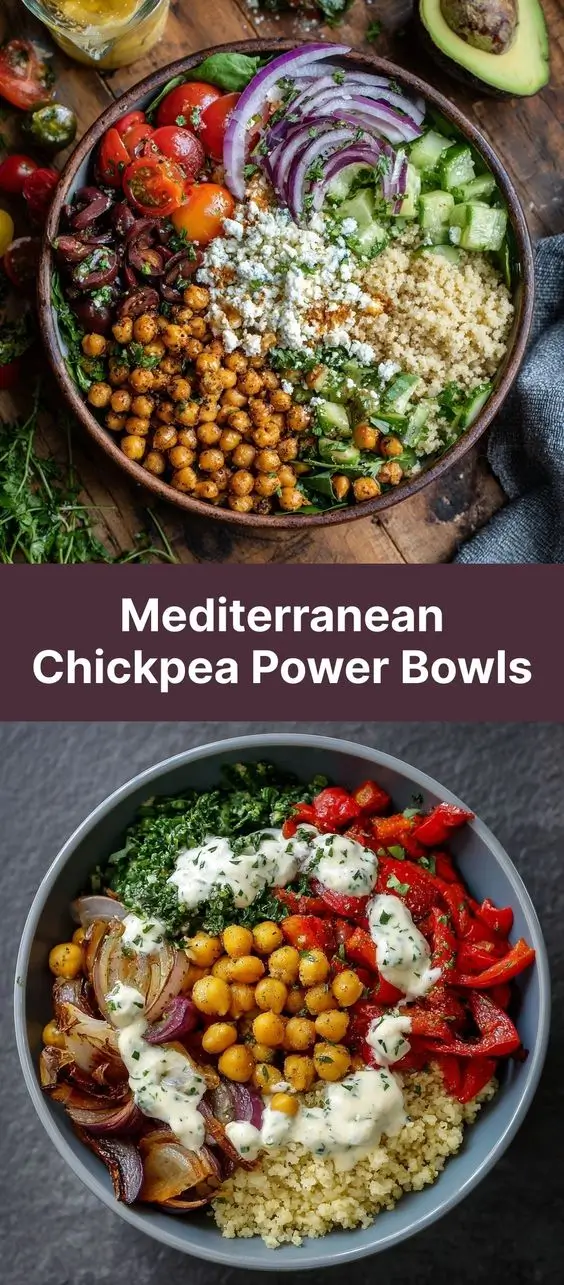
- Assemble the bowls: Start with a base of warm or room-temperature quinoa. Top evenly with roasted chickpeas, cucumber, tomatoes, red onion, olives, crumbled feta (if using), and fresh herbs. Drizzle generously with lemon-tahini dressing. Garnish with pomegranate arils for a festive touch.
- Serve immediately: Enjoy fresh for the best texture and flavor. If packing for lunch, store dressing separately and add just before eating.
Tips
- Rinse chickpeas well: This removes excess sodium and prevents mushiness, especially if roasting.
- Dry chickpeas thoroughly before roasting: Moisture is the enemy of crispiness—pat them very dry for optimal roasting results.
- Use warm quinoa: It absorbs dressing better and makes the bowl feel more comforting. However, chilled versions are great for meal prep.
- Brighten herbs just before serving: If storing leftovers, add fresh parsley and mint right before eating to maintain vibrancy.
- Balanced dressing: Taste the dressing and adjust—more lemon for acidity, more tahini for richness, more water for lightness.
- Batch-prep components: Cook quinoa, roast chickpeas, chop veggies, and make dressing up to 4 days in advance. Store separately in airtight containers in the fridge.
- Add greens: For extra nutrition, layer baby spinach, arugula, or kale at the bottom of the bowl.
- Toast grains: For deeper flavor, toast quinoa in a dry pan for 2–3 minutes before cooking.
Variations and Customizations
This recipe is incredibly adaptable based on dietary needs, flavor preferences, and what’s in season:
- Gluten-free: Naturally gluten-free as written—just ensure all packaged ingredients (like broth or tahini) are certified GF if necessary.
- Vegan: Omit feta or substitute with dairy-free alternatives like almond-based feta or avocado slices for creaminess.
- Low-carb option: Replace quinoa with cauliflower rice or shredded Brussels sprouts.
- Grain swaps: Use farro, bulgur, freekeh, or brown rice instead of quinoa for different textures and flavors.
- Additional proteins: Add grilled chicken, shrimp, falafel, or hard-boiled eggs to boost protein further.
- Roasted vegetables: Include roasted bell peppers, zucchini, eggplant, or sweet potatoes for added sweetness and heartiness.
- Different dressings: Try a yogurt-dill dressing (with Greek yogurt, lemon, garlic, dill), balsamic vinaigrette, or harissa-lemon blend for a spicy kick.
- Nutty crunch: Sprinkle with toasted pine nuts, slivered almonds, or pumpkin seeds for extra texture.
- Mediterranean meze style: Serve components family-style with warm pita bread, hummus, and tzatziki on the side.
- Spice it up: Add a pinch of smoked paprika, sumac, za’atar, or chili flakes to chickpeas or dressing.
Health Considerations and Nutritional Value
Mediterranean Chickpea Power Bowls align closely with one of the world’s most researched and recommended diets—the Mediterranean Diet—frequently ranked among the healthiest eating patterns by nutrition experts. Here’s why this bowl stands out:
- Heart-healthy fats: Olive oil, olives, and tahini provide monounsaturated fats that help lower LDL (“bad”) cholesterol and reduce cardiovascular risk.
- High fiber: With chickpeas and vegetables, each bowl offers 10–15 grams of fiber, promoting digestive health, satiety, and balanced blood sugar.
- Plant-based protein: Approximately 15–20 grams per serving, making it ideal for vegetarians and vegans seeking muscle repair and sustained energy.
- Antioxidant-rich: Tomatoes (lycopene), olives (oleuropein), lemon (vitamin C), and herbs (flavonoids) combat oxidative stress and inflammation.
- Low glycemic index: Complex carbs from quinoa and legumes release energy slowly, preventing spikes in insulin.
- Rich in vitamins and minerals: Excellent source of folate, iron, magnesium, potassium, vitamin K, and calcium (especially when feta is included).
- Supports weight management: High volume, low calorie density, and strong satiety signals help control appetite naturally.
- Gut-friendly: Prebiotic fibers from onions, garlic, and chickpeas feed beneficial gut bacteria, supporting microbiome diversity.
- Anti-inflammatory: Spices like cumin and ingredients like olive oil and lemon contribute to reducing chronic inflammation, a root cause of many diseases.
Note: Those with kidney issues should moderate intake of potassium-rich foods like tomatoes and chickpeas. Individuals sensitive to FODMAPs may need to limit onion and garlic; consider using garlic-infused oil and green tops of scallions instead.
Ingredients
- 1 cup quinoa, rinsed
- 2 cups water or vegetable broth
- 2 (15 oz) cans chickpeas, drained, rinsed, and patted dry
- 2 tbsp extra virgin olive oil (plus more for drizzling)
- Juice of 1½ lemons (divided)
- 1 tsp ground cumin
- 2 cloves garlic, minced (divided)
- Salt and freshly ground black pepper, to taste
- 1 English cucumber, diced
- 1 cup cherry tomatoes, halved
- ½ red onion, thinly sliced
- ½ cup Kalamata olives, pitted and halved
- ½ cup crumbled feta cheese (optional, omit for vegan)
- ¼ cup chopped fresh parsley
- ¼ cup chopped fresh mint
- ⅓ cup pomegranate arils (optional, for garnish)
For the Lemon-Tahini Dressing:
- ¼ cup tahini (well-stirred)
- Juice of 1 lemon (~3 tbsp)
- 1 clove garlic, minced
- 2 tbsp warm water
- 1 tbsp extra virgin olive oil
- ½ tsp maple syrup or honey (optional)
- Salt and pepper, to taste
Directions
- Cook quinoa: In a medium saucepan, bring 2 cups of water or broth to a boil. Add rinsed quinoa, reduce heat to low, cover, and simmer for 15 minutes. Turn off heat and let steam, covered, for 5 minutes. Fluff with a fork and set aside.
- Prepare chickpeas: Preheat oven to 400°F (200°C). On a baking sheet, toss chickpeas with 2 tbsp olive oil, juice of ½ lemon, 1 tsp cumin, 1 minced garlic clove, salt, and pepper. Spread in a single layer and roast for 20–25 minutes, flipping once, until golden and crisp. Let cool slightly.
- Chop vegetables: While quinoa and chickpeas cook, dice cucumber, halve tomatoes, slice red onion, pit and halve olives, and chop parsley and mint.
- Make dressing: In a small bowl, whisk tahini, lemon juice, remaining minced garlic, warm water, olive oil, maple syrup (if using), salt, and pepper. Whisk until smooth, adding more water 1 tsp at a time if too thick.
- Assemble bowls: Divide quinoa among 4 bowls. Top each with roasted chickpeas, cucumber, tomatoes, red onion, olives, feta (if using), and fresh herbs. Drizzle with dressing and sprinkle with pomegranate seeds if desired.
- Serve immediately, or refrigerate components separately for meal prep. Combine and dress just before eating.
FAQ
Can I make this ahead of time?
Yes! This bowl is perfect for meal prep. Cook quinoa and roast chickpeas up to 4 days in advance. Chop veggies and store in separate containers. Make dressing and keep refrigerated. Assemble bowls the night before or morning of, adding dressing just before eating to prevent sogginess.
How do I store leftovers?
Store assembled bowls (without dressing) in airtight containers in the refrigerator for up to 3 days. Keep dressing separate. Reheat gently in the microwave or enjoy cold—the flavors actually deepen when chilled!
Are chickpeas good for weight loss?
Yes! Chickpeas are high in protein and fiber, both of which increase feelings of fullness and reduce overall calorie intake. Their low glycemic index helps regulate appetite and energy levels.
Can I freeze this dish?
Freezing isn’t recommended for assembled bowls due to the fresh vegetables, which become soggy when thawed. However, you can freeze plain cooked quinoa or roasted chickpeas for up to 3 months. Thaw in the fridge before use.
Is this recipe kid-friendly?
Absolutely! Many children love the colorful ingredients and creamy dressing. You can reduce or omit red onion and garlic for milder flavor, and let kids build their own bowls for fun.
What can I use instead of tahini?
If tahini isn’t available, substitute with natural almond butter or cashew butter for a similar creamy texture. For a lighter option, use plain Greek yogurt mixed with lemon and garlic.
Can I use canned beans other than chickpeas?
Definitely! Try white beans (cannellini or navy), lentils, or even edamame for a different twist. Each brings unique texture and nutritional benefits.
Summary (in two lines)
Mediterranean Chickpea Power Bowls are a nutrient-packed, flavor-forward fusion of ancient tradition and modern wellness, featuring roasted chickpeas, quinoa, fresh vegetables, and zesty lemon-tahini dressing.
Ideal for meal prep, plant-based diets, and anyone craving a vibrant, satisfying meal that supports heart health, digestion, and sustained energy—all in one beautiful bowl.