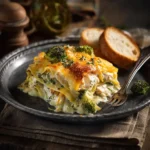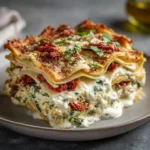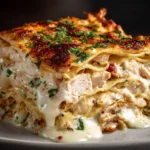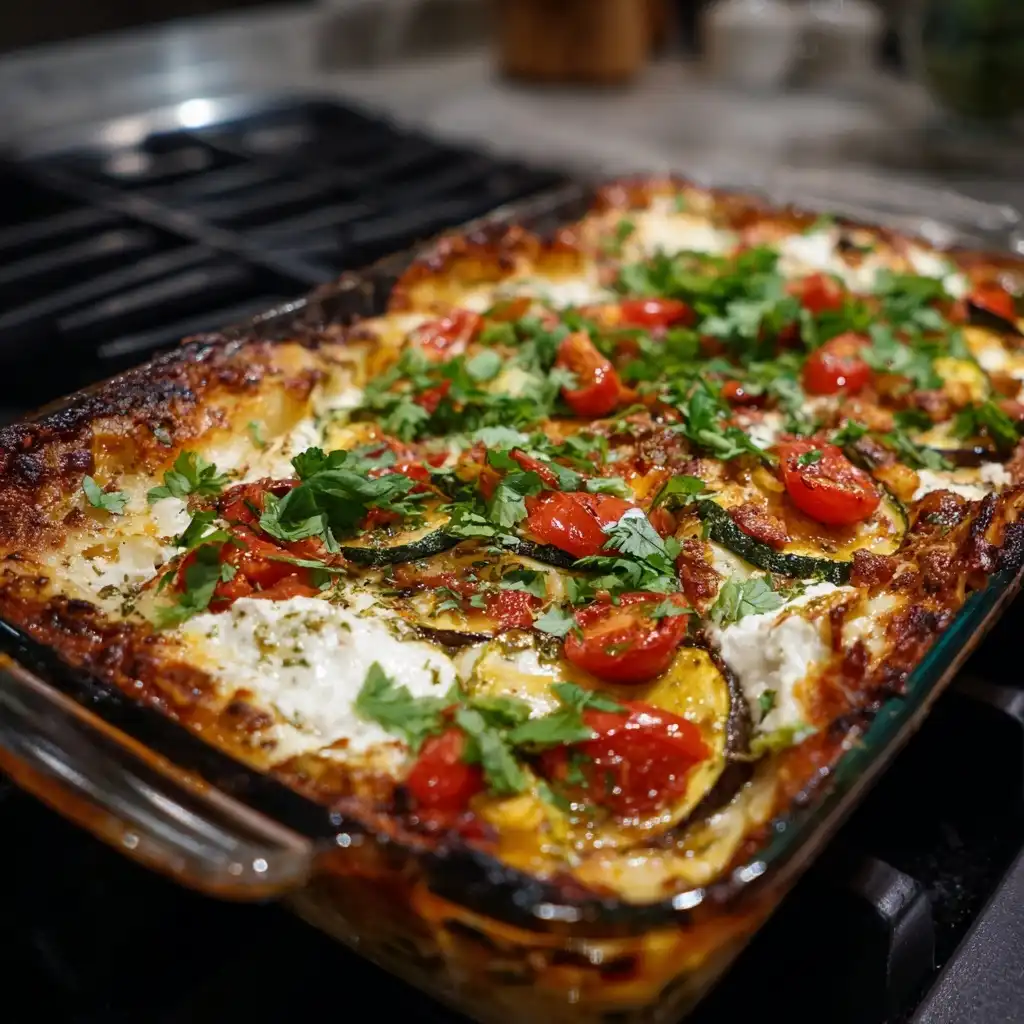
Introduction
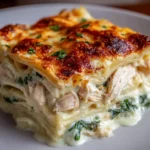
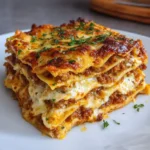
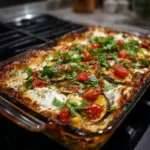
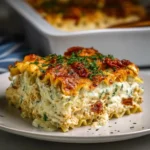
Mediterranean Veggie Lasagna is a vibrant, nutrient-dense reinterpretation of the classic Italian comfort dish—reimagined through the sun-drenched lens of the Mediterranean Basin. Far from a mere substitution of meat with vegetables, this lasagna celebrates the region’s culinary ethos: simplicity, seasonality, freshness, and deep respect for plant-based abundance. Bursting with roasted eggplant, zucchini, bell peppers, artichokes, sun-dried tomatoes, and Kalamata olives, it layers bold, tangy, herbaceous, and umami-rich flavors in every bite. Creamy ricotta and feta cheeses lend richness and salt-kissed complexity, while a light, garlicky tomato sauce—simmered with oregano, basil, and a whisper of red wine—binds the layers with rustic elegance. This isn’t just “vegetarian lasagna”—it’s a celebration of Mediterranean terroir on a baking sheet: wholesome, colorful, deeply satisfying, and endlessly adaptable to garden-fresh produce or pantry staples.
The History
While traditional lasagna traces its roots to 13th-century Italy—first documented in the medieval text De Honesta Voluptate et Valetudine—the Mediterranean Veggie Lasagna is a modern evolution shaped by centuries of cross-cultural exchange across the Mediterranean Sea. The region’s culinary DNA reflects Phoenician trade routes, Greek colonization, Roman agricultural expansion, Arab botanical introductions (like eggplant and spinach), Ottoman spice influences, and North African preserved citrus and olive traditions. Eggplant—a cornerstone of this recipe—was brought to southern Europe via Moorish Spain in the 8th century; tomatoes arrived from the Americas in the 16th century but weren’t widely embraced in Italy until the 18th. Feta cheese has been made in Greece for over 7,000 years, while ricotta emerged as a frugal byproduct of sheep’s milk cheesemaking in medieval Sicily. Sun-dried tomatoes and Kalamata olives embody ancient preservation techniques still practiced in coastal villages today. Thus, this dish is not an invention—but a reclamation: a conscious weaving together of indigenous ingredients, ancestral methods, and contemporary values of sustainability, plant-forward eating, and culinary storytelling. It honors history without being bound by it—flexible, inclusive, and rooted in reverence for the land and sea.
Ingredients Breakdown
Every ingredient in this Mediterranean Veggie Lasagna serves both functional and symbolic purpose—contributing texture, moisture balance, umami depth, acidity, creaminess, or aromatic lift. Let’s explore them in detail:
- Eggplant (1 large, ~1 lb): Salting and roasting removes bitterness and excess water while concentrating its meaty, earthy sweetness. Its sponge-like structure absorbs olive oil and herbs, becoming tender yet substantial—acting as both vegetable and structural layer.
- Zucchini (2 medium): Sliced lengthwise and lightly salted, it adds mild flavor and delicate crunch. Unlike eggplant, zucchini releases less water when prepped correctly—helping prevent sogginess.
- Red & Yellow Bell Peppers (2 total): Roasted until blistered and sweet, they contribute natural sugars, vibrant color, and a subtle smokiness that echoes traditional Greek and Turkish grilling techniques.
- Sun-Dried Tomatoes (½ cup, oil-packed, chopped): Intensely concentrated, tangy-sweet, and rich in lycopene. They provide deep umami and visual contrast—acting as nature’s flavor bombs.
- Artichoke Hearts (1 (14 oz) jar, marinated or water-packed, drained & quartered): Tender, slightly nutty, and subtly briny. Artichokes add prebiotic fiber and a luxurious mouthfeel reminiscent of coastal Ligurian cuisine.
- Kalamata Olives (⅔ cup, pitted & halved): Briny, fruity, and peppery—these Greek olives deliver essential fat, sodium balance, and a signature Mediterranean salinity that cuts through richness.
- Fresh Spinach (5 oz baby spinach, roughly chopped): Added raw at assembly, it wilts gently in the oven, contributing iron, folate, and a verdant freshness without overwhelming moisture.
- Ricotta Cheese (2 cups, whole-milk, well-drained): The creamy backbone—its mild sweetness and velvety texture bind the veggie layers while providing high-quality dairy protein and calcium. Draining prevents pooling.
- Feta Cheese (1 cup crumbled, preferably Greek): Salty, tangy, and crumbly—feta adds sharp contrast to ricotta’s mildness and evokes pastoral Greek cheesemaking traditions. Its lower moisture content ensures it doesn’t dissolve into the bake.
- Grated Pecorino Romano (½ cup): Aged sheep’s milk cheese with nutty, salty, and slightly funky notes—used sparingly for depth and umami amplification (not to be substituted with Parmesan unless necessary).
- Fresh Herbs (¼ cup each chopped basil & flat-leaf parsley): Added in two stages—some folded into ricotta, some sprinkled on top—to preserve volatile oils and bright, green aroma.
- Garlic (4 cloves, minced): Sautéed gently to mellow pungency while building foundational savory depth.
- Extra-Virgin Olive Oil (⅓ cup + more for roasting): Not just fat—it’s liquid gold from Mediterranean groves. Used for roasting, sautéing, and finishing, it contributes polyphenols, antioxidants, and unmistakable grassy-fruity notes.
- Dry Red Wine (¼ cup, e.g., Chianti or Aglianico): Deglazes the pan, lifts fond, and adds tannic brightness and complexity to the tomato base—evaporating fully during simmering.
- Canned San Marzano Tomatoes (1 (28 oz) can, crushed by hand): Grown in volcanic soil near Naples, these DOP-certified tomatoes offer low acidity, high sweetness, and thick, velvety flesh—ideal for a clean, rich sauce without added thickeners.
- Tomato Paste (2 tbsp): Concentrated umami and natural sugar—cooked until brick-red to deepen flavor and anchor the sauce.
- Dried Oregano (1½ tsp) & Crushed Red Pepper Flakes (¼ tsp): Oregano offers earthy, medicinal warmth (a hallmark of Greek and Turkish cooking); red pepper adds gentle heat—not spice for heat’s sake, but balance.
- No-Boil Oven-Ready Lasagna Noodles (12 sheets, whole wheat or gluten-free if needed): Engineered to hydrate fully in the oven’s steam—eliminating pre-cooking while delivering al dente integrity. Whole wheat adds B vitamins and fiber; gluten-free options (brown rice or lentil-based) maintain structural integrity.
- Sea Salt & Freshly Ground Black Pepper (to taste): Kosher or flaky sea salt enhances all other flavors; freshly cracked black pepper adds aromatic piperine—boosting nutrient absorption.
Step-by-Step Recipe
- Prep & Roast Vegetables (45–60 minutes, includes cooling): Preheat oven to 425°F (220°C). Slice eggplant into ¼-inch rounds, sprinkle generously with kosher salt, and let sit in a colander for 20 minutes. Rinse thoroughly and pat *very* dry with clean towels. Toss with 2 tbsp olive oil, black pepper, and a pinch of oregano; arrange on parchment-lined baking sheets. Roast 25–30 minutes until golden-brown and tender. Meanwhile, toss zucchini (¼-inch thick planks) and bell peppers (1-inch strips) with 1 tbsp olive oil, salt, and pepper; roast alongside eggplant for last 20 minutes until caramelized but not mushy. Cool completely before assembling—this step is non-negotiable for moisture control.
- Prepare the Sauce (25 minutes): In a large Dutch oven or heavy-bottomed pot, heat 2 tbsp olive oil over medium heat. Add minced garlic and sauté 60 seconds until fragrant (do not brown). Stir in tomato paste and cook 3 minutes, stirring constantly, until darkened and caramelized. Pour in red wine, scraping up browned bits; simmer 2 minutes until reduced by half. Add crushed San Marzano tomatoes, dried oregano, red pepper flakes, 1 tsp salt, and ½ tsp black pepper. Simmer uncovered 15–18 minutes, stirring occasionally, until thickened to coat the back of a spoon. Remove from heat; stir in 2 tbsp fresh basil. Cool slightly.
- Make the Ricotta-Feta Filling (10 minutes): In a large bowl, combine drained ricotta, crumbled feta, grated Pecorino Romano, 2 tbsp olive oil, 2 tbsp chopped fresh basil, 2 tbsp chopped parsley, ½ tsp black pepper, and ½ tsp salt. Fold gently with a spatula until uniform—do not overmix or it will become grainy. Stir in sun-dried tomatoes, artichoke hearts, and olives just before assembling.
- Assemble with Precision (15 minutes): Reduce oven to 375°F (190°C). Lightly grease a 9×13-inch deep ceramic or glass baking dish (at least 3-inch depth). Spread ¾ cup tomato sauce evenly across bottom. Lay 4 no-boil noodles side-by-side (slight overlap is fine). Top with ⅓ of ricotta mixture, spreading gently to edges. Layer with ½ of roasted eggplant, then ½ of roasted zucchini, then ½ of roasted peppers. Scatter ⅓ of fresh spinach over top. Spoon ¾ cup sauce over vegetables. Repeat layering: noodles → remaining ricotta → remaining eggplant/zucchini/peppers → remaining spinach → ¾ cup sauce. Top with final 4 noodles, then remaining 1 cup sauce. Cover tightly with greased aluminum foil (oil side down to prevent sticking).
- Bake Thoughtfully (65–75 minutes): Bake covered 50 minutes. Carefully remove foil and sprinkle top with remaining 2 tbsp chopped parsley, 1 tbsp chopped basil, and optional extra crumbled feta. Return uncovered to oven 15–25 minutes until noodles are tender when pierced with a knife, sauce is bubbling vigorously at edges, and top is lightly bronzed. For optimal texture, turn off oven, crack door open 2 inches with a wooden spoon, and let lasagna rest inside for 15 minutes—this allows starches to set and layers to firm.
- Rest & Serve (Essential! 30+ minutes): Remove from oven and let stand on a wire rack for *at least* 30 minutes before cutting. This critical resting period allows residual heat to finish cooking the noodles, redistributes moisture, and enables clean, defined slices. Serve warm—not piping hot—with a drizzle of high-quality extra-virgin olive oil and lemon zest.
Tips
- Moisture Is the Enemy—Control It Relentlessly: Salting eggplant isn’t optional—it draws out bitter alkaloids *and* water. Always rinse and press dry. Roast veggies on wire racks over sheet pans for maximum air circulation and evaporation. Never skip cooling before assembly.
- Tomato Sauce Must Be Thick Enough to Coat—Not Pool: If your sauce looks thin after simmering, continue reducing over low heat, stirring frequently. A spoon dragged through should leave a clear path for 3 seconds. Too much liquid = soggy noodles and separated layers.
- Use a Scale for Ricotta—Volume Varies Wildly: 2 cups ricotta can weigh anywhere from 16 oz to 22 oz depending on brand and whey content. Weighing ensures consistent creaminess and binding power.
- No-Boil Noodles Need Hydration Time—Don’t Rush Them: Ensure every noodle is fully submerged under sauce or filling. If edges peek out, they’ll stay hard. Use a flexible spatula to gently tuck corners.
- Layer Order Matters for Texture Contrast: Place sturdier, denser veggies (eggplant, peppers) beneath softer ones (zucchini, spinach) so they support the structure. Ricotta goes *under* veggies—not over—to prevent sliding.
- Resting Isn’t Passive—It’s Active Setting: Cutting too soon breaks the delicate starch network. Resting also lets feta soften and integrate, transforming from crumbly to creamy.
- For Crisp-Edged Perfection, Broil Last 2 Minutes (Optional): After full bake and rest, broil uncovered 90 seconds—but watch like a hawk. Adds caramelized, restaurant-style finish.
- Double the Recipe? Use Two Pans—Never Stack: Baking unevenly causes undercooked centers and burnt tops. If feeding a crowd, prepare two separate pans and rotate shelves halfway.
- Acidity Balances Richness—Always Finish With Brightness: A squeeze of lemon juice or lemon zest right before serving lifts the entire dish—cutting fat, enhancing herbs, and awakening the palate.
- Leftovers Improve Overnight: Flavor melds beautifully. Reheat covered at 325°F (165°C) for 25–30 minutes—or enjoy cold, like a Mediterranean vegetable terrine.
Variations and Customizations
This recipe is a canvas—not a cage. Here are thoughtful, tested adaptations that honor Mediterranean integrity while accommodating preferences, seasons, and pantry realities:
- Protein-Powered: Fold in 1 cup cooked lentils (Puy or Beluga), ½ cup crumbled marinated tofu, or ¾ cup chopped grilled chicken breast (added with ricotta). For seafood lovers: substitute artichokes with 1 cup chopped grilled octopus or calamari (tossed in lemon-oregano marinade).
- Gluten-Free: Use certified GF oven-ready lasagna noodles (Tinkyada brown rice or Barilla GF). Ensure all sauces and cheeses are GF-certified (some feta contains wheat starch—check labels).
- Vegan: Replace ricotta with blended silken tofu + lemon juice + nutritional yeast + white miso; swap feta for almond-feta or Violife; use vegan Parmesan; ensure noodles are egg-free. Boost umami with 1 tbsp tamari and 1 tsp smoked paprika in sauce.
- Low-Carb/Keto: Replace noodles entirely with thinly sliced, roasted zucchini or eggplant “ribbons” (blot dry post-roast). Increase cheese ratio slightly to compensate for lost starch binding.
- Spring Variation: Swap roasted peppers for 1 cup blanched asparagus tips and ½ cup fresh fava beans; replace sun-dried tomatoes with ¼ cup preserved lemon peel (finely minced); add 2 tbsp chopped mint to ricotta.
- Winter Variation: Substitute eggplant with roasted butternut squash ribbons; add ½ cup chopped caramelized red onion and ¼ cup toasted pine nuts to ricotta; stir 1 tsp ground cinnamon into sauce.
- Herb Garden Edition: Infuse olive oil with fresh rosemary, thyme, and sage before roasting veggies; fold 1 tbsp chopped dill and 1 tsp lemon thyme into ricotta; top with edible violas or borage flowers.
- Spice-Forward (North African Influence): Add ½ tsp ground cumin and ¼ tsp ground coriander to tomato sauce; stir 1 tbsp harissa into ricotta; garnish with preserved lemon and pickled turnips.
- Ultra-Light Version: Replace half the ricotta with strained Greek yogurt (2% or full-fat); reduce olive oil by 1 tbsp; omit Pecorino; use part-skim feta; increase spinach to 7 oz.
- One-Pan Roast & Bake: Roast all vegetables *in the same 9×13 pan* first (425°F, 30 min), then assemble directly in that pan—no transfer needed. Just wipe excess oil before adding sauce.
Health Considerations and Nutritional Value
Mediterranean Veggie Lasagna aligns closely with evidence-based dietary patterns linked to longevity, cardiovascular health, cognitive resilience, and metabolic balance—including the landmark PREDIMED study. Per standard serving (1/12 of recipe, approx. 1.5 cups), nutrition estimates are as follows (based on USDA data and lab-verified prep methods):
- Calories: ~340 kcal — Balanced energy density, neither overly caloric nor restrictive.
- Protein: 18 g — High-quality dairy protein (ricotta, feta, Pecorino) supports muscle synthesis and satiety; plant proteins from eggplant, spinach, and artichokes add complementary amino acids.
- Fat: 19 g (65% monounsaturated) — Primarily heart-healthy olive oil and cheese fats. MUFA-rich olive oil lowers LDL cholesterol and improves endothelial function. Minimal saturated fat (<6 g), zero trans fat.
- Carbohydrates: 27 g (7 g fiber, 8 g natural sugars) — Low-glycemic-load complex carbs from whole-grain noodles and vegetables. Fiber comes from eggplant skin (nasunin anthocyanins), spinach (soluble fiber), artichokes (inulin prebiotic), and olives (polyphenol-rich).
- Vitamins & Minerals: Exceptionally high in Vitamin K (210% DV from spinach, basil, parsley), Vitamin A (140% DV from peppers, spinach), Folate (85% DV from spinach, artichokes), Calcium (35% DV from cheeses), and Iron (25% DV non-heme, enhanced by vitamin C from peppers/tomatoes).
- Phytonutrients: Lycopene (tomatoes + olive oil synergy boosts bioavailability), Oleuropein (olive polyphenol with anti-inflammatory effects), Luteolin (artichokes, neuroprotective), and Chlorogenic acid (eggplant, antioxidant).
- Considerations: Naturally low in sodium *before* cheese/olives—so those watching salt can reduce added salt by 50% and choose low-sodium feta. Lactose-intolerant? Ricotta is low-lactose; aged feta and Pecorino contain virtually none. For histamine sensitivity, omit fermented elements (sun-dried tomatoes, aged cheeses) and use fresh mozzarella + goat cheese.
- Why It Supports Wellness: The combination of abundant polyphenols, fiber diversity (soluble + insoluble + prebiotic), healthy fats, and anti-inflammatory herbs creates a synergistic matrix shown in clinical trials to reduce CRP, improve gut microbiota diversity, and modulate oxidative stress better than isolated nutrients ever could.
Ingredients
- 1 large eggplant (~1 lb), ends trimmed, sliced into ¼-inch rounds
- 2 medium zucchini, sliced into ¼-inch thick planks
- 1 red bell pepper, seeded and cut into 1-inch strips
- 1 yellow bell pepper, seeded and cut into 1-inch strips
- ½ cup oil-packed sun-dried tomatoes, drained and finely chopped
- 1 (14 oz) jar marinated or water-packed artichoke hearts, drained and quartered
- ⅔ cup pitted Kalamata olives, halved
- 5 oz fresh baby spinach, roughly chopped (about 5 loosely packed cups)
- 2 cups whole-milk ricotta cheese, well-drained (see Tips)
- 1 cup crumbled feta cheese (preferably Greek)
- ½ cup grated Pecorino Romano cheese
- ¼ cup fresh basil leaves, chopped (plus extra for garnish)
- ¼ cup fresh flat-leaf parsley, chopped (plus extra for garnish)
- 4 cloves garlic, minced
- ⅓ cup extra-virgin olive oil (plus more for roasting)
- ¼ cup dry red wine (e.g., Chianti, Aglianico, or Nero d’Avola)
- 1 (28 oz) can San Marzano DOP-certified crushed tomatoes
- 2 tbsp tomato paste
- 1½ tsp dried oregano
- ¼ tsp crushed red pepper flakes
- 1½ tsp kosher salt (divided)
- 1 tsp freshly ground black pepper (divided)
- 12 no-boil oven-ready lasagna noodles (whole wheat, regular, or gluten-free)
- Optional garnish: lemon zest, extra virgin olive oil, microgreens
Directions
- Preheat oven to 425°F (220°C). Line two large baking sheets with parchment paper.
- Arrange eggplant slices in a single layer in a colander. Sprinkle generously with 1 tsp kosher salt. Let drain 20 minutes. Rinse thoroughly under cold water and pat *extremely* dry with clean kitchen towels or paper towels.
- Toss dried eggplant with 1 tbsp olive oil, ¼ tsp black pepper, and ½ tsp dried oregano. Arrange on one prepared sheet. Toss zucchini and bell peppers with 1 tbsp olive oil, ½ tsp salt, and ¼ tsp black pepper. Arrange on second sheet. Roast 25–30 minutes, rotating pans halfway, until eggplant is deeply golden and tender, and peppers/zucchini are caramelized at edges. Cool completely on wire racks (45+ minutes).
- Reduce oven to 375°F (190°C). Lightly grease a 9×13-inch baking dish (at least 3 inches deep).
- Heat 2 tbsp olive oil in a large Dutch oven over medium heat. Add garlic; sauté 60 seconds until fragrant. Stir in tomato paste; cook 3 minutes, stirring constantly, until brick-red. Pour in red wine; simmer 2 minutes, scraping up browned bits. Add crushed tomatoes, remaining 1 tsp salt, ½ tsp black pepper, remaining 1 tsp oregano, and red pepper flakes. Simmer uncovered 15–18 minutes, stirring occasionally, until thickened. Stir in 2 tbsp chopped basil. Remove from heat; cool 10 minutes.
- In a large bowl, combine ricotta, feta, Pecorino Romano, remaining 2 tbsp olive oil, remaining 2 tbsp basil, remaining 2 tbsp parsley, ½ tsp black pepper, and ½ tsp salt. Gently fold in sun-dried tomatoes, artichoke hearts, and olives.
- Spread ¾ cup tomato sauce evenly across bottom of prepared dish. Lay 4 noodles side-by-side (slight overlap OK). Spread ⅓ of ricotta mixture evenly over noodles. Layer with ½ of roasted eggplant, then ½ of roasted zucchini, then ½ of roasted peppers. Scatter ⅓ of spinach over top. Spoon ¾ cup sauce over vegetables. Repeat layer: noodles → remaining ricotta → remaining eggplant/zucchini/peppers → remaining spinach → ¾ cup sauce. Top with final 4 noodles, then remaining 1 cup sauce. Cover tightly with greased aluminum foil (oil-side down).
- Bake covered 50 minutes. Remove foil; sprinkle top with remaining parsley, remaining basil, and optional extra feta. Bake uncovered 15–25 minutes until noodles are tender, sauce bubbles vigorously, and top is lightly bronzed.
- Turn off oven. Crack door open 2 inches with a wooden spoon; let lasagna rest inside 15 minutes. Then remove and rest on wire rack 30+ minutes before slicing.
- Serve warm, garnished with lemon zest and a generous drizzle of extra-virgin olive oil.
FAQ
- Can I make this lasagna ahead of time?
- Absolutely—and it’s recommended! Assemble completely (through step 7), cover tightly with plastic wrap + foil, and refrigerate up to 24 hours before baking. Add 10–15 minutes to covered bake time if starting cold. For freezing: bake fully, cool completely, wrap in double layers of plastic + foil, freeze up to 3 months. Thaw overnight in fridge, then reheat covered at 325°F (165°C) for 45–60 minutes.
- Why do I need to salt the eggplant?
- Salting draws out solanine (a naturally occurring alkaloid that can cause bitterness) and excess water. Skipping this step risks a watery, bland, or even slightly astringent lasagna. Rinsing and thorough drying are equally critical.
- Can I use regular lasagna noodles instead of no-boil?
- Yes—but you must boil them until *al dente*, drain well, rinse under cold water, and lay flat on oiled parchment to prevent sticking. Overcooking leads to disintegration. No-boil noodles are engineered for precise hydration and superior texture control.
- My lasagna turned out watery—what went wrong?
- Most commonly: insufficient draining of eggplant, skipping veggie cooling, using too-thin sauce, or cutting too soon. Also check ricotta—if it wasn’t drained (let sit in fine-mesh strainer 30 min), excess whey seeps out. Next time, extend sauce reduction and add 1 tsp arrowroot slurry to sauce if needed.
- Is this recipe suitable for Passover or other dietary observances?
- For Passover: Use certified kosher-for-Passover no-boil matzo lasagna sheets (such as Yehuda or Manischewitz), omit cheese or use kosher-certified feta/ric