Introduction
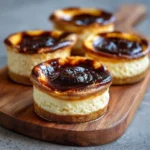
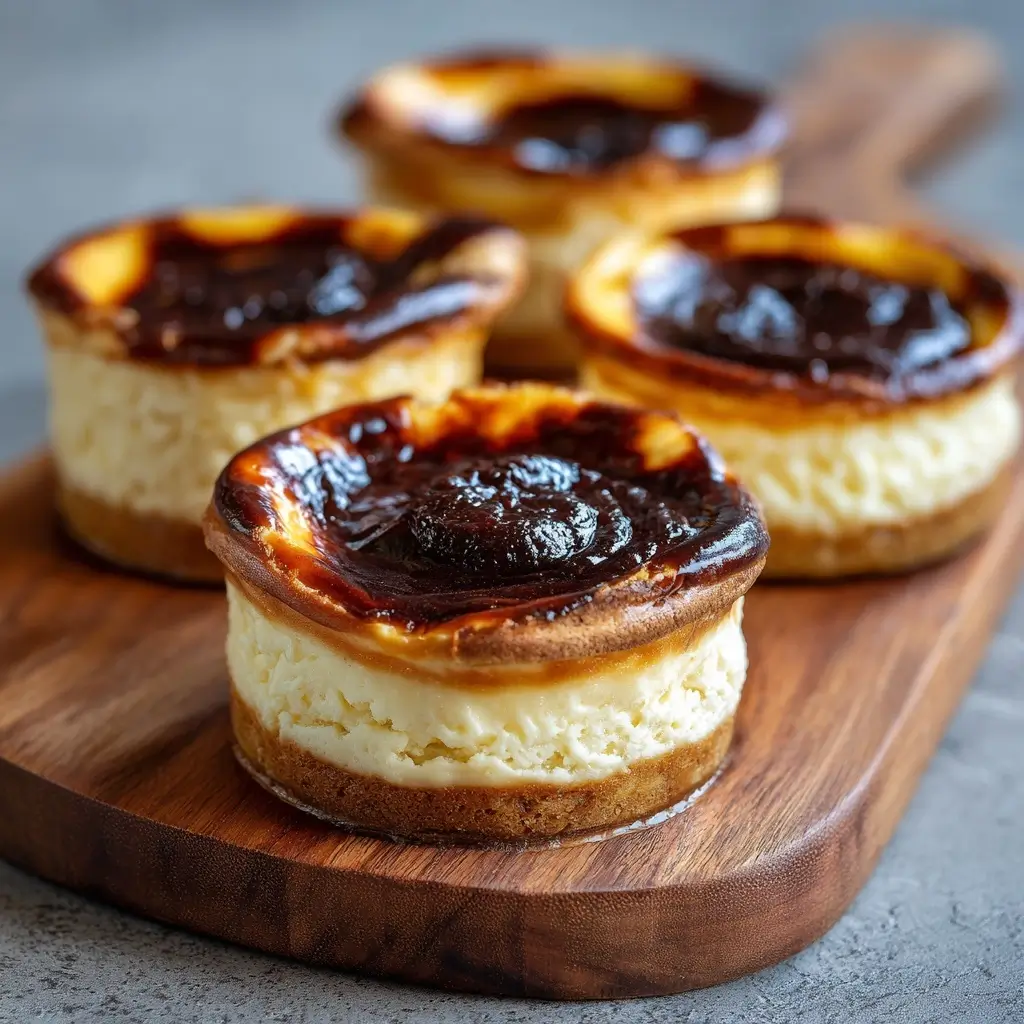
Mini Burnt Basque Cheesecake—elegantly rustic, irresistibly creamy, and deceptively simple—is a scaled-down, portion-perfect homage to the legendary Spanish dessert that took the global baking world by storm. Born in the Basque Country of northern Spain, this cheesecake defies conventional expectations: no water bath, no crust, no delicate handling—just bold caramelization, lush texture, and deep, complex flavor concentrated into petite, handheld delights. Each mini version delivers the signature contrast in one bite: a deeply bronzed, crackled, almost charred exterior giving way to an impossibly silky, molten-center interior reminiscent of crème brûlée meets New York cheesecake. Its minimalist ingredient list belies its sophisticated depth, while its forgiving, oven-tolerant method makes it ideal for home bakers of all skill levels—even those who swear they “can’t bake.” Whether served warm with a dusting of flaky sea salt, chilled with seasonal compote, or enjoyed straight from the fridge as an elegant afternoon treat, Mini Burnt Basque Cheesecake is more than a dessert—it’s an edible experience rooted in tradition, elevated by technique, and perfectly sized for sharing (or not).
The History
The Burnt Basque Cheesecake—known locally as Tarta de Queso al Estilo Vasco—originated in the late 1990s at La Viña, a family-run restaurant in San Sebastián, a coastal gem in Spain’s culturally rich Basque region. Chef Santiago Rivera, inspired by both French fromage blanc traditions and local dairy excellence—including the prized Idiazábal sheep’s milk cheese—sought to create a dessert that celebrated simplicity, terroir, and fearless technique. Rather than masking imperfections, he embraced them: high heat, minimal structure, and intentional over-baking transformed what might be considered “burnt” elsewhere into a hallmark of authenticity and craftsmanship. The cake’s dramatic, mahogany-dark crust wasn’t a mistake—it was the soul of the dessert. For over two decades, La Viña served it unadorned, straight from the oven, cut into generous wedges and passed on paper plates—a humble presentation that only heightened its allure. It wasn’t until the mid-2010s—fueled by viral social media posts, food blogs, and features in Saveur, Food & Wine, and The New York Times—that the world caught on. Chefs across Europe, Asia, and North America began adapting the recipe, experimenting with textures, temperatures, and presentations. The “mini” evolution followed naturally: pastry chefs in Tokyo and Barcelona started using individual ramekins and muffin tins to refine portion control, reduce bake time, improve textural consistency, and enhance visual appeal—especially for tasting menus, bakeries, and modern café service. Today, Mini Burnt Basque Cheesecake stands as a global symbol of culinary minimalism done right: where restraint, fire, and quality ingredients converge to produce something profoundly comforting and undeniably luxurious.
Ingredients Breakdown
Every element in Mini Burnt Basque Cheesecake serves a precise functional and sensory role—there are no “fillers,” no “just because” additions. Understanding the science and story behind each ingredient elevates both execution and appreciation:
- Cream Cheese (Full-Fat, Block Style): The backbone of structure and tang. Must be at true room temperature (68–72°F) and softened *without melting*. Brands like Philadelphia, Kraft, or organic European imports (e.g., President or Lurpak) work best—avoid whipped, low-fat, or spreadable versions, which contain stabilizers and excess air that compromise density and browning.
- Heavy Cream (36–40% Milk Fat): Provides unctuousness, moisture retention, and facilitates emulsification. Ultra-pasteurized cream is acceptable, but pasteurized (not ultra-pasteurized) yields slightly better coagulation and richer mouthfeel. Avoid half-and-half or whipping cream (<30% fat), which lack sufficient fat for proper set and browning.
- Granulated Sugar: More than just sweetness—it lowers the coagulation temperature of egg proteins, delays curdling, enhances browning (via caramelization and Maillard reaction), and contributes to the glossy surface sheen. Caster sugar dissolves faster but isn’t essential; avoid brown sugars or liquid sweeteners, which introduce unwanted moisture and acidity.
- Eggs (Large, USDA Grade A): Act as binders and leaveners. Yolks add richness and emulsifying lecithin; whites contribute structure and subtle lift. Always use eggs straight from the fridge *only if your kitchen is cool*—otherwise, bring them to room temp (15–20 min) for uniform incorporation. Cold eggs can cause lumps and uneven texture.
- Sour Cream or Crème Fraîche (Optional but Highly Recommended): Adds bright acidity to balance the fat, improves tenderness by inhibiting gluten formation (even though there’s no flour), and enhances browning through lactose content. Crème fraîche (10–15% fat, pH ~4.5) is superior to sour cream (18–20% fat, pH ~4.2) due to its milder acidity and velvety stability under heat.
- Unsalted Butter (Melted & Cooled): Not traditional in classic Basque versions—but included in many refined mini adaptations to boost richness, improve surface gloss, and encourage deeper crust formation via milk solids browning. Clarified butter may be used for higher smoke point, but whole butter contributes more flavor.
- Vanilla Extract (Pure, Madagascar Bourbon): Enhances aromatic complexity without overpowering. Alcohol-based extract (not imitation or paste) ensures even dispersion and thermal stability. Seeds from a fresh vanilla bean can be added for flecks and intensified fragrance.
- Sea Salt (Flaky or Fine, Uniodized): Critical for flavor balancing—reduces perceived sweetness, heightens dairy notes, and sharpens the burnt-sugar nuance. Maldon or Fleur de Sel added *after baking* provides textural contrast; fine grey salt blended *into the batter* ensures uniform seasoning.
- Lemon Zest (Optional, Microplaned): A tiny amount (½ tsp per batch) introduces volatile citrus oils that lift the richness and accentuate the caramelized notes without adding liquid or acidity.
Notably absent—and intentionally so—are flour, cornstarch, gelatin, lemon juice, or any stabilizer. Authenticity lies in the purity of dairy, egg, and sugar transformed by controlled thermal stress.
Step-by-Step Recipe
- Prep Your Tools & Space: Line a standard 12-cup muffin tin with *extra-long* parchment paper liners (or use 4-oz ramekins). Cut twelve 5″x5″ squares of parchment; fold each in half diagonally to form a triangle, then roll into a cone shape and press firmly into each cup—letting 1.5 inches extend above the rim. This ensures easy removal and supports dramatic crust formation. Preheat oven to 425°F (220°C) with rack positioned in the *center*. Place a heavy-duty baking sheet on the lowest rack to preheat—this creates radiant bottom heat critical for even browning.
- Soften & Prep Dairy: Remove cream cheese from fridge 2+ hours ahead. Cut into ½-inch cubes and let sit at room temp (68–72°F) until yielding to gentle finger pressure—no shiny oil separation. Measure heavy cream and sour cream; leave at room temp. Melt unsalted butter in a small saucepan over low heat; cool to lukewarm (105°F max).
- Cream the Base: In a large heatproof bowl (or stand mixer bowl), combine softened cream cheese and granulated sugar. Using a silicone spatula (not electric mixer yet), mash and fold for 2 minutes until homogenous and slightly glossy. This mechanical aeration prevents overmixing later. Add cooled melted butter and vanilla; fold until fully incorporated.
- Incorporate Liquids Gradually: Whisk eggs in a separate bowl until just broken—no foam. Add sour cream and heavy cream to the cheese mixture; fold gently with spatula until smooth. Then, add eggs *one at a time*, folding *just until disappeared* after each addition. Overmixing at this stage incorporates excess air, causing cracks or puffing instead of dense, custardy sinkage.
- Strain & Rest (Non-Negotiable Step): Pour batter through a fine-mesh sieve into a clean bowl—removing any undissolved sugar granules or lumps. Cover surface directly with plastic wrap and refrigerate for *minimum 30 minutes, up to 2 hours*. This hydrates proteins, cools the batter (preventing premature egg coagulation), and allows air bubbles to rise and pop—resulting in smoother, denser cakes.
- Portion & Bake: Remove batter from fridge. Gently stir once with spatula to recombine (do not whip). Fill each parchment-lined cup *¾ full* (≈¼ cup / 60g per mini cake). Tap tin sharply 3x on counter to release trapped air. Place tin on preheated baking sheet. Bake at 425°F for 14–17 minutes—until tops are deeply bronzed, puffed slightly, and edges appear dry and cracked, with faint wisps of smoke rising from corners. Internal temp should read 170–175°F when probed with instant-read thermometer at center (not touching liner).
- Cool Strategically: Immediately remove tin from oven and place on wire rack. Let mini cakes cool *in the tin* for exactly 15 minutes—this allows residual heat to finish setting interiors while preventing collapse. Then, carefully lift each cake by parchment “handle” and transfer to rack. Cool completely (1.5–2 hours) before serving chilled—or serve warm after 30 minutes for molten-center effect.
- Chill & Mature (Highly Recommended): For optimal texture and flavor integration, cover cooled cakes loosely with parchment and refrigerate *minimum 6 hours, ideally overnight*. The cold rest firms the custard, deepens the caramel notes, and harmonizes all elements. Do not freeze unless vacuum-sealed—ice crystals disrupt the microstructure.
Tips
- Oven Calibration is Everything: Use an independent oven thermometer—many ovens run hot or cold. A variance of ±25°F drastically affects crust development and interior doneness. If your cakes brown too fast, reduce temp to 415°F; if pale and under-baked at 17 min, increase to 430°F next batch.
- Parchment Matters: Standard muffin liners *will fail*. Use unbleached, food-grade parchment with high heat tolerance (up to 425°F+). Wax paper melts; silicone liners inhibit browning; foil tears. Make your own cones—they’re cheap, effective, and give perfect height clearance.
- No Peek Policy: Do not open the oven door during the first 12 minutes. Sudden temperature drops cause uneven rising and fissuring. Trust the timer and visual cues.
- Altitude Adjustments: Above 3,000 ft? Reduce sugar by 1 tbsp per batch, increase cream cheese by 1 oz, and bake at 435°F for 12–14 min—lower air pressure accelerates evaporation and browning.
- Consistent Batter Temp: If your kitchen exceeds 75°F, chill mixing bowl and spatula beforehand. Warm batter separates faster and browns prematurely.
- Perfect Release Every Time: After cooling, run a thin offset spatula *between* parchment and cake base—not under the cake—to loosen. Gently twist parchment upward while supporting base with other hand.
- Rescue Under-Baked Centers: If centers jiggle excessively after cooling, return to 325°F oven for 4–5 minutes—then chill again. Overbaked? Brush tops lightly with warm apricot glaze to restore sheen and mask dryness.
- Batch Baking Efficiency: You can bake two tins simultaneously—place one on center rack, one on upper rack—and rotate halfway through. Ensure 2-inch clearance around tins for airflow.
- Storage Wisdom: Keep refrigerated in airtight container with parchment layers between cakes. Best within 5 days. To refresh day-old cakes: warm 12 sec in microwave or 3 min in 300°F oven.
Variations and Customizations
While respecting the spirit of the original, countless creative interpretations honor regional ingredients, dietary needs, and seasonal inspiration—each preserving the core textural dichotomy:
- Basque-Inspired Smoked Sea Salt: Blend 1 tsp finely ground smoked paprika + 1 tsp flaky sea salt + ½ tsp dried thyme. Sprinkle generously over cakes *immediately after removing from oven*.
- Manchego & Honeycomb: Fold ¼ cup finely grated aged Manchego into batter; top baked cakes with crushed honeycomb and a drizzle of wildflower honey.
- Espresso-Cardamom: Dissolve 1 tbsp instant espresso powder + 1 tsp freshly ground cardamom into warm cream before adding to batter. Finish with dark chocolate shavings and orange zest.
- Berry-Infused Swirl: Gently swirl 1 tsp seedless raspberry or blackberry coulis into each cup *before baking*—creates stunning marbled contrast and bright acidity.
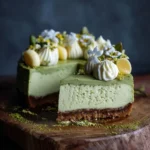
- Matcha-Yuzu: Whisk 1 tbsp ceremonial-grade matcha + 1 tsp yuzu zest into batter. Top with yuzu curd and white sesame brittle.
- Maple-Bourbon Pecan: Replace 2 tbsp sugar with dark maple syrup; add 1 tbsp bourbon and 2 tbsp toasted pecan pieces. Garnish with candied pecans.
- Dairy-Free Adaptation: Use full-fat coconut cream (chilled, solid part only), soaked raw cashews (blended ultra-smooth), coconut sugar, and flax “eggs.” Requires longer chill time and lower bake temp (375°F for 20 min). Texture will be softer but still luxuriously creamy.
- Gluten-Free & Keto: Naturally GF! For keto, substitute erythritol + monk fruit blend (1:1 sugar ratio) and add 1 tbsp powdered psyllium husk to stabilize. Reduce bake time by 2 min.
- Herbes de Provence & Lavender: Infuse cream with 1 tsp dried lavender + ½ tsp Herbes de Provence (steep 20 min, strain). Add 1 drop food-grade lavender oil to batter.
- Spiced Rum Raisin: Soak ⅓ cup golden raisins in 2 tbsp spiced rum for 1 hour; drain well and fold in. Top with rum caramel drizzle.
Pro Tip: Always test new variations in *one* mini cake first—adjust sugar, fat, or liquid ratios based on results before scaling.
Health Considerations and Nutritional Value
A single Mini Burnt Basque Cheesecake (approx. 60g, made with full-fat ingredients) contains roughly:
- Calories: 220–250 kcal
- Total Fat: 18–21g (11–13g saturated)
- Carbohydrates: 12–14g (12–14g sugars)
- Protein: 4–5g
- Calcium: ~55mg (6% DV)
- Vitamin A: ~120mcg RAE (13% DV)
Nutritional Context & Mindful Enjoyment:
This dessert is intentionally indulgent—rich in saturated fat and simple carbohydrates—and best appreciated as an occasional, mindful treat rather than a daily staple. However, it offers notable nutritional merits when viewed holistically: high-quality animal fats support hormone production and nutrient absorption (especially fat-soluble vitamins A, D, E, K); the protein content aids satiety; and the absence of refined grains, gluten, gums, or artificial additives makes it suitable for many elimination diets (e.g., Paleo, Whole30-compliant if using compliant cream cheese). For blood sugar considerations, pairing with a fiber-rich element—like a small handful of roasted walnuts or mixed berries—slows glucose absorption. Those managing cholesterol should note that recent research (including the 2023 American Heart Association Scientific Statement) emphasizes that dietary cholesterol has minimal impact on serum cholesterol for most people; saturated fat moderation remains more clinically relevant. For lactose-sensitive individuals, extended chilling (24+ hours) allows natural lactase enzymes in dairy to partially break down lactose, improving digestibility. Vegan or low-sugar versions exist but sacrifice the authentic Maillard-driven depth—the trade-off is texture, browning, and mouth-coating richness inherent to traditional preparation.
Ingredients
- 16 oz (454g) full-fat cream cheese, cubed & room temperature
- ¾ cup (150g) granulated sugar
- 1 large egg + 1 large egg yolk (reserve whites for another use)
- ⅔ cup (160ml) heavy cream (36–40% fat)
- ⅓ cup (80g) full-fat sour cream or crème fraîche
- 2 tbsp (30g) unsalted butter, melted & cooled
- 1½ tsp pure vanilla extract
- ½ tsp fine sea salt
- ¼ tsp freshly grated lemon zest (optional but recommended)
- Extra-long parchment paper squares (5″x5″) for lining
Directions
- Preheat oven to 425°F (220°C). Position rack in center. Place heavy baking sheet on lowest rack to preheat.
- Line a 12-cup muffin tin with parchment paper cones—press firmly into cups, leaving 1.5 inches above rim.
- In large bowl, mash cream cheese and sugar with spatula until smooth and glossy (~2 min). Stir in cooled melted butter and vanilla.
- Add sour cream and heavy cream; fold until combined. Add egg and yolk one at a time, folding just until incorporated.
- Strain batter through fine-mesh sieve into clean bowl. Cover surface with plastic wrap. Chill 30–120 minutes.
- Stir chilled batter once. Fill each parchment cup ¾ full (≈60g). Tap tin sharply 3 times.
- Bake 14–17 minutes, until deeply bronzed, puffed, and cracked—with internal temp 170–175°F.
- Cool in tin 15 minutes. Lift out by parchment. Cool completely on rack (1.5–2 hrs).
- For best texture & flavor, refrigerate uncovered 6+ hours or overnight before serving.
- Serve chilled or slightly warmed. Garnish with flaky sea salt, seasonal fruit, or edible flowers.
FAQ
- Why does my mini cheesecake crack excessively or sink dramatically?
- Overmixing after adding eggs incorporates too much air—leading to puffing then collapse. Also, opening oven too early or cooling too rapidly causes thermal shock. Always chill batter, avoid peeking, and cool gradually in tin.
- Can I make these ahead for an event?
- Absolutely—and you should! They peak in flavor and texture after 12–24 hours refrigeration. Store covered airtight for up to 5 days. Bring to cool room temp 20 min before serving.
- My crust isn’t dark enough—even though I baked as directed.
- Ensure your oven is truly at 425°F (verify with thermometer). Use convection *off*—it dries out the surface too fast. Try placing tin directly on preheated baking sheet. Also, check cream cheese brand—higher moisture content yields paler crusts.
- Can I use silicone muffin pans?
- Not recommended. Silicone insulates heat, inhibiting crust formation and extending bake time unpredictably. Metal tins conduct heat evenly and promote reliable browning.
- What if I don’t have ramekins or a muffin tin?
- You can bake one large Basque cheesecake in a 6-inch springform pan—adjust time to 55–65 min at 425°F. Or use oven-safe ceramic custard cups (4–6 oz size) placed on baking sheet.
- Why strain the batter?
- Straining eliminates undissolved sugar granules and micro-lumps that could become visible “gritty” spots or uneven browning points. It also removes air bubbles for flawless texture.
- Can I freeze Mini Burnt Basque Cheesecakes?
- Yes—with caveats. Freeze *fully chilled* cakes individually wrapped in parchment + freezer paper, sealed in zip-top bag. Thaw overnight in fridge. Texture remains >90% intact, though surface sheen may dull slightly.
- My batter looks curdled after adding cold cream—what do I do?
- Don’t panic. This is temporary emulsion failure caused by temperature mismatch. Continue folding gently—warmth from friction and fat content will re-emulsify it within 30–60 seconds. Never add cold liquids to cold cheese—always bring all dairy to room temp.
- Is there a lower-sugar version that still works?
- Yes—reduce sugar to ⅔ cup and add 1 tsp inulin or allulose for bulk and browning aid. Expect milder caramel notes and slightly looser set. Avoid stevia-only blends—they impart bitterness under high heat.
- What’s the difference between “burnt” and “over-baked”?
- “Burnt” refers to intentional, even Maillard browning of milk solids and sugars on the surface—rich, nutty, complex. “Over-baked” means dry, chalky interiors with bitter, acrid blackened patches. True Basque crust is dark brown, not black—and never tastes acrid.
Summary
Mini Burnt Basque Cheesecake is a masterclass in minimalist luxury—transforming just six core ingredients through fearless, high-heat baking into petite, crackled wonders with molten, cloud-like centers and deeply nuanced, caramelized exteriors. Born in San Sebastián and perfected in miniature form, it celebrates imperfection as artistry, demands no special equipment, and rewards patience with unforgettable texture, balance, and depth.
Whether you’re a novice seeking foolproof elegance or a seasoned baker chasing that elusive harmony of fire and cream, this recipe delivers consistent magic—one irresistible, shareable (but rarely shared) bite at a time.