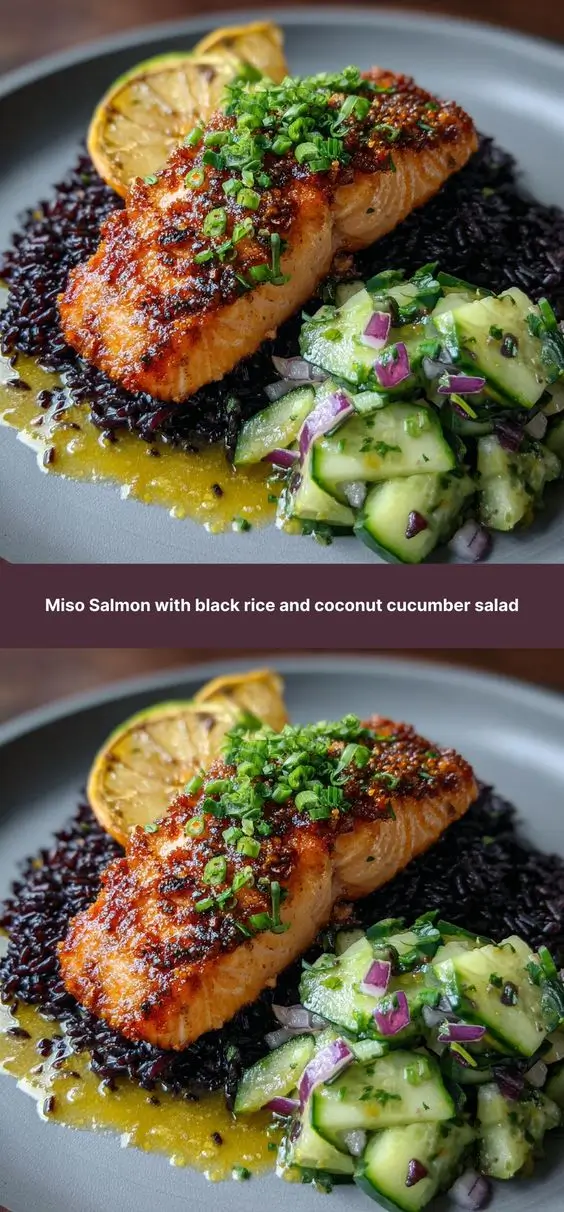
Miso Salmon with Black Rice and Coconut Cucumber Salad
Indulge in a harmonious blend of rich umami, nutty grains, and refreshing tropical flavors with this exquisite dish: Miso Salmon served atop a bed of earthy black rice and accompanied by a vibrant coconut cucumber salad. This recipe brings together the boldness of Japanese cuisine with the light, creamy essence of Southeast Asian ingredients to create a meal that’s as visually stunning as it is nourishing. Whether you’re cooking for a special dinner or simply treating yourself to a gourmet weeknight experience, this dish delivers on every level—flavor, texture, and nutritional balance.
The History
The roots of miso salmon trace back to traditional Japanese culinary practices, where miso—a fermented soybean paste—has been used for centuries to preserve and enhance the flavor of fish. Miso glaze was originally developed as a method of fermentation and preservation, particularly in coastal regions where seafood was abundant. Over time, the sweet-savory miso marinade became a celebrated technique, especially when applied to fatty fish like salmon. The pairing of miso with salmon gained international acclaim in the late 20th century, particularly through Japanese fusion cuisine in North America.
Black rice, also known as forbidden rice, originates from ancient China, where it was once reserved exclusively for Chinese emperors due to its rarity and high nutritional value. Its deep purple hue comes from anthocyanins—powerful antioxidants also found in blueberries. In recent years, black rice has become a staple in health-conscious kitchens worldwide, prized for its nutty flavor and chewy texture.
Meanwhile, the coconut cucumber salad draws inspiration from Thai and Vietnamese culinary traditions, where fresh vegetables are often tossed with lime, herbs, and coconut milk or toasted coconut for a cooling contrast to spicy or rich dishes. By combining these three elements—miso salmon, black rice, and coconut cucumber salad—we create a globally inspired, nutritionally balanced plate that honors tradition while embracing modern tastes.
Ingredients Breakdown
Miso Salmon:
- 4 fresh salmon fillets (about 6 oz each), skin-on preferred
- 1/3 cup white or yellow miso paste (ensure it’s not already seasoned)
- 3 tablespoons mirin (sweet rice wine)
- 3 tablespoons sake or dry white wine (optional, but enhances depth)
- 2 tablespoons granulated sugar or honey
- 1 tablespoon rice vinegar
- 1 teaspoon grated fresh ginger
- 1 small garlic clove, minced
Black Rice:
- 1 cup organic black rice (also called forbidden rice)
- 2 cups water or vegetable broth
- Pinch of sea salt
- 1 strip of kombu (optional, for added minerals and digestibility)
Coconut Cucumber Salad:
- 2 medium English cucumbers, thinly sliced or julienned
- 1/2 cup unsweetened shredded coconut (toasted if desired)
- 1/4 cup chopped fresh cilantro or mint (or a mix)
- 1 red chili, finely sliced (optional, for heat)
- 1/4 cup coconut milk (full-fat for creaminess or light for lower calories)
- 1 tablespoon lime juice (freshly squeezed)
- 1 teaspoon rice vinegar
- 1 teaspoon agave, maple syrup, or sugar (to balance acidity)
- Pinch of salt
Step-by-Step Recipe
Preparing the Miso Salmon
- In a small saucepan over low heat, combine miso paste, mirin, sake (if using), sugar, rice vinegar, grated ginger, and minced garlic. Whisk continuously until the mixture is smooth and the sugar dissolves completely. Do not boil—keep the temperature gentle to preserve the delicate flavors. Remove from heat and let cool to room temperature.
- Pat the salmon fillets dry with paper towels. Place them in a shallow glass or ceramic dish, skin-side down.
- Pour the cooled miso marinade evenly over the salmon, ensuring each piece is fully coated. Use a spoon to spread the marinade thickly. Cover with plastic wrap and refrigerate for at least 6 hours, preferably overnight. The longer it marinates, the deeper the flavor penetration.
- When ready to cook, preheat your oven to 400°F (200°C). Line a baking sheet with parchment paper or lightly oil it to prevent sticking.
- Remove salmon from the marinade (do not discard leftover marinade yet) and place skin-side down on the baking sheet. Reserve the extra marinade.
- Bake for 12–15 minutes, depending on thickness. For a caramelized finish, brush the tops with reserved marinade halfway through and broil for the final 2–3 minutes, watching closely to avoid burning.
- Salmon is done when it flakes easily with a fork but remains moist inside. Internal temperature should reach 125°F (52°C) for medium-rare or 135°F (57°C) for medium.
Cooking the Black Rice
- Rinse the black rice under cold water until the water runs clear. This removes excess starch and prevents gumminess.
- In a medium saucepan, combine rinsed black rice, water or broth, salt, and kombu (if using). Bring to a boil over high heat.
- Once boiling, reduce heat to low, cover tightly, and simmer for 30–35 minutes. Avoid lifting the lid during cooking to maintain steam.
- After cooking, turn off the heat and let the rice sit, covered, for 10 minutes. This allows the grains to absorb residual moisture and become fluffy.
- Fluff gently with a fork. Remove the kombu before serving. Keep warm until plating.
Assembling the Coconut Cucumber Salad
- In a large bowl, whisk together coconut milk, lime juice, rice vinegar, sweetener, and salt until well combined and slightly creamy.
- Add the sliced cucumbers, shredded coconut, fresh herbs, and red chili (if using). Toss gently to coat all ingredients evenly.
- Let the salad rest for 10–15 minutes at room temperature to allow flavors to meld. For a chilled version, refrigerate for up to 30 minutes before serving.
- Taste and adjust seasoning—add more lime for brightness, salt for balance, or sweetness if too tart.
Tips
- Marinating Time Matters: For optimal flavor, marinate the salmon for at least 6 hours. Overnight marination (up to 24 hours) yields the best results, giving the miso time to penetrate deeply without overpowering the fish.
- Avoid Aluminum Pans: Miso is acidic and can react with aluminum, causing off-flavors and discoloration. Always use glass, ceramic, or stainless steel containers for marinating.
- Don’t Overcook Salmon: Miso salmon becomes dry if baked too long. It continues to cook slightly after removal from the oven, so pull it out just before it reaches your desired doneness.
- Toast the Coconut: For enhanced aroma and crunch, toast the shredded coconut in a dry skillet over medium heat for 2–3 minutes until golden. Stir constantly to prevent burning.
- Rice Consistency: Black rice should be tender but slightly chewy. If it’s too firm, add a splash of hot water and steam for another 5 minutes.
- Serving Temperature: While the salmon is best served warm, the cucumber salad shines when cool. Prepare it shortly before serving to maintain crispness.
Variations and Customizations
- Vegetarian Option: Replace salmon with marinated and roasted king oyster mushrooms or tofu steaks. Use the same miso glaze and roasting method.
- Gluten-Free: Ensure your miso paste is certified gluten-free (some varieties contain barley). Tamari can replace soy-based ingredients if needed.
- Spicy Kick: Add sriracha, gochujang, or a dash of chili oil to the miso marinade for a fiery twist.
- Fruit Infusion: Add diced mango or pineapple to the cucumber salad for a sweeter, tropical profile.
- Herb Swaps: Try Thai basil, dill, or parsley instead of cilantro for different aromatic notes.
- Rice Alternatives: Substitute black rice with brown jasmine rice, quinoa, or cauliflower rice for lower-carb options.
- Smoky Flavor: Grill the miso-glazed salmon over medium heat for 4–5 minutes per side for a charred, smoky finish.
Health Considerations and Nutritional Value
This dish offers a powerhouse of nutrients ideal for supporting heart health, brain function, and overall wellness.
- Salmon: Rich in omega-3 fatty acids (EPA and DHA), high-quality protein, vitamin D, and selenium. These support anti-inflammatory processes, cognitive function, and cardiovascular health.
- Miso Paste: A probiotic-rich fermented food that promotes gut health. Contains beneficial enzymes and isoflavones, though it is high in sodium—use in moderation if on a low-sodium diet.
- Black Rice: Packed with anthocyanins, fiber, and iron. Its low glycemic index makes it suitable for blood sugar management. Higher in protein than white rice and naturally gluten-free.
- Cucumbers: Hydrating and low in calories, rich in vitamin K and antioxidants like cucurbitacins.
- Coconut Milk & Shredded Coconut: Provide healthy medium-chain triglycerides (MCTs), which are metabolized quickly for energy. Choose unsweetened versions to avoid added sugars.
- Lime and Herbs: Offer vitamin C, flavonoids, and detox-supportive compounds.
Nutritional Estimate (per serving, serves 4):
| Calories | Approx. 520 kcal |
| Protein | 32g |
| Fat | 24g (mostly healthy fats) |
| Carbohydrates | 45g |
| Dietary Fiber | 4g |
| Sodium | 680mg (can vary based on miso brand) |
| Sugar | 9g (naturally occurring) |
Note: Sodium content can be reduced by using low-sodium miso or diluting the paste with water or rice wine. Pregnant individuals should ensure salmon is cooked thoroughly if concerned about raw consumption risks, though this recipe involves full cooking.
Ingredients
For the Miso Salmon:
- 4 salmon fillets (6 oz each)
- 1/3 cup white miso paste
- 3 tbsp mirin
- 3 tbsp sake or dry white wine
- 2 tbsp sugar
- 1 tbsp rice vinegar
- 1 tsp grated ginger
- 1 garlic clove, minced
For the Black Rice:
- 1 cup black rice
- 2 cups water or broth
- Pinch of salt
- 1 strip kombu (optional)
For the Coconut Cucumber Salad:
- 2 cucumbers, sliced
- 1/2 cup shredded coconut
- 1/4 cup fresh cilantro or mint
- 1 red chili, sliced (optional)
- 1/4 cup coconut milk
- 1 tbsp lime juice
- 1 tsp rice vinegar
- 1 tsp sweetener
- Pinch of salt
Directions
- Marinate the Salmon: Whisk miso, mirin, sake, sugar, rice vinegar, ginger, and garlic in a saucepan over low heat until smooth. Cool, then coat salmon fillets. Refrigerate for 6–24 hours.
- Cook the Black Rice: Rinse rice, then simmer with water/broth, salt, and kombu for 30–35 minutes. Let steam off-heat for 10 minutes. Fluff and set aside.
- Prepare the Salad: Whisk coconut milk, lime juice, vinegar, sweetener, and salt. Toss with cucumbers, coconut, herbs, and chili. Chill briefly.
- Bake the Salmon: Preheat oven to 400°F. Place salmon on a lined baking sheet. Bake 12–15 minutes, brushing with extra marinade mid-way. Broil 2–3 minutes for glaze.
- Plate: Spoon black rice onto plates. Top with miso salmon. Serve with a generous portion of coconut cucumber salad on the side.
FAQ
Can I make this ahead of time?
Yes! Marinate the salmon up to 24 hours in advance. Cook the black rice and prepare the salad up to 2 hours ahead—store rice covered at room temp, and chill the salad. Reheat rice gently with a splash of water.
Can I freeze miso salmon?
Yes, uncooked marinated salmon freezes well for up to 2 months. Thaw overnight in the fridge before baking. Cooked salmon can also be frozen but may lose some texture upon reheating.
Is black rice hard to digest?
Black rice is a whole grain with a tough outer bran layer. Rinsing and proper soaking (optional) help. Cooking it fully and allowing it to steam ensures tenderness. Those with sensitive digestion may prefer smaller portions.
What can I substitute for miso?
There is no true substitute for miso’s unique umami and fermentation profile. However, in a pinch, a mix of soy sauce, tahini, and a touch of sugar can mimic some depth—but the result will differ significantly.
Can I use canned coconut milk?
Absolutely. Full-fat canned coconut milk gives the richest texture, but carton-style (refrigerated) works for a lighter version. Shake well before using.
Why is my miso glaze bitter?
Bitterness can result from over-broiling or using dark miso (which is saltier and stronger). Stick to white or yellow miso and monitor broiling closely.
Summary
Miso Salmon with Black Rice and Coconut Cucumber Salad is a luxurious, nutrient-dense meal that balances savory umami, earthy grains, and cool tropical freshness. Elegant enough for guests yet simple enough for weekly rotation, this dish celebrates global flavors in perfect harmony.