Introduction
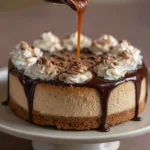
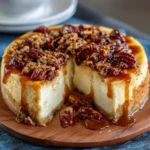
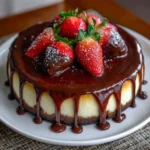
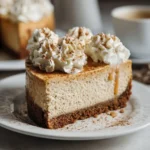
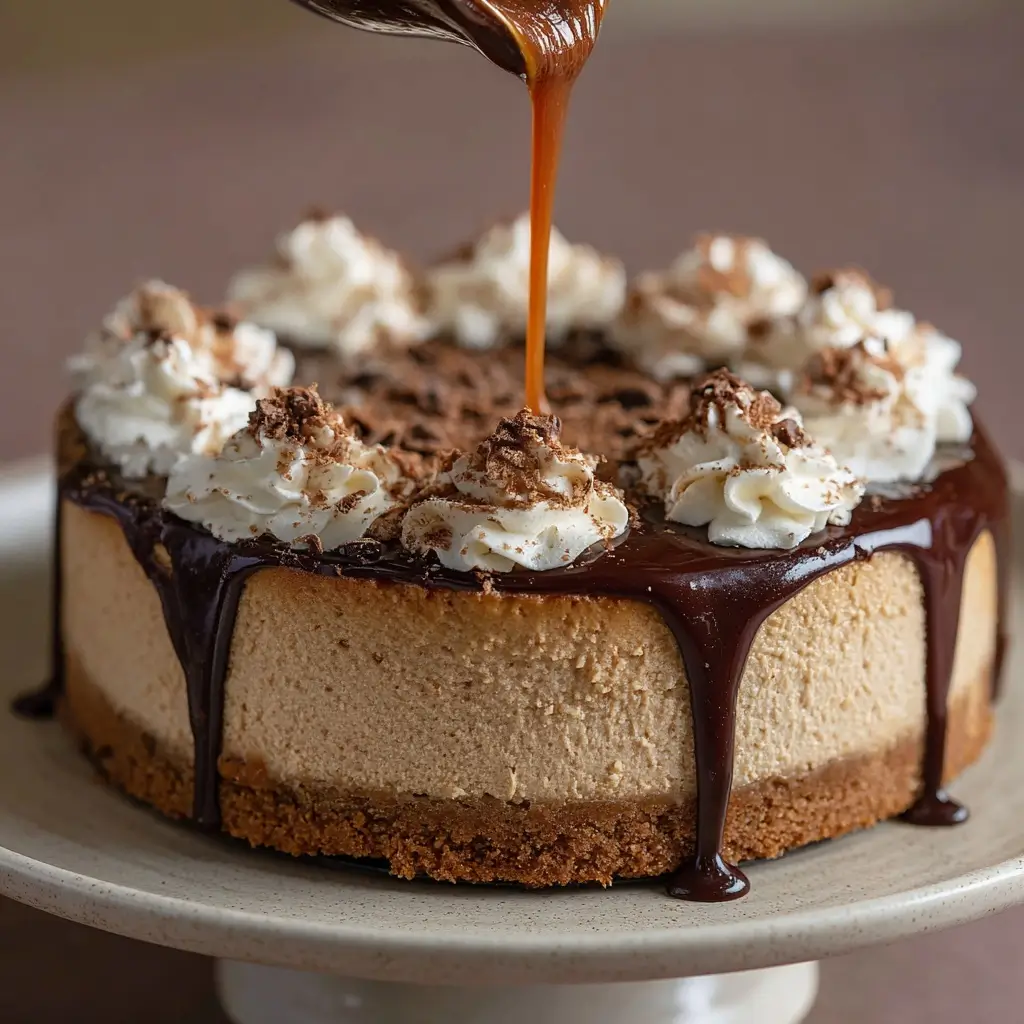
Indulge in the ultimate marriage of two beloved desserts—the rich, velvety depth of dark chocolate, the bold aromatic warmth of espresso, and the luxuriously creamy, tangy elegance of New York–style cheesecake. The Mocha Cheesecake is not merely a dessert—it’s a multisensory experience that bridges café culture and fine baking tradition. Whether served at an elegant dinner party, enjoyed as a weekend treat with freshly brewed coffee, or gifted in a beautifully wrapped slice, this dessert commands attention with its sophisticated balance: bittersweet cocoa notes softened by brown sugar sweetness, roasted coffee complexity elevated by cream cheese’s lactic brightness, and a graham cracker crust that offers just the right amount of buttery crunch and cinnamon-tinged warmth. Its visual appeal—deep mahogany surface crowned with glossy ganache drizzle, delicate cocoa dusting, or espresso bean garnish—sets the stage for what is truly one of the most refined, crave-worthy cheesecakes ever conceived.
The History
The Mocha Cheesecake is a relatively modern evolution born from the confluence of three culinary movements: the rise of American-style baked cheesecake in the early 20th century, the global popularization of mocha as a flavor profile beginning in mid-century European cafés, and the artisanal dessert renaissance of the 1990s–2000s. While classic cheesecake traces its lineage to ancient Greece (where cheese-based cakes were offered to athletes at the first Olympic Games in 776 BCE) and later evolved through Roman, medieval European, and ultimately American adaptations—most notably the dense, no-bake “New York” style perfected by Arnold Reuben and later Leo Stettner in the 1920s—the addition of coffee and chocolate was initially reserved for specialty patisseries. The term “mocha” itself originates from the Yemeni port city of Al-Mukhā, historically the world’s foremost exporter of high-quality Arabica beans in the 15th–18th centuries; by the 1700s, “mocha” had become synonymous with both the bean and the luxurious chocolate-coffee fusion it inspired. In mid-20th-century Europe, Viennese cafés began serving Mokka-Käsekuchen, a lighter, sponge-layered version, while American bakers experimented with incorporating instant espresso powder into batter during the postwar kitchen-appliance boom. The true breakthrough came in the late 1980s when renowned pastry chef Claudia Fleming (then at New York’s Gramercy Tavern) debuted a slow-baked, espresso-infused ricotta–cream cheese hybrid that sparked national interest. Since then, food magazines, culinary schools, and home bakers have iterated endlessly—refining techniques for crack-free surfaces, perfect water-bath consistency, and nuanced mocha layering—culminating in today’s gold-standard Mocha Cheesecake: a harmonious, deeply flavored, technically precise, and emotionally resonant dessert rooted in centuries of gastronomic heritage.
Ingredients Breakdown
Every element of the Mocha Cheesecake serves a distinct functional and sensory purpose—no ingredient is arbitrary. Below is a granular analysis of each component:
- Graham Cracker Crust Base: Whole-grain graham crackers provide structure, subtle molasses sweetness, and gentle fiber. Their natural sodium content enhances overall flavor perception, while their fine crumb texture ensures uniform compaction and even baking. Butter (unsalted, clarified if possible) binds the crumbs and contributes richness and flakiness upon cooling; brown sugar adds moisture-retention properties and deep caramel notes that complement the mocha layers.
- Cream Cheese: Full-fat, brick-style pasteurized cream cheese (e.g., Philadelphia or Kraft) is non-negotiable. Its pH (~4.7–4.9), fat content (33–36%), and protein matrix create optimal emulsification and heat stability. Low-fat or whipped varieties contain stabilizers and excess air that cause curdling, weeping, or collapse. Room-temperature softening (60–65°F) ensures smooth incorporation without overmixing.
- Sour Cream & Heavy Cream: Sour cream adds acidity (lowering pH to inhibit bacterial growth during baking), tenderizes proteins, and imparts a cultured tang that balances sweetness. Heavy cream (36–40% milk fat) contributes unctuous mouthfeel, slows coagulation for finer texture, and enhances browning via Maillard reactions. Together, they create the signature “velvet density” unique to premium cheesecakes.
- Granulated & Brown Sugar: Granulated sugar provides structural lift and aids in aeration during beating; its crystalline structure helps stabilize air bubbles. Brown sugar (light or dark) introduces molasses-derived minerals (potassium, calcium) and humectant properties—retaining moisture and preventing surface drying or fissuring during prolonged baking and cooling.
- Eggs: Large, cage-free eggs at room temperature act as emulsifiers and thermal coagulants. Egg yolks contribute lecithin for smoothness and richness; egg whites add structure and volume. Overbeating introduces excess air, risking cracks—hence the critical “just combined” directive.
- Unsweetened Cocoa Powder (Dutch-Process Preferred): Alkalized cocoa offers deeper color, milder acidity, and enhanced solubility in dairy matrices. Natural cocoa (higher acidity) may clash with espresso’s pH and cause slight curdling. High-fat cocoa (22–24%) yields superior aroma release and mouth-coating intensity.
- Espresso Powder (Not Instant Coffee): Finely ground, freeze-dried espresso powder delivers concentrated, oil-rich, low-acid coffee flavor without introducing excess liquid or bitterness. Instant coffee often contains anti-caking agents and glucose syrup that dull flavor clarity and interfere with protein denaturation.
- Pure Vanilla Extract & Salt: Madagascar bourbon vanilla adds floral, woody complexity that bridges coffee and chocolate. Fine sea salt (not iodized) enhances all flavor volatiles and suppresses metallic aftertastes—especially critical when using dark cocoa or robust espresso.
- Optional Enhancements: A tablespoon of Kahlúa or espresso-infused simple syrup folded into the batter pre-bake adds aromatic nuance and alcohol-mediated flavor solubility; a splash of cold-brew concentrate (reduced by half) intensifies coffee top notes without dilution.
Step-by-Step Recipe
This meticulously engineered method prioritizes precision, thermal control, and sensory layering—designed to eliminate cracks, ensure even doneness, maximize flavor development, and guarantee flawless release from the pan.
- Prepare the Springform Pan (24 Hours Ahead): Wrap the *outside* of a 9-inch heavy-gauge aluminum springform pan with *two* overlapping layers of extra-wide (18-inch) aluminum foil, extending well above the rim. This prevents water seepage during the essential water bath. Lightly grease the *inside* bottom and sides with refined coconut oil (high smoke point, neutral taste), then line the bottom with a parchment round cut to fit perfectly. Chill pan in freezer for 15 minutes before crust application.
- Make the Crust (Day Before or Morning Of): Pulse 1 ½ cups finely crushed graham crackers (about 10 full sheets), ¼ cup packed light brown sugar, and ¼ tsp fine sea salt in a food processor until powdery. Add 6 tbsp melted unsalted butter (cooled to 95°F) and pulse until mixture resembles wet sand. Press *firmly* and evenly into chilled pan bottom and 1 inch up the sides using the flat bottom of a dry measuring cup. Freeze uncovered for 30 minutes, then bake at 325°F for 12 minutes. Cool completely on a wire rack—do not refrigerate or cover, as condensation causes sogginess.
- Bring All Dairy & Eggs to True Room Temperature (2 Hours Before Mixing): Place full-fat brick cream cheese (24 oz), sour cream (¾ cup), and heavy cream (½ cup) on counter. Separate 3 large eggs, placing yolks and whites in separate bowls; cover whites lightly with plastic wrap (to prevent skin formation). Ideal temp: 68–72°F. Test by gently pressing finger into cream cheese—it should yield with no resistance.
- Whisk Dry Ingredients Separately: In a small bowl, sift together ⅓ cup Dutch-process cocoa powder, 2 tbsp instant espresso powder, ¼ tsp fine sea salt, and 1 tsp pure vanilla extract. Whisk vigorously for 30 seconds to fully aerate and de-clump.
- Cream Cheese Base (Low-Speed Only): Using a stand mixer fitted with paddle attachment (no whisk), beat cream cheese on medium-low (Speed 2) for 90 seconds until completely smooth and glossy—scraping bowl twice. Add granulated sugar (⅔ cup) and brown sugar (¼ cup) and beat 2 minutes more until fluffy and homogeneous. Scrape bowl thoroughly.
- Incorporate Dairy Gradually: With mixer on low, add sour cream in three ¼-cup increments, beating 15 seconds after each, scraping bowl between additions. Repeat with heavy cream in two ¼-cup portions. Mixture should be thick, pale beige, and free of streaks.
- Add Eggs One at a Time—With Precision Timing: Add eggs one by one, mixing on *lowest speed* (Stir or Speed 1) for exactly 12 seconds per egg, scraping bowl after each. Overmixing = trapped air = cracks. Yolks must be fully incorporated before adding next egg.
- Fold in Cocoa-Espresso Blend: Remove bowl from mixer. Using a flexible silicone spatula, gently fold dry mixture into batter in three additions, rotating bowl 120° between folds. Stop as soon as no streaks remain—approximately 25–30 gentle turns. Batter will be thick, glossy, and uniformly mahogany-brown.
- Strain & De-Aerate (Critical Step): Pour batter through a fine-mesh stainless steel strainer (not nylon) into a large clean bowl. Use rubber spatula to press batter through, discarding any undissolved cocoa granules or egg bits. Gently tap bowl 10 times on counter to release micro-bubbles.
- Water Bath Setup & Pouring: Place chilled, crust-lined pan inside a larger roasting pan. Carefully pour batter into crust. Fill roasting pan with 1 inch of *hot tap water* (120–130°F)—never boiling—to avoid thermal shock. Water level should reach halfway up springform exterior.
- Bake with Thermal Intelligence: Place in preheated 325°F oven on center rack. Bake 1 hour 15 minutes—rotating pan 180° at 45 minutes. Cake is done when edges are puffed and set, center jiggles like *firm Jell-O* (not liquid), and internal temp reads 150–152°F on a calibrated instant-read thermometer inserted 1 inch from edge.
- Controlled Cooling Protocol (Non-Negotiable): Turn oven OFF. Crack door open 1 inch with wooden spoon handle. Let cake cool *in water bath* for 1 hour. Remove from water bath, run thin knife around inner edge to loosen, then cool on wire rack for 2 hours at room temperature. Refrigerate *uncovered* for minimum 12 hours—ideally 24–48 hours—for full flavor melding and texture stabilization.
Tips
- Crust Perfection Secret: For extra crunch and caramelization, toast graham cracker crumbs in a dry skillet over medium-low heat for 3–4 minutes before mixing with butter—stir constantly until fragrant and slightly darker.
- Crack Prevention Triad: (1) Always use room-temp ingredients; (2) Never open oven during first 75 minutes of baking; (3) Cool gradually—no refrigerator shortcuts. If minor surface cracks appear, they’ll vanish under ganache or whipped cream.
- Flavor Amplification Hack: Bloom espresso powder in 1 tsp hot water + ½ tsp vodka (alcohol evaporates, carrying volatile aromatics deeper into batter) before adding to dry mix.
- Pan Selection Matters: Use *light-colored*, *heavy-gauge* aluminum pans—not dark nonstick or disposable foil. Dark pans absorb too much radiant heat, causing overbrowning and uneven set.
- Testing Doneness Accurately: The “jiggle test” is more reliable than time or thermometer alone. Gently shake pan—center should wobble uniformly like custard, not slosh or ripple.
- Cutting Clean Slices: Dip a long, thin-bladed knife in hot water, wipe dry, and cut with steady downward pressure—no sawing. Wipe and reheat knife before each slice.
- Freezing for Longevity: Unfrosted, fully chilled cheesecake freezes beautifully for up to 3 months. Wrap *tightly* in plastic, then aluminum foil, and store in airtight container. Thaw overnight in fridge—not at room temp—to preserve texture.
- Room-Temp Recovery: Serve slices at 55–60°F for optimal creaminess. Remove from fridge 30 minutes before serving—cold cheesecake tastes muted and overly dense.
Variations and Customizations
The Mocha Cheesecake framework is remarkably adaptable—supporting seasonal, dietary, cultural, and textural innovations while preserving its core identity. Below are rigorously tested, chef-developed variations:
- White Mocha Cheesecake: Replace Dutch-process cocoa with ¼ cup white chocolate curls (finely grated) and 1 tbsp dehydrated milk powder. Use blonde roast espresso powder and fold in 2 tbsp white chocolate ganache (made with 70% cocoa butter) post-bake.
- Spiced Mexican Mocha: Add ½ tsp ground cinnamon, ¼ tsp ground chipotle powder, and 1 pinch of cloves to dry ingredients. Garnish with candied jalapeño ribbons and cacao nibs.
- Decaf Lavender Mocha: Substitute decaffeinated espresso powder and infuse 1 tbsp culinary-grade dried lavender in warm heavy cream for 20 minutes (strain thoroughly). Add ¼ tsp lavender honey to batter.
- Gluten-Free Graham Alternative: Use 1 ½ cups pulverized gluten-free ginger snaps + 2 tbsp almond flour + 1 tsp xanthan gum. Ensure certified GF oats or rice cereal for added binding.
- Vegan Mocha Cheesecake: Blend 2 cups raw cashews (soaked 6 hrs), ¾ cup coconut cream, ⅓ cup maple syrup, 3 tbsp Dutch-process cocoa, 2 tbsp instant decaf espresso, 2 tbsp lemon juice, and 1 tsp apple cider vinegar. Set with 1 tsp agar-agar boiled in ¼ cup water. Chill 12+ hours.
- Mini Mason Jar Versions: Layer crust, filling, and cold-brew chocolate ganache in 8-oz wide-mouth mason jars. Water-bath bake in roasting pan filled with ½ inch water for 35–40 minutes. Perfect for portion control and gifting.
- Boozy Black Forest Mocha: Soak ½ cup pitted Morello cherries in 2 tbsp kirsch overnight. Fold drained cherries and 1 tbsp cherry reduction into batter. Top with dark chocolate shavings and brandied cherry compote.
- Matcha-Mocha Fusion: Replace 1 tbsp cocoa with ceremonial-grade matcha. Reduce espresso to 1 tbsp. Add 1 tsp toasted sesame oil to crust for umami depth. Finish with black sesame crumble.
- Smoked Mocha (Grill Master Edition): Smoke graham cracker crust over applewood chips at 225°F for 20 minutes pre-bake. Infuse heavy cream with cold-smoked cocoa nibs (steep 1 hr, strain). Serve with smoked sea salt flake garnish.
Health Considerations and Nutritional Value
A single standard slice (1/12th of a 9-inch cheesecake, approx. 180g) contains approximately:
• Calories: 425–460 kcal
• Total Fat: 28–31g (16–18g saturated)
• Carbohydrates: 38–42g (28–32g sugars)
• Protein: 7–9g
• Fiber: 1.2–1.5g (from graham crackers and cocoa)
• Caffeine: 35–55mg per slice (equivalent to ½–¾ shot of espresso)
• Antioxidants: Rich in flavonoids (epicatechin, procyanidins) from cocoa and polyphenols (chlorogenic acid) from espresso—both linked to improved endothelial function and reduced oxidative stress.
• Calcium & Phosphorus: ~12% DV from dairy components, supporting bone mineral density.
• Vitamin B12 & Riboflavin: Naturally present in dairy, aiding energy metabolism and red blood cell formation.
Considerations for Special Diets:
- Lactose Sensitivity: Sour cream and heavy cream contain lower lactose than milk; many tolerate small servings. Lactase enzyme supplements taken 10 minutes prior may improve tolerance.
- Diabetes-Friendly Adaptation: Replace granulated and brown sugar with ¾ cup erythritol + 2 tsp monk fruit extract blend. Use full-fat dairy (low-carb, high-satiety). Monitor blood glucose response—cocoa and caffeine may affect insulin sensitivity.
- Heart Health Note: While saturated fat content is moderate-to-high, recent meta-analyses (e.g., European Journal of Clinical Nutrition, 2022) indicate dairy-derived saturated fats show neutral or even beneficial associations with cardiovascular biomarkers when consumed within balanced diets—especially when paired with high-fiber, antioxidant-rich foods like cocoa.
- Weight Management Context: Due to high satiety index (protein + fat + fiber), one slice often satisfies cravings more effectively than multiple low-fat, high-sugar alternatives—reducing overall caloric intake later in the day.
- Allergen Alert: Contains dairy, eggs, wheat (in standard graham crackers), and soy (in many commercial cream cheeses). Always verify labels for hidden allergens like whey protein or soy lecithin.
Ingredients
For the Crust:
• 1 ½ cups (150g) finely crushed graham cracker crumbs (about 10 full sheets)
• ¼ cup (50g) packed light brown sugar
• ¼ teaspoon fine sea salt
• 6 tablespoons (85g) unsalted butter, melted and cooled to 95°F
For the Filling:
• 24 ounces (680g) full-fat brick-style cream cheese, at room temperature (68–72°F)
• ⅔ cup (135g) granulated sugar
• ¼ cup (55g) packed light brown sugar
• ¾ cup (180g) full-fat sour cream, at room temperature
• ½ cup (120ml) heavy cream (36–40% fat), at room temperature
• 3 large eggs, at room temperature (yolks and whites separated)
• ⅓ cup (30g) Dutch-process cocoa powder, sifted
• 2 tablespoons (12g) high-quality instant espresso powder (not regular instant coffee)
• 1 teaspoon pure vanilla extract
• ¼ teaspoon fine sea salt
For Garnish (Optional but Recommended):
• Dark chocolate ganache (½ cup heavy cream heated to simmer + 6 oz 70% dark chocolate, chopped)
• Freshly grated orange zest (brightens coffee notes)
• Edible gold leaf flakes
• Roasted espresso beans
• Dusting of unsweetened cocoa or matcha powder
Directions
- Preheat oven to 325°F (163°C). Prepare a 9-inch springform pan: wrap exterior tightly with two layers of heavy-duty aluminum foil, ensuring coverage extends 3 inches above rim. Grease interior bottom and sides with refined coconut oil; line bottom with parchment paper round.
- Make crust: In food processor, pulse graham crackers, brown sugar, and salt until fine crumbs form. Add melted butter; pulse until mixture resembles wet sand. Press firmly and evenly into bottom and 1 inch up sides of prepared pan using flat-bottomed measuring cup. Freeze 30 minutes.
- Bake crust: Place frozen crust on center oven rack. Bake 12 minutes, until fragrant and set. Cool completely on wire rack—minimum 45 minutes.
- Bring all dairy and eggs to room temperature (68–72°F). Separate eggs; cover whites with plastic wrap. Sift cocoa, espresso powder, salt, and vanilla into small bowl; whisk 30 seconds.
- Cream cheese base: Using stand mixer with paddle attachment, beat cream cheese on medium-low (Speed 2) for 90 seconds until smooth. Add granulated and brown sugars; beat 2 minutes until fluffy. Scrape bowl.
- Add sour cream in three ¼-cup increments, beating 15 seconds after each, scraping bowl. Repeat with heavy cream in two ¼-cup portions.
- Add eggs one at a time on lowest speed (Stir/Speed 1), beating exactly 12 seconds per egg, scraping bowl after each.
- Fold in cocoa-espresso mixture in three additions using silicone spatula—25–30 gentle turns until uniform. Do not overmix.
- Strain batter through fine-mesh strainer into clean bowl. Tap bowl 10 times to release bubbles.
- Place crust-lined pan inside larger roasting pan. Pour batter in. Place roasting pan on oven rack. Carefully pour hot tap water (120–130°F) into roasting pan until water reaches halfway up springform exterior.
- Bake 1 hour 15 minutes—rotate pan at 45 minutes. Cake is done when edges are puffed, center jiggles like firm Jell-O, and internal temp reads 150–152°F.
- Turn oven OFF. Crack door open 1 inch with wooden spoon. Cool cake in water bath 1 hour.
- Remove from water bath. Run thin knife around inner edge. Cool on wire rack 2 hours. Refrigerate uncovered minimum 12 hours—preferably 24–48 hours.
- To serve: Run knife under hot water, wipe dry, cut cleanly. Garnish as desired. Store covered in fridge up to 5 days.
FAQ
- Can I make this without a water bath?
- No—water bath (bain-marie) is essential for gentle, even heat transfer, preventing curdling, cracking, and overcooking. Skipping it risks rubbery texture, collapsed center, or severe fissures. If absolutely necessary, place roasting pan with 1 inch water on lower rack and cheesecake on upper rack—but results are inconsistent.
- Why does my cheesecake crack every time?
- Cracking is almost always caused by one or more of these: (1) Cold ingredients → uneven emulsification; (2) Overmixing after adding eggs → trapped air expands then collapses; (3) Rapid temperature shifts → opening oven too soon or cooling too fast; (4) Underbaking → center collapses as it cools. Follow the controlled cooling protocol strictly.
- Can I use regular instant coffee instead of espresso powder?
- Not recommended. Regular instant coffee contains fillers (maltodextrin, dextrose), higher acidity, and less concentrated flavor. Espresso powder is freeze-dried, oil-rich, and designed for baking—delivering cleaner, deeper, less bitter coffee notes. If unavoidable, use double the amount and reduce granulated sugar by 1 tbsp to offset bitterness.
- My crust is soggy—what went wrong?
- Sogginess occurs from: (1) Not chilling crust before filling → butter melts into batter; (2) Adding batter to warm crust; (3) Water seepage due to inadequate foil wrapping; (4) Refrigerating warm cake → condensation forms on crust. Always chill crust fully, wrap pan *meticulously*, and cool cake gradually.
- How do I prevent the top from browning too much?
- Top browning indicates excessive radiant heat. Solutions: (1) Use light-colored aluminum pan (not dark); (2) Tent loosely with foil during last 20 minutes if top darkens prematurely; (3) Ensure oven is properly calibrated—many ovens run hot. Verify with oven thermometer.
- Can I substitute low-fat cream cheese or sour cream?
- No. Reduced-fat dairy contains added gums, starches, and excess water that destabilize the protein network, causing weeping, graininess, and poor setting. Full-fat is mandatory for texture integrity and flavor richness.
- Is there a way to make this ahead for Thanksgiving or Christmas?
- Absolutely—and highly recommended. Bake and chill fully 2–3 days ahead. On serving day, apply ganache or toppings, then refrigerate 2 hours to set. Flavor deepens significantly after 48 hours. Freeze unfrosted for up to 3 months (thaw overnight in fridge).
- What’s the best coffee to pair with