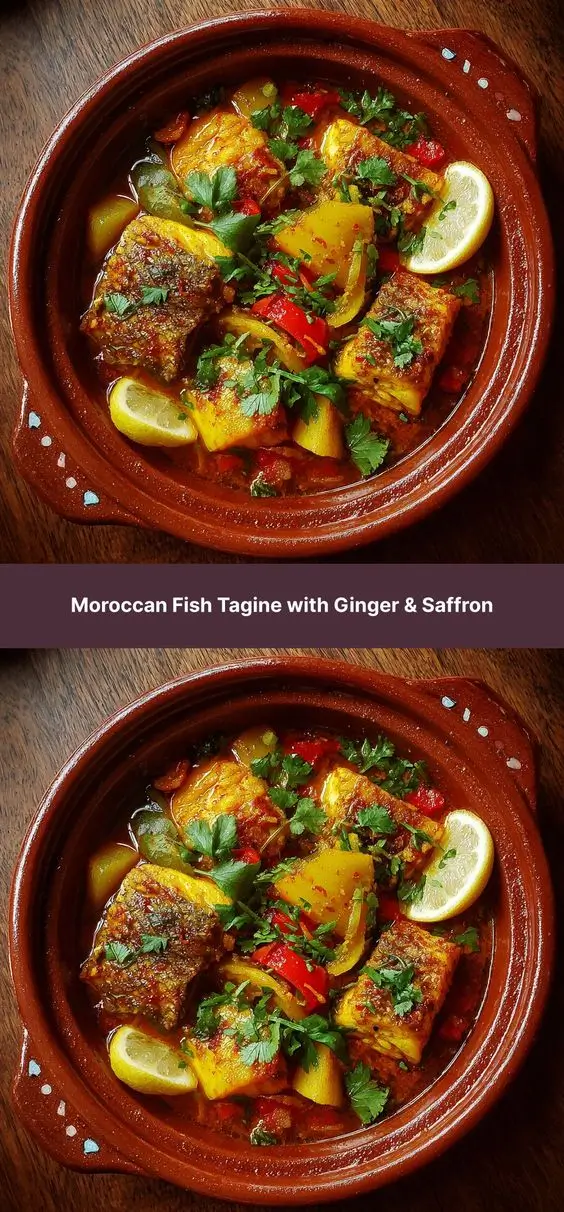
Moroccan Fish Tagine with Ginger & Saffron
Bathed in golden saffron, infused with warm ginger, and layered with the subtle sweetness of preserved lemons and olives, Moroccan Fish Tagine with Ginger & Saffron is a masterpiece of North African cuisine. This aromatic stew celebrates the sea through tender white fish fillets simmered in a fragrant broth that dances between earthy, citrusy, and gently spiced notes. Originating from the sun-drenched coastal cities of Morocco like Essaouira and Tangier, this dish reflects centuries of cultural fusion—Berber traditions, Arab influences, Andalusian refinement, and Mediterranean bounty—all harmonized in one earthenware pot.
The History: A Culinary Journey Through Time and Tide
The tagine, both as a cooking vessel and a culinary concept, has deep roots in Moroccan culture, dating back over a thousand years. The word “tagine” refers not only to the conical clay pot with a tapered lid but also to the slow-cooked stews prepared within it. Designed for even heat distribution and moisture retention, the tagine allows ingredients to steam gently in their own juices, concentrating flavors while preserving tenderness—ideal for delicate proteins like fish.
Fish tagine, in particular, emerged along Morocco’s Atlantic and Mediterranean coasts, where fishing has long been central to daily life. Coastal communities developed recipes that honored fresh catches without overpowering them, favoring gentle spices and bright, acidic elements. The use of saffron—a luxurious spice historically traded across the Sahara and into Europe via Moroccan ports—signaled both affluence and sophistication. Ginger, another prized import along ancient trade routes, added warmth and depth, balancing the brininess of seafood.
During the 8th century, waves of Arab and Andalusian migration introduced new techniques and flavor profiles, including the use of preserved lemons, green olives, and complex spice blends like ras el hanout. These influences refined the fish tagine into a dish served during special occasions, religious celebrations such as Eid, and Friday family gatherings after mosque prayers.
Today, Moroccan Fish Tagine with Ginger & Saffron remains a symbol of hospitality, balance, and culinary artistry. It’s often presented at weddings, holidays, and communal feasts, embodying the Moroccan philosophy of food as connection—between people, land, sea, and history.
Ingredients Breakdown: Crafting Flavor Layer by Layer
Every ingredient in this tagine plays a pivotal role in building its distinctive taste profile. The harmony lies not in heaviness but in precision—each component contributing nuance rather than dominance.
- White Fish Fillets (such as cod, halibut, or monkfish): Choose firm, sustainably sourced fish that can hold up during gentle simmering without flaking apart. These provide a neutral canvas for the bold sauce.
- Saffron Threads: The crown jewel of Moroccan cuisine. Soaked briefly in warm water or broth, saffron imparts a golden hue and an intoxicating floral-honey aroma. Just a pinch transforms the entire dish.
- Fresh Ginger Root: Grated or finely minced, it delivers a clean, zesty heat that warms without burning. Its anti-inflammatory properties also add health value.
- Garlic: Minced finely to blend seamlessly into the base, garlic enhances savoriness without overpowering.
- Onion (yellow or red): Slowly caramelized, it forms the sweet foundation of the sauce, adding body and richness.
- Tomato Paste or Fresh Tomatoes: Adds umami depth and slight acidity. Paste gives a more concentrated flavor; fresh tomatoes bring juiciness.
- Preserved Lemons: A hallmark of Moroccan cooking. Their fermented rind offers a unique blend of salty, sour, and floral notes. Only the pulp-free rind is used, thinly sliced.
- Green Olives (preferably Picholine or Cerignola): Briny yet mild, they contrast beautifully with the sweetness of lemon and saffron. Avoid overly salty varieties unless rinsed first.
- Fresh Herbs (cilantro and parsley): Used generously, these lend freshness and brightness. Traditionally, both are chopped finely and added at multiple stages.
- Olive Oil: High-quality extra virgin olive oil carries flavors and creates a silky mouthfeel.
- Spices (ground turmeric, paprika, cayenne pepper, black pepper): Turmeric adds color and earthiness; paprika brings mild sweetness; cayenne introduces gentle heat. Together, they form a balanced spice medley.
- Fish Stock or Water: For creating the simmering liquid. Fish stock intensifies marine essence; water works well when you want the natural fish flavor to shine.
- Lemon Juice (fresh): Enhances acidity and lifts all other flavors, especially important in cutting through the richness of saffron and oil.
- Optional Additions: Sliced potatoes, cherry tomatoes, or bell peppers may be included for heartiness and color variation.
Step-by-Step Recipe: How to Make Authentic Moroccan Fish Tagine with Ginger & Saffron
Ingredients
- 1.5 lbs (700g) firm white fish fillets (cod, halibut, or sea bass), cut into large chunks
- 6–8 saffron threads, soaked in 3 tbsp warm water
- 1 large yellow onion, finely chopped
- 4 cloves garlic, minced
- 2-inch piece fresh ginger, grated
- 3 tbsp extra virgin olive oil
- 2 tbsp tomato paste
- 1 tsp ground turmeric
- 1 tsp smoked paprika
- ¼ tsp cayenne pepper (adjust to taste)
- ½ tsp freshly ground black pepper
- 1 cup fish stock or warm water
- Zest and juice of 1 lemon
- 2 preserved lemons, rinsed and rind thinly sliced
- ½ cup green olives, pitted and halved
- ½ cup fresh cilantro, chopped
- ½ cup fresh parsley, chopped
- Sea salt to taste
- Optional: 1 cup cherry tomatoes, halved | 1 sliced potato per serving
Directions
- Prepare the Saffron Infusion: In a small bowl, crumble the saffron threads and pour 3 tablespoons of warm water over them. Let steep for at least 15 minutes to release color and aroma.
- Prep Ingredients: Chop onions, mince garlic, grate ginger, slice preserved lemons, pit and halve olives, and chop herbs. Keep everything ready before starting—this is a sequential process.
- Heat the Tagine or Dutch Oven: If using a traditional clay tagine, soak it in water for 30 minutes prior to prevent cracking. Place it on a diffuser over medium-low heat. Add olive oil and let warm gently.
- Sauté Aromatics: Add chopped onions and a pinch of salt. Cook slowly for 8–10 minutes until soft and translucent. Stir occasionally to avoid browning.
- Add Garlic and Ginger: Stir in minced garlic and grated ginger. Cook for 1–2 minutes until fragrant but not browned.
- Incorporate Spices and Tomato Paste: Add turmeric, paprika, cayenne, and black pepper. Stir for 30 seconds to toast the spices lightly. Then mix in tomato paste and cook for another minute to deepen flavor.
- Pour in Liquid Base: Add fish stock (or water), saffron infusion (including threads), lemon juice, and lemon zest. Stir well to combine. Bring to a gentle simmer.
- Add Preserved Lemon, Olives, and Herbs: Stir in preserved lemon slices, green olives, half of the chopped cilantro and parsley. Allow the sauce to simmer for 10–12 minutes to meld flavors.
- Layer in Vegetables (if using): If adding potatoes or cherry tomatoes, place them around the edges so they cook evenly. Simmer for 10 more minutes until slightly tender.
- Arrange the Fish: Gently place fish pieces on top of the simmering sauce, nestling them without submerging completely. Cover tightly with the tagine lid or a tight-fitting pot lid.
- Simmer Gently: Reduce heat to low. Cook for 10–15 minutes, depending on thickness of fish. Do not stir vigorously—just nudge gently if needed. Fish should flake easily when tested with a fork but remain moist.
- Finish with Fresh Herbs: Turn off heat. Sprinkle remaining cilantro and parsley over the top. Let rest, covered, for 5 minutes to allow flavors to settle.
- Serve Immediately: Carefully transfer the tagine to a serving platter or serve directly from the pot at the table. Accompany with crusty bread or couscous to soak up the golden broth.
Tips for the Perfect Moroccan Fish Tagine
- Don’t Overcook the Fish: Since fish cooks quickly, timing is crucial. Err on the side of undercooking—it continues to cook slightly off the heat.
- Use Fresh Saffron: Old saffron loses potency. Rub a few threads between your fingers—if they leave a strong yellow stain and fragrant scent, they’re good.
- Soak Clay Tagines Properly: Always soak unglazed clay tagines in water for 30+ minutes before first use and each subsequent use to prevent thermal shock.
- Low and Slow is Key: Never rush the cooking process. Gentle heat ensures even cooking and prevents curdling or breaking of delicate fish.
- Baste Midway (Optional): Using a spoon, gently ladle some sauce over the fish halfway through cooking to enhance flavor absorption.
- Rinse Olives if Too Salty: Some imported olives are heavily brined. Rinse under cold water and pat dry before adding.
- Balance Acidity: Taste before serving. If too tart, add a pinch of sugar or honey. If too mild, brighten with a squeeze of fresh lemon.
- Make Ahead Base: The sauce (without fish) can be made a day ahead. Reheat gently and add raw fish just before serving.
Variations and Customizations
Moroccan cuisine thrives on regional diversity and personal expression. Feel free to adapt this tagine based on availability, preference, or dietary needs:
- Vegetarian Twist: Replace fish with chickpeas, roasted eggplant, zucchini, or tofu for a plant-based version. Use vegetable broth instead of fish stock.
- Spicier Version: Add a chopped fresh chili (like serrano or jalapeño) with the aromatics, or increase cayenne. Harissa paste (1–2 tsp) stirred in boosts heat and complexity.
- Different Fish Options: Try salmon for a richer profile, swordfish for meatiness, or whole small fish like sardines for authenticity.
- Coastal-Inspired Seafood Medley: Combine fish with shrimp, mussels, or scallops. Add shellfish in the last 5 minutes of cooking.
- Citrus Variations: Swap preserved lemons with preserved oranges or add orange zest for floral-citrus complexity.
- Herb Swaps: Mint can be added sparingly for freshness, though traditionally less common in fish dishes.
- Gluten-Free Serving: Naturally gluten-free. Serve with quinoa or polenta instead of couscous if needed.
- Kid-Friendly Version: Omit spicy elements, reduce preserved lemon quantity, and add sweet vegetables like carrots or peas.
- Fasting-Friendly (Ramadan Iftar): Light yet nourishing, ideal for breaking fasts. Serve with dates and mint tea.
Health Considerations and Nutritional Value
Moroccan Fish Tagine with Ginger & Saffron isn’t just delicious—it’s a nutritionally balanced meal rich in essential nutrients.
- High-Quality Protein: White fish provides lean protein, supporting muscle repair and satiety with minimal saturated fat.
- Omega-3 Fatty Acids: Especially present in oily fish like mackerel (an alternate option), these support heart and brain health.
- Anti-Inflammatory Properties: Both ginger and saffron have potent anti-inflammatory and antioxidant effects. Studies suggest saffron may help regulate mood and sleep.
- Low Carb, High Flavor: With no grains in the tagine itself, it fits well into low-carb or keto diets when served without couscous.
- Rich in Vitamins: Cilantro and parsley supply vitamin K, C, and A. Lemon adds immune-boosting vitamin C.
- Heart-Healthy Fats: Olive oil contributes monounsaturated fats, linked to reduced cardiovascular risk.
- Mineral Content: Fish contains selenium, iodine, and phosphorus; olives offer iron and copper.
- Digestive Benefits: Ginger aids digestion and reduces nausea—ideal after heavy meals or during travel.
- Low Sodium Option: Control salt levels by using low-sodium stock, rinsing olives, and moderating preserved lemon usage.
- Allergen Notes: Naturally dairy-free and nut-free. Ensure fish is sustainably sourced to minimize mercury exposure, especially for pregnant individuals.
Frequently Asked Questions (FAQ)
Q: Can I make this tagine in a regular pot?
A: Absolutely. While a traditional tagine pot enhances flavor and presentation, a heavy-bottomed Dutch oven or deep skillet with a tight-fitting lid works perfectly.
Q: What can I substitute for preserved lemons?
A: There’s no exact substitute, but you can mimic the flavor by combining 1 tbsp lemon zest + 1 tsp kosher salt + 1 tsp lemon juice per lemon. Simmer briefly in the sauce to soften.
Q: Is saffron worth the cost?
A: Yes—saffron is used in tiny amounts but delivers unmatched aroma and color. Store unused threads in an airtight container away from light.
Q: Can I freeze leftover fish tagine?
A: Not recommended. Fish tends to become rubbery upon reheating after freezing. However, the sauce (without fish) freezes well for up to 2 months.
Q: How do I know when the fish is done?
A: The flesh should turn opaque and flake easily with a fork. Internal temperature should reach 145°F (63°C).
Q: Can I use frozen fish?
A: Yes, but thaw completely in the refrigerator overnight and pat dry before use to prevent excess moisture.
Q: Why is my sauce bitter?
A: Likely causes: overcooked garlic, too much preserved lemon peel (only use rind, not pith), or old/damaged saffron. Balance with a touch of honey if needed.
Q: What to serve with fish tagine?
A: Classic pairings include steamed couscous, crusty bread, quinoa, or a simple green salad with lemon vinaigrette.
Summary
Moroccan Fish Tagine with Ginger & Saffron is a luminous celebration of coastal flavors—tender fish bathed in a golden, aromatic broth enriched with saffron, fresh ginger, preserved lemons, and green olives, all slow-cooked to perfection in a traditional tagine.
A dish rooted in centuries of maritime tradition and cultural exchange, it offers a perfect balance of elegance and simplicity, making it ideal for weeknight dinners or festive gatherings alike.