Introduction
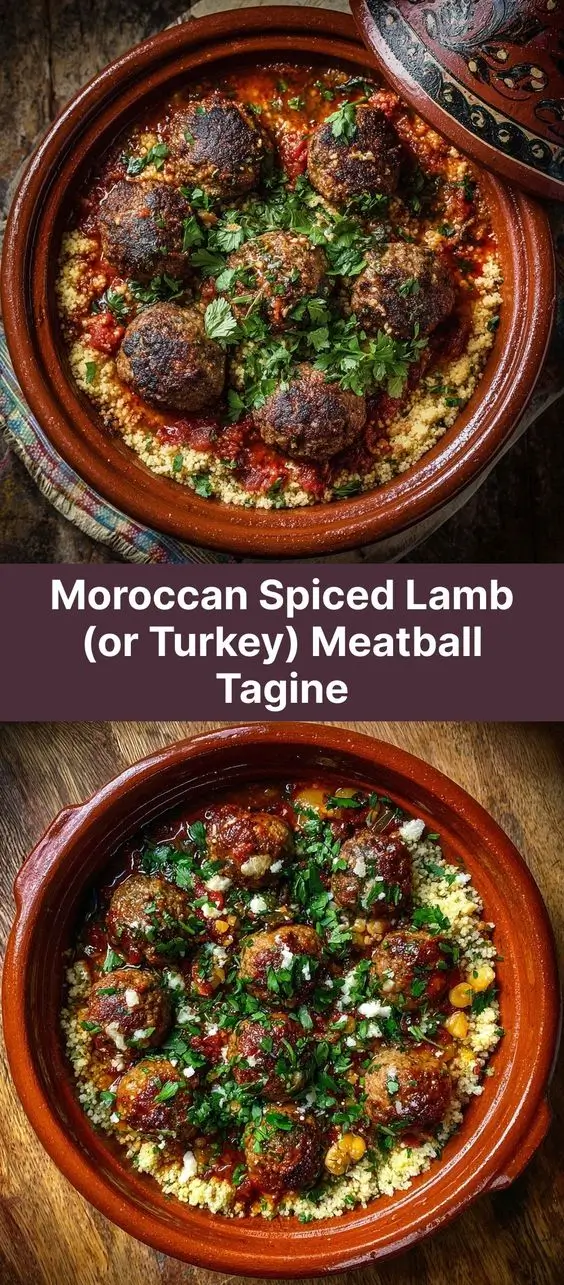
Moroccan Spiced Lamb (or Turkey) Meatball Tagine is a fragrant, soul-warming North African stew that captures the essence of Moroccan cuisine—rich in spices, layered in flavor, and deeply satisfying. This traditional dish combines tender meatballs with a sweet-and-savory sauce made from tomatoes, dried fruits, and aromatic spices, all slow-cooked to perfection in a tagine or heavy pot. Whether served over fluffy couscous or crusty bread, this meal offers an authentic taste of Morocco’s culinary heritage, blending Berber, Arab, and Mediterranean influences into one harmonious dish. Perfect for family dinners, special gatherings, or when you simply crave comfort food with a global twist, this tagine promises both elegance and ease.
The History
The tagine, both as a cooking vessel and a dish, has deep roots in Moroccan culture, dating back centuries to the ancient Berber civilizations of North Africa. Named after the conical clay pot in which it’s traditionally cooked, the tagine was designed to make the most of limited fuel sources by allowing slow, even cooking that tenderizes tough cuts of meat and infuses ingredients with complex flavors. Historically, Moroccan households used wood or charcoal fires, and the unique design of the tagine—its tall, domed lid—traps steam and returns condensation to the pot, preserving moisture and intensifying taste without needing excess liquid.
Meatball tagines are part of Morocco’s rich tradition of combining meat with dried fruits and nuts, a hallmark of royal and home kitchens alike. Influences from Andalusian Spain, sub-Saharan Africa, and the Middle East brought spices like cumin, cinnamon, ginger, and saffron into Moroccan pantries, creating a distinctive spice palette known as ras el hanout. While lamb has long been the preferred meat due to its availability and cultural significance, variations using chicken, beef, or turkey have emerged over time, especially in modern adaptations. Today, the meatball tagine remains a beloved staple across Morocco and beyond, symbolizing hospitality, patience, and the art of slow cooking.
Ingredients Breakdown
Creating an authentic Moroccan Spiced Meatball Tagine begins with understanding each component and its role in building depth and harmony:
- Lamb or Turkey Ground Meat: Traditionally, lamb is used for its rich, gamey flavor that stands up well to bold spices. However, ground turkey offers a leaner, milder alternative suitable for those seeking a lighter protein. Both absorb seasonings beautifully when properly seasoned and handled gently to maintain tenderness.
- Onion and Garlic: Finely grated or minced onion adds moisture and subtle sweetness to the meatballs, while garlic enhances savoriness. In Moroccan cooking, these aromatics form the base layer of flavor in nearly every savory dish.
- Fresh Herbs (Parsley and Cilantro): A generous amount of fresh flat-leaf parsley and cilantro is essential—not only for brightness but also to balance the heaviness of the meat and spices. These herbs are staples in Maghrebi cuisine and contribute freshness throughout the dish.
- Spices (Cumin, Coriander, Paprika, Cinnamon, Ginger, Cayenne): The heart of the dish lies in its spice blend. Toasted cumin seeds ground fresh offer earthiness; coriander brings citrusy warmth; paprika adds color and mild sweetness; cinnamon introduces a delicate floral note; ginger provides zing; and a pinch of cayenne delivers gentle heat. Together, they mimic elements of ras el hanout, though a store-bought version can be substituted.
- Breadcrumbs or Almond Flour (optional): Used sparingly, breadcrumbs help bind the meatballs without making them dense. For a gluten-free option, almond flour works well and complements the nutty undertones of the dish.
- Eggs: One egg per pound of meat acts as a binder, ensuring the meatballs hold their shape during browning and simmering.
- Olive Oil: Extra virgin olive oil is used for sautéing aromatics and searing meatballs, contributing fruity richness to the overall flavor profile.
- Tomatoes (Crushed or Diced): High-quality canned crushed tomatoes provide acidity, body, and natural sweetness, forming the foundation of the sauce. Fresh ripe tomatoes can be used in season, blanched and puréed.
- Chicken or Vegetable Broth: Adds depth and helps regulate the consistency of the sauce. Homemade broth yields superior results, but good-quality store-bought versions work well too.
- Dried Fruits (Apricots, Prunes, or Raisins): Apricots bring tangy sweetness, prunes add deep molasses-like notes, and raisins contribute quick caramelization. These fruits soften during cooking and contrast beautifully with the savory meatballs.
- Preserved Lemons (Optional but Traditional): A quintessential Moroccan ingredient, preserved lemons add a bright, salty, umami punch. Only the rind is used—finely chopped—and a little goes a long way.
- Olives (Green or Kalamata): Often added toward the end, olives lend brininess that cuts through the sweetness of the fruit, balancing the palate.
- Toasted Almonds or Slivered Almonds: Typically sprinkled on top before serving, toasted almonds add crunch and reinforce the luxurious texture of the dish.
- Honey or Date Syrup: A touch of natural sweetener rounds out the flavors, enhancing the interplay between sweet and savory without making the dish overtly sweet.
Step-by-Step Recipe
- Prepare the Meatball Mixture: In a large mixing bowl, combine 1½ pounds of ground lamb or turkey, ½ cup finely grated yellow onion, 2 cloves minced garlic, ¼ cup chopped fresh parsley, ¼ cup chopped fresh cilantro, 1 teaspoon ground cumin, 1 teaspoon ground coriander, ½ teaspoon smoked paprika, ½ teaspoon ground cinnamon, ½ teaspoon ground ginger, ¼ teaspoon cayenne pepper (adjust to taste), ½ teaspoon salt, freshly ground black pepper, ¼ cup breadcrumbs or almond flour, and 1 large egg. Mix gently with your hands until just combined—avoid overmixing to prevent toughness.
- Form the Meatballs: Using a tablespoon or small scoop, shape the mixture into 1-inch balls (about 24–30). Place them on a parchment-lined tray and refrigerate for 15–20 minutes to firm up, which helps them hold their shape during cooking.
- Sear the Meatballs: Heat 2 tablespoons of olive oil in a large tagine, Dutch oven, or heavy-bottomed pot over medium-high heat. Working in batches to avoid crowding, brown the meatballs on all sides, about 6–8 minutes total. They don’t need to be fully cooked at this stage—just nicely caramelized. Remove and set aside.
- Sauté Aromatics: Reduce heat to medium. Add another tablespoon of olive oil if needed. Sauté 1 large diced onion until softened and golden, about 8 minutes. Stir in 2 minced garlic cloves and cook for 30 seconds until fragrant.
- Bloom the Spices: Add 1 teaspoon ground cumin, 1 teaspoon ground coriander, ½ teaspoon paprika, ½ teaspoon cinnamon, ½ teaspoon ginger, and a pinch of cayenne. Stir constantly for 30–60 seconds to release their essential oils and deepen their flavor.
- Build the Sauce: Pour in 1 (28-ounce) can of crushed tomatoes, stirring to combine. Add 1 cup chicken or vegetable broth, ½ cup pitted and halved green olives (such as Castelvetrano or Kalamata), ½ cup chopped dried apricots (or prunes/raisins), 1 tablespoon honey or date syrup, and optional 1 tablespoon finely diced preserved lemon rind. Bring to a gentle simmer.
- Add Meatballs Back: Return the seared meatballs to the pot, nestling them into the sauce. Cover tightly with a lid or use a sheet of parchment paper under the lid to trap steam (a technique known as couche-couche).
- Simmer Gently: Reduce heat to low and let the tagine simmer for 30–40 minutes, turning the meatballs halfway through. The sauce should thicken slightly, and the meatballs should reach an internal temperature of 160°F (71°C) for lamb or 165°F (74°C) for turkey.
- Final Touches: Taste and adjust seasoning with salt, pepper, or a splash more honey for balance. Stir in a handful of fresh cilantro and parsley just before serving.
- Garnish and Serve: Transfer to a serving dish or present in the tagine if using. Sprinkle generously with toasted slivered almonds and additional chopped herbs. Serve hot with couscous, crusty bread, or warm flatbreads for scooping.
Tips
- Chill Before Cooking: Refrigerating the formed meatballs for 15–20 minutes prevents them from falling apart during searing.
- Don’t Overcrowd the Pan: Browning in batches ensures proper Maillard reaction, giving meatballs a flavorful crust instead of steaming them.
- Use Preserved Lemons Wisely: If unavailable, you can make a quick substitute by thinly slicing a lemon, removing seeds, and soaking it in salted water for 24 hours. But even a small amount of lemon zest plus a pinch of salt can mimic the effect in a pinch.
- Low and Slow is Key: Simmering gently allows flavors to meld and meatballs to stay juicy. Avoid boiling, which can toughen the meat.
- Toast Your Spices Fresh: Whenever possible, toast whole spices like cumin and coriander seeds in a dry pan, then grind them. This dramatically boosts aroma and complexity.
- Baste Occasionally: During the final simmer, spoon sauce over the meatballs to keep them moist and evenly coated.
- Rest Before Serving: Let the tagine sit off the heat for 5–10 minutes before serving. This allows the sauce to settle and flavors to further integrate.
- Make Ahead Friendly: This dish tastes even better the next day. Prepare it a day in advance and reheat gently on the stove.
- Freezing Option: Fully cooked meatball tagine freezes well for up to 3 months. Thaw overnight in the refrigerator and reheat slowly with a splash of broth to refresh the sauce.
- Balance Sweetness: If the dried fruit makes the sauce too sweet, counter it with a splash of red wine vinegar or lemon juice to brighten it up.
Variations and Customizations
This versatile recipe lends itself to numerous adaptations based on dietary preferences, regional styles, or seasonal ingredients:
- Vegan/Vegetarian Version: Replace meatballs with spiced chickpea or lentil falafel-style balls. Use plant-based protein crumbles or grilled tofu cubes for texture. Increase vegetables like carrots, zucchini, or bell peppers for heartiness.
- Gluten-Free Option: Substitute regular breadcrumbs with gluten-free oats, certified GF breadcrumbs, or almond flour. Ensure all other ingredients (like broth and preserved lemons) are labeled gluten-free.
- Keto-Friendly Adaptation: Omit breadcrumbs and dried fruit. Use almond flour and increase healthy fats like olive oil and avocado. Replace sugar-containing fruits with low-carb veggies such as roasted eggplant or mushrooms. Sweeten subtly with monk fruit syrup if needed.
- Different Meats: Try ground beef for a richer bite, chicken for a milder taste, or a mix of lamb and beef for balanced flavor. Game meats like venison can also be used for a rustic twist.
- Regional Twists: In southern Morocco, harissa paste might be stirred into the sauce for extra heat. Coastal regions may include seafood like shrimp added at the end. Some families add quince or apple for autumnal flair.
- Slow Cooker Method: After browning meatballs and sautéing aromatics, transfer everything to a slow cooker. Cook on Low for 6–8 hours or High for 3–4 hours.
- Instant Pot Version: Use Sauté function for browning and blooming spices. Add remaining ingredients and cook on Manual High Pressure for 8 minutes, followed by a natural release. Finish with garnishes.
- Children’s Version: Reduce or omit cayenne and use milder spices. Swap prunes or apricots for raisins, which kids often prefer. Serve with plain yogurt on the side to cool the palate.
- Festive Garnishes: For holidays or special occasions, top with pomegranate arils, edible rose petals, or a drizzle of argan oil for visual appeal and gourmet flair.
Health Considerations and Nutritional Value
Moroccan Spiced Lamb (or Turkey) Meatball Tagine can be a nutritious, well-balanced meal when prepared thoughtfully:
- Protein Content: Lamb provides high-quality complete protein, iron, zinc, and B vitamins (especially B12), supporting energy metabolism and immune health. Turkey is leaner, lower in saturated fat, and rich in selenium and niacin.
- Healthy Fats: Olive oil contributes monounsaturated fats linked to heart health. Nuts like almonds add vitamin E and beneficial fats. However, lamb contains more saturated fat, so moderation is advised for those managing cholesterol.
- Fiber and Antioxidants: Dried fruits offer dietary fiber, potassium, and antioxidants. Apricots are high in vitamin A; prunes support digestive health. Pairing with whole grain couscous or quinoa increases fiber intake further.
- Low Glycemic Impact: Despite the presence of dried fruit, the overall glycemic load remains moderate due to fiber, protein, and fat content slowing sugar absorption. Diabetics can reduce honey and limit dried fruit portions.
- Sodium Awareness: Store-bought broths, preserved lemons, olives, and canned tomatoes can be high in sodium. Opt for low-sodium versions and rinse preserved lemons to reduce salt levels.
- Spice Benefits: Cumin aids digestion; cinnamon helps regulate blood sugar; ginger has anti-inflammatory properties; turmeric (if added) contains curcumin, a powerful antioxidant.
- Allergen Notes: Contains tree nuts (almonds), eggs, and possibly gluten (breadcrumbs). Always label dishes accordingly when serving guests.
- Portion Control: A typical serving (1 cup tagine + ½ cup couscous) ranges from 350–500 calories depending on meat and preparation. Balancing with a side salad improves micronutrient diversity.
Ingredients
- 1½ pounds ground lamb or ground turkey
- ½ cup finely grated yellow onion
- 2 cloves garlic, minced
- ¼ cup fresh flat-leaf parsley, finely chopped
- ¼ cup fresh cilantro, finely chopped
- 1 teaspoon ground cumin (plus 1 tsp for sauce)
- 1 teaspoon ground coriander (plus 1 tsp for sauce)
- ½ teaspoon smoked paprika (plus ½ tsp for sauce)
- ½ teaspoon ground cinnamon (plus ½ tsp for sauce)
- ½ teaspoon ground ginger (plus ½ tsp for sauce)
- ¼ teaspoon cayenne pepper (adjust to taste)
- ½ teaspoon salt (plus more to taste)
- Freshly ground black pepper
- ¼ cup breadcrumbs or almond flour (gluten-free option)
- 1 large egg
- 3 tablespoons extra virgin olive oil (divided)
- 1 large yellow onion, diced
- 28 oz (1 can) crushed tomatoes
- 1 cup chicken or vegetable broth (low-sodium preferred)
- ½ cup pitted green olives (Castelvetrano or Kalamata)
- ½ cup chopped dried apricots (or prunes/raisins)
- 1 tablespoon honey or date syrup
- 1 tablespoon finely diced preserved lemon rind (optional)
- ½ cup toasted slivered almonds (for garnish)
- Additional fresh herbs (parsley/cilantro) for garnish
Directions
- In a large bowl, combine ground meat, grated onion, minced garlic, parsley, cilantro, 1 tsp each cumin, coriander, ½ tsp each paprika, cinnamon, ginger, cayenne, salt, pepper, breadcrumbs, and egg. Mix gently with hands until just combined. Do not overwork.
- Shape into 1-inch meatballs (about 24–30). Place on a tray and chill for 15–20 minutes.
- Heat 2 tbsp olive oil in a tagine, Dutch oven, or heavy pot over medium-high heat. Brown meatballs in batches, turning to sear all sides (6–8 min). Remove and set aside.
- Reduce heat to medium. Add remaining 1 tbsp oil. Sauté diced onion until soft and golden (~8 min). Add 2 cloves minced garlic; cook 30 sec.
- Stir in 1 tsp cumin, 1 tsp coriander, ½ tsp paprika, ½ tsp cinnamon, ½ tsp ginger, and pinch of cayenne. Bloom spices for 30–60 sec until fragrant.
- Pour in crushed tomatoes, broth, olives, dried apricots, honey, and preserved lemon (if using). Stir well and bring to a gentle simmer.
- Nestle browned meatballs into the sauce. Cover tightly with lid or parchment paper underneath.
- Simmer on low heat for 30–40 minutes, turning meatballs once halfway. Cook until meatballs are done and sauce is thickened.
- Taste and adjust seasoning—add salt, pepper, or a splash of lemon juice or honey as needed.
- Just before serving, stir in fresh herbs. Garnish with toasted almonds and extra herbs.
- Serve hot with couscous, bread, or over quinoa.
FAQ
Can I make this ahead of time?
Yes! This tagine reheats beautifully. Prepare it up to 2 days in advance and store in the refrigerator. Reheat gently on the stove with a splash of broth to loosen the sauce.
Can I freeze Moroccan meatball tagine?
Absolutely. Cool completely, then freeze in airtight containers for up to 3 months. Thaw overnight in the fridge and reheat slowly.
What can I use instead of preserved lemons?
If unavailable, use 1 tsp lemon zest + ½ tsp salt. Or soak lemon slices in salted water for 24 hours to make a quick version.
Is this dish spicy?
It has mild warmth from cayenne and ginger, but isn’t overly hot. Adjust cayenne to your preference or omit for sensitive palates.
Can I use fresh apricots instead of dried?
You can, but dried apricots offer concentrated sweetness and texture. If using fresh, add later in cooking to prevent mushiness.
Do I need a tagine pot to cook this?
No. A Dutch oven, heavy saucepan, or slow cooker works perfectly. The tagine pot is traditional but not required.
Why are my meatballs falling apart?
Overmixing, insufficient binder (egg/breadcrumbs), or skipping the chilling step can cause this. Handle gently and chill before cooking.
Can I make it in a slow cooker?
Yes. Sear meatballs and sauté aromatics first, then transfer all ingredients to the slow cooker. Cook on Low 6–8 hrs or High 3–4 hrs.
What to serve with Moroccan meatball tagine?
Classic pairings include couscous, khobz (Moroccan bread), or flatbread. A simple cucumber-tomato salad, tzatziki, or harissa yogurt complement the flavors.
Are there dairy-free and gluten-free options?
Yes—this recipe is naturally dairy-free. Use gluten-free breadcrumbs or almond flour to make it GF.
Summary (in two lines)
Moroccan Spiced Lamb (or Turkey) Meatball Tagine is a vibrant, aromatic stew that marries tender spiced meatballs with a luscious blend of tomatoes, dried fruits, olives, and warm spices. Slow-simmered to perfection and finished with toasted almonds and fresh herbs, it’s a celebration of Moroccan culinary artistry in every bite.