Introduction
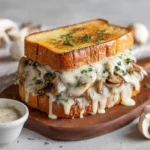
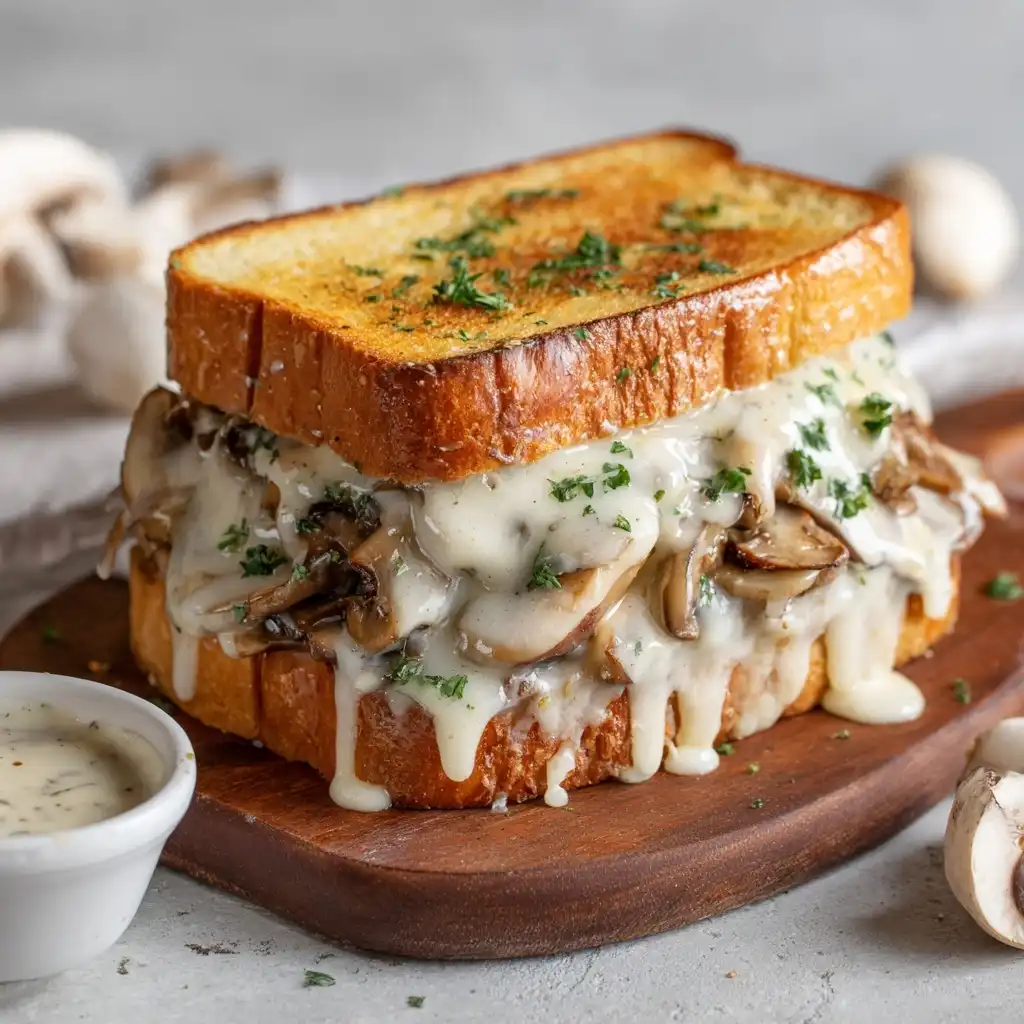
The Mushroom Swiss Sandwich is a beloved classic that bridges comfort food and gourmet simplicity—earthy, savory, and deeply satisfying. More than just a lunchtime staple, it’s a harmonious marriage of umami-rich sautéed mushrooms, melted Swiss cheese, and toasted artisan bread, often elevated with caramelized onions, garlic-infused butter, or a whisper of thyme. Whether enjoyed as a cozy café lunch, a hearty picnic centerpiece, or a sophisticated vegetarian main course, this sandwich delivers layered flavor, textural contrast, and nostalgic warmth in every bite. Its enduring appeal lies not only in its rich taste but also in its remarkable versatility: adaptable to dietary preferences, seasonal ingredients, and regional influences—making it as relevant today as it was decades ago.
The History
While no single inventor or exact origin date is documented, the Mushroom Swiss Sandwich emerged organically from mid-20th-century American diner culture, where Swiss cheese—imported since the 19th century but gaining broader domestic popularity post-WWII—and cultivated mushrooms (especially white button and cremini) became increasingly accessible in supermarkets. Swiss cheese’s nutty, slightly sweet profile and excellent meltability made it a natural partner for the deep, meaty savoriness of mushrooms—a synergy chefs and home cooks alike quickly recognized. Early iterations appeared in regional cookbooks and diner menus across the Midwest and Northeast, often served open-faced on rye or pumpernickel with horseradish cream or grainy mustard. The sandwich gained wider recognition in the 1970s and ’80s as upscale casual dining expanded, with chefs like Alice Waters and Wolfgang Puck championing ingredient-driven, rustic preparations that spotlighted high-quality, simple components—precisely what defines an exceptional Mushroom Swiss. Over time, it evolved beyond the diner counter into gastropubs, farm-to-table bistros, and even fine-dining tasting menus, where variations now feature foraged chanterelles, aged Gruyère, house-made brioche, or black truffle oil—proving that tradition and innovation can coexist beautifully on two slices of bread.
Ingredients Breakdown
Understanding each component’s role unlocks the full potential of this sandwich:
- Mushrooms: Cremini (baby bella) are the gold standard—more flavorful than white buttons yet milder and more affordable than wild varieties. Their dense texture holds up to sautéing without turning mushy, and their natural glutamates intensify umami. Portobello caps offer bold, meaty depth; shiitake lend an almost smoky, woodsy note; oyster mushrooms bring delicate sweetness and tender-crisp texture. Always clean mushrooms with a damp paper towel—not submerged water—to preserve integrity and prevent steaming instead of searing.
- Swiss Cheese: Authentic Emmental or Gruyère is ideal—both have low moisture, high fat, and complex nuttiness that melts smoothly into golden ribbons without greasing or clumping. American Swiss (a pasteurized process cheese) offers reliable melt and mild flavor but lacks depth. Jarlsberg adds buttery sweetness; Appenzeller brings spicy complexity; Comté offers caramelized richness. For vegan versions, high-fat, fermented cashew-based or coconut-oil-based Swiss-style cheeses (e.g., Miyoko’s or Violife) perform best when warmed slowly.
- Bread: A sturdy, medium-density loaf with structure and subtle flavor is essential. Sourdough provides tangy balance and crisp crust; brioche contributes buttery richness and tender crumb; whole-grain rye adds earthy heft and acidity that cuts through richness; ciabatta offers airy chew and excellent toastability. Avoid overly soft sandwich bread—it collapses under moisture and heat. Always slice ¾” thick for optimal structural integrity and surface area for browning.
- Aromatics & Seasonings: Yellow onions build foundational sweetness when caramelized slowly; shallots add refined sharpness; garlic (fresh, minced, or roasted) delivers pungent warmth. Fresh thyme or rosemary complements mushroom earthiness; a splash of dry sherry, Madeira, or brandy deglazes the pan and concentrates flavor. Umami boosters like soy sauce, tamari, or Worcestershire (vegan if needed) deepen savoriness without overt saltiness. Black pepper should be freshly cracked—its volatile oils awaken alongside the cheese’s nuttiness.
- Fats: Unsalted butter is irreplaceable for toasting bread—its milk solids brown for nutty aroma and crisp texture. For sautéing mushrooms, a blend of butter and high-smoke-point oil (like grapeseed or avocado) prevents burning while enabling proper Maillard browning. Olive oil works well for Mediterranean-inspired versions but may impart bitterness if overheated.
Step-by-Step Recipe
- Prep the Mushrooms: Wipe 12 oz (340 g) cremini mushrooms clean with a damp cloth. Trim tough stems; slice ¼” thick. Let rest on paper towels to air-dry for 5–10 minutes—this ensures searing, not steaming.
- Caramelize the Onions (Optional but Highly Recommended): In a wide, heavy-bottomed skillet over medium-low heat, melt 1 tbsp unsalted butter with 1 tsp olive oil. Add 1 thinly sliced yellow onion and a pinch of sugar. Cook gently, stirring every 3–4 minutes, for 20–25 minutes until deep amber, soft, and jammy. Transfer to a small bowl and set aside.
- Sauté the Mushrooms: In the same skillet over medium-high heat, add 1 tbsp butter and 1 tbsp neutral oil. Once shimmering (not smoking), add mushrooms in a single layer—do not overcrowd. Let sear untouched for 2 minutes until golden underneath, then stir. Continue cooking 5–7 minutes total, adding 2 minced garlic cloves and 1 tsp fresh thyme in the last minute. Stir in 1 tsp soy sauce and 1 tbsp dry sherry; cook 1 more minute until liquid evaporates. Season with sea salt and freshly cracked black pepper. Remove from heat and let cool slightly.
- Toast the Bread: Generously butter the outer surfaces of four ¾”-thick slices of sourdough or brioche. Heat a clean griddle or large nonstick skillet over medium heat. Place bread butter-side-down and toast 3–4 minutes per side until deep golden brown, crisp, and fragrant. Press gently with a spatula for even contact. Transfer to a wire rack.
- Assemble & Melt: Lay two toasted slices butter-side-up on a heatproof surface. Divide mushroom mixture evenly between them, spreading into an even layer. Top each with 2–3 oz (55–85 g) Swiss cheese—overlapping slices slightly ensures full coverage. Spoon caramelized onions over cheese. Cover loosely with foil or a lid and let rest 1 minute to begin gentle melting.
- Grill or Panini Press: Return sandwiches to the skillet over low heat (or use a panini press preheated to 325°F/165°C). Weight lightly with another skillet or press. Cook 4–5 minutes, flipping once halfway, until cheese is fully molten, bread is deeply toasted and crackling, and internal temperature reaches 155°F (68°C). For extra crispness, finish under a broiler for 30–60 seconds—watch closely!
- Rest & Serve: Transfer sandwiches to a cutting board. Tent loosely with foil and rest 2 minutes—this allows cheese to settle and prevents scalding bites. Slice diagonally and serve immediately with optional sides: dill pickle spears, arugula salad with lemon vinaigrette, or creamy tomato soup.
Tips
- Dry Your Mushrooms Thoroughly: Excess moisture is the #1 cause of soggy, steamed mushrooms instead of deeply browned, flavorful ones. Pat twice—before and after slicing.
- Don’t Rush the Sear: Crowding the pan lowers temperature drastically. Cook mushrooms in batches if needed. Let them sit undisturbed for the first 2 minutes to develop caramelized fond—the flavor base for the entire sandwich.
- Use Cold Butter for Toasting: Contrary to intuition, applying cold, firm butter to room-temp bread before toasting yields superior browning and less greasiness than softened butter.
- Layer Cheese Strategically: Place cheese directly on warm mushrooms—not on cold bread—to jumpstart melting. If using multiple cheeses (e.g., Swiss + a sliver of blue), put the milder one against the bread and stronger one on top.
- Control Moisture with Acid: A tiny squeeze of lemon juice over finished mushrooms brightens richness and balances fat—add just before assembling.
- Press Gently, Not Aggressively: Too much pressure squeezes out precious mushroom juices and flattens texture. Light, even weight preserves tenderness and juiciness.
- Invest in a Thermometer: For perfect melt without overheating, aim for 150–160°F (65–71°C) internally. Beyond that, Swiss can separate or become rubbery.
- Toast Bread Ahead, But Assemble Last Minute: Pre-toasted bread stays crisp for hours in an airtight container at room temp—but never assemble more than 5 minutes before serving.
- Reserve Mushroom Fond: Scrape the flavorful browned bits from the pan with a splash of broth or wine—use as a base for gravy, soup, or drizzle over the finished sandwich.
- Season in Layers: Salt mushrooms lightly while sautéing, again when seasoning the filling, and a final flaky sea salt sprinkle right before serving for dimensional salinity.
Variations and Customizations
By Mushroom Type
- Wild Mushroom Medley: Combine equal parts oyster, hen-of-the-woods, and dried porcini (soaked 20 min in hot water, chopped, liquid reserved for deglazing). Adds forest-floor complexity and chewy elegance.
- Truffle-Infused: Finish sautéed mushrooms with ½ tsp white truffle oil and shave fresh black truffle over assembled sandwich.
- Smoky Chipotle: Sauté mushrooms with 1 minced chipotle in adobo and ½ tsp smoked paprika for bold, barbecued depth.
By Cheese
- Gruyère & Caramelized Leek: Swap Swiss for aged Gruyère and replace onions with slow-cooked leeks for silky-sweet sophistication.
- Beer-Braised Swiss: Simmer sliced Swiss briefly in warm lager or stout before layering—adds malty tang and ultra-creamy texture.
- Goat Cheese Swirl: Blend 2 oz soft goat cheese with 1 tsp honey and 1 tbsp chives; spread thinly on bread beneath Swiss for bright, creamy contrast.
Dietary Adaptations
- Vegan: Use king oyster mushrooms (shredded to mimic “steak”), caramelized shallots, vegan Swiss (Miyoko’s Creamery), and cultured cashew butter instead of dairy butter. Deglaze with tamari and apple cider vinegar.
- Gluten-Free: Choose certified GF sourdough or seeded multigrain bread. Ensure soy sauce and Worcestershire are GF-compliant (e.g., Coconut Secret aminos).
- Low-Carb/Keto: Grill portobello caps as “buns,” stuff with mushroom-cheese filling, and top with roasted red peppers and basil oil.
- High-Protein Boost: Add a thin, grilled chicken cutlet or marinated tempeh slice between mushroom and cheese layers.
Global Twists
- French Bistro Style: Use pain de campagne, Gruyère, thyme, and Dijon mustard spread on the *inside* of bread before assembling. Serve with cornichons.
- Swiss Alpine: Incorporate diced boiled potatoes, pickled pearl onions, and a splash of kirsch. Serve with lingonberry compote.
- Japanese-Inspired: Sauté mushrooms with mirin, ginger, and scallions; use smoked Gouda instead of Swiss; garnish with nori strips and yuzu kosho.
- Mediterranean: Add sun-dried tomatoes, kalamata olives, roasted garlic, and feta crumbles atop the Swiss for briny, tangy brightness.
Health Considerations and Nutritional Value
A well-crafted Mushroom Swiss Sandwich can be both indulgent and nutritionally thoughtful. A standard version (using 2 slices sourdough, 12 oz cremini, 4 oz Gruyère, 2 tbsp butter, caramelized onions) delivers approximately 720–850 calories, with 42–48g protein, 40–45g carbohydrates (including 4–6g fiber), and 45–52g total fat (24–28g saturated). Key health highlights include:
- Mushrooms: Rich in B-vitamins (especially riboflavin, niacin, and pantothenic acid), selenium (a potent antioxidant), ergothioneine (a unique cytoprotective amino acid), and beta-glucans that support immune modulation and gut health. Cremini contain significantly more potassium and copper than white buttons.
- Swiss Cheese: An excellent source of calcium (25% DV per ounce), phosphorus, vitamin B12, and bioactive peptides shown to support bone density and cardiovascular function. Lower in lactose than many cheeses, making it more digestible for some with mild intolerance.
- Whole-Grain Bread Options: Provide complex carbohydrates, lignans, and prebiotic fibers that feed beneficial gut bacteria and stabilize blood sugar. Look for sprouted grain or 100% whole-wheat sourdough for enhanced mineral bioavailability and lower glycemic impact.
- Healthy Fats: Butter contains butyrate (anti-inflammatory short-chain fatty acid) and fat-soluble vitamins A, D, E, and K2—especially in grass-fed varieties. When balanced with mushrooms’ fiber and antioxidants, the overall meal supports satiety and metabolic health.
Considerations: Sodium content can run high (900–1,200 mg) due to cheese and seasonings—opt for low-sodium Swiss or reduce added salt. For heart health, moderate saturated fat by using half butter/half olive oil for sautéing and choosing reduced-fat Swiss (though flavor and melt suffer). Those managing histamine sensitivity should note that aged cheeses and fermented breads (sourdough) contain naturally occurring histamines—fresh mozzarella or young Gouda may be better tolerated.
Ingredients
- 12 oz (340 g) cremini mushrooms, wiped clean and sliced ¼” thick
- 1 medium yellow onion, thinly sliced
- 3 tbsp unsalted butter, divided
- 2 tbsp neutral oil (grapeseed, avocado, or light olive oil), divided
- 2 cloves garlic, finely minced
- 1 tsp fresh thyme leaves (or ½ tsp dried)
- 1 tbsp dry sherry or Madeira
- 1 tsp low-sodium soy sauce or tamari
- ½ tsp organic cane sugar (for onions)
- ¾ tsp fine sea salt, divided
- Freshly ground black pepper, to taste
- 4 slices (¾” thick) artisan sourdough or brioche bread
- 4 oz (115 g) high-quality Swiss cheese (Emmental or Gruyère), sliced ⅛” thick
- Optional: 2 tbsp caramelized onions (prepared separately), 1 tsp lemon juice, flaky sea salt for finishing
Directions
- In a large heavy-bottomed skillet over medium-low heat, melt 1 tbsp butter with 1 tsp oil. Add sliced onion and sugar; cook gently, stirring occasionally, for 20–25 minutes until deep golden and jammy. Transfer to a small bowl and set aside.
- In the same skillet over medium-high heat, combine remaining 2 tbsp butter and 1 tbsp oil. Once butter foams and subsides (about 1 minute), add mushrooms in a single layer. Let sear untouched for 2 minutes. Stir and continue cooking 5–7 minutes until deeply browned and moisture has evaporated.
- Add garlic and thyme; cook 1 minute until fragrant. Stir in sherry and soy sauce; cook 1 more minute until pan is nearly dry. Season with ½ tsp salt and several grinds of black pepper. Remove from heat; fold in caramelized onions if using. Let cool 3 minutes.
- Butter outer surfaces of bread slices generously with remaining 1 tbsp softened butter. Heat a clean griddle or large skillet over medium heat. Toast bread 3–4 minutes per side until deeply golden and crisp. Transfer to wire rack.
- Place two toasted slices on work surface, butter-side up. Divide mushroom mixture evenly. Top each with cheese slices, overlapping slightly. Cover loosely with foil; let sit 1 minute.
- Return sandwiches to skillet over low heat (or use panini press). Press gently with another skillet or lid. Cook 4–5 minutes, flipping once, until cheese is fully molten and bread is crackling-crisp.
- Transfer to cutting board; tent with foil and rest 2 minutes. Slice diagonally. Finish with lemon juice, flaky salt, and extra thyme if desired. Serve immediately.
FAQ
- Can I make this sandwich ahead of time?
- Yes—with caveats. You can prep mushrooms and caramelize onions up to 3 days ahead and refrigerate separately in airtight containers. Toast bread the day before and store at room temperature in a paper bag (not plastic) to retain crispness. However, never assemble and refrigerate—moisture will soften bread and cause cheese to weep. Assemble and grill within 5 minutes of serving for optimal texture.
- Why does my cheese never melt properly?
- Several factors: (1) Swiss cheese has relatively low moisture—use authentic Emmental or Gruyère, not American Swiss; (2) Low heat is essential—high heat causes proteins to seize and oil to separate; (3) Ensure mushrooms are warm (not cold from fridge) before adding cheese; (4) Covering loosely during initial assembly helps trap steam and initiate gentle melting.
- Can I bake this instead of grilling?
- Absolutely. Assemble sandwiches on a parchment-lined baking sheet. Bake at 375°F (190°C) for 12–15 minutes, flipping halfway, until cheese bubbles and bread is golden. For extra crispness, broil 1–2 minutes at the end—watch constantly.
- What’s the best way to reheat leftovers?
- Avoid the microwave—it makes bread soggy and cheese rubbery. Instead, slice leftover sandwich and pan-fry in butter over medium-low heat, covered, until heated through and cheese remelts (about 4 minutes per side). Or wrap tightly in foil and bake at 325°F (165°C) for 15 minutes.
- Is Swiss cheese gluten-free?
- Yes—pure Swiss cheese contains only milk, cultures, salt, and enzymes. However, always check labels for additives like anti-caking agents (e.g., wheat starch) in pre-shredded versions. Opt for block cheese you shred yourself for guaranteed GF safety.
- How do I prevent the sandwich from falling apart?
- Three keys: (1) Use thick-cut, sturdy bread (¾” minimum); (2) Press *gently* while cooking—too much force squeezes out filling; (3) Let rest 2 minutes after cooking—this allows cheese to set slightly and bind ingredients together. A serrated knife helps slice cleanly without dragging.
- Can I freeze this sandwich?
- Not recommended for best quality. Freezing causes bread to become gummy and cheese texture to degrade upon thawing. However, uncooked mushroom filling freezes beautifully for up to 3 months—thaw overnight in fridge before using.
- What wine or beverage pairs best?
- A dry Riesling or off-dry Gewürztraminer balances richness with bright acidity and floral notes. For beer lovers, a Belgian Dubbel or German Märzen offers caramel malt and subtle spice. Non-alcoholic options: chilled hibiscus-ginger shrub, sparkling apple cider, or roasted barley tea.
Summary
The Mushroom Swiss Sandwich is a timeless celebration of umami depth, textural harmony, and rustic elegance—where humble mushrooms and nutty Swiss cheese transform through careful technique into something profoundly comforting and deeply flavorful. With endless customization potential—from wild-foraged variations and global accents to vegan and gluten-free adaptations—it remains as versatile and nourishing as it is delicious.
Whether crafted in a professional kitchen or a home stove, its magic lies in respecting each ingredient’s integrity: drying mushrooms thoroughly, caramelizing onions slowly, toasting bread with intention, and melting cheese with patience—because greatness, like the finest Swiss, is always aged with care.