Introduction
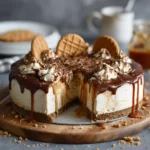
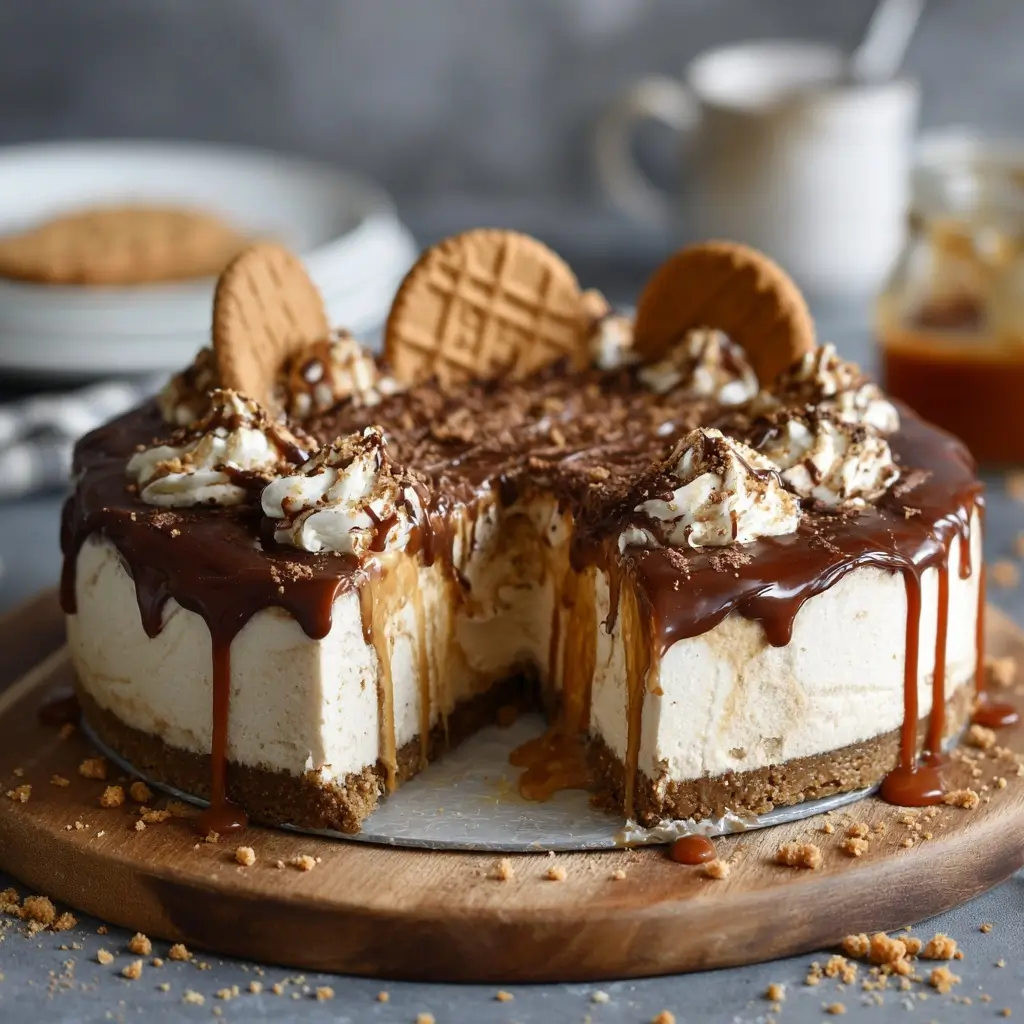
Welcome to the decadent world of no-bake desserts—where rich flavor meets effortless elegance! The No-Bake Biscoff Cookie Butter Cheesecake is a showstopping, refrigerator-set masterpiece that marries the warm, caramelized spice of Lotus Biscoff cookies with the luxuriously creamy tang of classic cheesecake. Unlike traditional baked versions that require precise oven temperatures and water baths, this version delivers restaurant-quality texture and depth in under 30 minutes of active prep—plus chilling time. It’s the perfect crowd-pleaser for summer barbecues, holiday dessert tables, bridal showers, or even a well-deserved “me-time” treat after a long week. With its buttery graham cracker crust, velvety Biscoff-infused filling, glossy cookie butter drizzle, and artful garnishes, every slice feels like a celebration—no oven, no stress, no compromise.
The History
The story of this cheesecake begins not in a New York deli or a Parisian patisserie—but in the quiet kitchens of home bakers worldwide who discovered the magic of Lotus Biscoff in the early 2010s. Originally launched in Belgium in 1932 as “Speculoos” biscuits—spiced shortcrust wafers traditionally enjoyed with coffee—the Lotus brand gained global fame after rebranding as “Biscoff” and launching its smooth, spreadable Cookie Butter in 2008. Its deep notes of cinnamon, ginger, nutmeg, caramel, and brown sugar quickly became a viral pantry staple.
Meanwhile, no-bake cheesecakes have long been cherished for their accessibility—dating back to mid-20th-century American cookbooks that championed convenience amid rising suburban lifestyles. Early versions relied on cream cheese, whipped topping, and gelatin or evaporated milk for stability. As food bloggers and social media platforms exploded in the 2010s, creative hybrids emerged: peanut butter swirls, Oreo layers, matcha infusions—and inevitably, the irresistible union of Biscoff and cheesecake. By 2015, #BiscoffCheesecake had over 250,000 Instagram posts; by 2018, it was featured in Food & Wine, Taste of Home, and even Starbucks’ limited-edition menu (as a Biscoff Frappuccino-inspired cake pop). This recipe honors that evolution—paying tribute to Belgian baking tradition, American no-bake ingenuity, and the digital-age spirit of playful, shareable dessert innovation.
Ingredients Breakdown
Every exceptional no-bake cheesecake starts with intentionality—not just measurements, but *why* each ingredient matters. Here’s what makes this version uniquely balanced, stable, and unforgettable:
- Graham Cracker Crumbs (1 ½ cups): Provides structure and subtle sweetness. Whole-grain graham crackers add gentle fiber and toasty notes—avoid honey or cinnamon varieties unless you want amplified spice. Finely crushed (not sandy) for optimal binding.
- Unsalted Butter (6 tbsp, melted): Acts as the glue—melting the crumbs into a cohesive, sliceable base. Unsalted ensures full control over sodium levels and lets Biscoff’s natural saltiness shine.
- Granulated Sugar (2 tbsp): Enhances crust browning and balances acidity. Not overly sweet—just enough to complement, not compete.
- Cream Cheese (16 oz, full-fat, room temperature): The heart of the filling. Must be truly softened (65–70°F)—cold cream cheese causes lumps; overheated or microwaved versions break and weep. Full-fat ensures richness, body, and proper emulsification with Biscoff.
- Lotus Biscoff Cookie Butter (¾ cup, smooth, not crunchy): The star. Use authentic Lotus brand for consistent spice profile and emulsified texture. Contains roasted speculoos paste, sugar, oils, and spices—providing both flavor *and* fat content critical for mouthfeel and stability.
- Powdered Sugar (1 cup, sifted): Dissolves instantly, adds sweetness without graininess, and contributes to the ultra-smooth, airy texture when whipped. Sifting prevents clumps and ensures even incorporation.
- Heavy Whipping Cream (1 ¼ cups, cold): Adds volume, silkiness, and luxurious melt-in-your-mouth quality. Cold cream whips better and stabilizes the filling—never substitute with half-and-half, milk, or plant-based creams unless using a tested dairy-free adaptation.
- Vanilla Extract (1 tsp, pure): Deepens warmth and rounds out the spice profile—complements cinnamon and caramel without overpowering.
- Sea Salt (¼ tsp, fine): A chef’s secret weapon. Elevates all other flavors, cuts through sweetness, and enhances the toasty, almost molasses-like depth of Biscoff.
- Optional Garnishes: Reserved whole Biscoff cookies, crumbled cookies, extra cookie butter drizzle, flaky sea salt, edible gold dust, caramelized white chocolate shavings, or a light dusting of ground cinnamon or cardamom.
Note on stabilizers: This recipe intentionally omits gelatin, cornstarch, or agar-agar. Instead, it relies on the natural thickening power of chilled heavy cream + full-fat cream cheese + Biscoff’s high fat content (≈45% oil) to achieve firm yet tender set. Proper chilling (minimum 8 hours, ideally 12–24) is non-negotiable for structural integrity.
Step-by-Step Recipe
- Prepare the Crust (5 minutes + cooling): In a medium bowl, combine graham cracker crumbs, granulated sugar, and melted butter. Mix with a fork until evenly moistened and resembling wet sand. Press firmly into the bottom and 1 inch up the sides of a 9-inch springform pan using the bottom of a flat measuring cup or glass. Ensure edges are even and compacted—this prevents crumbling when slicing. Refrigerate uncovered for at least 30 minutes (or freeze for 15) to fully set.
- Beat the Cream Cheese Base (4 minutes): Using a stand mixer fitted with the paddle attachment (or hand mixer on medium), beat softened cream cheese on medium speed for 1–2 minutes until completely smooth and lump-free. Scrape down the bowl thoroughly. Add Biscoff cookie butter and beat 1 minute more until homogenous and glossy. Scrape again.
- Incorporate Sweetness & Flavor (2 minutes): With mixer on low, gradually add sifted powdered sugar in three additions, beating 20 seconds between each. Add vanilla extract and fine sea salt. Beat on medium for 30 seconds until fully combined. Scrape bowl one final time.
- Whip the Cream (3–4 minutes): In a separate large, chilled bowl, whip cold heavy cream on medium-high speed until soft peaks form—about 1–1.5 minutes. Increase speed to high and continue whipping just until stiff peaks hold (do not over-whip into butter!). Gently fold ⅓ of the whipped cream into the Biscoff mixture with a silicone spatula using broad, slow strokes to lighten the batter. Then carefully fold in remaining cream in two additions, rotating the bowl and lifting from bottom to top—stop as soon as no white streaks remain. Overmixing deflates air and yields denser texture.
- Assemble & Chill (1 minute + minimum 8 hours): Pour filling evenly over chilled crust. Smooth the top with an offset spatula or the back of a spoon. Optional: Swirl 2–3 tbsp additional Biscoff on surface with a toothpick for marbled effect. Cover loosely with plastic wrap (touching surface to prevent condensation) and refrigerate for a minimum of 8 hours—or preferably overnight (12–16 hours) for cleanest slices and most developed flavor.
- Unmold & Garnish (5 minutes): Run a thin, flexible knife around inner edge of pan. Release springform collar. For flawless presentation, place pan on a heated kitchen towel (10 sec microwave) or dip base briefly in warm water—this loosens the crust. Transfer cake to a serving platter. Drizzle generously with warmed Biscoff (microwave 15 sec, stir, repeat if needed), then top with crushed cookies, whole Biscoff, and a pinch of flaky salt. Serve chilled with a warm knife dipped in hot water between cuts.
Tips
- Room Temperature Is Non-Negotiable: Cream cheese must be truly softened—not just “out of the fridge.” Leave unwrapped at room temp for 1.5–2 hours. If rushed, cut into ½-inch cubes and let sit 30 minutes—never microwave.
- Chill Your Tools: Chill your mixing bowl and whisk/beaters before whipping cream. Cold tools = faster, sturdier peaks.
- Measure Biscoff by Weight When Possible: Volume measures vary wildly—¾ cup smooth Biscoff = ~180g. A kitchen scale ensures consistency.
- Prevent Weeping: Avoid opening the fridge during first 4 hours of chilling. Rapid temperature shifts cause condensation and watery separation.
- For Ultra-Shiny Drizzle: Warm Biscoff gently—overheating causes oil separation. Stir constantly. Add ½ tsp neutral oil (grapeseed or sunflower) if too thick.
- Slicing Like a Pro: Use a thin, sharp knife dipped in hot water and wiped dry before each cut. Wipe blade after every slice for pristine edges.
- Crust Too Crumbly?: Add ½–1 tsp extra melted butter next time—or pulse 2–3 whole Biscoff cookies into your crumb mixture for added binding and flavor boost.
- Too Sweet?: Reduce powdered sugar to ¾ cup and increase sea salt to ⅓ tsp—Biscoff’s caramel notes will still shine, with better balance.
- Make-Ahead Magic: Fully assembled and chilled cakes keep beautifully for up to 5 days refrigerated (covered). Freeze unfrosted for up to 3 months—thaw overnight in fridge before garnishing.
Variations and Customizations
This recipe is endlessly adaptable—whether accommodating dietary needs, seasonal ingredients, or bold flavor experiments. All variations maintain the no-bake integrity and signature Biscoff-cream cheese harmony:
Dietary Adaptations
- Vegan Version: Substitute full-fat coconut cream (chilled overnight, solid part only) for heavy cream; use vegan cream cheese (e.g., Kite Hill or Miyoko’s); replace butter with refined coconut oil; and choose certified vegan Biscoff-style spread (check labels—some contain whey). Add 1 tsp apple cider vinegar to mimic tang.
- Gluten-Free: Use GF graham crackers (like Schär or Pamela’s) or GF digestive biscuits. Verify Biscoff is certified GF (Lotus brand is in the US/UK/EU).
- Lower-Sugar: Swap powdered sugar for erythritol-based confectioners’ blend (1:1), use reduced-sugar Biscoff (if available), and add 1 tsp lemon juice to brighten without extra sweetness.
Flavor Twists
- Biscoff Caramel Swirl: Layer ¼ cup salted caramel sauce between crust and filling, or ripple into batter before chilling.
- Espresso Biscoff: Dissolve 1 tbsp instant espresso powder in 1 tsp hot water; cool, then fold into cream cheese mixture pre-whipped cream.
- Spiced Chai Infusion: Steep 2 chai tea bags in ¼ cup warm heavy cream for 5 minutes; chill, then whip with remaining cream.
- White Chocolate Biscoff: Fold in ½ cup finely chopped high-quality white chocolate (tempered or stabilized) after folding in whipped cream.
- Blackberry-Biscoff Compote Topper: Simmer 1 cup blackberries + 2 tbsp sugar + 1 tsp lemon juice until jammy (10 min); cool completely and spoon over individual slices.
Textural & Presentation Upgrades
- Crunchy Layer: Press a thin layer of crushed Biscoff cookies into the top of the filling before chilling for a delightful contrast.
- Chocolate Ripple: Melt and cool ¼ cup dark chocolate (70%), then swirl into batter with a knife before refrigerating.
- Mini Mason Jar Edition: Layer crust, filling, and garnish in 6–8 oz sterilized mason jars. Chill 6 hours. Perfect for parties or gifts.
- Naked Cake Style: Skip the crumb coating—serve with exposed, elegantly imperfect sides and a generous cookie butter drip down the exterior.
Health Considerations and Nutritional Value
While undeniably indulgent, this no-bake cheesecake can fit thoughtfully into a balanced lifestyle—especially when understood, portioned, and occasionally adapted. Here’s a realistic, science-informed perspective:
Nutrition Snapshot (Per Standard Slice, 1/12 of 9-inch cake)
- Calories: ~420–460 kcal
- Total Fat: 32–36g (including 18–20g saturated fat)
- Carbohydrates: 30–34g (24–27g sugars)
- Protein: 5–6g
- Fiber: ~0.5g (from graham crackers—boost with GF oat-based crust)
- Sodium: ~220–260mg
Key Observations:
- Cream Cheese Benefits: Contains vitamin A, small amounts of calcium and B12, and conjugated linoleic acid (CLA)—a fatty acid studied for potential metabolic support.
- Biscoff Nuances: While high in added sugar, authentic Biscoff contains no artificial preservatives, colors, or hydrogenated oils—and derives its caramel notes from roasted speculoos paste, not pure cane syrup alone.
- Why It’s More Satisfying Than Expected: High fat + moderate protein + complex carbs from graham crackers promote satiety and slower glucose response versus high-sugar, low-fat alternatives.
- Portion Wisdom: A 2-inch slice (vs. oversized restaurant portions) delivers pleasure without excess. Pair with herbal tea or fresh berries to round out the experience nutritionally.
- Notable Absences: Zero trans fats, zero cholesterol-raising hydrogenated oils, zero artificial sweeteners (unless customized), and no refined flour beyond the crust.
Mindful Enjoyment Tips:
- Enjoy after a balanced meal—not on an empty stomach—to stabilize blood sugar.
- Share generously: This cake shines brightest when served socially—not eaten solo from the container.
- Listen to your body: One slice often satisfies more than expected due to richness and texture.
- Rotate desserts weekly—don’t let Biscoff replace whole-food sweets like baked apples or yogurt parfaits.
Remember: Nutrition isn’t just about numbers—it’s about joy, culture, connection, and sustainability. This cheesecake embodies celebration, craftsmanship, and comfort. Honor it as such.
Ingredients
- 1 ½ cups (150g) graham cracker crumbs (about 12 full sheets)
- 6 tablespoons (85g) unsalted butter, melted
- 2 tablespoons (25g) granulated sugar
- 16 ounces (450g) full-fat brick-style cream cheese, softened to room temperature
- ¾ cup (180g) smooth Lotus Biscoff Cookie Butter (not crunchy)
- 1 cup (120g) powdered sugar, sifted
- 1 ¼ cups (300ml) cold heavy whipping cream (≥36% fat)
- 1 teaspoon (5ml) pure vanilla extract
- ¼ teaspoon (1g) fine sea salt
- Additional smooth Biscoff for drizzling (¼–½ cup)
- Garnishes: crushed Biscoff cookies, whole Biscoff cookies, flaky sea salt
Directions
- Lightly grease a 9-inch springform pan and line the bottom with parchment paper (optional but recommended for easy release).
- In a medium bowl, combine graham cracker crumbs, granulated sugar, and melted butter. Mix with a fork until all crumbs are evenly moistened and the mixture holds together when pinched.
- Press mixture firmly and evenly into the bottom and 1 inch up the sides of the prepared pan. Use the flat bottom of a measuring cup or glass to compact thoroughly. Refrigerate uncovered for at least 30 minutes—or freeze for 15 minutes—to set.
- Using a stand mixer fitted with the paddle attachment (or hand mixer), beat softened cream cheese on medium speed for 1–2 minutes until completely smooth and free of lumps. Scrape down bowl and beater.
- Add Biscoff cookie butter and beat on medium for 1 minute until fully incorporated and glossy. Scrape bowl again.
- With mixer on low speed, gradually add sifted powdered sugar in three parts, beating 20 seconds after each addition. Add vanilla extract and sea salt; beat on medium for 30 seconds until combined. Scrape bowl one last time.
- In a separate large, chilled bowl, whip cold heavy cream on medium-high speed until soft peaks form (1–1.5 minutes). Increase speed to high and whip until stiff peaks hold—do not over-whip.
- Using a large silicone spatula, gently fold ⅓ of the whipped cream into the Biscoff mixture to lighten. Then carefully fold in remaining whipped cream in two additions, rotating bowl and lifting from bottom to top—stop as soon as batter is uniform and no streaks remain.
- Pour filling over chilled crust. Smooth top with an offset spatula. Optional: Drizzle 2 tablespoons Biscoff over top and swirl gently with a toothpick for marbling.
- Cover loosely with plastic wrap, ensuring wrap touches surface to prevent drying. Refrigerate for a minimum of 8 hours—or ideally 12–24 hours—for cleanest slices and fullest flavor development.
- To serve: Run a thin knife around inner edge. Release springform collar. For best release, briefly warm base of pan on a damp, warm kitchen towel (10 seconds) or dip in warm water. Slide onto serving plate. Drizzle with warmed Biscoff, garnish generously, and slice with hot, wiped knife.
FAQ
- Can I use crunchy Biscoff instead of smooth?
- Yes—but with caveats. Crunchy Biscoff adds delightful texture, yet its chunky bits may inhibit ultra-smooth filling. For best results: Blend ½ cup crunchy Biscoff with the cream cheese until fully smooth *before* adding remaining smooth Biscoff. Or reserve crunchy Biscoff exclusively for garnish or crust mix-in.
- What if my filling is too soft or won’t set?
- First, verify your cream cheese was truly room temperature (not cold or microwaved) and your heavy cream was *cold*. Next, ensure full 8+ hour chill—ideally overnight. If still soft, your cream may have been slightly warm or over-whipped. For future batches, chill bowl/beaters, and stop whipping cream at stiff peaks—not dry/buttery. You can also add 1 tsp unflavored gelatin (bloomed in 1 tbsp cold water, then microwaved 5 sec and cooled) to cream cheese mixture before folding in cream.
- Can I make this in advance?
- Absolutely! This cheesecake tastes even better after 24–48 hours of chilling—the flavors meld and deepen. Fully assembled, it keeps covered in the refrigerator for up to 5 days. For longer storage, freeze *without garnish*: Wrap tightly in plastic, then foil. Thaw overnight in fridge before drizzling and serving. Keeps frozen up to 3 months.
- Is there a substitute for heavy cream?
- For best texture and stability, no. Half-and-half, whole milk, or coconut milk lack sufficient fat content to whip and stabilize. However, a tested alternative is chilled full-fat canned coconut milk (solid part only, whipped with 1 tbsp powdered sugar and ½ tsp vinegar) for vegan versions. Never use “lite” coconut milk or coffee creamers.
- Why does my crust stick to the pan?
- Two likely culprits: insufficient chilling time (must be ≥30 min) or inadequate butter ratio. Ensure butter is fully melted and evenly distributed. Also, always line the bottom with parchment—or run a warm knife around the edge before unmolding. A quick warm-water dip on the pan base works wonders.
- Can I use another cookie butter?
- You can—but flavor and texture will differ significantly. Many “speculoos” or “cookie butter” brands contain palm oil, different spice blends, or added stabilizers that affect emulsification. For guaranteed success and authentic taste, stick with Lotus Biscoff. If experimenting, start with ½ cup and adjust to taste.
- How do I prevent cracks or bubbles on the surface?
- This no-bake version doesn’t crack like baked cheesecakes—but air bubbles can appear if batter is overmixed or poured too vigorously. To avoid: tap pan firmly on counter 3–4 times after pouring to release trapped air. Also, avoid over-folding the whipped cream.
- Can kids help make this?
- Yes! It’s a fantastic family-friendly recipe. Kids can crush graham crackers (in a zip-top bag with a rolling pin), stir crust mixture, measure powdered sugar, and help fold in whipped cream (with supervision). It teaches measuring, texture awareness, and patience with chilling—a delicious life lesson!
Summary
This No-Bake Biscoff Cookie Butter Cheesecake is a masterclass in effortless luxury—combining the nostalgic warmth of spiced Belgian cookies with the creamy sophistication of classic cheesecake—all without turning on your oven.
With a buttery graham crust, velvety Biscoff-cream cheese filling, glossy cookie butter drizzle, and endless customization options, it’s as versatile as it is unforgettable—perfect for beginners, entertainers, and dessert devotees alike.