Introduction
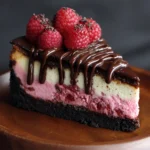
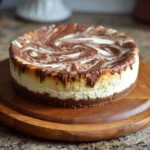
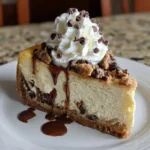
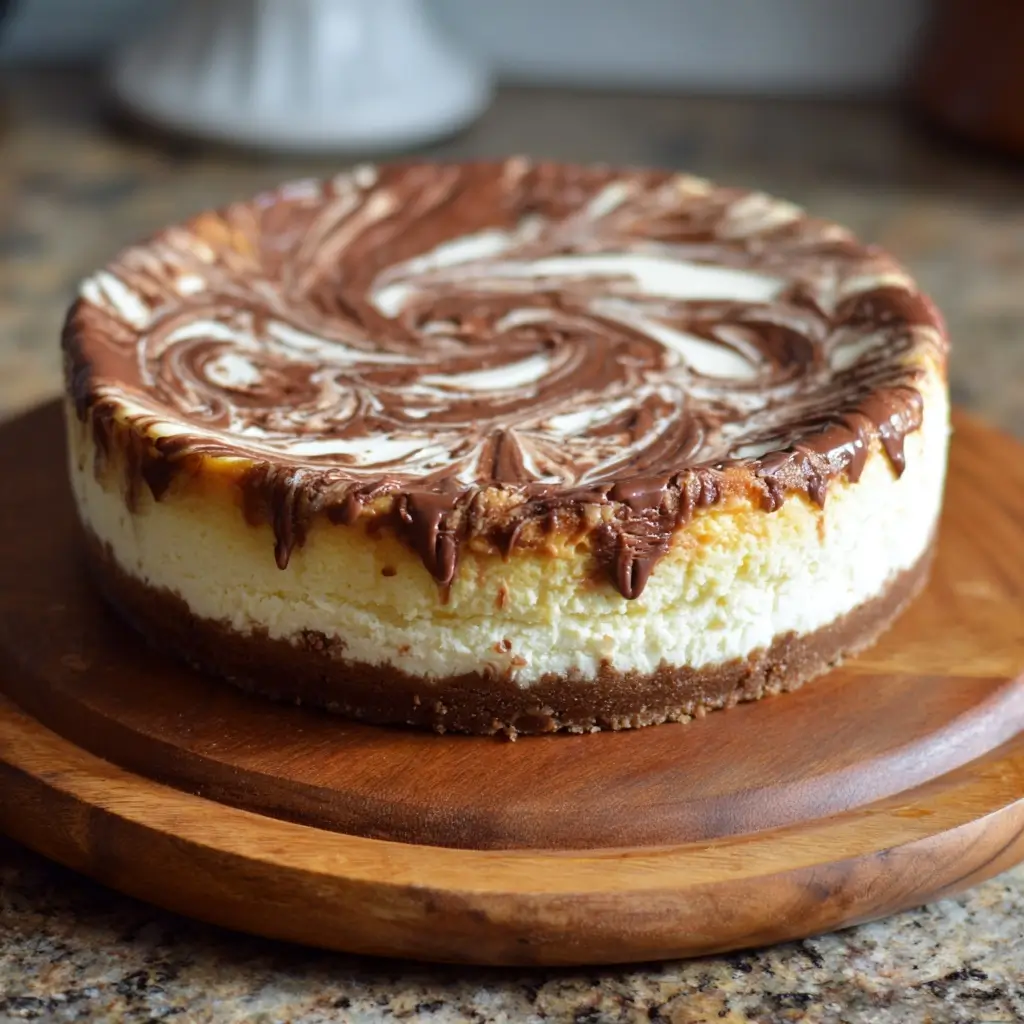
Welcome to the decadent world of Nutella Swirl Cheesecake—a luxurious fusion of creamy New York–style cheesecake and the iconic Italian chocolate-hazelnut spread that has captured hearts worldwide. This isn’t just dessert—it’s an experience: velvety, rich, deeply aromatic, and visually stunning with its signature marbled ribbons of glossy Nutella swirling through a cloud-like, golden-brown-topped cheesecake. Whether you’re baking for a special occasion, impressing guests at a dinner party, or treating yourself after a long week, this recipe delivers restaurant-quality elegance with surprisingly approachable technique. It balances indulgence with precision—offering structure without stiffness, sweetness without cloyingness, and texture without compromise. From the buttery graham cracker crust that provides a crisp, caramelized foundation to the luxuriously dense yet airy filling infused with vanilla bean, espresso depth, and just the right amount of tang, every bite tells a story of thoughtful craftsmanship—and yes, a generous swirl of Nutella that melts, pools, and transforms as it bakes into molten pockets of nutty, bittersweet magic.
The History
The origins of Nutella Swirl Cheesecake are delightfully modern and organic—a natural evolution born from two beloved global icons. Cheesecake itself traces back over 2,000 years to ancient Greece, where early versions were made with honey-sweetened cheese and flour, served to athletes during the first Olympic Games in 776 BCE. It migrated through Rome, medieval Europe, and finally blossomed into its American incarnation in the late 19th and early 20th centuries—most notably with Arnold Reuben’s famed “New York Cheesecake” in the 1920s and later, the legendary Junior’s and Lindy’s iterations that defined creamy, dense, oven-baked perfection.
Nutella, by contrast, is a post-war innovation born of scarcity and ingenuity. In 1946, Pietro Ferrero—a pastry maker in Alba, Italy—faced cocoa shortages after WWII and ingeniously blended roasted hazelnuts (abundant in Piedmont) with a touch of cocoa, sugar, palm oil, and skim milk powder to create “Pasta Gianduja”—a solid block spread. By 1951, it evolved into “Supercrema,” and in 1964, under Michele Ferrero’s leadership, it was reborn as Nutella, derived from “nut” + “ella” (a diminutive Italian suffix meaning “lovely” or “little”). Its global explosion began in the 1960s and 70s, eventually becoming synonymous with breakfast joy, midnight cravings, and creative culinary reinterpretation.
The marriage of Nutella and cheesecake emerged organically in the early 2000s among food bloggers and home bakers experimenting with swirl techniques—first as simple ribboned variations on no-bake recipes, then refined into sophisticated baked versions using water-bath (bain-marie) methods to prevent cracking and ensure silkiness. Social media accelerated its rise: Instagram-worthy marbling, TikTok “swirl hacks,” and Pinterest-fueled nostalgia transformed it from a niche treat into a cultural phenomenon—appearing in bakery windows from Tokyo to Toronto, featured in Bon Appétit, Food & Wine, and even as a limited-edition flavor at high-end patisseries like Dominique Ansel and Milk Bar. Today, Nutella Swirl Cheesecake stands as a delicious testament to cross-cultural innovation—where Italian resilience meets American baking tradition, elevated by global pantry staples and shared online with love.
Ingredients Breakdown
Every element in this Nutella Swirl Cheesecake plays a precise, intentional role—not just in flavor, but in chemistry, texture, and structural integrity. Let’s explore each component in detail:
The Crust
- Graham cracker crumbs (1 ½ cups / ~150g): Provides structure, sweetness, and gentle caramel notes. Whole-grain graham crackers add subtle fiber and deeper molasses complexity; honey graham variants enhance floral sweetness. Avoid cinnamon or chocolate varieties unless intentionally customizing—they can clash with Nutella’s roasted profile.
- Granulated sugar (3 tbsp / 36g): Enhances browning via the Maillard reaction and balances the slight bitterness of whole-wheat crumbs. Brown sugar may be substituted for richer molasses depth—but reduce by 1 tsp to avoid excess moisture.
- Unsalted butter (6 tbsp / 85g), melted: Acts as the binding agent. Clarified butter yields a crisper, more stable crust; standard unsalted butter offers superior flavor and easier handling. Salt content must be controlled separately—hence “unsalted” is non-negotiable for consistency.
- Pinch of flaky sea salt (¼ tsp): A secret weapon—elevates all other flavors, counters sweetness, and enhances perceived richness without tasting salty.
The Cheesecake Filling
- Cream cheese (24 oz / 680g), full-fat, room temperature: The backbone. Must be Philadelphia-style (or equivalent)—no low-fat, no whipped, no “spreadable” varieties. Cold cream cheese causes lumps; overly warm cheese introduces air pockets and destabilizes emulsion. Room temperature = 68–72°F (20–22°C), soft enough to indent with fingertip but still holding shape.
- Granulated sugar (1 ¼ cups / 250g): Sweetens *and* tenderizes—sugar interferes with protein coagulation, yielding a smoother, less rubbery set. Confectioners’ sugar is avoided—it contains cornstarch, which dulls flavor and thickens unevenly.
- Sour cream (1 cup / 240g), full-fat, room temperature: Adds acidity for brightness, fat for lushness, and moisture for tenderness. Low-fat sour cream separates and curdles; Greek yogurt may substitute *only* if strained overnight to match viscosity and pH.
- Full-fat heavy cream (½ cup / 120ml), cold: Introduces extra dairy fat and stabilizes the batter’s emulsion. Cold cream helps lower overall batter temperature pre-bake—critical for minimizing thermal shock and cracking.
- Large eggs (3), room temperature: Provide structure via protein coagulation—but must be added one at a time, fully incorporated before the next, to avoid over-aeration. Cold eggs cause temperature inconsistency; yolks add richness, whites add lift—so whole eggs are essential.
- Egg yolk (1 extra), room temperature: An optional but highly recommended refinement—the additional yolk contributes lecithin (a natural emulsifier), deep yellow hue, and unparalleled silkiness. Do not skip if pursuing ultra-luxury texture.
- Pure vanilla extract (2 tsp) + seeds from 1 vanilla bean (scraped): Dual-layer vanilla infusion—extract for immediate aromatic impact, seeds for visual speckling and lingering, floral-woody complexity. Imitation vanilla lacks nuance and can taste medicinal when baked.
- Unsweetened Dutch-process cocoa powder (1 tbsp / 5g), sifted: Not for chocolate flavor per se—but for subtle bitterness that cuts through Nutella’s sweetness and enhances its roasted hazelnut notes. Dutch-process is alkalized, mellow, and dissolves cleanly; natural cocoa is too acidic and may cause curdling.
- Fine sea salt (¾ tsp): Balances sweetness, enhances umami, and sharpens all other flavors. Kosher salt is acceptable but weighs differently—use 1 tsp if substituting.
- Espresso powder (1 tsp, instant, finely ground): A “stealth ingredient.” It doesn’t make the cake taste like coffee—it intensifies chocolate and hazelnut flavors through flavor synergy (similar to how salt enhances tomatoes). Omit only if allergic; do not substitute brewed coffee (adds unwanted liquid).
The Nutella Swirl
- Nutella (¾ cup / 210g), room temperature: Must be freshly opened or well-stirred—separated oil ruins marbling. Never microwave or heat directly; instead, let sit at room temp 30–45 minutes. Thinner Nutella swirls more elegantly; overly stiff Nutella resists blending and creates muddy streaks. For best marbling, gently fold Nutella with 1 tbsp of room-temp heavy cream to loosen slightly—just enough to ribbon smoothly but not so much that it bleeds.
- Optional enhancement: 1 tbsp Frangelico or hazelnut liqueur: Added to the Nutella swirl for aromatic amplification—intensifies roasted nut notes and adds a delicate boozy warmth that evaporates during baking. Non-alcoholic substitute: ½ tsp hazelnut extract + ½ tsp almond extract.
The Water Bath (Bain-Marie)
- Hot tap water (enough to reach halfway up springform pan): Regulates oven temperature, prevents surface drying/cracking, and ensures gentle, even heat transfer. Critical for custard-based bakes. Use a roasting pan large enough to hold the springform with 2″ clearance on all sides.
- Aluminum foil (heavy-duty, double-layered): Wrapped tightly around the *outside* base and up the sides of the springform pan to prevent water seepage. Leakage = soggy crust, ruined texture, and potential electrical hazard. Foil must be seamless—no gaps, no tears, no shortcuts.
Step-by-Step Recipe
This method prioritizes control, consistency, and crack-free results. Total active time: ~45 minutes. Bake time: 1 hour 45 minutes. Cooling & chilling: minimum 12 hours (ideally 24–48). Yield: 14–16 servings (10-inch springform pan).
Step 1: Prepare the Pan & Preheat Oven
Wrap the *outside* of a 10-inch springform pan with two overlapping layers of heavy-duty aluminum foil, sealing tightly at the base and extending at least 3 inches up the sides. Place on a large rimmed baking sheet (for stability and spill containment). Position an oven rack in the lower third. Preheat oven to 325°F (163°C)—do not skip preheating; thermal shock causes cracks. Fill a kettle with 4–5 cups of water and bring to a gentle simmer (not boil) while preparing batter—this ensures hot water is ready for the bath.
Step 2: Make the Crust
In a food processor, pulse graham crackers until fine, sandy crumbs form (~15 seconds). Add sugar and salt; pulse 3 times to combine. Pour in melted butter and pulse in 1-second bursts until mixture resembles wet sand and holds together when pinched. Transfer to prepared pan. Press firmly and evenly into bottom and 1 inch up sides using the flat bottom of a measuring cup or glass. Chill uncovered for 20 minutes to set.
While chilling, bake crust: Place pan on center oven rack. Bake 10 minutes until fragrant and lightly golden. Remove, place on wire rack, and cool completely—*at least* 20 minutes. Do not skip cooling—hot crust melts filling on contact.
Step 3: Prepare Nutella Swirl Mixture
In a small bowl, stir Nutella with 1 tbsp heavy cream and (optional) Frangelico or extracts until smooth and slightly loosened—should ribbon slowly off a spoon. Cover and set aside at room temperature. Do not refrigerate—chilled Nutella hardens and won’t swirl.
Step 4: Make the Cheesecake Batter
Using a stand mixer fitted with paddle attachment (or hand mixer with strong motor), beat cream cheese on medium-low for 1 minute until completely smooth and lump-free—scrape bowl thoroughly. Add sugar and beat 2 minutes until pale and fluffy—do not rush; this incorporates air *strategically*. Scrape bowl and beater.
Add sour cream; beat 1 minute on medium until fully incorporated and silky. Scrape bowl.
Add heavy cream; beat 30 seconds on low—just until blended. Scrape bowl.
Add eggs one at a time on low speed, beating *just until yolk disappears* (5–8 seconds each). Scrape bowl after each addition. Add extra yolk; beat 5 seconds. Overmixing = cracked cake.
With mixer on lowest setting, add vanilla extract, scraped vanilla seeds, cocoa powder, salt, and espresso powder. Beat 15 seconds—just until no dry streaks remain. Scrape bowl and beater. Batter should be thick, glossy, and uniform—no lumps, no streaks, no air bubbles.
Step 4.5: Portion & Layer (Key for Clean Swirling)
Reserve 1 cup of batter in a separate bowl (this will become the top layer). Pour remaining batter into cooled crust. Tap pan sharply 5 times on counter to release air bubbles. Smooth top with offset spatula.
Drop Nutella mixture by tablespoonfuls evenly over surface. Using a thin knife or skewer, drag gently in figure-eights, then zigzags, then concentric circles—*never* over-swirl. Aim for bold, contrasting ribbons—not uniform blending. Then, spoon reserved 1 cup batter over top in dollops. With clean knife, make 3–4 *very light* vertical passes—just enough to partially submerge swirls and create depth. Do not smooth top—natural peaks enhance rustic elegance.
Step 5: Bake in Water Bath
Place springform pan inside roasting pan. Carefully pour hot (not boiling) water into roasting pan until it reaches halfway up sides of springform pan (~1 ½ inches). Gently transfer roasting pan to preheated oven. Close oven door slowly—avoid jostling.
Bake 1 hour 30 minutes. Cake is done when edges are puffed and set, center is *just* wobbly (like Jell-O) with a 2-inch unmoving circle, and internal temperature reads 150–152°F (65–67°C) on an instant-read thermometer inserted 1 inch from edge. Do *not* open oven during first 75 minutes.
Turn off oven. Crack door open 1 inch with wooden spoon handle. Let cake cool *in oven* for 1 hour—this gradual cooldown prevents collapse and cracking.
Step 6: Chill & Set
Remove roasting pan from oven. Carefully lift springform pan out of water bath. Run thin knife around inner edge to loosen. Cool on wire rack at room temperature for 1 hour. Refrigerate *uncovered* for at least 12 hours—or ideally, 24–48 hours. This slow, cold set develops flavor, firms texture, and allows residual heat to dissipate fully. Do not slice before full chill—structure is fragile when warm.
Step 7: Unmold & Serve
Run knife under hot water, wipe dry, and glide around perimeter again. Release springform clasp. Lift off outer ring. Slide thin metal spatula under crust to loosen from base. Slide onto serving platter. For clean slices: dip knife in hot water, wipe dry, cut, repeat. Wipe knife between *every* slice.
Tips
- Room Temperature Is Non-Negotiable: Cream cheese, eggs, sour cream, and Nutella must all be truly room temperature—not “left out for 30 minutes” if your kitchen is 60°F. Place ingredients in a warm (not hot) oven with light on for 20 minutes if needed.
- Scrape Religiously: Scrape bowl, beater, and spatula after *every single step*. One stubborn lump of cream cheese = a crater in your finished cake.
- No Overmixing After Eggs: Once eggs are added, mix only until just combined. Overbeating incorporates too much air → bubbles expand → cracks form during cooling.
- Foil Wrapping Technique Matters: Use *two* overlapping sheets of heavy-duty foil. Fold edges tightly like wrapping a present. Test for leaks by filling pan with water before baking—if any seeps through, rewrap.
- Water Bath Water Must Be Hot—Not Boiling: Boiling water creates steam turbulence and rapid temperature spikes. Simmering water (180–190°F) provides steady, gentle heat.
- Swirl Like an Artist, Not a Scientist: Less is more. Bold, uneven ribbons create visual drama and textural surprise. If Nutella spreads too thin, it’s too warm—let it cool 5 minutes.
- Cooling Is Part of Baking: Skipping the 1-hour oven cooldown guarantees cracks. Think of it as “thermal tempering.”
- Chill Time Is Flavor Time: The cake tastes noticeably better at 24 hours vs. 12—flavors meld, acidity mellows, and texture tightens.
- Knife Discipline: Use a long, thin-bladed knife (chef’s or offset). Heat in hot water for 10 seconds, dry *completely*, cut, wipe, repeat. A damp knife smears Nutella; a cold knife drags.
- Storage Wisdom: Keep covered tightly with plastic wrap (pressed directly on surface) or in airtight container. Lasts 5 days refrigerated. Freezes beautifully for up to 3 months—wrap *twice* in plastic, then foil. Thaw overnight in fridge—never at room temp.
Variations and Customizations
This recipe is a canvas—respect the core structure, but embrace creativity within its framework:
Dietary Adaptations
- Gluten-Free: Swap graham crackers for GF gingersnaps or almond flour–coconut crust (1 ¼ cups GF cookie crumbs + 3 tbsp melted butter + 2 tbsp brown sugar + ¼ tsp salt). Ensure Nutella is certified GF (standard Nutella is, but verify regionally).
- Lower-Sugar: Replace granulated sugar with ⅔ cup allulose + ⅓ cup erythritol blend (tested for baking stability). Reduce Nutella to ½ cup and add 2 tbsp unsweetened cocoa + 1 tbsp hazelnut butter for volume. Note: Texture will be slightly softer; chill 48 hours.
- Lighter Fat: Substitute half the cream cheese with full-fat Neufchâtel (reduces fat by ~30% without sacrificing structure). Keep sour cream and heavy cream at full fat—these are critical for moisture and mouthfeel.
Flavor Infusions
- Orange-Nutella: Add 1 tbsp finely grated orange zest + 1 tsp orange extract to batter. Swirl with Nutella mixed with 1 tsp orange liqueur (Cointreau).
- Espresso Double Swirl: Reserve 2 tbsp batter, mix with 1 tbsp instant espresso + 1 tsp hot water, then swirl *alongside* Nutella for layered intensity.
- Sea Salt Caramel Swirl: Replace ¼ cup Nutella with house-made salted caramel (cooled to room temp). Swirl both side-by-side for sweet-salty-nutty complexity.
- Spiced Hazelnut: Toast ½ cup skinned hazelnuts, chop finely, and fold ⅓ cup into batter. Add ½ tsp ground cardamom + ¼ tsp ground cloves to dry ingredients.
Texture & Presentation Twists
- Crunch Layer: Press ¼ cup toasted, chopped hazelnuts into warm crust before baking. Or sprinkle over top post-bake, adhering with light brush of warmed Nutella.
- Stuffed Center: After pouring base batter, press 12–15 whole roasted hazelnuts into center before adding swirl—creates delightful crunch pockets.
- Mini Versions: Bake in lined muffin tins (fill ⅔ full). Reduce bake time to 22–26 minutes. Chill 8+ hours. Perfect for parties or portion control.
- Naked Style: Skip the crust entirely. Line pan with parchment. Pour batter directly—results in ultra-creamy, dense, “naked” cheesecake ideal for elegant plating with fresh berries and gold leaf.
Global Inspirations
- Italian Affogato Swirl: Swirl with Nutella mixed with 1 tbsp Vin Santo (Tuscan dessert wine) and a pinch of cinnamon.
- Turkish Delight Swirl: Mix Nutella with 1 tbsp rosewater + 1 tsp crushed pistachios + pinch of dried rose petals.
- Japanese Matcha Ribbon: Whisk 1 tsp culinary-grade matcha with 1 tsp hot water + 1 tsp honey; swirl alongside Nutella for earthy contrast.
Health Considerations and Nutritional Value
A single generous slice (1/16 of cake, ~180g) contains approximately:
- Calories: 485 kcal
- Total Fat: 32g (19g saturated, 1g trans)
- Cholesterol: 142mg (47% DV)
- Sodium: 345mg (15% DV)
- Total Carbohydrates: 42g (including 31g sugars, 1g fiber)
- Protein: 7g
What’s Beneficial? Hazelnuts in Nutella provide monounsaturated fats (heart-healthy), vitamin E (antioxidant), magnesium, and dietary fiber. Cocoa powder contributes flavanols linked to improved vascular function and cognitive support. Full-fat dairy supplies bioavailable calcium, vitamin D (if fortified), and conjugated linoleic acid (CLA) with potential anti-inflammatory properties. The modest espresso addition may offer mild metabolic and alertness benefits without jitters.
Considerations for Mindful Enjoyment: This is an occasional indulgence—not an everyday food. Those managing blood sugar should note the high glycemic load (primarily from refined sugars); pairing with a protein-rich snack (e.g., Greek yogurt) or consuming post-meal slows glucose absorption. Individuals with nut allergies must avoid entirely—Nutella contains hazelnuts and may have cross-contact with almonds and walnuts. Lactose-intolerant individuals may tolerate small portions due to fermentation in sour cream and aging in cream cheese—but lactase enzyme supplements are recommended if consuming more than one slice.
How to Lighten Thoughtfully (Without Sacrificing Joy): Opt for smaller slices (1/20th = ~380 kcal). Serve with a vibrant, acidic garnish—fresh raspberries, macerated strawberries, or blood orange segments—to balance richness and boost polyphenol intake. Skip sugary toppings (whipped cream, caramel drizzle) and rely on Nutella’s inherent decadence. Stay hydrated and savor slowly—mindful eating enhances satisfaction and reduces likelihood of overconsumption.
Ingredients
Makes one 10-inch cheesecake (14–16 servings)
For the Crust
- 1 ½ cups (150g) graham cracker crumbs (about 12 full sheets)
- 3 tablespoons (36g) granulated sugar
- 6 tablespoons (85g) unsalted butter, melted
- ¼ teaspoon flaky sea salt
For the Cheesecake Filling
- 24 ounces (680g) full-fat brick-style cream cheese, room temperature
- 1 ¼ cups (250g) granulated sugar
- 1 cup (240g) full-fat sour cream, room temperature
- ½ cup (120ml) full-fat heavy cream, cold
- 3 large eggs, room temperature
- 1 large egg yolk, room temperature
- 2 teaspoons pure vanilla extract
- Seeds scraped from 1 whole vanilla bean
- 1 tablespoon (5g) unsweetened Dutch-process cocoa powder, sifted
- ¾ teaspoon fine sea salt
- 1 teaspoon instant espresso powder, finely ground
For the Nutella Swirl
- ¾ cup (210g) Nutella, room temperature
- 1 tablespoon (15ml) full-fat heavy cream, room temperature
- (Optional) 1 tablespoon Frangelico or hazelnut liqueur, or ½ tsp hazelnut extract + ½ tsp almond extract
For the Water Bath
- Heavy-duty aluminum foil (2 large sheets)
- Hot tap water (enough to reach 1 ½ inches up springform pan