Introduction
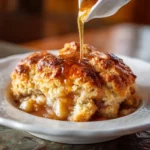
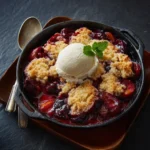
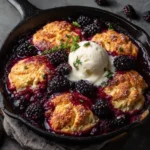
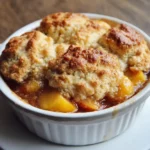
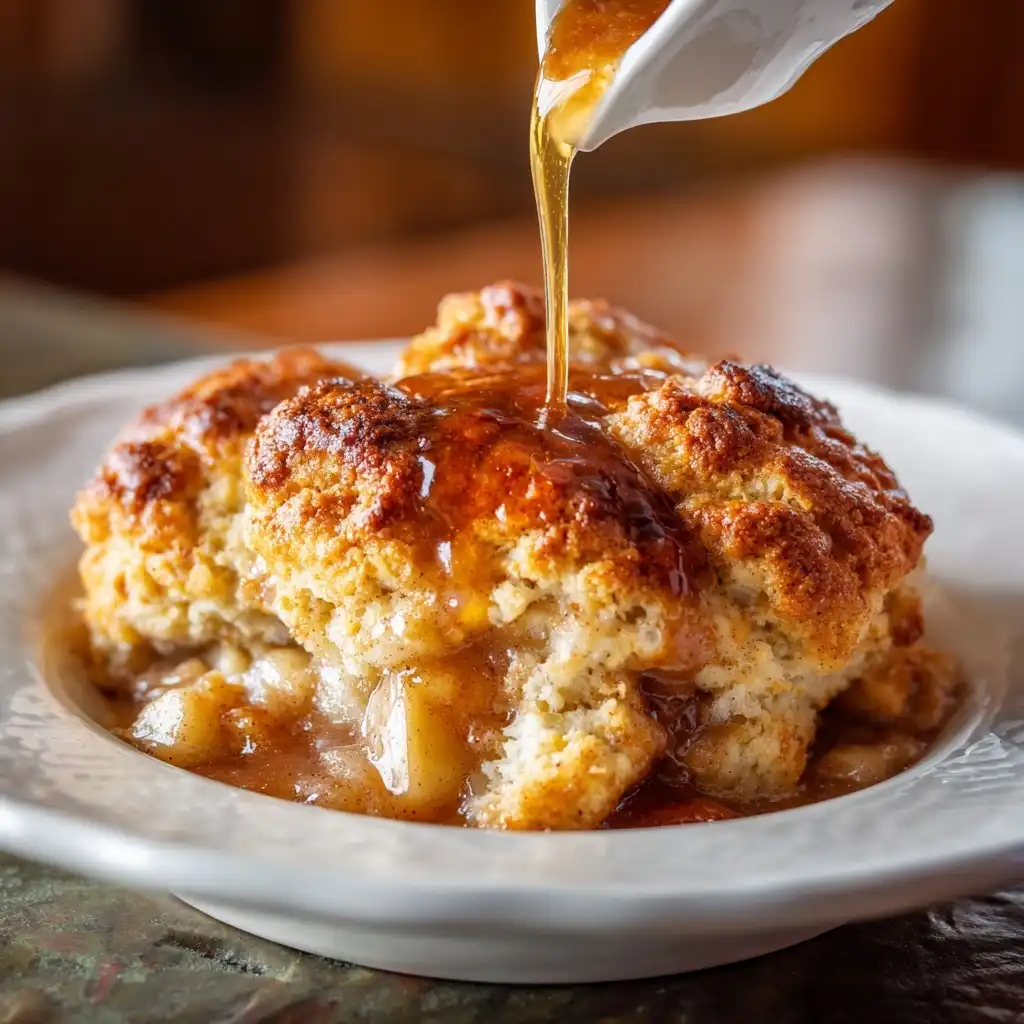
The Old Fashioned Apple Biscuit Cobbler is a cherished American dessert that embodies the soul-warming essence of home baking—rich with nostalgia, rustic charm, and the unmistakable aroma of cinnamon-kissed apples bubbling beneath tender, golden-brown biscuit dough. Unlike traditional cobblers that rely on dropped batter or cake-like toppings, this version honors its “old fashioned” roots by using a flaky, buttery, scratch-made biscuit layer that bakes into a beautifully crisp-yet-tender crown over a luxuriously thick apple filling. It’s the kind of dessert served in cast-iron skillets at family reunions, passed down through generations via stained recipe cards, and often accompanied by a generous scoop of vanilla ice cream melting slowly into its steamy crevices. Whether you’re reviving a childhood memory or introducing a new tradition to your own kitchen, this cobbler delivers comfort in every bite—unfussy, deeply flavorful, and profoundly satisfying.
The History
The origins of the apple cobbler trace back to 18th-century England, where “coble” (a Middle English term meaning “lumpy” or “rounded”) described the uneven, cobblestone-like appearance of early fruit desserts topped with dumplings or crusts. When English settlers brought these traditions to colonial America, ingredients were scarce—and ingenuity abundant. Apples, hardy and widely cultivated across New England and the Midwest, became the fruit of choice. By the mid-1800s, as baking powder was commercialized (notably by Royal Baking Powder Company in 1866), the biscuit-style cobbler emerged: lighter, more reliable, and easier to prepare than yeast-raised doughs. The “Old Fashioned Apple Biscuit Cobbler” specifically evolved in rural kitchens of the late 19th and early 20th centuries—particularly in Appalachia and the Ozarks—where cooks used lard or rendered leaf lard for flakiness, wood-fired ovens for even browning, and heirloom apples like Winesap, Arkansas Black, or Spitzenburg for complex tart-sweet balance. Regional variations flourished: some added nutmeg or clove; others included a splash of apple cider or bourbon; many employed buttermilk in the biscuits for tang and tenderness. Cookbooks like The Settlement Cook Book (1901) and Community Cook Book (1922) helped standardize the format, cementing the biscuit-topped apple cobbler as a cornerstone of American heritage baking—less about perfection, more about generosity, resourcefulness, and love baked right in.
Ingredients Breakdown
Every ingredient in this Old Fashioned Apple Biscuit Cobbler serves a distinct functional and sensory purpose—no filler, no shortcuts, just time-tested synergy:
- Apples: A blend of firm-tart and firm-sweet varieties (e.g., Granny Smith + Honeycrisp or Braeburn) ensures structural integrity during baking while delivering layered flavor—tartness balances sweetness, natural pectin helps thicken the filling, and dense flesh resists turning to mush.
- Granulated Sugar: Provides foundational sweetness and aids in caramelization of apple edges; also draws out juices to create a rich syrup base.
- Brown Sugar (light or dark): Adds molasses depth, moisture retention, and subtle caramel notes—essential for that “old fashioned” richness.
- Ground Cinnamon & Nutmeg: Warm, aromatic spices that complement apples’ natural esters; freshly grated nutmeg is strongly recommended for superior volatility and brightness.
- Fine Sea Salt: Not just for seasoning—salt enhances all other flavors, suppresses bitterness, and strengthens gluten structure slightly in the biscuit dough.
- Lemon Juice: Brightens flavor, prevents enzymatic browning pre-bake, and balances sweetness with acidity—critical for complexity.
- All-Purpose Flour (unbleached preferred): The backbone of both filling (thickener) and biscuit (structure); unbleached flour offers better protein consistency and cleaner flavor.
- Unsalted Butter (cold, cubed): The secret to flaky, tender biscuits—cold fat creates steam pockets as it melts in the oven; unsalted allows precise salt control.
- Full-Fat Buttermilk: Provides acidity to activate baking soda (if used), tenderness via lactic acid, and a subtle tang that cuts through richness—never substitute with low-fat or powdered versions without adjustments.
- Baking Powder & Baking Soda: Double-acting leavening ensures optimal rise—baking powder provides most lift, while a small amount of baking soda neutralizes buttermilk’s acidity and boosts browning.
- Heavy Cream (for brushing): Creates an irresistibly glossy, deep-golden crust with a hint of richness—milk or egg wash can’t replicate its sheen and flavor impact.
- Coarse Turbinado Sugar (optional garnish): Adds delicate crunch and sparkling visual appeal—dissolves just enough to caramelize on the surface.
Step-by-Step Recipe
- Preheat & Prep: Position oven rack in the lower third and preheat to 375°F (190°C). Generously butter a deep 10-inch cast-iron skillet (or 9×13-inch ceramic baking dish). Set aside.
- Peel & Slice Apples: Peel, core, and slice 6–7 medium apples (about 2¼ lbs / 1 kg) into uniform ¼-inch-thick wedges. Place in a large stainless steel or glass bowl.
- Macenate Filling: Add ¾ cup granulated sugar, ½ cup packed light brown sugar, 1½ tsp ground cinnamon, ¼ tsp freshly grated nutmeg, ½ tsp fine sea salt, 2 tbsp fresh lemon juice, and 3 tbsp all-purpose flour. Gently toss with a silicone spatula until apples are evenly coated. Let stand 20 minutes—this draws out juices and begins flavor melding.
- Prepare Biscuit Dough: In a chilled large bowl, whisk together 2 cups (250g) all-purpose flour, 1 tbsp baking powder, ½ tsp baking soda, and 1 tsp fine sea salt. Cut in ½ cup (113g) very cold unsalted butter using a pastry cutter or two forks until mixture resembles coarse crumbs with pea-sized butter pieces visible. Stir in ¾ cup (180ml) well-shaken full-fat buttermilk just until a shaggy dough forms—do not overmix. If too dry, add 1 tsp buttermilk; if too wet, dust lightly with flour.
- Assemble: Pour macerated apple mixture—including all accumulated juices—into the prepared skillet. Spread evenly. Using a ¼-cup measuring cup or ice cream scoop, portion 8–10 biscuit dough mounds over the apples, spacing them evenly. Gently press each mound to flatten slightly (about ¾-inch thick)—they’ll expand during baking.
- Finish & Bake: Brush tops generously with 2 tbsp heavy cream. Sprinkle evenly with 1 tbsp turbinado sugar (optional but highly recommended). Place skillet on a parchment-lined baking sheet (to catch drips). Bake 55–65 minutes—until biscuit tops are deeply golden brown, crisp at the edges, and spring back when lightly pressed; apples should be bubbling vigorously around the sides and thickened (a skewer inserted into a biscuit should come out clean).
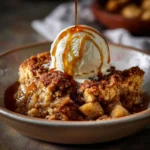
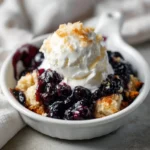
- Cool & Serve: Let rest on a wire rack for *at least* 30 minutes before serving—this allows the filling to fully set and prevents scalding. Serve warm—not hot—with vanilla bean ice cream, spiced whipped cream, or a drizzle of salted caramel sauce.
Tips
- Apple Selection Matters: Avoid Red Delicious or Golden Delicious—they turn mealy. Opt for a 60/40 blend of tart (Granny Smith, Jonathan) and sweet-tart (Honeycrisp, Pink Lady, Cortland) for ideal texture and flavor balance.
- Cold Is Crucial: Chill your mixing bowl, butter, and even buttermilk for 15 minutes before making biscuits. Warm butter = greasy, dense biscuits.
- Don’t Overmix the Dough: Stir only until no dry flour remains. Overworking develops gluten, leading to tough, chewy biscuits instead of tender, flaky ones.
- Thickening Power: If your apples are exceptionally juicy (e.g., Fuji or Gala), increase flour in the filling to ¼ cup—or add 1 tsp instant tapioca for foolproof thickening without cloudiness.
- Skip the Soggy Bottom: To prevent undercooked biscuits, ensure your apple mixture isn’t swimming in liquid before assembling. Drain excess juice *only if pooling*—otherwise, those juices are essential for flavor and syrup formation.
- Cast-Iron Advantage: Preheating the skillet for 5 minutes before adding apples jumpstarts caramelization and promotes even bottom browning. Just be cautious—it gets extremely hot!
- Test for Doneness Correctly: The visual cue is bubbling filling *around the edges*, not just the center. Insert a toothpick into the thickest part of a biscuit—if it emerges clean (no raw dough), it’s done—even if the center still looks slightly soft.
- Resting Is Non-Negotiable: Cutting in too soon causes the filling to run and the biscuits to collapse. Thirty minutes allows starches to fully gel and heat to equalize.
- Reheating Right: To revive leftovers, cover loosely with foil and bake at 325°F (165°C) for 15–20 minutes—microwaving makes biscuits rubbery and filling watery.
- Make-Ahead Magic: Assemble the unbaked cobbler up to 1 day ahead—cover tightly and refrigerate. Add 5–8 minutes to bake time. Biscuit dough can be made and refrigerated (wrapped) for 2 days—or frozen for 1 month (thaw overnight before using).
Variations and Customizations
This Old Fashioned Apple Biscuit Cobbler is gloriously adaptable—here’s how to make it your own, while preserving its soulful integrity:
- Spiced Upgrade: Add ¼ tsp ground cloves, ⅛ tsp ground allspice, or a 1-inch piece of fresh ginger (grated) to the apple filling for deeper warmth.
- Bourbon-Infused: Stir 2 tbsp good-quality bourbon into the macerated apples along with the lemon juice—let sit 10 extra minutes before assembling. Adds smoky-sweet complexity and enhances apple’s natural fruitiness.
- Caramel Apple: Drizzle ⅓ cup salted caramel sauce over the apples *before* adding biscuit dough—or swirl gently with a knife. Top finished cobbler with extra caramel and flaky sea salt.
- Nutty Crisp: Fold ½ cup toasted walnuts or pecans into the apple mixture—or sprinkle over biscuits before baking for crunch and earthy richness.
- Oat-Top Variation: Replace ¼ cup of the biscuit flour with old-fashioned rolled oats (not instant) for subtle chew and nutty aroma—add 1 tsp extra buttermilk if dough feels stiff.
- Cheddar-Chive Biscuits: For savory-sweet contrast, stir ½ cup finely shredded sharp white cheddar and 1 tbsp fresh chives into the biscuit dough—pair with apples and a touch less sugar.
- Vegan Version: Use plant-based butter (high-fat, European-style), unsweetened soy or oat milk + 1 tbsp apple cider vinegar (instead of buttermilk), flax egg (1 tbsp ground flax + 2.5 tbsp water) in biscuits, and coconut sugar in filling. Thicken filling with arrowroot instead of flour.
- Gluten-Free Adaptation: Substitute a 1:1 GF flour blend (with xanthan gum) for all-purpose flour in *both* filling and biscuits. Add ½ tsp xanthan gum to biscuit mix if blend doesn’t include it. Use GF oats if including.
- Mini Individual Cobblers: Divide filling and dough among six 6-oz ramekins. Reduce baking time to 35–42 minutes—watch closely for golden tops and bubbling edges.
- Overnight “Biscuit Blanket”: Assemble cobbler, then refrigerate covered overnight. Cold dough yields even flakier, taller biscuits with enhanced flavor development.
Health Considerations and Nutritional Value
While undeniably indulgent, this Old Fashioned Apple Biscuit Cobbler offers meaningful nutritional benefits when enjoyed mindfully—and several thoughtful modifications can enhance its wellness profile without sacrificing authenticity:
- Natural Fiber & Antioxidants: Apples provide soluble fiber (pectin) linked to heart health and blood sugar regulation, plus quercetin—a potent anti-inflammatory flavonoid concentrated in the skin. Leaving skins on (if using organic apples) boosts fiber and nutrient density by ~25%.
- Reduced Added Sugar Options: You can safely reduce total sugar by ¼ cup (to 1 cup combined) without compromising texture—rely on naturally sweet apples and enhance spice depth to maintain perceived sweetness. Swapping half the granulated sugar for coconut sugar adds trace minerals (potassium, magnesium) and lowers glycemic impact slightly.
- Whole Grain Potential: Replace up to ½ cup of all-purpose flour in the biscuit dough with white whole wheat flour—retains light texture while adding B vitamins, iron, and extra fiber (approx. +2g per serving).
- Healthy Fat Choices: Using grass-fed butter increases conjugated linoleic acid (CLA) and vitamin K2—nutrients associated with metabolic and bone health. For dairy-free, avocado oil-based butter alternatives offer monounsaturated fats.
- Sodium Awareness: This recipe uses only 1 tsp fine sea salt total—well within daily limits (2,300mg). Those on sodium-restricted diets can reduce to ¾ tsp with minimal flavor loss, especially when using high-quality, mineral-rich salts.
- Portion Control Strategy: One generous serving (⅙ of recipe) contains approximately 380–420 calories, 60g carbs (20g natural sugars), 6g fiber, 5g protein, and 16g fat (10g saturated). Serving with Greek yogurt instead of ice cream saves ~100 calories and adds 10g protein per portion.
- Considerations for Special Diets: Naturally free of nuts, eggs (in classic version), and soy—but always verify labels on baking powder, butter, and buttermilk. For low-FODMAP needs, limit apples to 1 medium per serving and avoid high-FODMAP spices like garlic powder (not used here).
- Mindful Enjoyment: Research shows pairing dessert with mindful eating practices—savoring aroma, texture, temperature, and gratitude—enhances satiety signals and reduces likelihood of overconsumption. Serve in smaller bowls, eat slowly, and pair with herbal tea for full sensory satisfaction.
Ingredients
For the Apple Filling:
- 6–7 medium apples (about 2¼ lbs / 1 kg), peeled, cored, and sliced ¼-inch thick (e.g., 4 Granny Smith + 2 Honeycrisp)
- ¾ cup (150g) granulated sugar
- ½ cup (100g) packed light brown sugar
- 1½ tsp ground cinnamon
- ¼ tsp freshly grated nutmeg
- ½ tsp fine sea salt
- 2 tbsp fresh lemon juice (about 1 lemon)
- 3 tbsp all-purpose flour (or 1 tsp instant tapioca for juicier apples)
For the Biscuit Topping:
- 2 cups (250g) all-purpose flour (unbleached preferred), plus extra for dusting
- 1 tbsp baking powder
- ½ tsp baking soda
- 1 tsp fine sea salt
- ½ cup (113g) unsalted butter, very cold and cubed
- ¾ cup (180ml) full-fat buttermilk, well-shaken and chilled
For Finishing:
- 2 tbsp heavy cream (or full-fat milk in a pinch)
- 1 tbsp turbinado sugar (optional but recommended)
- Unsalted butter for greasing skillet
Directions
- Preheat oven to 375°F (190°C). Position rack in lower third. Generously butter a 10-inch cast-iron skillet (or 9×13-inch ceramic baking dish). Line a rimmed baking sheet with parchment paper and set aside.
- In a large bowl, combine apple slices, granulated sugar, brown sugar, cinnamon, nutmeg, salt, lemon juice, and flour. Toss gently but thoroughly until apples are evenly coated. Let macerate at room temperature for 20 minutes, stirring once halfway through.
- Meanwhile, make biscuit dough: In a chilled large bowl, whisk together flour, baking powder, baking soda, and salt. Add cold cubed butter. Using a pastry cutter or two forks, cut butter into flour until mixture resembles coarse crumbs with visible pea-sized butter pieces.
- Make a well in center. Pour in chilled buttermilk. Using a silicone spatula or fork, stir gently just until a shaggy dough forms—about 12–15 strokes. Do not overmix. Dough should hold together when pinched but remain slightly crumbly. If too dry, add 1 tsp buttermilk; if too wet, dust with 1 tsp flour.
- Pour macerated apple mixture—including all juices—into prepared skillet. Spread evenly with spatula. Using a ¼-cup measuring cup or cookie scoop, portion dough into 8–10 mounds over apples. Gently press each mound to flatten to about ¾-inch thickness, leaving space between for expansion.
- Brush biscuit tops evenly with heavy cream. Sprinkle with turbinado sugar. Place skillet on prepared baking sheet.
- Bake 55–65 minutes, rotating pan halfway through, until biscuit tops are deep golden brown, crisp at edges, and spring back when lightly touched—and filling is bubbling vigorously around perimeter. A toothpick inserted into center of a biscuit should emerge clean.
- Remove from oven. Let rest on wire rack for at least 30 minutes—this allows filling to set and prevents burns. Serve warm with vanilla ice cream, spiced whipped cream, or caramel sauce.
FAQ
- Can I use canned apple pie filling?
- No—canned fillings contain stabilizers, excess water, and artificial flavors that interfere with proper thickening and compromise the authentic, nuanced taste and texture. Fresh apples are essential for this “old fashioned” result.
- Why do my biscuits sink into the apples?
- This usually happens when the apple mixture is too wet (drain excess juice if pooling), the biscuits aren’t thick enough before baking, or the oven wasn’t fully preheated. Ensure cold butter, proper dough thickness, and correct oven temp.
- Can I make this gluten-free?
- Yes—with caveats: Use a trusted 1:1 gluten-free flour blend *with xanthan gum*, and add ½ tsp additional xanthan gum to biscuit mix if blend lacks it. Thicken filling with arrowroot or cornstarch (2 tbsp) instead of flour. Expect slightly denser biscuits—chill dough 15 minutes before portioning.
- How do I store leftovers?
- Cool completely, cover tightly with plastic wrap or aluminum foil, and refrigerate up to 4 days. Reheat covered with foil at 325°F (165°C) for 15–20 minutes. Do not freeze assembled cobbler—biscuits become gummy. Freeze unbaked biscuit dough or cooked filling separately.
- Can I use a different fruit?
- Absolutely—pears, blackberries, peaches, or mixed berries work beautifully. Adjust sugar (reduce for very ripe fruit) and thickener (increase for juicier fruits). Maintain same biscuit method.
- What if I don’t have buttermilk?
- Make a quick substitute: Add 1 tbsp lemon juice or white vinegar to ¾ cup whole milk. Let sit 5 minutes until slightly curdled. Do not use low-fat milk or non-dairy milk unless fortified with calcium (affects leavening).
- Is lard better than butter for biscuits?
- Lard yields incredibly flaky, tender biscuits with neutral flavor—ideal for purists. However, butter contributes superior flavor and browning. For best of both worlds, use half butter, half lard—or high-quality European-style cultured butter.
- Can I prepare this ahead for Thanksgiving?
- Yes! Assemble up to 24 hours ahead (refrigerated, covered). Or bake fully, cool, and reheat day-of. For freshest biscuits, prep dough and filling separately—combine just before baking.
- Why does my filling taste bland?
- Under-seasoning is common. Ensure you’re using *fine* sea salt (not kosher—measure by weight if possible), freshly grated nutmeg, and real cinnamon (not cassia). Taste filling pre-bake—adjust salt or spice if needed.
- Can I add oats or nuts to the biscuit topping?
- Yes—fold in ¼ cup old-fashioned oats or ⅓ cup chopped toasted pecans/walnuts into biscuit dough *after* adding buttermilk. Reduce flour by 1 tbsp if adding oats to maintain consistency.
Summary
The Old Fashioned Apple Biscuit Cobbler is a timeless celebration of simplicity, seasonality, and soulful technique—where slow-macerated, spiced apples bubble beneath hand-cut, butter-laced biscuits until crowned with a crackling, golden crust.
It’s not just dessert—it’s edible heritage, patiently baked, generously shared, and endlessly adaptable, inviting every generation to stir, slice, and savor the enduring magic of apples, butter, and time well spent in the kitchen.