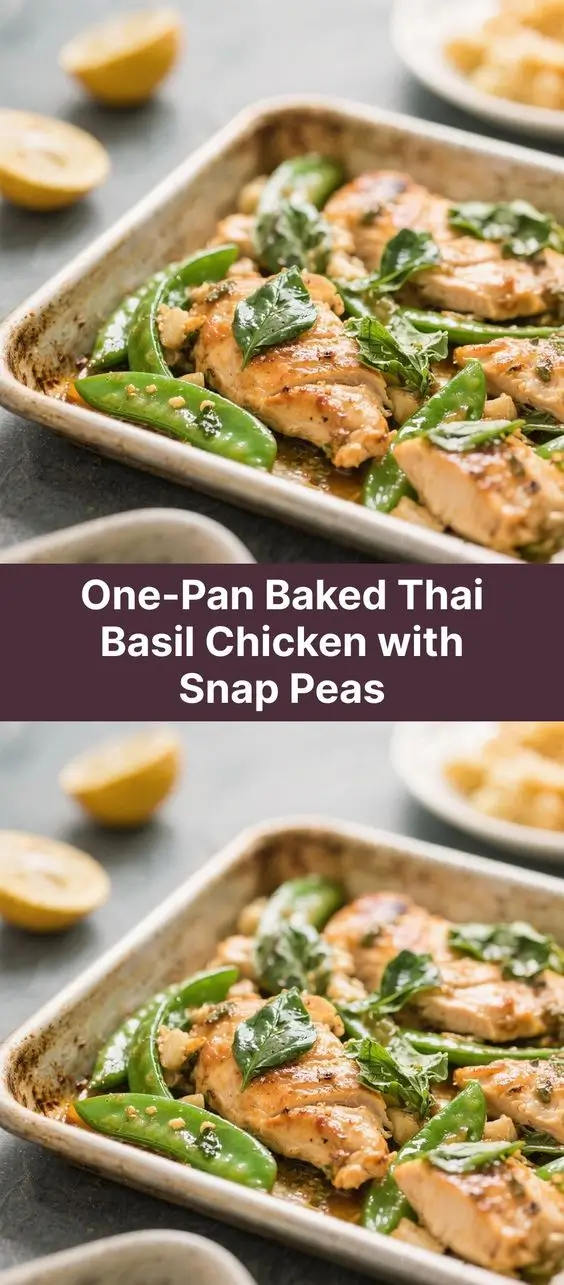
One-Pan Baked Thai Basil Chicken with Snap Peas
If you’re looking for a flavorful, fuss-free meal that captures the essence of Thai cuisine without spending hours in the kitchen, this One-Pan Baked Thai Basil Chicken with Snap Peas is your answer. Combining tender chicken, crisp snap peas, and the aromatic punch of fresh Thai basil, all baked together on a single sheet pan, this recipe delivers bold umami flavors with minimal cleanup. Perfect for busy weeknights or when you crave takeout but want something healthier and homemade, this dish brings restaurant-quality taste straight to your dinner table—no wok required.
The History
Thai cuisine has long been celebrated for its balance of sweet, sour, salty, bitter, and spicy flavors, with regional variations across Thailand influencing ingredients and cooking techniques. One of the most beloved dishes in Thai home cooking and street food culture is Pad Krapow, or stir-fried meat with holy basil. Traditionally made with minced pork or chicken, chili, garlic, fish sauce, and a generous handful of fragrant holy basil, it’s typically served over steamed jasmine rice with a fried egg on top.
This modern adaptation—One-Pan Baked Thai Basil Chicken with Snap Peas—takes inspiration from Pad Krapow but reimagines it for Western kitchens and contemporary lifestyles. Instead of high-heat stir-frying, which requires skill and attention, baking simplifies the process while still preserving deep, savory flavors. The addition of snap peas introduces a fresh crunch and boosts the nutritional profile, making it a well-rounded meal. While not traditional, this version honors the spirit of Thai cooking by emphasizing aromatic herbs, bold seasonings, and vibrant textures—all achieved with less oil and effort.
Ingredients Breakdown
The magic of this dish lies in its simplicity and synergy of ingredients. Each component plays a role in building layers of flavor, texture, and aroma:
- Chicken Breast or Thighs: Boneless, skinless chicken breasts offer a lean option, while thighs provide more moisture and richness due to their higher fat content. Both work well when cut into even-sized pieces for uniform cooking.
- Fresh Thai Basil (Holy Basil): This is non-negotiable for authentic flavor. Thai basil has a licorice-like sweetness with subtle spiciness, distinct from Italian sweet basil. If unavailable, regular basil can substitute in a pinch, though the flavor will differ slightly.
- Snap Peas: Also known as sugar snap peas, these add a satisfying crunch and bright green color. They retain their texture well during baking and contribute natural sweetness.
- Garlic: Freshly minced garlic forms the aromatic base, releasing pungent, savory notes when roasted.
- Red Chili (Fresh or Dried): Adds heat and complexity. Adjust according to spice tolerance—remove seeds for milder heat or increase for extra kick.
- Fish Sauce: A staple in Southeast Asian cooking, fish sauce provides saltiness and umami depth. It’s fermented and potent, so a little goes a long way.
- Low-Sodium Soy Sauce: Complements fish sauce with additional savory notes while helping control sodium intake.
- Oyster Sauce: Adds a rich, slightly sweet thickness to the glaze, enhancing the overall mouthfeel.
- Sesame Oil: Used sparingly for its nutty aroma, especially when drizzled at the end.
- Brown Sugar or Coconut Sugar: Balances the saltiness and acidity with a touch of caramelized sweetness.
- Lime Juice: Freshly squeezed lime juice adds brightness and cuts through the richness, finishing the dish with a zesty lift.
- Olive Oil or Avocado Oil: For tossing the chicken and vegetables before baking, ensuring they roast evenly and don’t dry out.
Step-by-Step Recipe
- Preheat Oven: Set your oven to 400°F (200°C). Line a large rimmed baking sheet with parchment paper or lightly grease it to prevent sticking.
- Prepare Chicken: Cut 1.5 lbs (about 700g) of boneless, skinless chicken into bite-sized cubes. Place in a large mixing bowl.
- Make Marinade: In a small bowl, whisk together 2 tablespoons fish sauce, 1 tablespoon low-sodium soy sauce, 1 tablespoon oyster sauce, 1 tablespoon brown sugar, 1 tablespoon lime juice, 1 teaspoon sesame oil, and 1 minced garlic clove. Stir until sugar dissolves.
- Marinate Chicken: Pour half of the marinade over the chicken. Toss thoroughly to coat. Let sit for at least 15 minutes (or up to 30 minutes in the fridge for deeper flavor).
- Prep Vegetables: Wash and trim 2 cups of snap peas. Thinly slice 1–2 red chilies (optional, depending on heat preference).
- Toss Veggies: In the same large bowl (after removing marinated chicken), combine snap peas, remaining garlic, chili slices, 1 tablespoon olive oil, and the other half of the marinade. Toss gently.
- Arrange on Pan: Spread the chicken in a single layer on one side of the baking sheet. Place the snap peas on the other side, arranging them so they aren’t overcrowded. This ensures proper roasting instead of steaming.
- Bake: Roast in the preheated oven for 18–22 minutes, flipping halfway through, until chicken reaches an internal temperature of 165°F (74°C) and snap peas are tender-crisp with slight browning.
- Add Basil: Remove pan from oven. Immediately sprinkle ½ cup loosely packed fresh Thai basil leaves over the hot chicken and vegetables. The residual heat will wilt the basil and release its fragrance.
- Drizzle and Serve: Finish with a light drizzle of extra virgin olive oil or toasted sesame oil and another squeeze of fresh lime juice. Serve immediately over cooked jasmine rice, brown rice, or cauliflower rice for a lower-carb option.
Tips
- Uniform Cutting: Cut chicken and snap peas into similar sizes to ensure even cooking.
- Don’t Overcrowd the Pan: Use two baking sheets if needed. Overlapping ingredients steam instead of roast, leading to soggy results.
- Use Fresh Garlic: Avoid jarred minced garlic for best flavor; freshly minced has superior aroma and potency.
- High-Quality Fish Sauce: Opt for reputable brands like Red Boat or Three Crabs for cleaner, less fishy taste.
- Wilt Basil Off Heat: Adding basil after baking preserves its volatile oils and prevents bitterness from overcooking.
- Rest Before Serving: Allow the dish to rest for 2–3 minutes after baking so flavors meld and juices redistribute.
- Double the Sauce (Optional): If serving over rice, consider doubling the sauce components (minus sugar) to create a more generous coating.
- Check Doneness Early: Ovens vary; start checking at 16 minutes to avoid drying out the chicken.
Variations and Customizations
This recipe is highly adaptable to different tastes, dietary needs, and ingredient availability:
- Protein Swaps: Substitute chicken with thinly sliced beef, ground turkey, shrimp, tofu, or tempeh for vegetarian/vegan versions.
- Veggie Additions: Include bell peppers, broccoli florets, baby corn, mushrooms, or carrots for more color and nutrients. Just adjust baking time accordingly.
- Spice Level: Add sriracha, chili garlic paste, or crushed red pepper flakes to the marinade for extra heat.
- Gluten-Free Option: Use tamari or coconut aminos instead of soy sauce to keep it gluten-free.
- Vegan Version: Replace chicken with firm tofu or seitan, omit fish sauce, and use vegan oyster sauce or mushroom sauce. Increase lime and sugar for balance.
- Herb Substitutes: If Thai basil is unavailable, try using a mix of Italian basil and mint, or add a few holy basil leaves if accessible.
- Cooking Method Variants: Cook stovetop in a large skillet over medium-high heat, stirring frequently for a stir-fry effect. Or use an air fryer: cook chicken in batches at 375°F for 12–15 minutes, shaking halfway.
- Rice Alternatives: Serve over quinoa, forbidden black rice, or zucchini noodles for varied textures and nutrition.
Health Considerations and Nutritional Value
This One-Pan Baked Thai Basil Chicken with Snap Peas is not only delicious but also offers several health benefits when prepared mindfully:
- Lean Protein Source: Chicken breast is high in protein and low in saturated fat, supporting muscle maintenance and satiety.
- Rich in Vitamins and Fiber: Snap peas are an excellent source of vitamin C, vitamin K, fiber, and antioxidants. Their crisp texture comes from soluble and insoluble fiber, aiding digestion.
- Low in Carbs (When Adjusted): Without rice, this dish is relatively low in carbohydrates, making it suitable for moderate low-carb diets. Using coconut sugar or reducing sugar further lowers glycemic impact.
- Heart-Healthy Fats: Using olive oil or avocado oil contributes monounsaturated fats, which support cardiovascular health.
- Umami Without Excess Sodium: By using low-sodium soy sauce and controlling fish sauce quantity, sodium levels can be kept reasonable—especially important for those managing blood pressure.
- Antioxidant-Rich Herbs: Thai basil contains eugenol, a compound with anti-inflammatory properties, and contributes phytonutrients that support immune function.
- Digestive Benefits: Garlic and ginger (if added) have prebiotic effects and may aid gut health.
Nutritional Estimate (per serving, serves 4, without rice):
| Calories | 240 kcal |
| Protein | 28g |
| Fat | 9g |
| Saturated Fat | 1.5g |
| Carbohydrates | 10g |
| Fiber | 3g |
| Sugar | 5g (natural from sugar + snap peas) |
| Sodium | 680mg (can be reduced with low-sodium substitutions) |
Note: Values are approximate and depend on specific ingredients and portion sizes used.
Ingredients
- 1.5 lbs (700g) boneless, skinless chicken breasts or thighs, cut into 1-inch cubes
- 2 cups fresh snap peas, trimmed
- ½ cup fresh Thai basil leaves, loosely packed
- 4 cloves garlic, minced (divided)
- 1–2 red chilies, thinly sliced (adjust to taste)
- 2 tbsp fish sauce
- 1 tbsp low-sodium soy sauce (or tamari for gluten-free)
- 1 tbsp oyster sauce (or vegan alternative)
- 1 tbsp brown sugar or coconut sugar
- 1 tbsp fresh lime juice (plus extra for serving)
- 1 tsp sesame oil
- 1 tbsp olive oil or avocado oil (plus extra for drizzling)
- Jasmine rice or preferred grain, for serving
Directions
- Preheat oven to 400°F (200°C). Line a large baking sheet with parchment paper.
- In a small bowl, whisk together fish sauce, soy sauce, oyster sauce, brown sugar, lime juice, and sesame oil until sugar dissolves. Set aside.
- Place chicken in a large bowl. Add 2 cloves minced garlic and half of the sauce mixture. Toss to coat. Marinate for 15–30 minutes.
- In the same bowl, toss snap peas with remaining garlic, chili slices, olive oil, and the other half of the sauce.
- Spread marinated chicken in a single layer on one side of the baking sheet. Arrange snap peas on the other side.
- Bake for 18–22 minutes, flipping halfway, until chicken is fully cooked and snap peas are tender with slight char.
- Remove from oven. Immediately scatter Thai basil over the hot mixture. Toss gently to wilt the herbs.
- Drizzle with a bit of olive oil or sesame oil and extra lime juice. Serve hot over rice.
FAQ
Can I use frozen snap peas?
While possible, fresh snap peas yield better texture and flavor. If using frozen, thaw and pat dry thoroughly to avoid excess moisture on the baking sheet.
Is Thai basil the same as holy basil?
Yes, “Thai basil” commonly refers to Ocimum thyrsiflora, also known as holy basil, which is used in savory Thai dishes. Do not confuse it with sweet Italian basil or purple-stemmed Thai basil used in Vietnamese cuisine.
Can I make this ahead of time?
The marinade can be prepared up to 24 hours in advance. However, bake just before serving for optimal texture. Reheating may cause snap peas to become mushy and basil to lose fragrance.
Can I grill this instead?
Absolutely! Thread chicken onto skewers and grill alongside snap peas in a grill basket. Baste with sauce and finish with fresh basil and lime.
What can I do if I don’t have fish sauce?
Substitute with a mix of soy sauce and a splash of Worcestershire sauce, or use coconut aminos with a pinch of anchovy paste for umami. However, fish sauce is key to authenticity.
How do I store leftovers?
Store cooled leftovers in an airtight container in the refrigerator for up to 3 days. Reheat gently in a skillet or microwave. Note: basil may darken, and snap peas soften upon reheating.
Can I freeze this dish?
Freezing is not recommended due to the delicate texture of snap peas and herbs. Chicken may become dry when thawed and reheated.
Is this dish spicy?
It depends on the amount of chili used. You can control the heat level by adjusting the number of chilies or removing seeds. For mild flavor, omit chilies entirely.
Summary
Aromatic, savory, and effortlessly simple, this One-Pan Baked Thai Basil Chicken with Snap Peas brings the vibrant flavors of Thai street food into your kitchen with minimal cleanup and maximum satisfaction. Packed with lean protein, colorful veggies, and fresh herbs, it’s a healthy, balanced meal that feels indulgent yet wholesome.