Introduction
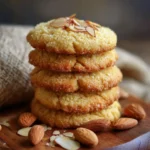
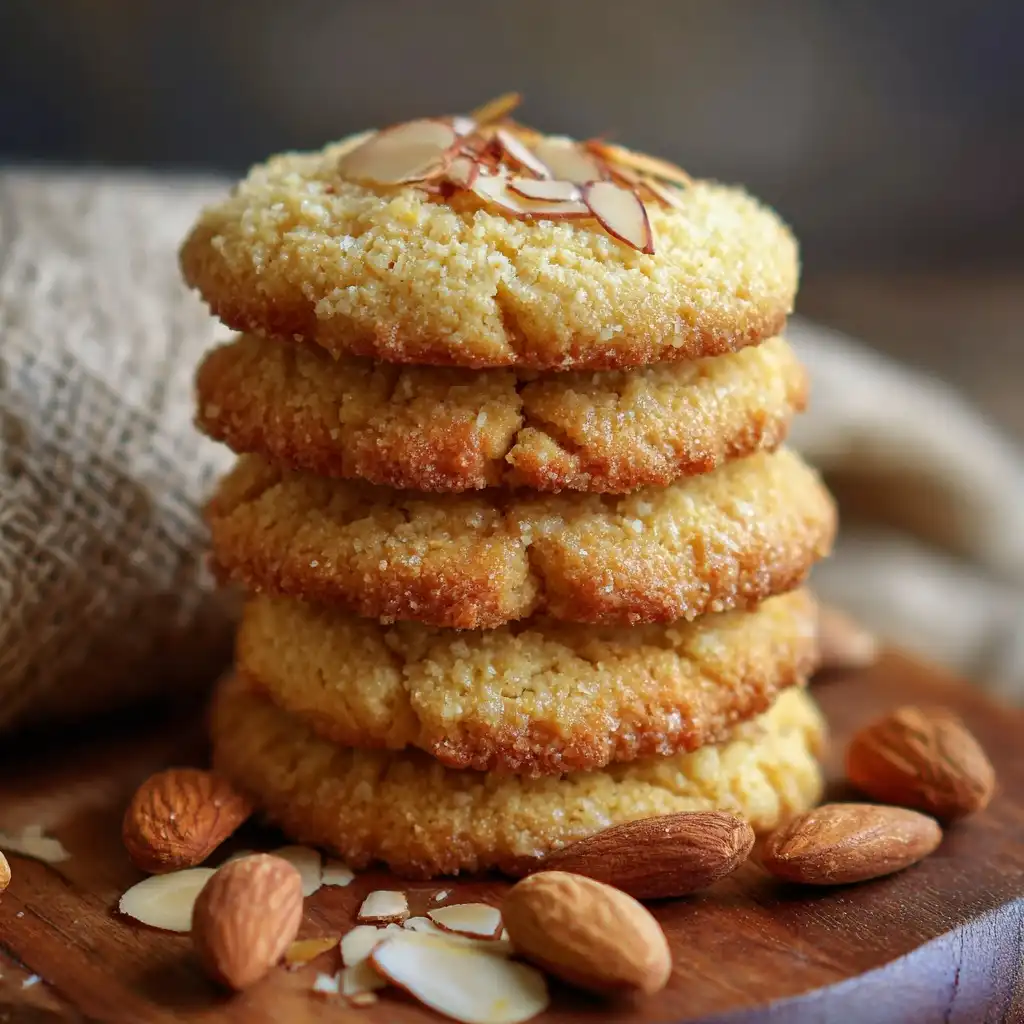
Orange Almond Cookies are a radiant fusion of sun-kissed citrus brightness and the rich, nutty depth of toasted almonds—creating a sophisticated yet comforting treat that straddles the line between classic European pastry tradition and modern American baking sensibility. These cookies boast a tender, slightly crumbly yet melt-in-your-mouth texture, fragrant with zesty orange oil, warm vanilla, and the unmistakable earthy-sweet aroma of finely ground almonds. Whether served alongside afternoon tea, gifted in a hand-tied tin during the holiday season, or enjoyed as an elegant after-dinner indulgence, Orange Almond Cookies offer a multi-sensory experience: vivid orange hue, delicate floral-citrus perfume, subtle marzipan-like sweetness, and a gentle crunch from slivered or sliced almonds on top. Their versatility makes them equally at home at a rustic farmhouse kitchen counter or a refined patisserie display case—and their relatively simple ingredient list belies their gourmet appeal.
The History
The lineage of Orange Almond Cookies traces back through several culinary traditions, converging over centuries into today’s beloved iteration. Almond-based cookies have ancient roots—dating to medieval Arab confectionery, where ground almonds were bound with honey or rosewater to create early marzipan-like sweets. In Spain and later Italy, almond paste evolved into polvorones, amaretti, and paste di mandorle, often flavored with citrus zest for balance. The introduction of sweet oranges to Europe via Moorish trade routes in the 10th century—and their widespread cultivation in Mediterranean regions by the 15th century—paved the way for citrus-infused almond confections. By the 18th century, French macarons and German mandelplätzchen began incorporating orange flower water or grated Seville orange zest. In the United States, the cookie gained renewed popularity in the mid-20th century, especially in California—the nation’s largest producer of both Valencia oranges and almonds—where home economists and regional cookbook authors (like those contributing to the Los Angeles Times Test Kitchen archives) standardized recipes using local, seasonal ingredients. The modern version reflects this transatlantic dialogue: a buttery shortbread foundation enriched with almond flour, elevated by cold-pressed orange zest and juice, and finished with artisanal almond toppings—a true heirloom recipe reimagined for contemporary palates.
Ingredients Breakdown
Every element in Orange Almond Cookies serves a precise functional and sensory role—no ingredient is merely decorative or optional without consequence to structure, flavor, or shelf life:
- Unsalted Butter (1 cup / 2 sticks / 227g): Provides richness, flakiness, and mouthfeel. Must be at cool room temperature (65–68°F) for proper creaming—too warm causes spreading; too cold inhibits emulsification. European-style butter (82–86% fat) yields superior tenderness and browning.
- Powdered Sugar (1¼ cups / 150g): Dissolves seamlessly into the batter, contributing to fine crumb and delicate sweetness without graininess. Its cornstarch content also aids in moisture retention and softness.
- Granulated Sugar (¼ cup / 50g): Adds subtle sparkle, slight textural contrast, and enhances caramelization during baking—critical for golden edges and complex Maillard notes.
- Almond Extract (1½ tsp): Pure, alcohol-based extract delivers concentrated, true-to-nut aroma. Do not substitute imitation—its harsh, artificial tone overwhelms citrus notes.
- Vanilla Extract (1 tsp, preferably Madagascar bourbon): Deepens warmth and rounds out sharp citrus acidity with creamy, floral undertones.
- Fresh Orange Zest (from 2 large navel or Valencia oranges, ~2 tbsp finely grated): Contains volatile citrus oils—responsible for 90% of the aromatic impact. Must be finely microplaned, avoiding bitter white pith.
- Fresh Orange Juice (2 tbsp, strained): Adds bright acidity and subtle liquid for cohesion—but used sparingly to avoid activating gluten or weakening structure.
- Almond Flour (1¾ cups / 175g, ultra-fine, blanched): The star structural ingredient—gluten-free, high in natural oils and protein, lending moist density and pronounced nuttiness. Must be weighed, not scooped; volume measurements vary wildly. Sift twice to prevent clumping.
- All-Purpose Flour (½ cup + 2 tbsp / 75g): Provides minimal gluten development for just enough cohesion and lift—enough to hold shape but not enough to toughen. For gluten-free versions, sub certified GF all-purpose blend (with xanthan gum).
- Salt (½ tsp fine sea salt): Not just for seasoning—it intensifies sweetness, balances acidity, and stabilizes emulsions.
- Slivered or Sliced Almonds (⅓ cup, lightly toasted): For garnish—adds visual elegance, textural contrast (crisp vs. tender), and toasted almond fragrance that complements raw almond flour.
Note on substitutions: Coconut sugar compromises texture (gritty, less soluble); oat flour lacks binding power; orange essential oil is unsafe for ingestion unless food-grade and highly diluted; store-bought almond paste introduces excess moisture and sugar imbalance.
Step-by-Step Recipe
- Prep & Toast Almonds: Preheat oven to 325°F (165°C). Spread slivered almonds on a parchment-lined baking sheet. Toast 8–10 minutes until fragrant and pale gold. Cool completely—then chop coarsely if desired for extra texture.
- Zest & Juice Oranges: Using a microplane, zest two large oranges directly over a bowl (to capture oils). Strain juice through a fine-mesh sieve to remove pulp and seeds. Measure precisely—do not substitute bottled juice.
- Cream Butter & Sugars: In a stand mixer fitted with paddle attachment, beat unsalted butter, powdered sugar, and granulated sugar on medium speed for 3–4 minutes until pale, fluffy, and free of graininess. Scrape bowl thoroughly.
- Incorporate Flavorings: Add almond extract, vanilla, orange zest, and orange juice. Mix on low 30 seconds to combine—then increase to medium for 1 minute until fully homogenized and glossy.
- Combine Dry Ingredients: In a separate bowl, whisk together sifted almond flour, all-purpose flour, and salt. Ensure no lumps remain—almond flour compacts easily.
- Gradual Incorporation: With mixer on low, add dry mixture in three equal additions, mixing only until each is *just* incorporated—about 15–20 seconds per addition. Overmixing develops gluten and creates toughness. Batter will be soft, slightly sticky, and resemble thick playdough.
- Chill Dough (Critical Step): Divide dough in half. Shape each into a 1½-inch-thick log, wrap tightly in parchment paper, then plastic wrap. Refrigerate minimum 2 hours—or ideally overnight (up to 5 days). Chilling solidifies butter, prevents overspreading, deepens flavor, and allows almond flour to fully hydrate.
- Preheat & Prep Baking Sheets: Position racks in upper and lower thirds. Line two heavy-duty baking sheets with parchment (not silicone mats—they inhibit browning). Preheat oven to 350°F (175°C).
- Slice & Garnish: Unwrap logs. Using a sharp, thin-bladed knife dipped in hot water and wiped dry between cuts, slice cookies ¼-inch thick. Place 2 inches apart on sheets. Gently press 3–4 toasted almond slices onto center of each cookie.
- Bake with Precision: Bake one sheet at a time for 11–13 minutes—rotating pan front-to-back at 6 minutes—until edges are delicately golden brown and centers appear set but still slightly soft to the touch. Avoid overbaking: cookies firm up as they cool. Let cool on sheet 3 minutes—then transfer to wire racks to cool completely (15+ minutes) before storing.
Tips
- Temperature Control Is Non-Negotiable: Butter must be cool room temp—not melted, not chilled. If dough feels greasy or oily after mixing, it’s too warm—return to fridge 15 minutes before shaping.
- Zest First, Juice Second: Zesting before juicing prevents bitter pith contamination and maximizes oil yield. Never use a box grater—it tears peel and releases bitterness.
- Weigh Your Flours: A cup of almond flour can range from 80g to 110g depending on packing. Use a digital scale calibrated to 0.1g for repeatable results.
- Chill Logs Before Slicing: Warm logs squash and deform. If logs soften while slicing, return to freezer 5–7 minutes.
- Rotate Pans Mid-Bake: Home ovens have hot spots. Rotating ensures even browning—especially critical for delicate citrus sugars prone to scorching.
- Cool Completely Before Storing: Trapped steam creates sogginess. Store only when fully cooled to room temperature.
- Revive Stale Cookies: Place in a 300°F oven for 3–4 minutes—then cool on rack. The brief heat redraws moisture to the surface and restores crisp edges.
- Freeze Like a Pro: Slice logs, freeze un-baked cookies on parchment-lined sheet for 1 hour, then transfer to airtight freezer bag (label with date). Bake straight from frozen—add 1–2 minutes to bake time.
Variations and Customizations
These cookies serve as an exquisite canvas for seasonal, cultural, and dietary reinterpretation—each variation preserving the core orange-almond harmony while introducing thoughtful nuance:
- Lavender-Orange Almond: Add ½ tsp culinary-grade dried lavender buds (crushed) to dry ingredients. Pairs beautifully with Earl Grey tea service.
- Spiced Citrus: Stir in ¼ tsp freshly grated nutmeg + ⅛ tsp cardamom with dry ingredients. Evokes Scandinavian kardemummekarder.
- Dark Chocolate-Dipped: Once fully cooled, dip half of each cookie in tempered 70% dark chocolate. Sprinkle with flaky sea salt and microplaned orange zest before chocolate sets.
- Gluten-Free & Vegan Adaptation: Replace butter with 1 cup cold-pressed coconut oil (refined for neutral taste); swap egg wash for maple syrup glaze; use certified GF all-purpose blend + 1 tsp xanthan gum. Add 1 tbsp aquafaba to bind if dough seems too crumbly.
- Maple-Glazed Mini Cookies: Roll dough into 1-inch balls, flatten slightly, bake 9–10 minutes. While warm, brush tops with maple-orange glaze (2 tbsp pure maple syrup + 1 tsp orange juice + pinch salt).
- Prosecco-Infused: Replace orange juice with 1½ tbsp chilled, dry Prosecco + ½ tsp additional zest. Adds effervescent brightness and subtle yeast complexity.
- Herbal Citrus: Fold in 1 tbsp finely chopped fresh thyme or rosemary (use sparingly—rosemary is potent) with zest. Surprising, savory-sweet, and garden-fresh.
- Everything-But-the-Kitchen-Sink Nut Crunch: Add 2 tbsp chopped pistachios and 1 tbsp toasted sesame seeds to dough along with almonds. Boosts protein and adds visual intrigue.
Health Considerations and Nutritional Value
While Orange Almond Cookies are inherently indulgent, mindful preparation transforms them into a nutrient-dense, functional treat with notable wellness attributes—when enjoyed in moderation as part of a balanced diet. Per standard 2-cookie serving (approx. 30g each):
- Calories: ~210 kcal — moderate for a dessert cookie, primarily from heart-healthy monounsaturated fats (almonds, butter) rather than refined carbs.
- Fat Profile: ~13g total fat (3.5g saturated), with 8g monounsaturated (oleic acid)—clinically shown to support LDL cholesterol reduction and endothelial function.
- Protein: ~4g — unusually high for a cookie, courtesy of almond flour’s 21% protein content and bioavailable amino acid profile (including arginine for vascular health).
- Fiber: ~2g — predominantly from almond skin polyphenols and residual fiber in blanched flour; supports microbiome diversity and satiety.
- Vitamins & Minerals: Excellent source of vitamin E (25% DV), magnesium (12% DV), calcium (8% DV), and manganese (30% DV)—all critical for antioxidant defense, nerve conduction, bone matrix formation, and enzymatic glucose metabolism.
- Phytonutrient Power: Orange zest delivers d-limonene (a potent anti-inflammatory terpene) and hesperidin (a flavonoid shown to improve capillary integrity and reduce oxidative stress). Almond skins contain quercetin and kaempferol—linked to reduced neurodegenerative risk.
- Glycemic Considerations: Low glycemic load (~7) due to high fat/protein/fiber content slowing glucose absorption—making them more diabetes-friendly than traditional sugar-forward cookies (GL 15–20).
- Dietary Notes: Naturally grain-free option possible with 100% almond flour + tapioca starch; nut-free version requires sunflower seed flour substitution (though flavor profile shifts significantly); always verify almond extract is gluten-free and kosher-certified if needed.
Wellness Tip: Pair with green tea (rich in EGCG) to synergistically enhance antioxidant bioavailability—studies show citrus flavonoids increase catechin absorption by up to 130%.
Ingredients
- 1 cup (2 sticks / 227g) unsalted butter, cool room temperature
- 1¼ cups (150g) powdered sugar
- ¼ cup (50g) granulated sugar
- 1½ tsp pure almond extract
- 1 tsp pure Madagascar bourbon vanilla extract
- 2 tbsp finely grated orange zest (from 2 large navel or Valencia oranges)
- 2 tbsp fresh-squeezed, strained orange juice
- 1¾ cups (175g) ultra-fine blanched almond flour (weighed)
- ½ cup + 2 tbsp (75g) all-purpose flour
- ½ tsp fine sea salt
- ⅓ cup slivered or sliced almonds, lightly toasted and cooled
Directions
- Preheat oven to 325°F (165°C). Line a baking sheet with parchment. Spread slivered almonds in a single layer and toast 8–10 minutes until fragrant and pale gold. Cool completely, then coarsely chop if desired. Set aside.
- Using a microplane, zest two large oranges over a small bowl. Strain juice through a fine-mesh sieve; measure exactly 2 tbsp. Set both aside.
- In the bowl of a stand mixer fitted with paddle attachment, combine butter, powdered sugar, and granulated sugar. Beat on medium speed 3–4 minutes until light, fluffy, and smooth. Scrape bowl thoroughly.
- Add almond extract, vanilla, orange zest, and orange juice. Mix on low 30 seconds, then medium 1 minute until glossy and fully combined.
- In a separate bowl, whisk together almond flour, all-purpose flour, and salt. Sift twice to ensure no lumps.
- With mixer on low, gradually add dry ingredients in three equal parts, mixing only until each is just incorporated—15–20 seconds per addition. Do not overmix. Dough will be soft and slightly tacky.
- Divide dough in half. Shape each portion into a 1½-inch-thick log on parchment paper. Wrap tightly in parchment, then plastic wrap. Refrigerate minimum 2 hours—or preferably 12–24 hours.
- When ready to bake, preheat oven to 350°F (175°C). Position racks in upper and lower thirds. Line two heavy-duty baking sheets with parchment paper.
- Unwrap logs. Using a sharp, thin knife dipped in hot water and dried between cuts, slice cookies ¼-inch thick. Place 2 inches apart on prepared sheets. Gently press 3–4 toasted almond slices onto center of each cookie.
- Bake one sheet at a time for 11–13 minutes—rotating pan front-to-back at 6 minutes—until edges are delicately golden and centers look set but still soft. Cool on sheet 3 minutes, then transfer to wire racks to cool completely (15+ minutes).
FAQ
- Can I use almond meal instead of almond flour?
- No—almond meal is coarser, contains skins, and absorbs liquid differently. It yields dense, gritty, overly moist cookies that spread unpredictably. Always use *blanched, ultra-fine almond flour* (e.g., Bob’s Red Mill or Honeyville brands).
- Why did my cookies spread too much?
- Most commonly: butter was too warm, dough wasn’t chilled long enough, or too much orange juice was added. Also check oven calibration—low temps cause prolonged melting before set.
- Can I make these dairy-free?
- Yes—with caveats. Replace butter with cold-pressed refined coconut oil (not virgin—it tastes too strong) and add 1 tsp apple cider vinegar to mimic butyric acid tang. Texture will be slightly more crumbly but still delicious.
- How long do they stay fresh?
- Stored in an airtight container at cool room temperature: 1 week. Refrigerated: up to 3 weeks. Frozen (baked or unbaked): 6 months. Thaw unbaked logs in fridge overnight before slicing.
- My dough is crumbly—did I overmix?
- Unlikely. Crumbliness usually means insufficient moisture (too little juice, over-sifted flour, or dry environment). Add ½ tsp orange juice or 1 tsp cold heavy cream—one drop at a time—until dough just holds together when squeezed.
- Can I use orange extract instead of zest and juice?
- Avoid it. Extract lacks volatile oils and nuanced flavor layers. Zest provides top-note brightness; juice contributes acidity and moisture. Together, they’re irreplaceable for authenticity.
- Are these safe for nut allergy sufferers?
- No—almond flour and almond garnish contain allergenic proteins. Even trace cross-contact poses serious risk. There is no safe almond substitute for true nut-allergy accommodation.
- Can I add chocolate chips?
- You can—but it changes the profile dramatically. Use ⅓ cup finely chopped white or dark chocolate (not chips—they contain stabilizers that resist melting). Fold in gently after dry ingredients. Reduce orange zest to 1 tbsp to avoid flavor competition.
Summary
Orange Almond Cookies are a masterclass in balanced contrast—zesty, floral orange cutting through the deep, toasty richness of premium almond flour, all bound in a tender, buttery crumb that dissolves with quiet elegance on the tongue. They honor centuries of Mediterranean confectionery tradition while embracing modern precision, nutrition science, and customizable creativity—making every bite both nostalgically comforting and refreshingly contemporary.
Whether you’re a novice baker seeking foolproof elegance or a seasoned chef exploring layered flavor architecture, these cookies deliver sophistication without pretense, joy without compromise, and a luminous, sunlit taste of citrus orchards and almond groves—captured perfectly in every golden-edged, delicately scented bite.