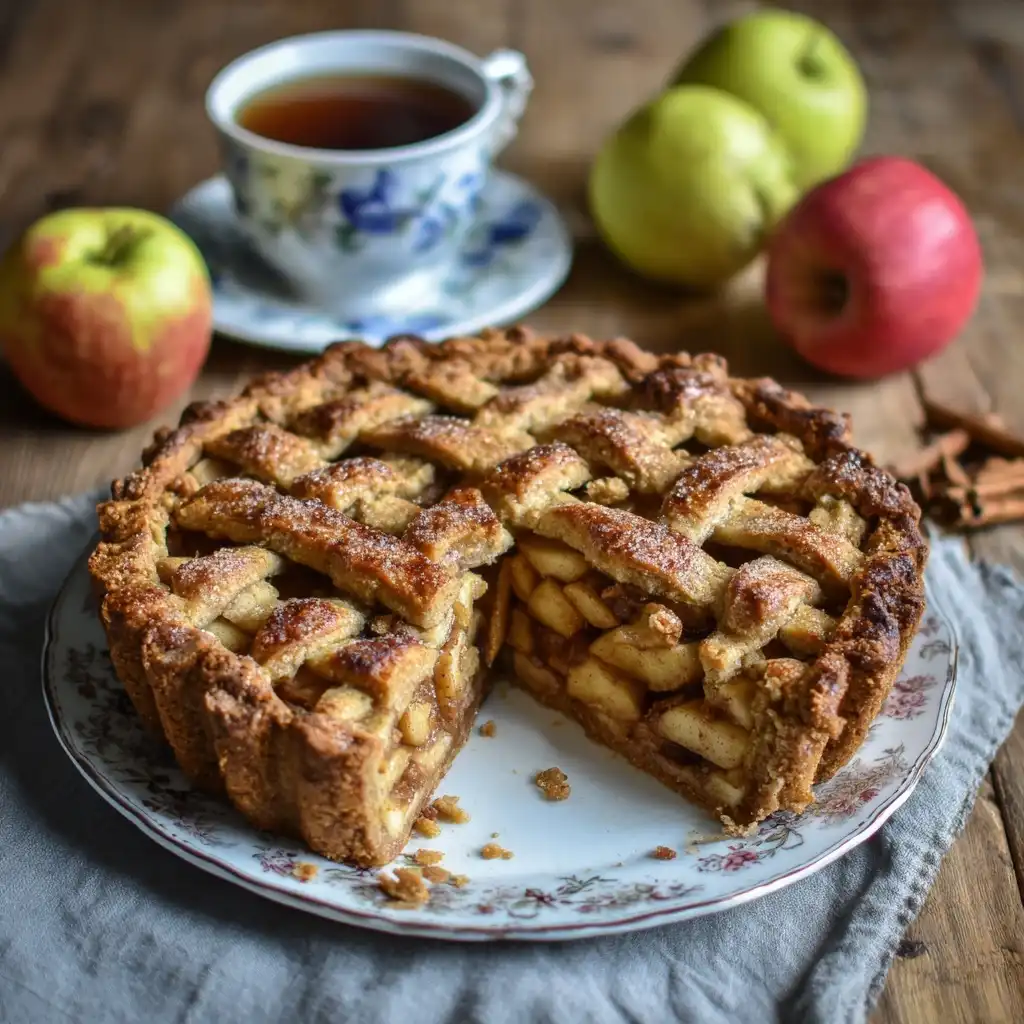
Introduction
Welcome to the ultimate guide to Paleo Apple Pie — a wholesome, grain-free, dairy-free, and refined-sugar-free reinterpretation of America’s most beloved dessert. This isn’t just a compromise for dietary restrictions; it’s a celebration of real food, seasonal produce, and ancestral wisdom. Crafted with nutrient-dense, whole-food ingredients, this pie honors the spirit of traditional apple pie while aligning seamlessly with the principles of the Paleo lifestyle: no grains, no legumes, no dairy, no refined sugars, and no industrial seed oils. Whether you’re following Paleo for autoimmune support, digestive healing, blood sugar regulation, or simply a cleaner way of eating, this recipe delivers rich flavor, tender-crisp apples, warm spices, and a flaky, golden-brown crust that shatters beautifully with every forkful — all without a single non-Paleo ingredient.
The History
The origins of apple pie trace back centuries — long before it became synonymous with American identity. Early versions appeared in 14th-century England and medieval Europe, where “pyes” were savory or sweet enclosures made with rye or wheat pastry, often containing dried fruits, spices, and even meat. Apples themselves have been cultivated since at least 6500 BCE, with wild varieties native to Central Asia. When European settlers brought apple seeds to North America in the 17th century, they planted orchards that flourished in the New World’s temperate climate — giving rise to heirloom varieties like Roxbury Russet, Baldwin, and Rhode Island Greening, many of which remain ideal for Paleo baking today due to their natural sweetness and firm texture.
Yet the modern notion of “American as apple pie” didn’t solidify until the 20th century — fueled by wartime propaganda, advertising, and cultural mythmaking. Ironically, the original colonial pies bore little resemblance to today’s versions: they used lard-based crusts, honey or maple syrup as sweeteners, and sparse spices — all of which happen to be Paleo-compliant. The Paleo Apple Pie we celebrate today is thus not an invention, but a *reclamation*: returning to the pre-industrial, whole-food foundations upon which early pies were built — minus the gluten, gums, and processed additives introduced during the Industrial Revolution and post-war food manufacturing boom.
Ingredients Breakdown
Every ingredient in this Paleo Apple Pie serves a functional and nutritional purpose — nothing is included for convenience or shelf stability. Here’s why each component matters:
- Grass-Fed Tallow or Pasture-Raised Lard (for crust): Rich in fat-soluble vitamins A, D, E, and K2, these traditional animal fats provide structure, flakiness, and satiety. Unlike refined vegetable oils, they’re stable at high heat and contain zero oxidized lipids or trans fats. Tallow lends a subtle, buttery richness; lard offers unparalleled tenderness and neutral flavor. Both are naturally anti-inflammatory when sourced from ethically raised animals.
- Almond Flour & Coconut Flour (crust base): Almond flour supplies protein, vitamin E, magnesium, and healthy monounsaturated fats — while delivering a fine, soft crumb. Coconut flour adds fiber (especially beneficial prebiotic inulin), absorbs excess moisture, and contributes subtle sweetness and structure. Crucially, neither contains phytic acid in problematic amounts when properly prepared (blanched almond flour is low-phytate; coconut flour is inherently low-phytate).
- Arrowroot Starch or Tapioca Starch (filling thickener): These root-based starches are gut-friendly, easily digestible, and highly effective at gelling apple juices without turning gluey or cloudy — unlike cornstarch or potato starch, which some Paleo practitioners avoid due to lectin content or processing concerns. Arrowroot is preferred for its neutral taste and superior clarity.
- Granny Smith, Honeycrisp, Braeburn, or Winesap Apples: A strategic blend ensures complexity: tart Granny Smith provides acidity and holds shape; Honeycrisp adds juiciness and natural fructose; Braeburn contributes spice-forward notes; Winesap delivers deep, wine-like depth. All are low-glycemic relative to dessert apples like Fuji or Red Delicious — especially when paired with cinnamon and fiber-rich crust.
- Raw Local Honey or Pure Maple Syrup (sweetener): Though technically not Paleo in strictest interpretation (due to fructose concentration), both are widely accepted in modified Paleo and Primal circles — especially when used in moderation (<¼ cup total). Honey offers antimicrobial enzymes, polyphenols, and prebiotics; maple syrup contains manganese, zinc, and unique phenolic antioxidants like quebecol. For strict Autoimmune Protocol (AIP), omit sweetener entirely or use a small amount of date paste (soaked, strained, and blended).
- Spices — Cinnamon, Cardamom, Cloves, Freshly Grated Nutmeg: Far more than flavor enhancers, these are potent phytonutrient powerhouses. Cinnamon improves insulin sensitivity and reduces postprandial glucose spikes; cardamom supports digestion and detoxification pathways; cloves contain eugenol — a natural analgesic and antimicrobial; nutmeg offers myristicin, shown in studies to support cognitive function and mitochondrial health.
- Unsweetened Apple Juice or Coconut Water (optional liquid): Used sparingly to adjust filling consistency, these add natural fruit sugars and minerals without refined additives. Apple juice contributes pectin for natural thickening; coconut water provides potassium and electrolytes — especially helpful if baking at high altitude or low humidity.
- Sea Salt (Himalayan or Celtic): Not just for balance — unrefined salt supplies over 60 trace minerals, including iodine (in some varieties), magnesium, and selenium. It also enhances enzymatic activity in the dough and amplifies the perception of sweetness — allowing you to use less sweetener overall.
Step-by-Step Recipe
- Prepare Your Workspace (30 minutes ahead): Chill mixing bowls, pastry cutter, and metal pie plate in the freezer for 15–20 minutes. Cold tools = flakier crust. Line a large baking sheet with parchment paper — this catches drips and prevents smoke in your oven.
- Make the Crust Dough (15 minutes + 1 hour chill): In a chilled bowl, whisk together 1¾ cups blanched almond flour, ¼ cup coconut flour, 2 tbsp arrowroot starch, 1 tsp sea salt, and 1 tsp ground cinnamon. Add ½ cup chilled, cubed grass-fed tallow (or pastured lard) and cut in using a pastry blender or two knives until mixture resembles coarse meal with pea-sized fat pieces. Gradually drizzle in 3–4 tbsp ice-cold water or unsweetened apple juice, 1 tsp at a time, mixing gently with a fork just until dough begins to clump. Gather into a disc, wrap tightly in parchment paper (not plastic), and refrigerate for at least 60 minutes — or freeze for 20 minutes for ultra-firm handling.
- Prepare the Filling (20 minutes): Peel, core, and slice 6 medium apples (≈2.5 lbs / 1.1 kg) into ¼-inch thick half-moons. Place in a large stainless steel or enameled Dutch oven. Add 3 tbsp raw honey or pure maple syrup, 2 tbsp lemon juice (to prevent browning and enhance pectin release), 1½ tsp ground cinnamon, ¼ tsp ground cardamom, ⅛ tsp ground cloves, ⅛ tsp freshly grated nutmeg, ¼ tsp sea salt, and 3 tbsp arrowroot starch. Stir gently to coat evenly. Let macerate 10 minutes at room temperature — this draws out juices and begins natural thickening.
- Pre-Cook the Filling (12–15 minutes): Cook apple mixture over medium-low heat, stirring every 90 seconds, until apples soften slightly at the edges but still hold shape (≈8–10 minutes). Reduce heat if bubbling too vigorously. Once thickened to a glossy, spoon-coating consistency (like loose jam), remove from heat and cool completely — at least 30 minutes — to prevent soggy crust. Stir in 1 tsp vanilla extract (alcohol-free, if AIP-compliant) and optional ¼ tsp orange zest for brightness.
- Roll & Line the Crust (10 minutes): Lightly dust parchment paper with almond flour. Place chilled dough disc on parchment and top with another sheet of parchment. Roll gently from center outward into a 12-inch round, rotating dough ¼ turn after each roll to maintain even thickness (~⅛ inch). Carefully peel off top parchment. Invert rolled dough over a 9-inch deep-dish pie plate. Gently lift and settle dough into dish without stretching. Trim overhang to 1 inch beyond rim. Fold edge under itself to create a reinforced rim; flute decoratively with fingers or a fork. Freeze crust-lined plate for 15 minutes.
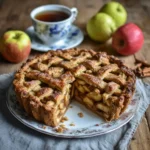
- Fill & Top (5 minutes): Preheat oven to 375°F (190°C). Remove chilled crust from freezer. Pour cooled apple filling into crust, mounding slightly in center. Optional: Roll remaining dough scraps (or make a second small batch) into lattice strips, or prepare a full top crust. For full top: roll second disc, place over filling, trim and crimp edges, then cut 4–5 steam vents. For lattice: weave 5–6 strips over filling, trimming ends and sealing to bottom crust with water or egg wash (duck egg preferred for richer color and AIP tolerance).
- Bake with Precision (65–75 minutes total): Place pie on preheated baking sheet in center rack. Bake at 375°F for 25 minutes. Reduce heat to 350°F (175°C) and continue baking 40–50 minutes — until crust is deeply golden, filling is bubbling vigorously through vents, and apples are tender when pierced with a thin knife (no resistance). If edges brown too quickly, cover with foil or silicone pie crust shields after 35 minutes total.
- Cool Completely (Minimum 3 hours — non-negotiable): Remove pie from oven and place on a wire rack. Resist cutting! Cooling allows starches to fully set, juices to reabsorb, and crust to crisp. Cutting too soon yields runny, gummy filling and crumbly crust. For best texture and flavor development, cool overnight at room temperature (covered loosely with clean linen cloth) or refrigerate uncovered for 8–12 hours.
Tips
- Apple Selection is Everything: Never rely on a single variety. Combine at least two — one tart and firm (Granny Smith), one aromatic and moderately sweet (Braeburn or Pink Lady). Avoid Red Delicious or Golden Delicious — they turn mushy and lack structural integrity.
- Chill Every Component: Fat, water, bowls, tools, and even the pie plate must stay cold. Warm fat melts prematurely, creating greasy, dense crust instead of airy, layered flakes.
- Don’t Overwork the Dough: Mix only until shaggy clumps form. Overmixing develops residual almond proteins, leading to toughness — unlike gluten, but still undesirable.
- Pre-Cooking Is Non-Negotiable: Raw apples release massive amounts of water in the oven. Simmering first evaporates excess liquid and activates pectin — ensuring a lush, cohesive, non-watery filling.
- Measure Flours by Weight (Not Volume): Almond flour compacts heavily — 1 cup can weigh anywhere from 90g to 120g depending on grind and scoop method. Use a digital scale: target 160g almond flour, 30g coconut flour, 16g arrowroot per batch.
- High-Altitude Adjustments: Above 3,000 ft: increase arrowroot by 1 tsp, reduce honey by 1 tsp, add 1 tsp coconut water to dough, and extend initial bake by 5 minutes at 375°F.
- Freezing Instructions: Unbaked pie freezes beautifully for up to 3 months. Assemble fully, wrap tightly in parchment + foil, and freeze solid. Bake from frozen — add 15–20 minutes to total time and cover edges after 40 minutes.
- Reheating Without Sogginess: To refresh leftovers, place slice on parchment-lined baking sheet. Warm in 325°F oven for 12–15 minutes — never microwave, which steams the crust and separates layers.
- Crust Troubleshooting: If dough cracks while rolling, patch with extra dough + water “glue.” If too sticky, refrigerate 10 minutes. If too dry, spritz with ½ tsp water and fold gently.
- Serving Wisdom: Serve at cool room temperature — not chilled or hot. Accompany with full-fat coconut milk “ice cream” (blended frozen coconut milk, vanilla, pinch sea salt) or a dollop of grass-fed whipped tallow (yes — it’s delicious, rich, and surprisingly neutral).
Variations and Customizations
Autoimmune Protocol (AIP)-Compliant Version
Omit cinnamon, clove, and nutmeg (nightshades and high-histamine spices). Replace with ½ tsp ground ginger, ¼ tsp ground allspice, and 1 tsp fresh lemon verbena or rosemary-infused apple juice. Use cassava flour instead of coconut flour (¼ cup), and replace honey with 2 tbsp date paste (strained). Skip cardamom; add 1 tsp finely minced crystallized ginger for warmth.
Nightshade-Free & Low-FODMAP Adaptation
Avoid apples high in fructose (e.g., Gala, Fuji); choose green Granny Smith and small quantities of peeled, stewed pears. Replace arrowroot with 1 tbsp ground chia seeds soaked in 2 tbsp apple juice for 5 minutes. Omit all added sweeteners — rely on natural apple sugars enhanced by slow caramelization and pinch of ascorbic acid (vitamin C powder) to brighten flavor.
Higher-Protein, Lower-Carb Option
Increase almond flour to 2 cups and reduce coconut flour to 2 tbsp. Add 2 scoops unflavored collagen peptides (ensure grass-fed, third-party tested) to dry ingredients — it strengthens dough without altering taste. Use only tart apples (Granny Smith + Arkansas Black), reduce sweetener to 1 tbsp honey, and boost cinnamon to 2 tsp for satiety signaling.
Herbal Infusion Variation
Steep 1 tbsp dried rosehips, 1 tsp dried chamomile, and ½ tsp dried lavender in ¼ cup warm apple juice for 10 minutes. Strain and use infused liquid in both crust and filling. Adds antioxidant depth, gentle floral notes, and adrenal-supportive compounds — perfect for stress-resilient baking.
Spiced Pear-Ginger Variation
Substitute half the apples with ripe but firm Bartlett or Anjou pears. Add 2 tbsp freshly grated ginger (pressed to extract juice, then pulp reserved) and 1 star anise pod (removed before baking). Replace maple syrup with blackstrap molasses (1 tbsp) for iron and calcium — ideal for menstruating individuals.
Deconstructed “Apple Crisp” Style
Press crust mixture into a parchment-lined 8×8 pan. Bake at 350°F for 18 minutes until golden. Meanwhile, prepare filling as directed. Spoon warm filling over baked crust base. Top with additional crumble: ½ cup almond flour + 2 tbsp melted tallow + 1 tbsp honey + ½ tsp cinnamon, baked 12 minutes more. Serve in jars for portable, portion-controlled servings.
Mini Hand Pies (Perfect for Meal Prep)
Roll dough thinner (⅛ inch), cut into 4-inch rounds. Fill each with 2 heaping tbsp cooled filling. Moisten edges, fold over, crimp with fork, and vent tops. Bake at 375°F for 22–26 minutes. Freeze unbaked for grab-and-go breakfasts — reheat in toaster oven at 350°F for 14 minutes.
Health Considerations and Nutritional Value
This Paleo Apple Pie is designed not only to satisfy cravings but to actively support physiological resilience. Per standard slice (1/8 of 9-inch pie, ≈220g), here’s what science-backed nutrition looks like:
- Calories: ~340–375 kcal — energy-dense yet balanced between fat (22g), moderate carbs (28g net), and protein (6g), promoting sustained satiety and stable blood glucose.
- Fat Profile: Predominantly monounsaturated (from almond flour and tallow) and saturated (from tallow), both essential for hormone synthesis, cell membrane integrity, and brain health. Contains zero trans fats, omega-6 overload, or oxidized cholesterol.
- Fiber: ~6.2g per slice — primarily soluble (from apples and arrowroot), feeding beneficial Bifidobacterium and Lactobacillus strains. Supports regular motilin-driven gut motility and lowers LDL cholesterol via bile acid binding.
- Phytonutrients: Quercetin (apples), cinnamaldehyde (cinnamon), eugenol (cloves), and catechins (green apples) collectively exert anti-inflammatory, antiviral, and Nrf2 pathway-activating effects — enhancing endogenous antioxidant production (glutathione, SOD).
- Mineral Bioavailability: Vitamin C from lemon juice increases non-heme iron absorption from tallow and spices. Magnesium from almond flour and sea salt synergizes with apple polyphenols to improve endothelial function and vascular elasticity.
- Glycemic Impact: Estimated glycemic load ≈ 11 (low). Tart apples’ malic acid slows gastric emptying; cinnamon inhibits alpha-glucosidase enzymes; fiber forms viscous gels — all delaying glucose absorption and blunting insulin spikes.
- Microbiome Support: Resistant starch forms as cooled pie sits — particularly from retrograded apple pectin and cooled tallow — acting as a prebiotic fuel for butyrate-producing Clostridia clusters linked to reduced intestinal permeability and improved mood regulation.
- Considerations for Specific Needs:
– For Hypothyroidism: Ensure tallow is from pasture-raised, iodine-supplemented cattle; add 1 tsp kelp powder to crust flour blend.
– For Histamine Intolerance: Use only freshly pressed apples (no stored), skip cloves/nutmeg, ferment filling 4–6 hours at room temp before cooking to degrade histamine.
– For Pregnancy: Boost folate with ¼ tsp nutritional yeast in crust; include 1 tbsp chopped walnuts in crumble topping for DHA precursors.
– For Gut Healing (SIBO): Reduce apple quantity by 25%, increase ginger, and add ½ tsp caraway seed to filling for prokinetic effect.
Ingredients
For the Crust (9-inch double-crust pie)
- 1¾ cups (160g) blanched almond flour, sifted
- ¼ cup (30g) coconut flour
- 2 tablespoons (16g) arrowroot starch
- 1 teaspoon (5g) fine Himalayan sea salt
- 1 teaspoon (2g) ground cinnamon (optional, omit for AIP)
- ½ cup (115g) chilled, cubed grass-fed tallow or pastured lard
- 3–4 tablespoons (45–60ml) ice-cold filtered water or unsweetened apple juice
For the Filling
- 6 medium apples (≈2.5 lbs / 1.1 kg), peeled, cored, and sliced ¼-inch thick (Granny Smith + Honeycrisp or Braeburn recommended)
- 3 tablespoons (45ml) raw local honey or pure maple syrup (reduce to 1 tbsp for lower-carb)
- 2 tablespoons (30ml) fresh lemon juice
- 1½ teaspoons (3g) ground cinnamon
- ¼ teaspoon (0.5g) ground cardamom
- ⅛ teaspoon (0.25g) ground cloves
- ⅛ teaspoon (0.25g) freshly grated nutmeg
- ¼ teaspoon (1g) fine sea salt
- 3 tablespoons (24g) arrowroot starch or tapioca starch
- 1 teaspoon (5ml) pure alcohol-free vanilla extract
- Optional: 1 teaspoon (2g) finely grated orange zest
For Finishing
- 1 large egg yolk + 1 tsp water (for egg wash — omit for AIP; use coconut milk)
- Coarse sea salt flakes (a light sprinkle before baking enhances contrast)
- Optional garnish: edible dried rose petals, crushed pecans, or cinnamon stick “serving wand”
Directions
- Chill Equipment: Place mixing bowls, pastry cutter, rolling pin, and 9-inch deep-dish ceramic or cast-iron pie plate in freezer for 15–20 minutes.
- Make Crust Dough: In chilled bowl, whisk almond flour, coconut flour, arrowroot starch, salt, and cinnamon (if using). Add chilled tallow cubes. Cut in with pastry cutter until mixture resembles coarse crumbs with visible pea-sized fat pieces. Drizzle in ice water, 1 teaspoon at a time, tossing gently with fork until dough just begins to clump. Squeeze a handful — it should hold together without crumbling. If too dry, add ½ tsp more water. If too wet, add ½ tsp almond flour. Gather into disc, wrap in parchment, refrigerate 60+ minutes.
- Prepare Apples: Peel, core, and slice apples uniformly. Place in large bowl. Add lemon juice and toss to coat.
- Mix Filling Dry Ingredients: In separate bowl, combine honey/maple syrup, spices, salt, and arrowroot starch. Whisk until no lumps remain.
- Combine & Macerate: Pour spice mixture over apples. Stir gently but thoroughly until all slices are evenly coated. Let sit 10 minutes at room temperature.
- Pre-Cook Filling: Transfer mixture to heavy-bottomed pot. Cook over medium-low heat, stirring every 90 seconds, until apples soften slightly at edges and liquid thickens to glossy, spoon-coating consistency (8–10 minutes). Remove from heat. Stir in vanilla and orange zest (if using). Cool completely — minimum 30 minutes, preferably 1 hour — stirring occasionally to release steam.
- Roll Bottom Crust: Lightly dust parchment with almond flour. Place chilled dough on parchment. Top with second parchment. Roll into 12-inch circle, ~⅛-inch thick. Carefully peel top parchment. Invert dough over pie plate. Gently press in without stretching. Trim overhang to 1 inch. Fold edge under; flute or press with fork. Freeze 15 minutes.
- Fill Pie: Pour cooled filling into chilled crust, spreading evenly and mounding slightly in center.
- Add Top Crust or Lattice: For full top: roll second disc, drape over filling, trim, crimp, and cut 4–5 steam vents. For lattice: cut 6–8 strips, weave over filling, seal edges, and trim. Brush top with egg wash. Sprinkle with flaky salt.
- Bake Strategically: Place pie on preheated baking sheet in center rack. Bake at 375°F (190°C) for 25 minutes. Reduce heat to 350°F (175°C) and bake 40–50 more minutes — until crust is deep golden brown and filling bubbles vigorously through vents. Shield edges with foil or pie shields after 35 minutes if browning too fast.
- Cool Thoroughly: Transfer to wire rack. Cool completely — minimum 3 hours, ideally overnight — before slicing. This sets the filling and crisps the crust.
- Serve Mindfully: Cut with sharp serrated knife. Serve at cool room temperature. Optional accompaniments: cultured coconut cream, spiced walnut crumble, or a small scoop of homemade cinnamon-turmeric gelatin “mousse.”
FAQ
- Can I use coconut oil instead of tallow or lard?
- No — coconut oil melts at 76°F and lacks the plasticity and melting point profile needed for flaky, laminated crust. It produces greasy, crumbly, or overly hard results. Stick with rendered animal fats for authenticity and texture.
- Why does the recipe require pre-cooking the apples?
- Raw apples contain pectin locked in cell walls and high water content. Simmering breaks down protopectin into soluble pectin while evaporating ~40% of liquid — preventing a soupy, separated pie. It also concentrates flavor and ensures even doneness without overbaking the crust.
- Is almond flour Paleo? What about phytic acid?
- Yes — when blanched (skins removed), almond flour contains minimal phytic acid — far less than whole nuts, legumes, or grains. Soaking/sprouting isn’t necessary for blanched almond flour, and its nutrient density (vitamin E, magnesium, healthy fats) makes it a cornerstone of nutrient-rich Paleo baking.
- Can I make this nut-free?