Introduction
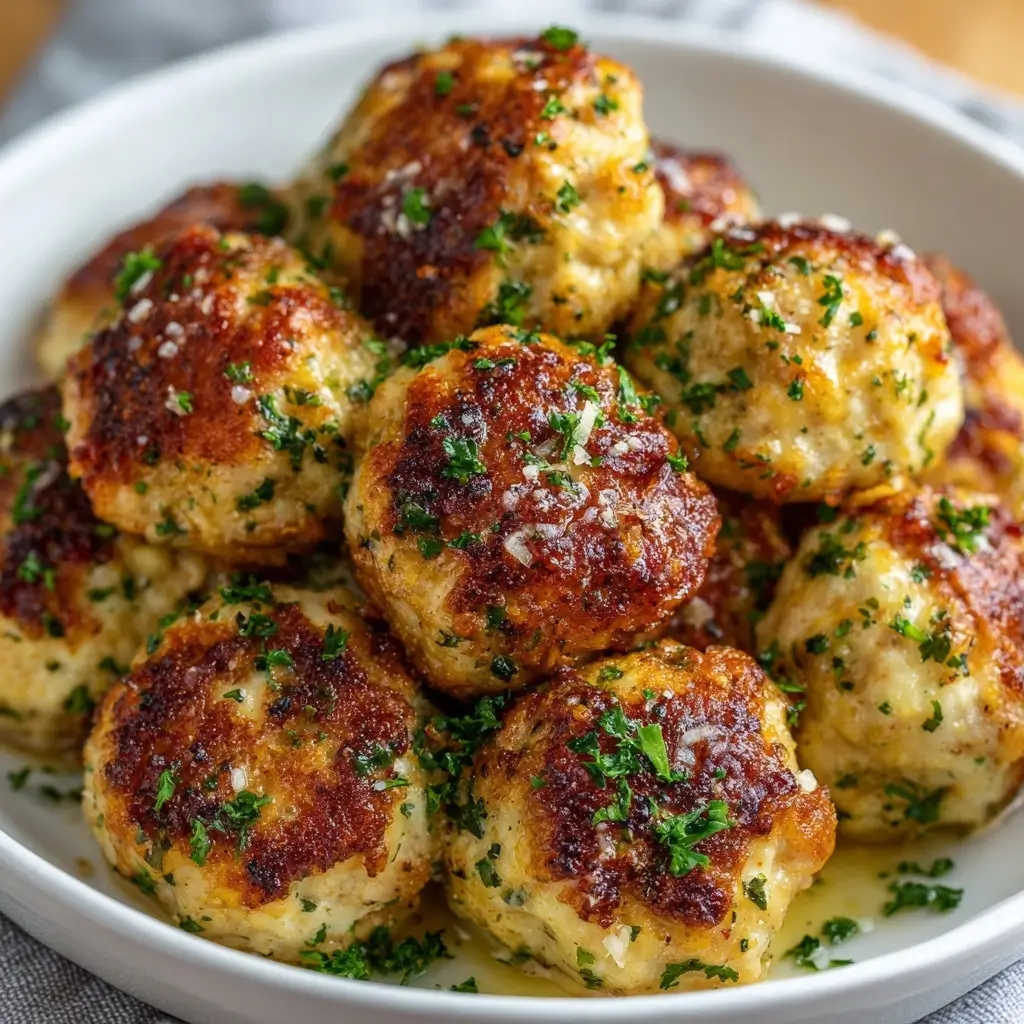
Parmesan Chicken Meatballs are a delightful fusion of Italian tradition and modern, health-conscious cooking—offering all the savory depth and umami richness of classic meatballs, but with leaner, lighter chicken as the star. Unlike traditional beef or pork-based versions, these meatballs deliver tender juiciness without heaviness, elevated by the nutty, salty punch of freshly grated Parmigiano-Reggiano and aromatic herbs. Whether served over spaghetti, tucked into sub rolls, floated in zesty marinara soup, or enjoyed as an elegant appetizer with lemon-dill yogurt dip, Parmesan Chicken Meatballs bring versatility, flavor, and sophistication to weeknight dinners and special occasions alike. Their appeal spans generations: kids love their mild, cheesy tenderness; adults appreciate their refined balance and protein-forward nutrition; and home cooks cherish their forgiving technique and minimal cleanup.
The History
Meatballs themselves trace back millennia—to ancient Roman isicia, Persian kofte, Chinese won ton precursors, and medieval European minced-meat preparations—but the *Italian-American* meatball as we know it crystallized in early 20th-century immigrant kitchens across New York, Philadelphia, and Chicago. Resourceful families stretched affordable ground meats (often beef-pork blends) with breadcrumbs, eggs, cheese, and herbs—creating hearty, economical fare that honored Old World techniques while adapting to New World ingredients. Parmesan, specifically aged Parmigiano-Reggiano from Italy’s Emilia-Romagna region, was historically reserved for grating over finished dishes—not mixed into meatballs—due to its cost and intense flavor. However, as artisanal cheeses became more accessible in the U.S. during the 1970s–1990s, home cooks began experimenting with folding real Parmesan directly into poultry-based mixtures, recognizing its unparalleled ability to enhance moisture retention, deepen savoriness (via natural glutamates), and lend a luxurious mouthfeel. The rise of health-focused cuisine in the 2000s accelerated this trend: chicken emerged as the go-to lean alternative, and Parmesan Chicken Meatballs evolved into a signature dish of contemporary Italian-American cooking—featured in cookbooks by Giada De Laurentiis, Lidia Bastianich, and Martha Stewart, and celebrated on food blogs and cooking shows for their perfect harmony of lightness and decadence.
Ingredients Breakdown
Every ingredient in Parmesan Chicken Meatballs serves a precise functional and flavor role—no filler, no afterthoughts:
- Ground Chicken (1½ lbs, 93% lean / 7% fat): The foundation. Use a blend of breast *and* thigh meat—or ask your butcher for “medium-ground” chicken—for optimal moisture and tenderness. Pure breast meat alone yields dry, crumbly results; too much thigh adds unwanted greasiness. Organic, air-chilled chicken is ideal for superior texture and cleaner taste.
- Freshly Grated Parmigiano-Reggiano (¾ cup, finely grated): Non-negotiable. Pre-grated “Parmesan” contains cellulose anti-caking agents that inhibit binding and mute flavor. Authentic Parmigiano-Reggiano contributes proteolytic enzymes that gently tenderize proteins, lactic acid for brightness, and crystalline tyrosine for subtle crunch and umami complexity. Its salt content also seasons the mixture from within.
- Panko Breadcrumbs (½ cup): Japanese-style light, airy crumbs absorb liquid without turning gummy. They create lift and porosity—critical for tender, non-dense meatballs. Stale artisanal baguette crumbs work beautifully too; avoid fine, dense regular breadcrumbs.
- Whole Large Egg + 1 Extra Yolk: The yolk adds richness, emulsification, and binding power; the whole egg contributes structure and moisture. Cold eggs integrate more evenly and prevent premature protein coagulation.
- Grated Yellow Onion (½ medium, ~¼ cup): Raw onion provides sharp sweetness and enzymatic tenderness. Squeeze out excess juice before adding to prevent sogginess—this concentrates flavor without watering down the mix.
- Minced Garlic (3 large cloves, ~1 tbsp): Freshly minced (not jarred or powdered) delivers volatile sulfur compounds essential for aromatic depth. Let it sit 5–10 minutes after mincing to activate allicin—the compound responsible for garlic’s health benefits and layered flavor.
- Chopped Fresh Parsley (¼ cup, flat-leaf): Adds herbal freshness and visual appeal. Stems removed; leaves finely chopped by hand (not food processor) to preserve volatile oils.
- Dried Oregano (1 tsp) & Dried Basil (1 tsp): Complement the parsley with warm, earthy, slightly floral notes. Toast lightly in a dry pan for 30 seconds before use to awaken essential oils.
- Extra-Virgin Olive Oil (2 tbsp): Not just for sautéing—folded into the raw mixture, it coats proteins to lock in juices during cooking and carries fat-soluble flavors (like those in herbs and cheese).
- Kosher Salt (1¼ tsp) & Freshly Ground Black Pepper (1 tsp): Salt is critical for seasoning *and* protein solubilization (helping myosin bind for cohesion). Use Diamond Crystal kosher salt for precise control; adjust if using Morton’s (it’s denser). Coarse black pepper adds floral heat that blooms when cooked.
- (Optional but Recommended) Grated Lemon Zest (1 tsp): Brightens the entire profile, cutting richness and enhancing the chicken’s natural sweetness. Add with herbs.
Note: This recipe intentionally omits milk, cream, or cheese sauces *in the mix*—those dilute flavor and destabilize texture. All richness comes from smart ingredient synergy.
Step-by-Step Recipe
- Prep & Chill (15 min + 30 min rest): Grate cheese, onion, and garlic; chop parsley; zest lemon. In a large bowl, combine panko and 2 tbsp olive oil—stir until crumbs are evenly coated and slightly glossy. Let sit 5 minutes to hydrate. In a separate small bowl, whisk egg, yolk, salt, pepper, oregano, basil, and lemon zest. Refrigerate both bowls.
- Combine Dry & Wet (5 min): To the oiled panko, add grated onion (squeezed dry), garlic, parsley, and Parmigiano-Reggiano. Stir with a fork until evenly distributed—no pockets of dry crumbs or cheese clumps. Gently pour in the egg mixture. Using clean hands, fold *just until combined*—about 45 seconds. Overmixing develops gluten (if using flour-based crumbs) and tightens chicken proteins, leading to toughness. The mixture should be moist, cohesive, and slightly sticky—but hold its shape when pressed.
- Portion & Shape (7 min): Chill mixture 30 minutes (essential for firmness and flavor melding). Scoop with a 1.5-tbsp cookie scoop (or level tablespoon). Roll each portion between palms into smooth, compact 1¼-inch balls—do not over-roll or compress. Place on a parchment-lined baking sheet, spaced ½ inch apart. For uniform size (critical for even cooking), use a kitchen scale: each ball should weigh 1.3–1.4 oz (37–40g).
- Sear for Depth (8–10 min): Heat 2 tbsp high-smoke-point oil (avocado or grapeseed) in a heavy 12-inch stainless steel or cast-iron skillet over medium-high heat until shimmering (350°F). Working in batches (do not crowd), place meatballs gently in hot oil. Press down *once* with a spatula to maximize surface contact. Cook undisturbed 2.5 minutes until deeply golden brown and crust forms. Rotate carefully with tongs and sear remaining sides—total 8–10 minutes until all surfaces are richly caramelized. Transfer to a wire rack set over a baking sheet to drain excess oil and cool slightly.
- Finish Cooking (12–15 min): Preheat oven to 375°F (190°C). Arrange seared meatballs in a single layer in a lightly oiled 9×13-inch baking dish. Pour 1 cup warm marinara sauce (homemade or high-quality store-bought) around—not over—meatballs to keep tops crisp. Cover tightly with foil. Bake 12 minutes. Uncover, spoon 2 tbsp sauce over each meatball, and bake uncovered 3–5 more minutes until internal temperature reaches 165°F (74°C) at the center (test with an instant-read thermometer). Rest 5 minutes before serving.
Tips
- Temperature Control is Everything: Keep all ingredients cold until mixing—warm chicken fat melts prematurely, causing greasiness. Chill the bowl and utensils for 10 minutes beforehand.
- Hand-Mix Only—No Tools: A fork or spatula won’t achieve the delicate binding needed. Use fingertips to feel texture changes and stop *the moment* the mixture holds together. If it feels gritty, add 1 tsp olive oil; if too wet, add ½ tsp panko.
- Don’t Skip the Sear: That Maillard reaction builds complex flavor compounds (melanoidins) you cannot replicate in the oven alone. It also creates a protective crust that seals in juices during baking.
- Rest Before Serving: Letting meatballs sit 5 minutes after baking allows residual heat to finish cooking the center while juices redistribute—preventing dryness upon cutting.
- Baking Dish Matters: Use light-colored metal or ceramic—not dark nonstick. Dark pans overbrown bottoms and cause uneven cooking. Glass dishes retain too much heat and risk cracking.
- Freeze Smart: Freeze uncooked, shaped meatballs on a parchment-lined tray for 2 hours, then transfer to airtight freezer bags (remove air). Cook from frozen: add 3–4 minutes to bake time. Never freeze cooked meatballs in sauce—they become mushy when thawed.
- Make-Ahead Friendly: Fully prepared (shaped) meatballs refrigerate up to 24 hours. Sear and bake day-of for best texture. Chilled mixture also makes excellent stuffed peppers or meatloaf mini-loaves.
Variations and Customizations
These meatballs adapt brilliantly to dietary needs, seasonal produce, and global flavors—without sacrificing integrity:
- Gluten-Free: Swap panko for ½ cup finely ground toasted almonds or certified GF oat flour. Add 1 tsp xanthan gum to mimic binding.
- Dairy-Free: Replace Parmesan with ¾ cup nutritional yeast + ¼ tsp white miso paste + ½ tsp sea salt. Texture remains tender; umami depth is remarkably close.
- Herb-Forward Mediterranean: Add 2 tbsp chopped fresh mint + 1 tbsp chopped Kalamata olives + ½ tsp crushed fennel seeds. Serve with tzatziki.
- Spicy Arrabbiata Style: Stir in 1 tsp Calabrian chili paste + ¼ tsp red pepper flakes + 1 tbsp chopped sun-dried tomatoes (oil-packed, patted dry).
- Lemon-Ricotta Stuffed: Make a thumbprint indentation in each raw meatball; fill with ½ tsp fresh whole-milk ricotta + lemon zest before sealing and shaping.
- Asian-Inspired: Replace oregano/basil with 1 tsp grated ginger + 1 tbsp tamari + 1 tsp toasted sesame oil + 1 tbsp chopped scallions. Garnish with cilantro and lime.
- Veggie-Boosted: Fold in ⅓ cup finely grated zucchini (squeezed dry) or shredded carrot. Adds moisture, nutrients, and subtle sweetness.
- Smoky Chipotle: Add 1 tsp chipotle powder + ½ tsp smoked paprika + 1 tbsp adobo sauce (from canned chipotles).
- Breakfast Version: Mix in 2 tbsp crumbled cooked bacon + 1 tsp maple syrup + pinch of cayenne. Serve over creamy polenta with fried eggs.
Health Considerations and Nutritional Value
A standard serving (4 meatballs, ~180g) provides approximately:
- Calories: 290–310 kcal
- Protein: 32–35g (65–70% DV)—complete, highly bioavailable amino acid profile supporting muscle synthesis and satiety
- Fat: 14–16g (mostly unsaturated from olive oil and chicken thigh; only 4–5g saturated)
- Carbohydrates: 5–6g (primarily from panko; low glycemic impact)
- Fiber: 0.5g (enhance with veggie additions like zucchini or spinach)
- Sodium: 580–620mg (well within daily limit of 2,300mg; reduce by using low-sodium marinara)
- Vitamins & Minerals: Rich in B6 and B12 (chicken), calcium and phosphorus (Parmesan), antioxidants (garlic, parsley, olive oil), and lycopene (when served with tomato sauce)
Key Health Highlights:
- Heart-Healthy Fats: Olive oil’s oleic acid and polyphenols reduce LDL oxidation and improve endothelial function.
- Gut-Friendly Fermentation: Authentic Parmigiano-Reggiano contains beneficial bacteria (e.g., Lactobacillus helveticus) and bioactive peptides shown to support microbiome diversity.
- Natural Anti-Inflammatory Agents: Garlic’s allicin, parsley’s apigenin, and olive oil’s oleocanthal work synergistically to modulate inflammatory pathways.
- No Added Sugars or Preservatives: When made from scratch, this recipe avoids hidden sugars common in commercial meatballs and sauces.
- Weight Management Friendly: High protein + moderate healthy fat promotes prolonged fullness and stabilizes blood sugar—ideal for balanced eating patterns.
Note: For those monitoring cholesterol, rest assured that dietary cholesterol (from egg yolk and cheese) has minimal impact on serum levels for most people—current USDA guidelines no longer set limits, emphasizing overall dietary pattern instead.
Ingredients
- 1½ pounds (680g) ground chicken (preferably 93% lean / 7% fat blend of breast and thigh)
- ¾ cup (85g) freshly grated Parmigiano-Reggiano cheese (do NOT substitute pre-grated)
- ½ cup (30g) plain panko breadcrumbs
- 1 large whole egg + 1 large egg yolk
- ½ medium yellow onion, finely grated (about ¼ cup; squeezed dry)
- 3 large garlic cloves, finely minced (about 1 tbsp)
- ¼ cup (10g) fresh flat-leaf parsley, finely chopped (stems removed)
- 1 teaspoon dried oregano, lightly toasted
- 1 teaspoon dried basil, lightly toasted
- 2 tablespoons extra-virgin olive oil, plus more for searing
- 1¼ teaspoons Diamond Crystal kosher salt (or 1 tsp Morton’s)
- 1 teaspoon freshly ground black pepper
- 1 teaspoon lemon zest (optional but recommended)
- 2 tablespoons high-smoke-point oil (avocado or grapeseed) for searing
- 1 cup warm marinara sauce (for baking)
Directions
- Prepare all ingredients as directed in the Ingredients Breakdown section. Grate cheese, onion, and garlic; chop parsley; zest lemon; toast herbs.
- In a large mixing bowl, combine panko and 2 tbsp olive oil. Stir with a fork until crumbs are evenly coated and glossy. Let stand 5 minutes.
- Add grated (and squeezed-dry) onion, minced garlic, chopped parsley, toasted oregano, toasted basil, lemon zest, salt, and pepper to the oiled panko. Stir with fork until well distributed.
- Add freshly grated Parmigiano-Reggiano and stir again until evenly dispersed.
- Using clean hands, gently fold mixture with a lifting-and-turning motion—no kneading or squeezing—until just combined and cohesive (about 45 seconds). It should be moist, slightly tacky, and hold its shape when pressed. Do not overmix.
- Cover bowl with plastic wrap and refrigerate for 30 minutes minimum (up to 24 hours).
- Line a baking sheet with parchment paper. Using a 1.5-tbsp scoop or tablespoon, portion chilled mixture. Roll each into a smooth, compact 1¼-inch ball (weigh 37–40g each for precision). Place on parchment, spaced ½ inch apart.
- Heat 2 tbsp avocado or grapeseed oil in a heavy 12-inch skillet over medium-high heat until shimmering (350°F). Working in batches, carefully place meatballs in hot oil. Press down gently once with a spatula. Sear undisturbed for 2.5 minutes until deeply golden. Rotate with tongs and sear all sides until uniformly caramelized (8–10 minutes total). Transfer to a wire rack over a baking sheet to drain.
- Preheat oven to 375°F (190°C). Arrange seared meatballs in a single layer in a lightly oiled 9×13-inch baking dish. Pour 1 cup warm marinara sauce around (not over) meatballs.
- Cover dish tightly with aluminum foil. Bake for 12 minutes.
- Remove foil. Spoon 2 tablespoons sauce over each meatball. Bake uncovered for 3–5 minutes more, until internal temperature reaches 165°F (74°C) when checked with an instant-read thermometer inserted into the center of a middle meatball.
- Let rest on the wire rack for 5 minutes before serving. Serve hot with additional sauce, grated Parmesan, fresh basil, and your choice of sides (spaghetti, roasted vegetables, cauliflower mash, or crusty bread).
FAQ
- Can I make these meatballs entirely in the oven—skip the sear?
- Yes—but you’ll lose significant flavor depth and textural contrast. Oven-only meatballs will be uniformly soft with less umami. For best results, sear first (even under the broiler for 3 minutes per side if stovetop isn’t available).
- Why do my meatballs fall apart?
- Most commonly: (1) Overmixing—develops tough protein networks; (2) Using too much lean chicken (100% breast); (3) Skipping the chill time—warm fat melts and breaks emulsion; (4) Substituting pre-grated cheese (anti-caking agents inhibit binding); (5) Using fine breadcrumbs instead of airy panko.
- Can I use ground turkey instead of chicken?
- Absolutely—use the same 93/7 blend. Turkey has milder flavor, so consider adding ½ tsp poultry seasoning or increasing garlic to 4 cloves. Avoid “lean” turkey—it dries out easily.
- How do I reheat leftovers without drying them out?
- Gently simmer in marinara sauce over low heat for 8–10 minutes, covered. Or steam in a bamboo steamer for 6 minutes. Never microwave uncovered—they’ll turn rubbery.
- Are these safe for pregnant women or immunocompromised individuals?
- Yes—when cooked to 165°F (74°C) and handled with clean utensils. Use pasteurized eggs if concerned. Avoid raw herb garnishes unless thoroughly washed.
- What’s the best sauce pairing besides marinara?
- Try creamy lemon-dill yogurt sauce, roasted red pepper coulis, mushroom ragù, pesto cream, or a bright chimichurri for contrast.
- Can I double the batch?
- Yes—but mix in two separate batches to ensure consistent texture. Doubling the volume in one bowl leads to uneven incorporation and overworking.
- My meatballs taste bland—what went wrong?
- Most likely: undersalted (taste a tiny piece of raw mixture before shaping—you should detect clear seasoning); using low-quality or pre-grated cheese; skipping the herb toasting step; or substituting dried parsley for fresh.
- Can I cook these in an air fryer?
- Yes! Preheat to 375°F. Lightly spray basket with oil. Arrange meatballs in single layer (don’t overcrowd). Air fry 10 minutes, flipping halfway, until golden and 165°F internally. Finish with 2 minutes under broiler for extra crispness.
- How long do leftovers last?
- Refrigerated in airtight container with sauce: up to 4 days. Frozen (uncooked): up to 3 months. Frozen (cooked): up to 2 months—but texture degrades faster than uncooked.
Summary
Parmaesan Chicken Meatballs masterfully unite lean protein, artisanal cheese, and aromatic herbs into tender, golden-brown morsels bursting with umami depth and nuanced freshness—achievable through meticulous ingredient selection, intelligent technique, and respect for culinary science.
Whether baked, pan-seared, or air-fried—and endlessly customizable for dietary needs or global flavors—they deliver restaurant-worthy satisfaction, nutrition-forward benefits, and effortless elegance, making them a timeless, adaptable cornerstone of modern home cooking.