Introduction
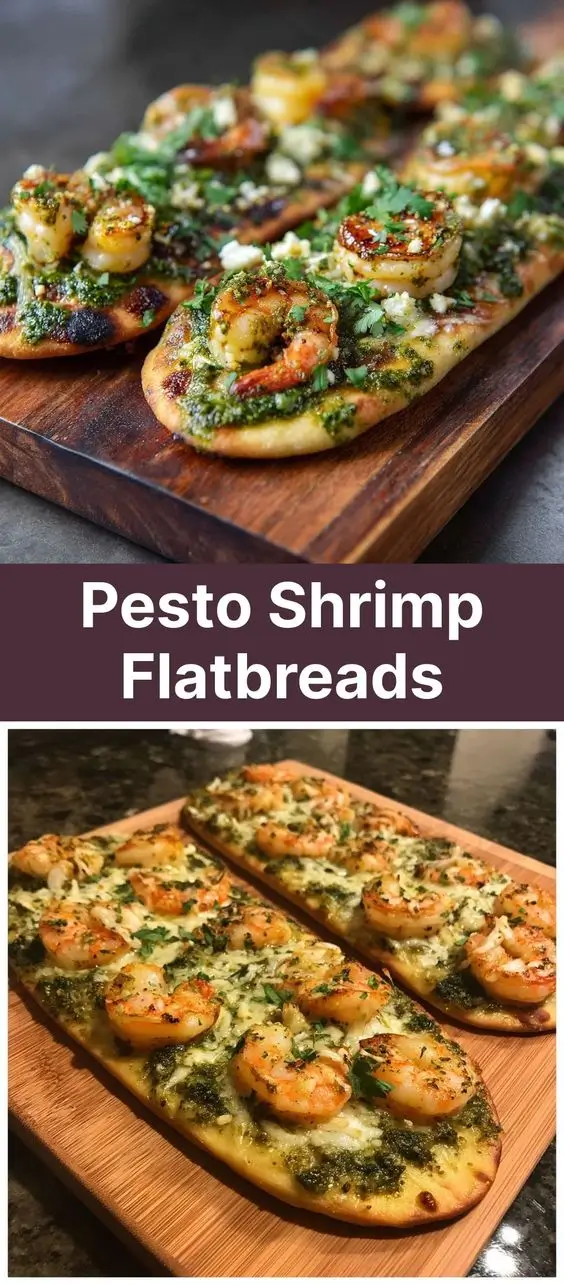
Pesto Shrimp Flatbreads are a delightful fusion of Mediterranean and modern American cuisine, combining the bold flavors of fresh basil pesto with the delicate sweetness of succulent shrimp. These flatbreads are perfect for a quick weeknight dinner, an elegant appetizer at a dinner party, or even as a gourmet lunch option. With their crisp crust, vibrant green pesto, juicy shrimp, and melty cheese, each bite delivers a symphony of textures and tastes that will leave your taste buds dancing. Whether you’re a seasoned home cook or just starting to explore more adventurous recipes, this dish is approachable, customizable, and guaranteed to impress.
The History
The concept of flatbread dates back thousands of years, with ancient civilizations across the Middle East, Mediterranean, and South Asia crafting simple doughs from flour, water, and salt, then baking them on hot stones or in clay ovens. Flatbreads like focaccia, naan, lavash, and piadina evolved regionally, each absorbing local ingredients and culinary traditions. The Italian version, particularly focaccia and schiacciata, laid the foundation for modern flatbreads in Western cuisine.
Pesto, specifically pesto alla Genovese, originated in Genoa, Italy, during the late 16th century. Traditionally made with fresh basil, pine nuts, garlic, Parmesan cheese, Pecorino, and olive oil, it was originally ground using a mortar and pestle—hence the name “pesto,” derived from the Italian word pestare, meaning “to crush.” Over time, pesto gained global popularity, especially after the advent of food processors simplified its preparation.
Shrimp, a beloved seafood worldwide, has been enjoyed since ancient times, particularly in coastal regions where fishing was a way of life. In contemporary American cuisine, shrimp became a staple protein due to its versatility, mild flavor, and fast cooking time.
The marriage of pesto and shrimp emerged in the late 20th century as chefs began experimenting with fusion dishes, blending Italian flavors with seafood-centric preparations. Flatbreads, popularized in the U.S. during the 1980s and 1990s as a lighter alternative to deep-dish pizza, provided the ideal canvas for this combination. Today, Pesto Shrimp Flatbreads represent a modern classic—a harmonious blend of tradition, innovation, and global culinary influences.
Ingredients Breakdown
To create the perfect Pesto Shrimp Flatbreads, it’s essential to understand the role each ingredient plays in building layers of flavor, texture, and aroma. Here’s a detailed breakdown:
- Flatbread or Naan: Acts as the base. Pre-made flatbreads save time, while naan offers a slightly chewy texture and subtle garlic notes. For a crispier crust, opt for thin pizza dough or pita bread.
- Homemade or Store-Bought Pesto: The star flavor component. Traditional pesto includes fresh basil, extra virgin olive oil, toasted pine nuts, garlic, Parmesan, and Pecorino Romano. Using high-quality ingredients ensures a vibrant, aromatic spread.
- Large Shrimp (Peeled and Deveined): Preferably wild-caught, medium to large in size (21–25 count per pound). Their natural sweetness pairs beautifully with the herbal pesto. Fresh or thawed frozen shrimp work well.
- Garlic: Adds depth and pungency. Sautéed lightly with the shrimp to enhance without overpowering.
- Lemon Juice and Zest: Brightens the entire dish, cutting through the richness of the pesto and cheese. Zest adds fragrance; juice brings acidity.
- Olive Oil: Used for sautéing shrimp and sometimes drizzled on top before serving. Choose a good quality extra virgin olive oil for best flavor.
- Mozzarella Cheese: Melts beautifully and provides a creamy, mild contrast to the bold pesto. Fresh mozzarella balls (ciliegine or bocconcini) offer a softer texture, while shredded low-moisture mozzarella gives a stretchier melt.
- Parmesan Cheese: Grated over the top for a salty, umami kick. Authentic Parmigiano-Reggiano is highly recommended.
- Cherry Tomatoes: Sliced or halved, they add freshness, color, and a juicy burst with every bite.
- Arugula or Baby Spinach: Added after baking for a peppery or earthy green note, enhancing both nutrition and presentation.
- Red Pepper Flakes (optional): For a touch of heat that complements the sweetness of shrimp and richness of cheese.
- Salt and Black Pepper: Essential seasonings used throughout—from seasoning the shrimp to finishing the final dish.
Step-by-Step Recipe
- Preheat Oven: Set your oven to 425°F (220°C). Line a baking sheet with parchment paper or lightly grease it to prevent sticking.
- Prepare the Shrimp: Pat the shrimp dry with paper towels. In a bowl, toss them with olive oil, minced garlic, lemon zest, salt, pepper, and a pinch of red pepper flakes (if using). Let marinate for 10–15 minutes at room temperature.
- Cook the Shrimp: Heat a skillet over medium-high heat. Add a tablespoon of olive oil, then sear the shrimp for 1–2 minutes per side until just pink and opaque. Remove from heat and squeeze fresh lemon juice over them. Do not overcook, as shrimp become rubbery. Set aside.
- Assemble the Flatbreads: Lay out the flatbreads on the prepared baking sheet. Spread a generous layer of pesto evenly across each surface, leaving a small border for the crust.
- Add Cheese: Sprinkle shredded mozzarella evenly over the pesto. For extra indulgence, mix in some ricotta or goat cheese dollops.
- Bake Until Golden: Place the flatbreads in the preheated oven and bake for 8–10 minutes, or until the edges are golden and the cheese is bubbly and slightly browned.
- Add Toppings: Once out of the oven, immediately arrange the cooked shrimp over the melted cheese. Scatter halved cherry tomatoes and any residual juices from the shrimp pan.
- Add Greens: Top with a handful of fresh arugula or baby spinach. The residual heat will slightly wilt the greens, enhancing their flavor without making them soggy.
- Finish with Cheese and Drizzle: Shave or grate fresh Parmesan over the top. For added richness, drizzle a bit more pesto or a swirl of high-quality olive oil.
- Slice and Serve: Cut each flatbread into slices or wedges using a sharp knife or pizza cutter. Serve warm, ideally within 10–15 minutes of baking for optimal texture.
Tips
- Don’t Overcook the Shrimp: Shrimp cook very quickly. They should be opaque and pink but still tender. Overcooking leads to toughness.
- Use Fresh Lemon Juice: Bottled juice lacks brightness. Always use freshly squeezed lemon for the best flavor.
- Toast Your Own Nuts (for homemade pesto): Lightly toasting pine nuts or substituting walnuts or almonds enhances nuttiness and depth.
- Warm the Flatbreads First: If using refrigerated dough or naan, let it come to room temperature before spreading pesto to avoid cracking.
- Bake One at a Time: If you’re only making one serving, bake individual flatbreads to maintain crispness and freshness.
- Balance Moisture: Avoid soggy flatbreads by patting shrimp dry after cooking and not overloading with wet ingredients.
- Customize Baking Time: Thin flatbreads may only need 6–7 minutes; thicker ones up to 12. Watch closely to prevent burning.
- Double the Pesto: Make extra pesto and freeze in ice cube trays for future use—perfect for sauces, dressings, or future flatbreads.
- Let It Rest: Allow baked flatbreads to rest for 1–2 minutes before slicing to help cheese set and toppings stay in place.
- Garnish Just Before Serving: Add delicate herbs like basil or microgreens right before serving to preserve color and flavor.
Variations and Customizations
Pesto Shrimp Flatbreads are incredibly versatile. Here are numerous ways to tailor them to your taste, dietary needs, or seasonal availability:
- Dairy-Free Version: Use vegan pesto (without cheese or with nutritional yeast), dairy-free mozzarella shreds, and omit Parmesan. Nutritional yeast adds a cheesy flavor.
- Gluten-Free Option: Use gluten-free flatbread, cauliflower crust, or portobello mushroom caps as a base.
- Different Pesto Varieties: Try sun-dried tomato pesto, kale-walnut pesto, cilantro-lime pesto, or roasted red pepper pesto for unique twists.
- Protein Swaps: Replace shrimp with grilled chicken, scallops, salmon, tofu, chickpeas, or white beans for vegetarian or alternative protein versions.
- Cheese Variations: Substitute mozzarella with feta, burrata, smoked gouda, or blue cheese for different flavor profiles.
- Add Vegetables: Roasted zucchini, caramelized onions, sautéed mushrooms, bell peppers, artichoke hearts, or roasted eggplant can be layered under or over the shrimp.
- Spicy Kick: Mix harissa or sriracha into the pesto, or top with pickled jalapeños or banana peppers.
- Mediterranean Style: Add kalamata olives, capers, roasted red peppers, and a sprinkle of oregano for a Greek-inspired twist.
- Breakfast Flatbread: Top with a poached or fried egg and swap shrimp for smoked salmon or bacon.
- Herb Infusion: Stir chopped fresh dill, parsley, chives, or mint into the pesto or as a garnish for added freshness.
- Citrus Swap: Use orange or lime instead of lemon for a different citrus profile.
- Nut-Free Pesto: Replace pine nuts with sunflower seeds or omit nuts entirely for allergy-friendly versions.
- Low-Carb/Keto: Use a fathead dough (cheese-based) or almond flour crust and load up on shrimp, pesto, and cheese.
Health Considerations and Nutritional Value
Pesto Shrimp Flatbreads can be both delicious and nutritious when prepared with wholesome ingredients and balanced portions. Here’s a breakdown of key health considerations and approximate nutritional values per serving (assuming two servings from one standard flatbread):
| Nutrient | Amount (Approx.) |
|---|---|
| Calories | 450–600 kcal |
| Protein | 25–35g |
| Total Fat | 20–30g |
| Saturated Fat | 6–9g |
| Carbohydrates | 30–45g |
| Fiber | 3–5g |
| Sugar | 3–6g |
| Sodium | 600–900mg |
| Cholesterol | 150–200mg |
Health Highlights:
- High-Quality Protein: Shrimp provide lean protein, supporting muscle maintenance and satiety.
- Heart-Healthy Fats: Olive oil and nuts in pesto contain monounsaturated fats and omega-3s, beneficial for cardiovascular health.
- Antioxidant-Rich Ingredients: Basil, garlic, tomatoes, and lemon are packed with antioxidants, vitamins C and K, and anti-inflammatory compounds.
- Low in Carbs (when modified): Can be adapted for lower-carb diets with alternative bases.
Considerations:
- Sodium Content: Store-bought pesto and cheeses can be high in sodium. Opt for low-sodium versions or make your own pesto to control salt levels.
- Cholesterol: Shrimp naturally contain cholesterol, though recent research suggests dietary cholesterol has less impact on blood cholesterol than once believed. Still, those with specific conditions should consult a healthcare provider.
- Allergens: Contains shellfish, tree nuts (in traditional pesto), dairy, and gluten (unless substituted).
- Portion Control: While nutrient-dense, the calorie content can add up quickly with extra cheese, oil, or larger flatbreads.
Ingredients
- 2 pre-made flatbreads or naan (about 8–10 inches each)
- ½ cup basil pesto (homemade or high-quality store-bought)
- 12 oz large shrimp (peeled, deveined, tails removed)
- 2 tbsp olive oil (divided)
- 2 cloves garlic, minced
- 1 lemon (zest and juice)
- Salt and freshly ground black pepper (to taste)
- ¼ tsp red pepper flakes (optional)
- 1 cup shredded mozzarella cheese
- ¼ cup grated Parmesan cheese (plus extra for garnish)
- 1 cup cherry tomatoes, halved
- 1 cup fresh arugula or baby spinach
- Additional pesto or olive oil for drizzling (optional)
- Fresh basil leaves for garnish (optional)
Directions
- Preheat oven to 425°F (220°C). Line a large baking sheet with parchment paper.
- In a bowl, combine shrimp, 1 tablespoon olive oil, minced garlic, lemon zest, salt, pepper, and red pepper flakes. Toss to coat and let sit for 10 minutes.
- Heat a skillet over medium-high heat. Add remaining 1 tablespoon olive oil. Cook shrimp for 1–2 minutes per side until pink and opaque. Remove from heat and squeeze half the lemon juice over them. Set aside.
- Place flatbreads on the baking sheet. Spread ¼ cup pesto evenly over each flatbread.
- Sprinkle shredded mozzarella over the pesto, followed by a light dusting of Parmesan.
- Bake for 8–10 minutes, until cheese is melted and bubbly, and edges are golden.
- Remove from oven. Arrange cooked shrimp over the cheese, then scatter cherry tomatoes.
- Top with arugula or spinach. Drizzle with remaining lemon juice and a bit more pesto or olive oil if desired.
- Sprinkle additional Parmesan and garnish with fresh basil.
- Slice and serve immediately.
FAQ
Can I make Pesto Shrimp Flatbreads ahead of time?
Yes, you can prep components in advance: make pesto, cook shrimp, slice tomatoes, and shred cheese up to a day ahead. Assemble and bake just before serving for best texture.
Can I freeze these flatbreads?
It’s not recommended to freeze fully assembled flatbreads. However, you can freeze uncooked assembled flatbreads (without greens) for up to 1 month. Bake from frozen, adding 3–5 minutes to cooking time. Add shrimp and greens after baking.
What can I substitute for shrimp?
Grilled chicken, scallops, flaked salmon, tofu, tempeh, chickpeas, or white beans are excellent alternatives.
Is store-bought pesto okay?
Absolutely! Choose a high-quality brand with recognizable ingredients. For better flavor and less sodium, consider making your own.
How do I store leftovers?
Store leftover flatbread in an airtight container in the refrigerator for up to 2 days. Reheat in a toaster oven or oven (not microwave) to preserve crispness.
Why is my flatbread soggy?
This usually happens from too much moisture—wet pesto, unpat dried shrimp, or excessive tomatoes. Ensure all ingredients are well-drained and shrimp are not overcooked.
Can I grill these instead of baking?
Yes! Grill the flatbreads over medium heat for 2–3 minutes per side, add toppings, and close the lid to melt the cheese. Great for summer!
Are these safe for pregnant women?
Yes, as long as shrimp are fully cooked to 145°F (63°C) internal temperature and sourced from reputable suppliers.
Summary
Pesto Shrimp Flatbreads are a flavorful, elegant, and easy-to-make dish that combines garlicky basil pesto, tender sautéed shrimp, melted cheese, and fresh vegetables on a crisp flatbread base. Perfect for weeknights, entertaining, or meal prep, this recipe balances rich and bright flavors with wholesome ingredients.