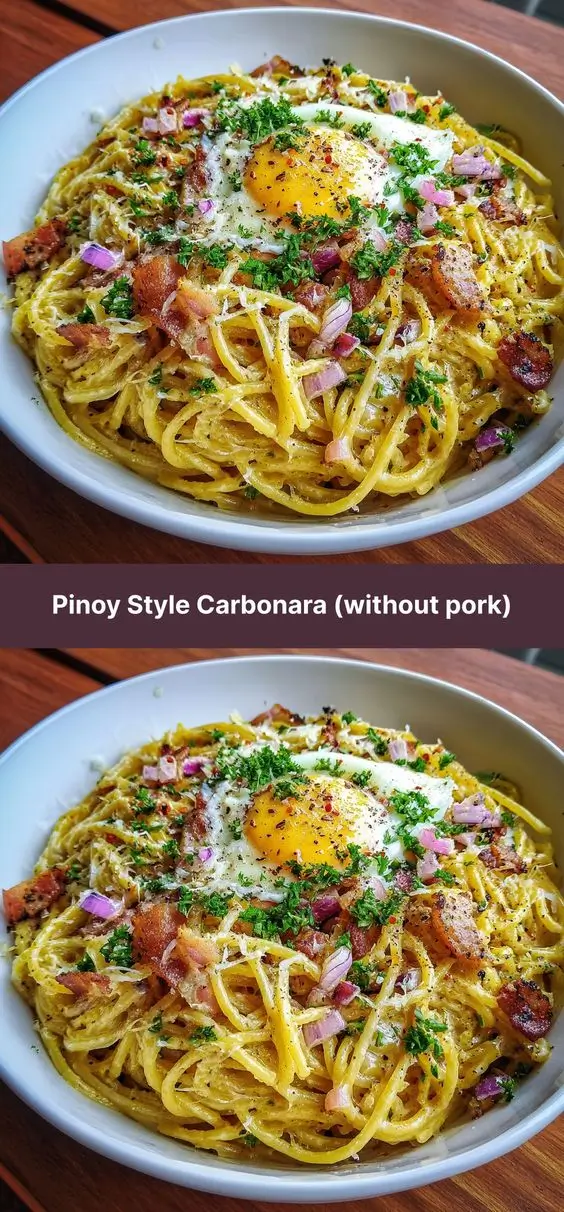
Pinoy Style Carbonara (Without Pork) – A Creamy, Comforting Filipino Twist on a Classic
The History of Pinoy Style Carbonara
The origins of carbonara trace back to Italy, where it is traditionally made with eggs, Pecorino Romano cheese, guanciale (cured pork cheek), black pepper, and pasta. However, the Filipino adaptation—affectionately known as “Pinoy Style Carbonara”—is a delightful culinary evolution born from local tastes and ingredient availability. Introduced during the American occupation and further popularized through exposure to Western cuisine in the mid-20th century, this version quickly became a staple at Filipino gatherings, birthday parties, and family dinners.
Unlike its Italian counterpart, which emphasizes simplicity and savory umami, Pinoy Style Carbonara embraces indulgence and sweetness. It features a creamy sauce made from evaporated milk or cream, sweetened condensed milk, grated cheese (often Cheddar), and sometimes even hotdogs or ham. Over time, regional variations emerged, and families developed their own signature twists. The absence of pork in many versions caters to religious dietary restrictions, health preferences, or simply personal taste, making this dish inclusive and widely loved across the Philippines.
Ingredients Breakdown: What Makes It Unique
Understanding the ingredients in Pinoy Style Carbonara helps explain why it diverges so deliciously from traditional Italian carbonara. Each component plays a role in creating the rich, sweet, and creamy texture that defines this comfort food:
- Pasta: Most commonly, elbow macaroni is used for its ability to hold sauce, though some use penne or fusilli. The pasta is boiled until al dente and then rinsed—unlike Italian tradition—to stop overcooking and remove excess starch.
- Evaporated Milk: This shelf-stable dairy product adds richness without curdling when heated, forming the base of the creamy sauce.
- Sweetened Condensed Milk: A hallmark of Filipino cooking, this ingredient introduces a subtle sweetness that balances the saltiness of cheese and meat alternatives.
- Grated Cheese: While authentic recipes call for Pecorino, Filipinos often use mild Cheddar or processed cheese (like Quickmelt or Eden) for a gooey, melty texture and familiar flavor.
- Hotdogs or Ham (Pork-Free): Since this recipe excludes pork, beef hotdogs, chicken ham, or turkey sausages are ideal substitutes. They provide protein and a smoky-savory note.
- Butter or Margarine: Adds richness and helps sauté ingredients smoothly.
- Black Pepper: Used more for tradition than heat, offering a slight bite to contrast the sweetness.
- Optional Add-ins: Peas, carrots, bell peppers, or even canned mushrooms enhance color, texture, and nutrition.
Step-by-Step Recipe
Ingredients
- 300g elbow macaroni
- 2 tbsp butter or margarine
- 1 cup beef hotdogs or chicken ham, sliced into rounds
- 1/2 cup frozen peas (optional)
- 1/2 cup diced carrots (optional)
- 1 can (12 oz / 375ml) evaporated milk
- 1/4 cup sweetened condensed milk
- 1 cup grated Cheddar cheese (plus extra for topping)
- 1/2 tsp ground black pepper
- Salt (to taste, though often unnecessary due to salty cheese and processed meats)
Directions
- Cook the Pasta: Bring a large pot of salted water to a boil. Add the elbow macaroni and cook according to package instructions until just tender (al dente). Drain and rinse under cold water to stop the cooking process. Set aside.
- Prepare the Vegetables: In a small pot, bring water to a boil and blanch the peas and carrots for 2–3 minutes. Drain and set aside. Alternatively, you can skip this step if using canned vegetables.
- Sauté the Meats and Veggies: In a large saucepan or skillet, melt the butter over medium heat. Add the sliced hotdogs or ham and sauté for 2–3 minutes until lightly browned. Add the blanched vegetables and stir to combine. Remove from heat temporarily.
- Create the Sauce: In a separate bowl, whisk together the evaporated milk, sweetened condensed milk, grated cheese, and black pepper until smooth and well blended. The residual heat from the skillet will help melt the cheese fully later.
- Combine Everything: Return the skillet to low heat. Pour in the milk-cheese mixture, stirring continuously to prevent scorching. Allow the sauce to warm gently—do not boil—until it thickens slightly (about 3–5 minutes).
- Mix in the Pasta: Add the cooked and drained macaroni into the sauce. Stir thoroughly until every piece is coated in the creamy sauce and everything is heated through (about 2–3 minutes).
- Taste and Adjust: Give the carbonara a taste. You may add a pinch more pepper for sharpness, but avoid adding salt unless needed—the cheese and processed meats are already quite salty.
- Serve Warm: Transfer to a serving dish. Top with additional grated cheese for presentation and extra flavor. Serve immediately while hot.
Tips for the Perfect Pinoy Style Carbonara (Without Pork)
- Don’t Overcook the Pasta: Always aim for al dente. Overcooked pasta turns mushy once mixed with the sauce.
- Rinse After Boiling: Rinsing removes surface starch, preventing clumping—a common practice in Filipino kitchens.
- Use Low Heat for the Sauce: High heat can cause the dairy to separate or curdle. Gentle warming preserves the silky texture.
- Grate Your Own Cheese: Pre-grated cheese contains anti-caking agents that can affect meltability. Freshly grated Cheddar blends more smoothly.
- Balancing Sweetness: If the dish turns out too sweet, reduce the condensed milk to 2 tablespoons and add a splash of fresh milk instead.
- Make It Ahead: You can prepare components separately and assemble just before serving to maintain optimal texture.
- Reheating Tip: When reheating leftovers, add a splash of evaporated milk to revive the creaminess, as the sauce tends to thicken upon cooling.
Variations and Customizations
One of the joys of Pinoy Style Carbonara is its versatility. Here are some creative, pork-free variations you can try:
- Vegetarian Carbonara: Omit meat entirely and boost flavor with sautéed mushrooms, zucchini, corn kernels, and spinach. Use plant-based butter and cheese for a vegan twist.
- Seafood Carbonara: Add cooked shrimp, imitation crab sticks, or flaked tuna for a coastal-inspired version.
- Chicken Carbonara: Use grilled or smoked chicken breast, diced into small pieces, for a leaner protein option.
- Spicy Kick: Add a dash of cayenne pepper or a few slices of jalapeño for those who enjoy heat.
- Gluten-Free Option: Substitute regular macaroni with gluten-free pasta made from rice, corn, or quinoa.
- Dairy-Free Version: Replace evaporated milk with coconut cream, use dairy-free condensed milk, and opt for vegan cheese alternatives.
- Baked Carbonara: Transfer the mixed carbonara into a greased casserole dish, top with breadcrumbs and extra cheese, and bake at 350°F (175°C) for 20 minutes for a golden crust.
Health Considerations and Nutritional Value
While undeniably delicious, Pinoy Style Carbonara is considered a treat due to its high calorie, sugar, and saturated fat content. Here’s a nutritional breakdown per serving (approx. 1 cup):
- Calories: ~350–450 kcal
- Carbohydrates: ~45g (from pasta and condensed milk)
- Protein: ~12–15g (from dairy, cheese, and meat substitute)
- Fat: ~18–22g (mostly from cheese, butter, and processed meats)
- Sugars: ~15–20g (primarily from sweetened condensed milk)
- Sodium: ~600–900mg (can be high due to processed ingredients)
To make a healthier version:
- Use whole grain or legume-based pasta for added fiber.
- Reduce or replace sweetened condensed milk with a sugar-free alternative or natural sweeteners like stevia (use sparingly).
- Opt for low-fat evaporated milk and reduced-fat cheese.
- Increase vegetable content to boost vitamins, minerals, and fiber.
- Leverage lean proteins like grilled chicken, tofu, or tempeh.
- Serve in moderate portions alongside a side salad or fresh fruit.
This dish should be enjoyed occasionally, especially by individuals managing diabetes, hypertension, or weight concerns. However, when balanced with mindful eating and active lifestyle choices, it remains a joyful part of Filipino food culture.
Frequently Asked Questions (FAQ)
Can I make Pinoy Carbonara without any meat?
Absolutely! You can create a fully vegetarian version by omitting meat and adding more vegetables like mushrooms, bell peppers, corn, and broccoli. The creamy sauce still makes it satisfying and flavorful.
Why does my carbonara turn out too sweet?
The sweetness comes mainly from sweetened condensed milk. To tone it down, reduce the amount to 2–3 tablespoons or balance it with a pinch of salt or extra black pepper. Some cooks also add a squeeze of lemon juice for brightness.
Can I use fresh milk instead of evaporated milk?
You can, but the sauce will be thinner and less rich. Evaporated milk has a concentrated flavor and thicker consistency. If using fresh milk, consider simmering it longer or adding a bit of cornstarch slurry to thicken the sauce.
Is it safe to reheat Pinoy Carbonara?
Yes, but do so gently over low heat with a splash of milk to restore creaminess. Avoid microwaving on high, as it can cause separation.
Can I freeze leftover carbonara?
It’s not recommended. Dairy-based sauces tend to separate when frozen and thawed, resulting in a grainy texture. Best consumed fresh or within 2–3 days when refrigerated.
What makes Pinoy Carbonara different from Italian Carbonara?
Traditional Italian carbonara uses eggs, Pecorino Romano, guanciale, and black pepper—no cream, no sugar. Pinoy Style replaces these with creamy, sweetened dairy and includes vegetables and processed meats, reflecting local palates and ingredient access.
Can kids eat this dish?
Yes, it’s very popular among children due to its mild, creamy, and slightly sweet profile. Just ensure portion sizes are appropriate and balance it with vegetables or fruits in the meal.
Summary
Pinoy Style Carbonara (without pork) is a beloved Filipino comfort dish that transforms the classic Italian recipe into a creamy, slightly sweet, and hearty meal perfect for celebrations and family dinners. With simple ingredients and endless customization options, it’s a versatile favorite that brings warmth to any table.